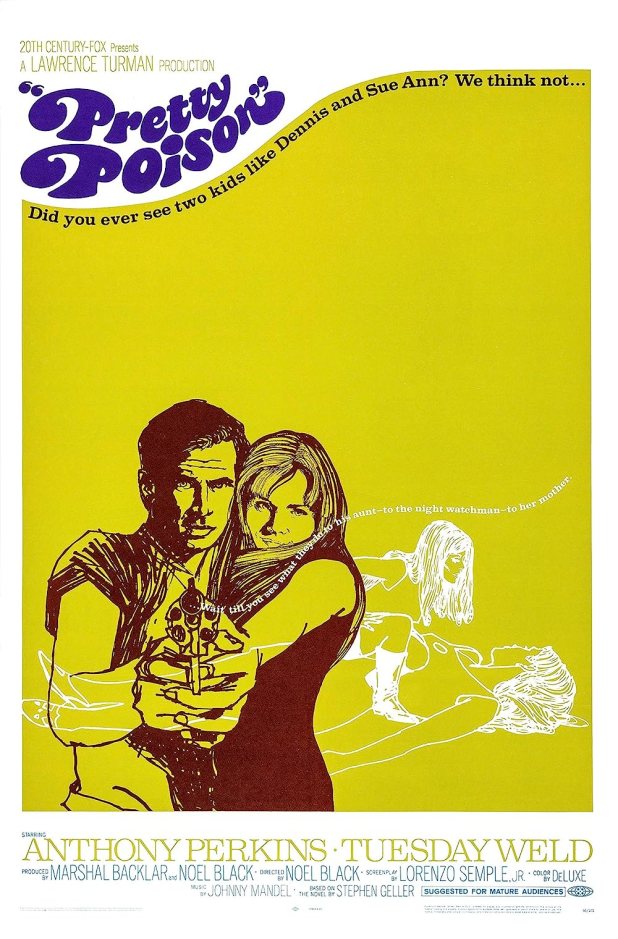
CBS LATE MOVIE MONTH: Pretty Poison (1968)

EDITOR’S NOTE: Pretty Poison aired on the CBS Late Movie on May 15 and December 5, 1973 and July 23, 1974.

Dennis Pitt (Anthony Perkins) wants a life of adventure, and he gets it.

On parole from a mental institution — he set the fire that accidentally claimed the life of his aunt — he works a menial job watching bottles go through the line at Sausenfeld Chemical Company. So when he sees the gorgeous Sue Ellen Stepanek (Tuesday Weld) march across the field in her majorette uniform, he brings her along into the games in his head, pretending to be a CIA agent and having some fun with a young and innocent teenager.

Except that Dennis goes from being the antagonist to the protagonist.

Directed by Noel Black (Private School) and written by Lorenzo Semple Jr. (the TV BatmanFlash Gordon) from the book She Let Him Continue by Stephen Geller, Pretty Poison spends so much of the movie making us think that Dennis is the same kind of killer that Perkins played in Psycho — the last film he was in before going back to the stage — and he’s really just a scared little boy being shocked by the evil inside a gorgeous young lady.

Semple told Shock Magazine, “It was very hard to cast. Tuesday was excellent for it but Tony was much too obvious for it. We really tried to find somebody young to do it. We never could find a new, young actor the studio would go with.”

Weld had tremendous issues with Black. She told Rex Reed it was “The least creative experience I ever had. Constant hate, turmoil and dissonance. Not a day went by without a fight. Noel Black, the director, would come up to me before a scene and say, ‘Think about Coca-Cola.’ I finally said, ‘Look, just give the directions to Tony Perkins, and he’ll interpret for me.” She further hated the movie, saying, “I don’t care if critics like it; I hated it. I can’t like or be objective about films I had a terrible time doing.”

The movie pretty much disappeared in theaters, and any reputation it had came from critics like Pauline Kael, who vilified Fox for its failure to market Pretty Poison. 1968 was a strange year. However, it was a time when the country felt like it was falling to bits, and Robert Kennedy and Martin Luther King were both shots. A film that has a young woman gleefully accepting murder and even turning a gun on her mother (Beverly Garland) was going to have a hard time.

But wow — this movie. It really took me unaware, and I loved the turn Perkins gives to his character; at the end, he is so frightened of Weld that he willingly goes to prison for her crimes. She’s learned nothing and is already moving on to her next victim, yet the end teases that parole officer Morton Azenauer (John Randolph) has figured her out. At one point, it seems like Dennis has all the answers, but when the world cracks on him, he becomes a child.

By the way, Dennis and Sue Ellen go to see The St. Valentine’s Day Massacre, directed by Roger Corman.
CBS LATE MOVIE MONTH: The Biggest Bundle of Them All (1968)

EDITOR’S NOTE: The Biggest Bundle of Them All was on the CBS Late Movie on March 24 and July 26, 1972; September 13, 1973; March 24 and August 30, 1976.

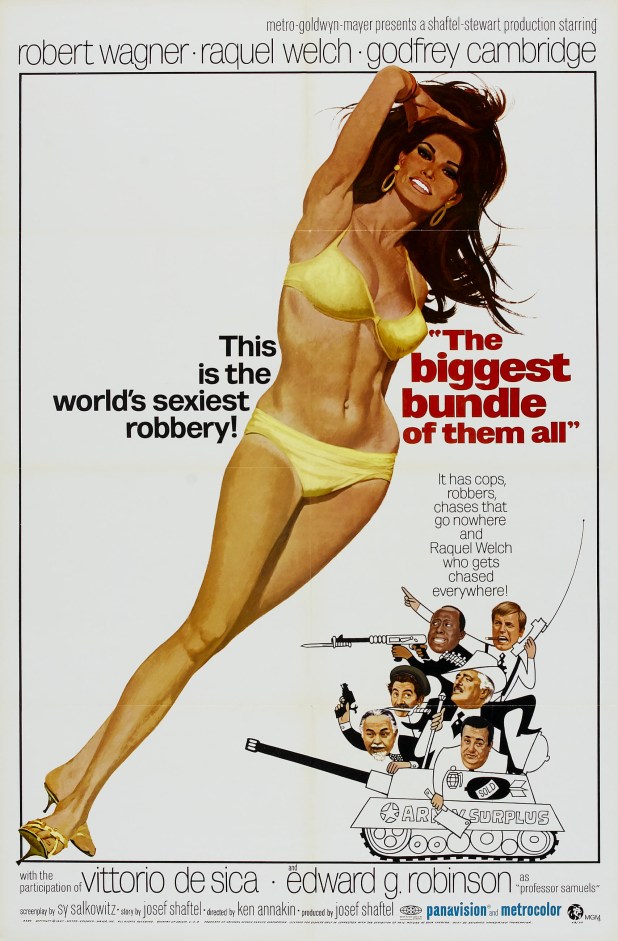
It’s easy for us in 2023 to forget just how big of a deal Raquel Welch was. I was born in 1972, so by the time I hit puberty, she was playing the role of the former sex symbol. But once you see her in this film, it all makes sense.

In this, she’s Juliana, the girlfriend of criminal Harry Price (Robert Wagner). Price’s gang has taken former Chicago gangster Cesare Celli (Vittorio De Sica, yes, the director of Bicycle Thieves) captive. Yet none of the older man’s fellow bosses try to save him. No one is more insulted by Cesare, who decides to teach Price and his gang how to steal $6 million in plutonium.

Ten days before shooting, director Ken Annakin realized he’d read a similar script called The Happening. That movie was being made by Sam Spiegel at Columbia, who got 15% of the profits for this, got to approve the script, changed the title from The Italian Caper and delayed it for six months after his movie.

There’s a great cast in this, with Edward G. Robinson as a professor of crime, plus Godfrey Cambridge, Davy Kaye, Francesco Mulé, Mickey Knox and Victor Spinetti. The soundtrack is also a pretty choice because Johnny Matthis sings “Most of All There’s You,” with music written by Riz Ortolani.

It’s funny reading interviews with Annakin and Robinson, as they both didn’t think much of Welch. They either said she winged all of her lines and didn’t learn them or that she was just using her body instead of being an actress. Robert Wagner wrote that she was late so often that Robinson cut a ten-minute promo, leaving Welch in tears.

She was late again the next day.

CBS LATE MOVIE MONTH: The Vatican Affair (1968)

EDITOR’S NOTE: The Vatican Affair was on the CBS Late Movie five times, airing on March 14, 1972; March 19, June 10 and December 29, 1975 and June 22, 1988.

Emilio Miraglia is best known to readers as the director of The Night Evelyn Came Out of the Grave and The Red Queen Kills Seven Times.

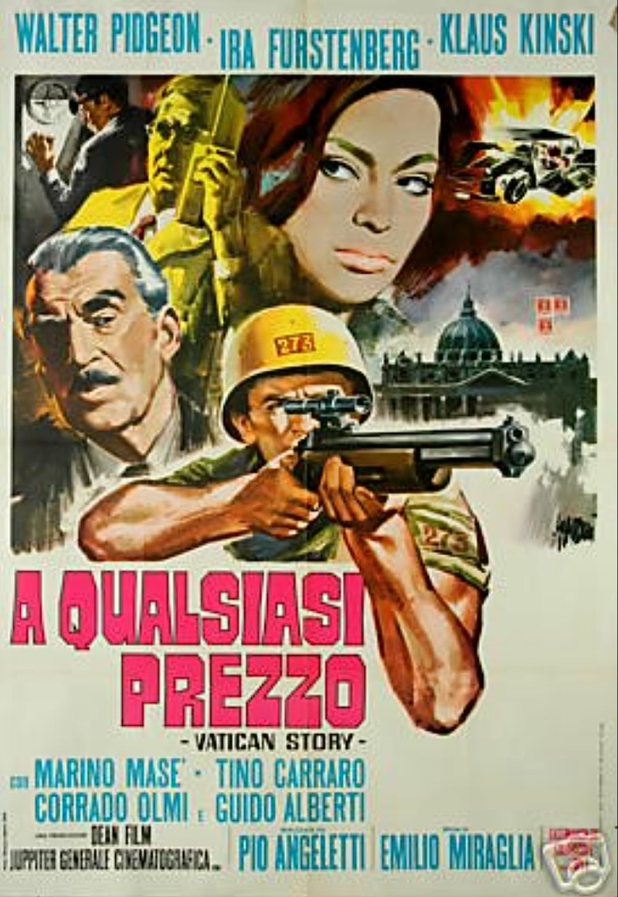
Professor Herbert Cummings (Walter Pidgeon) seems like no threat to anyone. After all, he’s blind. But in a surprising turn of events, he’s also looking to rob gems from St. Peter’s and has hired Clint Rogers (Klaus Kinski) to help get the job done. Richard (Marino Masé) and Pamela Scott (Ira von Fürstenberg) complete the crew.

The plot is similar to Operazione San Gennaro, directed by Dino Risi, and Operazione San Pietro, the sequel, directed by Lucio Fulci. It’s like another movie with Kinski, Ad ogni costo (Grand Slam). However, the true star of the film is the captivating soundtrack, composed by Luis Bacalov, which adds more excitement than what’s happening on screen. Bacalov, known for his work on DjangoThe Great SilenceThe Designated VictimIl Postino and Hell of the Living Dead, delivers a score that will keep you on the edge of your seat.

Source

Emilio Miraglia – Wikipedia. https://en.wikipedia.org/wiki/Emilio_Miraglia

CBS LATE MOVIE MONTH: Dracula Has Risen From His Grave (1968)

EDITOR’S NOTE: Dracula Has Risen From His Grave was on the CBS Late Movie on May 19 and October 12, 1972 and August 9, 1974.

This was the fourth Hammer Dracula movie and the third to star Christopher Lee (he doesn’t appear in The Brides of Dracula). It was directed by Freddie Francis, who stepped in to replace Terence Fisher, who injured his leg in a car accident. It has an extraordinary and wonderful effect when Dracula appears in the film, as the edges of the frame take on the colors of crimson, amber and yellow.

There’s a fantastic beginning where a young altar boy (Norman Bacon) finds a dead woman hidden inside a church bell, just one more of Dracula’s victims. But a year after — and the events of Dracula: Prince of Darkness — finds the greatest of all the undead quite dead.

Monsignor Ernst Mueller (Rupert Davies) visits the village from the opening and learns that the altar boy can no longer speak and the town’s holy man (Ewan Hooper) has lost his faith. Because Dracula’s castle has a shadow that extends over their church, they refuse to even come near it. The Monsignor decides to exorcise the castle, which leads to the kind of strange occurrences that always bring Dracula back: lightning strikes, the older priest slips, he hits his head on a rock, and the drips of his blood through the cracks in the ground make their way to the deceased vampire.

As Mueller returns home, Dracula quite literally rises from his grave and takes on the frightened priest as his familiar. Now unable to enter his castle, he flips out and demands revenge, heading off to Keinenberg, where he plans on making Mueller’s niece Maria (Veronica Carlson, Frankenstein Must Be DestroyedThe Horror of Frankenstein) into one of his lovers.

Luckily, her boyfriend Paul (Barry Andrews) is ready to protect her, even if he has to defeat the advances of a barmaid Zena (Barbara Ewing, who has since become a well-reviewed author) who has been hypnotized by Dracula. There’s a wild moment when Dracula orders the priest to kill Zena, so he burns her body in a bakery oven while Dracula leaps across the rooftops to find and bite Maria.

This has some fascinating ideas as Paul has to go it alone after the Monsignor dies. As an atheist, he and the lost faith priest are unable to properly stake and destroy Dracula. As always, Dracula is stopped, and faith is restored. This is the most challenging time for achieving that end goal.

As a kid, the Hammer movies were quite literally the end-all, be-all of my existence. I thought about them all day and would discuss them with anyone who wanted to hear about them—often, many who didn’t.

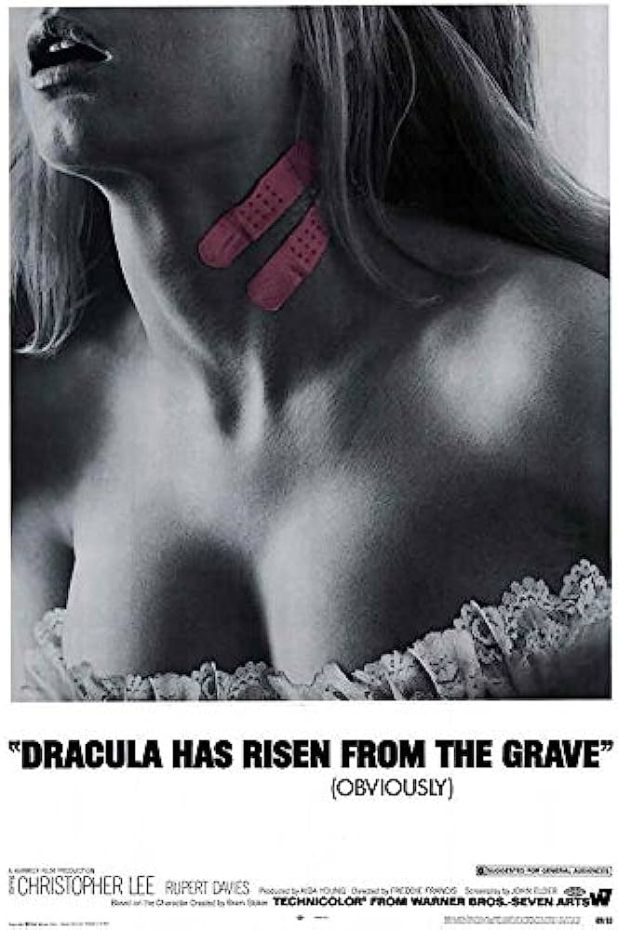
As an old man, I’m struck by how often the film in the movie is sped up, which doesn’t work, while the color effects and rooftop scenes have lost none of their infernal power. Plus, this has one of the best posters I’ve seen, just the throat of a bosom woman with band-aids where Dracula’s teeth have penetrated her.

CBS LATE MOVIE MONTH: The Green Slime (1968)

EDITOR’S NOTE: The Green Slime was on the CBS Late Movie four times: March 23 and November 20, 1972; January 25, 1974 and March 10, 1976.

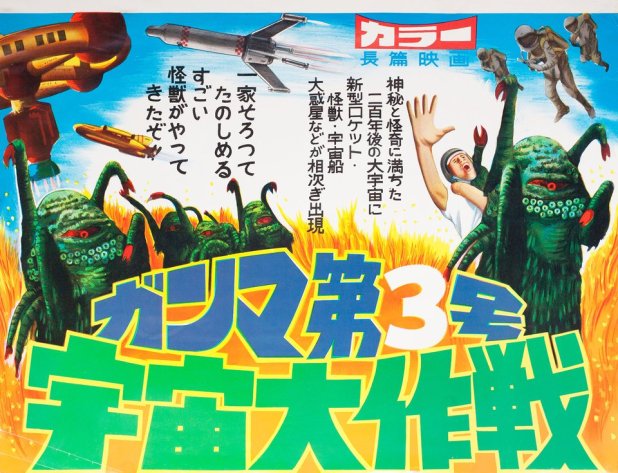
Known in Japan as Ganmā Daisan Gō: Uchū Daisakusen or Gamma 3: The Great Space War, this was directed by Kinji Fukasaku (Battles Without Honor or HumanityBattle RoyaleMessage from Space) and written by American screenwriters Tom Rowe, Charles Sinclair and Bill Finger, the uncredited for decades co-creator of Batman. It was shot with a Japanese crew and had non-Japanese actors, Robert Horton, Richard Jaeckel, and Luciana Paluzzi, in the lead roles. A  co-production between Metro-Goldwyn-Mayer, Ram Films, and Toei had MGM paying and providing the script, along with Toei hiring the film crew and getting a location to shoot this.

Commander Jack Rankin (Horton) takes command of space station Gamma 3 to destroy Flora, an asteroid about to end all life on Earth. Along with Commander Vince Elliot (Jaeckel) and science officer Dr. Hans Halversen (Ted Gunther), they set bombs off on the surface of the asteroid, but they end up bringing back some of that green slime. That slime starts eating any energy and turns into a one-eyed creature that loves to kill humans.

As we’re getting into the United Nations nature of this movie, it all started in Italy, as years before, MGM had contracted Antonio Margheriti to direct four films about the adventures of space station Gamma One: Wild, Wild Planet, War of the Planets, War Between the Planets and Snow Devils. MGM was so happy with these movies that they released them theatrically. This was intended by producers Walter Manley and Ivan Reiner as the fifth film in the series.

Charles Fox, who wrote the theme song for this film, would go on to co-write “Killing Me Softly With His Song,” the Wonder Woman theme and music for Barbarella. The song features Randy Nauert on sitar, Richard Delvy on drums, who also produced and arranged it, Rick Lancelot singing, Rob Edwards on guitar, and Paul Tanner playing the theremin.

THE FILMS OF BRIAN DE PALMA: Greetings (1968)

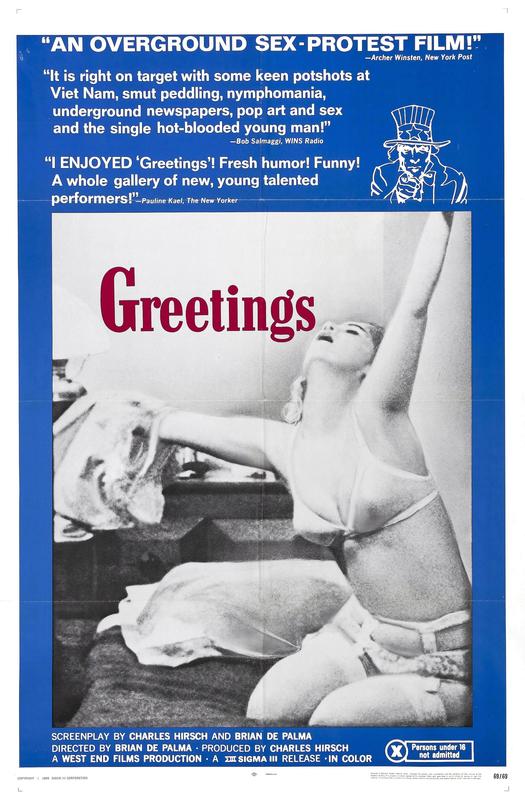
The first American film to receive an X rating by the Motion Picture Association of America (MPAA), this may have not been the first movie Robert De Niro was in — that would be an earlier film by director Brian De Palma, The Wedding Party — but it is one of the first.

This is a movie about three men: Jon Rubin (De Niro), who spies on women and also captures people with his camera. Paul Shaw (Jonathan Warden), a shy romantic. And Lloyd Clay (Gerrit Graham) who is obsessed with conspiracy theory.

It’s ramshackle and episodic, but you can tell it’s also a movie made by young people who were excited to create something. Most of those young people grew up to do major things in entertainment, so this is a chance to see them before they knew what it was like to be known or famous.

Today, they’d probably just make YouTube videos or a podcast.

THE FILMS OF BRIAN DE PALMA: Murder a La Mod (1968)

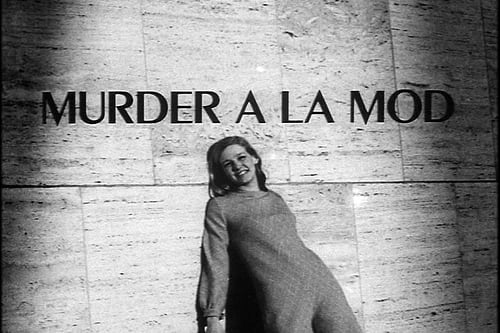
Brian De Palma’s first released movie as a director and writer, this movie is all about models, murder and multiple points of view. Sure, it doesn’t all work, but it’s a first try for a creative of staggering genius that would soon be regularly making suspense magic throughout the 70s and 80s.

It’s about a prankster named Otto (William Finley) who is making an adult movie.

It’s also about Chris (Jared Martin, The Lonely Lady), who is in love with Karen (Margo Norton) but can’t marry her until he can pay for his divorce. That’s why he’s making the movie with Otto.

But where it gets weird is that the murders may start as jokes, but suddenly become real. Or maybe they don’t. In fact, you can’t even trust who you think may have been killed.

So while it seems like Karen has stolen money from her friend Tracy (Andra Akers) and come on set to deliver it to Chris, only to be stabbed in the eye with an ice pick in a scene right out of a giallo. Chris finds her body and starts tracking down the killer but then we start to see things from multiple perspectives.

A young De Palma may not have been fully ready to make such a complex film but you have to credit him for trying. The themes in this movie and the style that he employs to show them to the viewer would become the very things that would soon make him a success.

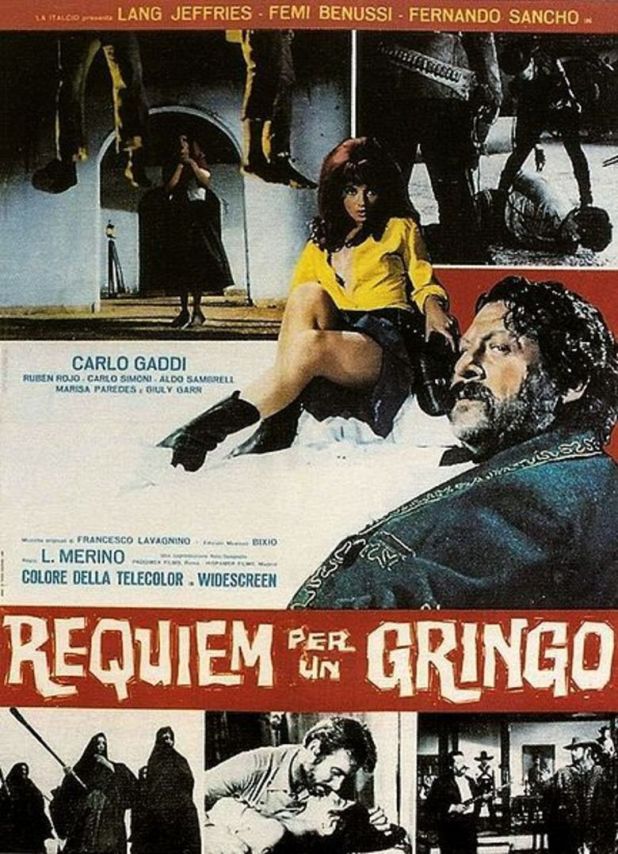
APRIL MOVIE THON 2: Requiem for a Gringo (1968)

April 30: How the (Not) West Was Won — A Western not made in America.

In the United Nations that is exploitation cinema, I love the connections that are built. It may seem unexpected, but the line between Japanese samurai cinema and the Italian Western are incredibly direct. Yojimbo is A Fistful of DollarsRequiem for a Gringo has elements of Harakiri.

Directed by Eugenio Martin (Horror Express) and José Luis Merino, this film is also known as Requiem for Django because, well, in 1968 every movie it seemed was about Django. The Django in this film is also known as Ross Logan and he’s hunting down a gang — while dressed in a leopard skin! — using astronomy to plan his attack during an eclipse. He also knows how to play the gang’s personalities and desires against one another, which is a step beyond the traditional Italian Western hero who may go in guns blazing.

He can also precict storms, which is a strong skill to have in the West.

He puts Porfirio Carranza (Fernando Sancho) and his men — Tom Leader (Rubén Rojo), Ted Corby (Carlo Gaddi) and Charley Fair (Aldo Sambrell) — at odds with one another. Meanwhile, the stories of two women — Alma (Femi Benussi, So Sweet, So Dead), who is supposedly the property of Carranza but is already sleeping with Leader but she knows she’s trapped in a gang of maniacs, and Nina (Marisa Paredes), a young woman constantly pursued by Corby and trying to stay pure for just one more day — take more of a center stage than in other Eurowesterns.

I love how this genre bends and flexs to accept new ideas, even if we live within the constant Western cycles of murder and revenge.

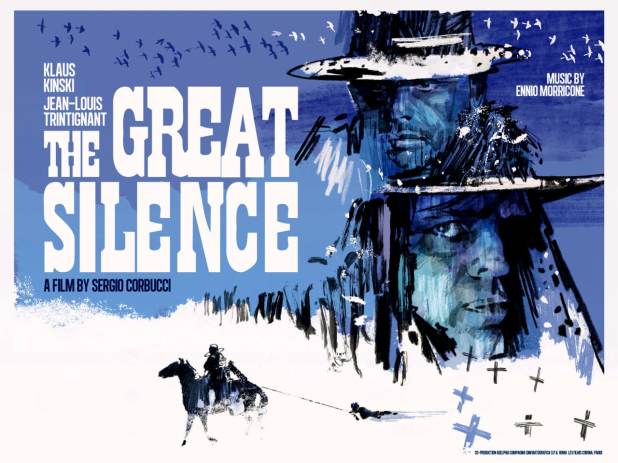
APRIL MOVIE THON 2: The Great Silence (1968)

April 30: How the (Not) West Was Won — A Western not made in America.

When you’re looking for a happy movie to start the day with, let me not recommend The Great Silence, a film that Sergio Corbucci created after the deaths of Che Guevara and Malcolm X.

But let me definitely recommend it any other time.

Between Minnesota ClayDjangoThe Mercenary and Navajo Joe, Corbucci contributed more to Italian Westerns than nearly anyone short of Leone. But he was getting tired.

Corbucci said, “Every time I make a Western, I say “This is the last”. I get tired and nervous; I hate the horses and the desert. I go back to town wanting to make a film about a man who drives a car, uses a phone and watches TV. But once I’m there, I start thinking how nothing is finer in the cinema than a horseman, with the setting sun and a red sky. That makes me want to carry on. And I think up another Western with my actors. ”

So one more cowboy movie. But this time, in the snow.

Italiam Westerns had made their way, well, west thanks to casting American actors, which worked thanks to dubbing. Marcello Mastroianni had the idea of playing a mute gunfighter and told Corbucci that he had always wanted to appear in a Western. Just the fact that he didn’t know English may have held him back. So when Corbucci first met Jean-Louis Trintignant — Franco Nero turnd it down to be in Django — he discovered he didn’t speak English. So instead of dubbing, he could play the hero in this movie, Silence.

For the villain, who is a worse human being than Klaus Kinski? Corbucci took this further by asking him to base his role on Gorca, the vampire played by Boris Karloff in Mario Bava’s Black Sabbath. Bava’s movie would influence this film in many ways. Kinski was Kinski on set, having an affair while his wife and child were there; also he told Frank Wolff — who played Sheriff Gideon Burnett — “I don’t want to work with a filthy Jew like you; I’m German and hate Jews.”  Wolff responded by strangling Kinski.

The Great Silence also has a cast of noted Italian actors, including Luigi Pistilli (Your Vice Is a Locked Room and Only I Have the Key), Bruno Corazzari (Live Like a Cop, Die Like a Man), Raf Baldassarre (the tour guide in Eyeball) and Mario Brega (a butcher who went into acting; he’s Corporal Wallace in The Good, the Bad and the Ugly). They’re joined by Vonetta McGee, who dropped out of pre-law at San Francisco State College and moved to Rome. This was her first movie and she was invited back to America by Sidney Poitier, where she became a blaxploitation star. She’s also in Repo Man, probably because not only is she a great actress, but because Alex Cox is a big Italian western fan.

The movie that emerged is set up like a traditional Western — Loco (Kinski) and his men are bounty hunters who have hunted a group of people unfairly condemned as criminals; they use the law of the bounty to cover the fact that as capitalists they love money and as maniacs they love to kill. Silence should be the strong and silent man who rides into town, cleans things up and rides back out. But he’s different because he uses a gun — a Mauser C96 semi-automatic pistol — that gives him an unfair advantage over his enemies, men who he stops by shooting off their thumbs, keeping them from doing any more violence.

Yet even his heroism, even his love for a good woman — Pauline (McGee) — can’t save him. But in 1968, just the fact that a white man and a black woman had a love scene was subversive (as subversive as the hero being ultimately ineffectual). Corbucci said, “People don’t go to the cinema to see love scenes. Buñuel was right when he said the most embarrassing thing, for a filmmaker, is to point a camera at a couple kissing. Nothing is more banal than a kiss. Generally you can’t have love scenes in stories which are action-based – though in The Great Silence I shot quite a beautiful love scene between a black woman and a mute. There was something very beautiful and very morbid about it. This was the only love scene I ever included in a film of this genre…”

Yet Alex Cox said that the real moral of this movie is that “sometimes, even though you know you’ll fail, you still do the right thing,” which might make Silence, even though he fails, the most noble of all Italian Western heroes.

That said, Corbucci also delivered two other endings:

In one, Silence is shot by Loco’s henchman in both of his hands before he can draw his gun. Instead of killing his enemy, Loco tells his men to leave. The fate of everyone is left up in the air.

Yet there’s also a happy ending. Seeing as how this would be released over the holidays, Corbucci had a different ending where Loco draws before Silence initiates their duel. Yet the sheriff has survived, helping Silence to kill the other bounty hunters, showing that he has created a metal sleeve to protect his hand, just like Clint Eastwood did in A Fistful of Dollars. Silence agrees to be a deputy and everyone leaves happy.

But that doesn’t work, does it?

The Grand Silence didn’t play the UK until 1990 and the U.S. until 2001. When it was screened for 20th Century Fox boss Darryl F. Zanuck, he was so offended by the ending that he nearly swallowed his cigar and refused to release it in the U.S. In Italy, a viewer was so upset by the closing that he shot the screen with a gun.

So maybe wait to watch this until later in the day and not immediately upon waking up like I did.

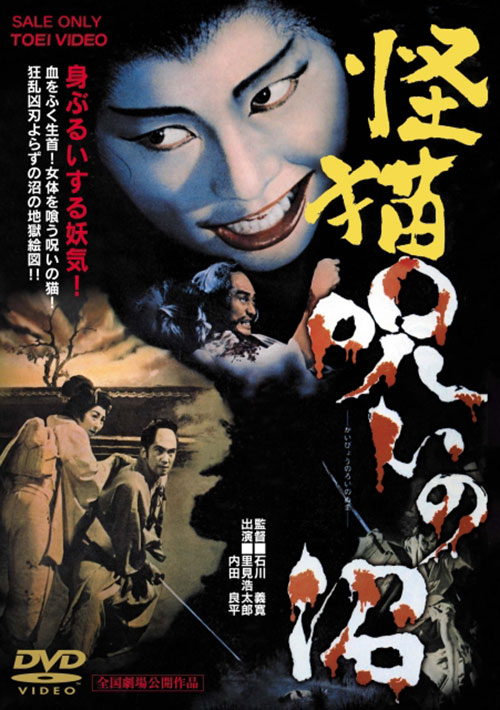
SALEM HORROR FEST: Bakeneko: A Vengeful Spirit (1968)

EDITOR’S NOTE: This movie was watched as part of Salem Horror Fest. You can still get a weekend pass for weekend two. Single tickets are also available. Here’s the program of what’s playing.

Held in conjunction with the Miskatonic Institute of Horror Studies’ presentation of Alexandra West’s multimedia lecture The Cat Came Back: Feline Familiars in the Horror Genre, the new 2K restoration of Bakeneko: A Vengeful Spirit screened this weekend at Salem Horror Fest.

Also known as Ghost Cat of the Cursed Pond, this explains what happens when Nabeshima Naoshige murders Ryuzoji Takafusa in an attempt to get his land, his power and his wife Lady Takafusa, who would rather drown herself and her cat familiar in a swamp than suffer underneath this man. Also: Takafusa is killed by being sealed up in clay.

Years later, Naoshige has learned nothing and tries to assault another woman, Yukiji (Kyoko Mikage), then claims that he will behead her entire family if she doesn’t leave her fiancee Yuki Jonosuke (Kotaro Satomi) for him. The young lovers are faced with a horrible choice before they find Lady Takafusa’s cat mud-caked cat on the shore. It has not forgotten the past and is thirsty for blood and ready to take revenge for the lives stolen by the rich and powerful. You get what you ask for when you anger the spirits of the swamp during the festival meant to appease them. As Yukiji and Yuki die in the swamp, the cat drinks deep of their plasma and sets into motion its horrific reprisal.

Soon, one of the many wives of Naoshige, Lady Hyuga (Machiko Yashiro) has clawed hands — yes, like a cat — and is feasting on the many severed arms of her victims.

Director and writer Yoshihiro Ishikawa covers this film in inky darkness and by the end, unleashes severed arms crawling for the dead, beheadings, psychotic freakouts and the entire family of Noashige paying for his behavior. Ishikawa also directed The Ghost Cat of Otama Pond and wrote Mansion of the Ghost Cat if you need more Kaibyo — ghost cat — films. There’s also KuronekoBlind Woman’s Curse and Hausu.

This one has a truly hateable villain, doomed heroines and that ghost cat whose eyes cast a shadow across everything in this film. A magical exploration of myth and cinema; one that I can’t wait to watch again when Severin releases it this year.