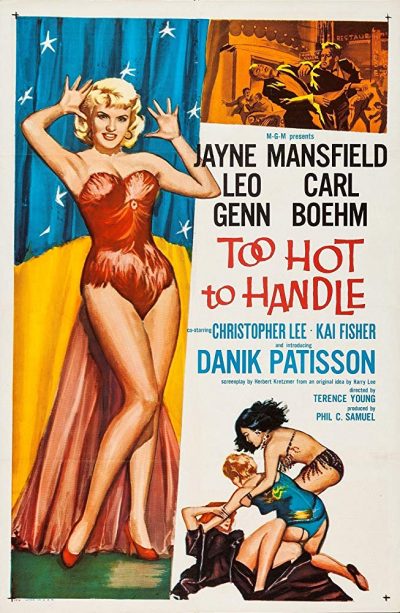
Too Hot to Handle (1960)

Released in the U.S. as Playgirl After Dark, this was Jayne Mansfield’s first film away from 20th Century Fox after her star started to dim. The studio loaned her out for this British drama, directed by Terence Young (Dr. NoFrom Russia With LoveThunderball, The Klansman).

While billed as “an exposé of ‘sexy, sordid Soho, England’s greatest shame,” the film may not appear all that scandalous today. But in 1960, Mansfield’s see-through outfits and sexy music numbers kept the movie out of American theaters until puritanical heads cooled. Playboy came to the rescue of horndogs everywhere — I mean, discriminating gentlemen — and showed several shots of the film to build interest.

Mansfield plays nightclub siren Midnight Franklin, who wants her man Johnny Solo  (Leo Genn, Lizard In a Woman’s Skin) out of the business of owning the Pink Flamingo. When an underage dancer named Ponytail (Barbara Windsor, who was in nine Carry On movies) is killed, the cops and the crooks are all over Johnny. One of those underworld types is a very young Christopher Lee.

You can watch this on YouTube.
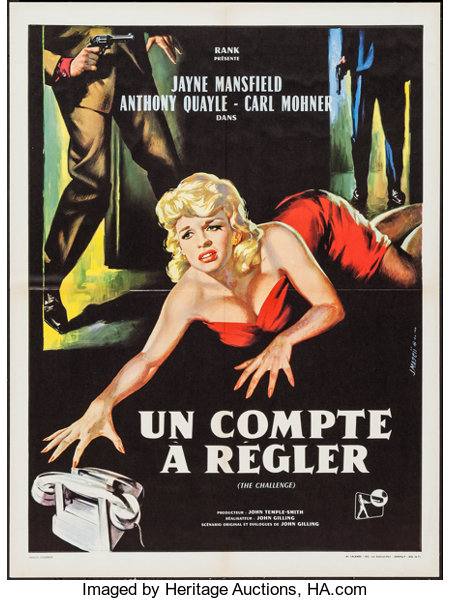
The Challenge (1960)

Released in the U.S. as It Takes a Thief, this U.K. film has Jayne Mansfield as Billie, who acts demure by day but leads a gang of robbers at night. One of their old members, Maxton, went to jail and they think he knows where the big score they made got hidden. They take his son, despite the ending which lets everyone know that the money had been found three years ago.

The cast includes Anthony Quayle (The Guns of Navarone), Peter Reynolds (Devil Girl from Mars) and Robert Brown (who was M in the Bond films from Octopussy to Licence to Kill).

Director John Gilling has a pretty good resume of films in his history, like The Flesh and the Fiends, The Plague of the Zombies and The Mummy’s Shroud. This isn’t the best interesting movie you’ll see, but as always, Mansfield rises above the material.

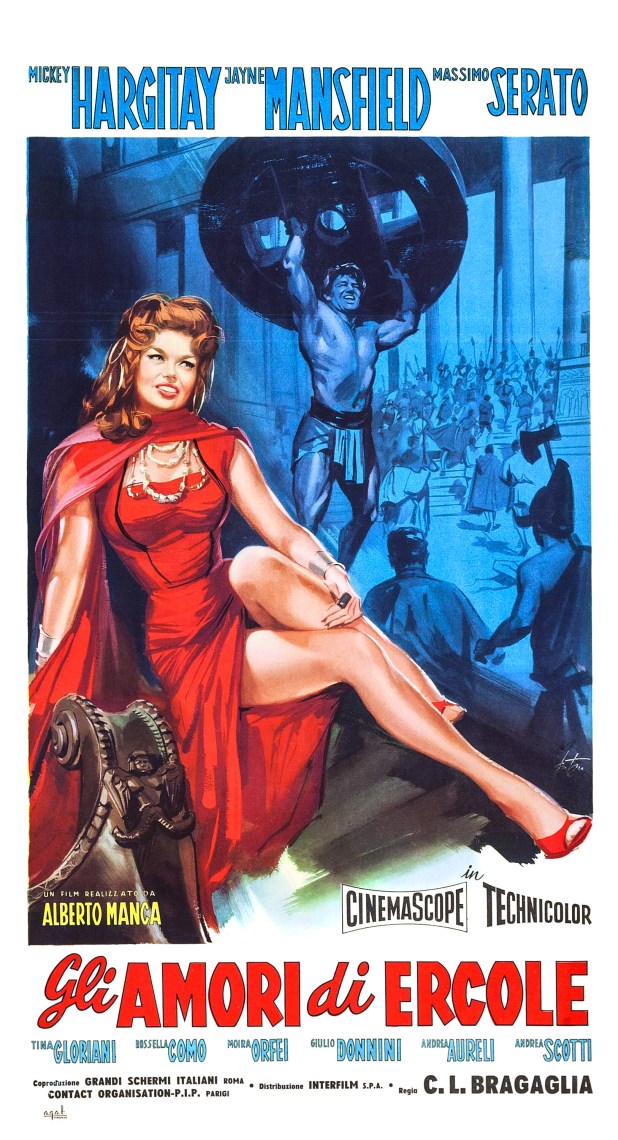
The Loves of Hercules (1960)

Also known as Hercules vs. the Hydra, this Carlo Ludovico Bragaglia-directed peblum starts with Hercules’ (Mickey Hargitay) empire being invaded by the villainous Licos (Massimo Serato, Don’t Look NowThe Humanoid) and his bride killed by the army of Ecalia. Hercules goes wild and is only stopped when the king is murdered by an unseen hand and his daughter Queen Deianira (Jayne Mansfield!)

The rest of the film involves Hercules pining for the queen, who is already married, Licos trying to get with her and Hippolyta, queen of the Amazons, turns all of her lovers into trees and makes herself look exactly like Deianira to try and get with our hero. Oh yeah — there are also battles with a hydra and a bigfoot looking beast.

Filmed on location in Italy during the height of the sword and sandal era, Mansfield was offered the film while she was shooting The Sheriff of Fractured Jaw in Spain. She agreed as long as Hargitay got the lead. She was four months pregnant while making this movie.

Look, any movie where Hercules saves Jayne Mansfield from a mad bull by wrestling it is going to win me over.

You can watch this on YouTube.
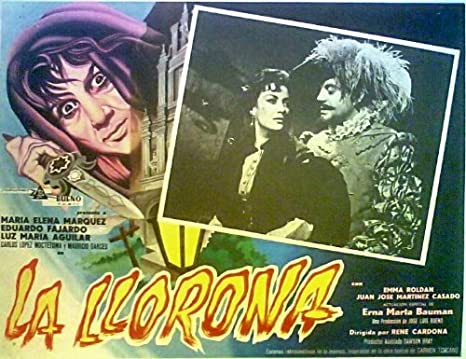
La Llorona (1960)

Rene Cardona directed this take on the Crying Woman of Mexican legend. It starts with newlyweds being told the legend and flashes back to the origin of the story, where a woman named Luisa is spurned by her husband for not being pure Spanish. She kills their children before being put to death. The reason the story is being told to them? Because the bride is a descendent of the conquistador who wronged Luisa. Now, his entire family has been cursed to die violently.

I’ve joked that every few years, we get a new and worse retelling of this legend. Luckily, this is one of the better versions, with an ending filled with some genuine fright and doom. When viewed by modern audiences, it will seem slow and like a stage play, but to me, that was part of its charm.

You can watch this on YouTube.
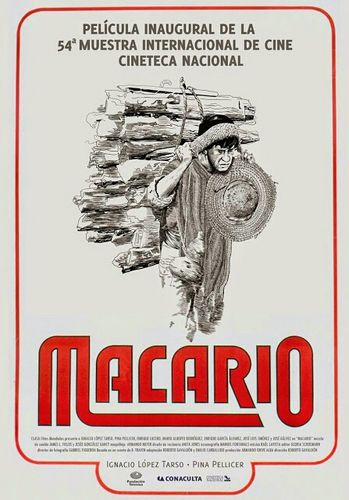
Macario (1960)

The first Mexican movie to be nominated for an Academy Award for Best Foreign Language Film, it was also entered into the 1960 Cannes Film Festival. It’s based on the B. Traven novel The Third Guest and is loosely based on an old border legend. It also bears similarities to the Grimm Fairy Tale Godfather Death or The Death’s Godson. It was directed by Roberto Gavaldon.

Poor, hungry peasant Macario longs for just one good meal on the Day of the Dead. In fact, he’s so hungry that after seeing a parade of turkeys, he says that he will no longer eat until his dream of eating an entire roast turkey. His wife steals him one as he goes off to work.

As Macario prepares to eat, three men appear to him. The first one is a fine gentleman who is the Devil and the second is an old man. Macario refuses to share with them, as he believes they are powerful enough to get the food  themselves. But a third man, a peasant much like our hero, gets the turkey right away. And that man is Death.

Death is touched by this and becomes friends with Macario, but they never speak, merely stare at one another. He also gifts him with magical water, which can heal any injury. That gift will lead him through all manner of toil and trouble and one final meal with Death.

You can watch this on YouTube.


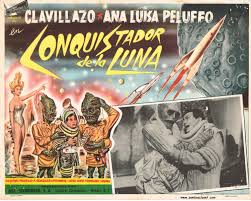
Conquistador de la Luna (1960)

Rogelio A. Gonzalez directed two of the movies that I feel most strongly about when it comes to classic Mexican science fiction and horror: The Ship of Monsters and Dr. Satan vs. the Black Hand. Both of these movies refuse to play by any rules of the genre and mix humor with outright shocks. They also make frugal use of their budget to craft truly fantastic vistas that some would say were impossible to craft for the money.

This film, however, is a vehicle for Mexican comedian Antonio “Clavillazo” Espino, who plays a bumbling fix-it man who finds himself on a rocket for the moon and up against four-armed aliens that look way more frightening than this simple film would deserve.

The aliens are led by an even more intimidating creature, a large brain that floats around on its own power that would have scared the absolute pants off of me had I seen this as a kid. More of the brain! More of the aliens! Less of the hijinks!

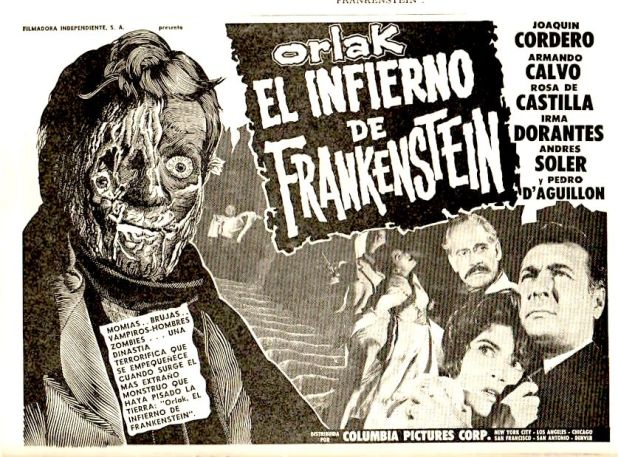
Orlak, El Infierno de Frankenstein (1960)

Rafael Baledon was an actor and director who also created the 1963 film The Crying Woman. Here, he makes his own take on the Universal Frankenstein mythos with a film that is broken into four parts, as by splitting it up into four sections like a movie serial, Baledon was able to get around some Mexican union laws.

Jaime Rojas (Joaquin Cordero, Vacation of Terror 2Dr. Satan) has just been released from jail when he helps Dr. Frankenstein escape from prison. The scientist succeeds one more time in making new life in the form of the bestial Orlak, a monster with Rojas’ face that the evil doctor controls via radio waves to kill numerous men, women and even a baby.

Orlak, The Hell of Frankenstein was written by Carlos Enrique Taboada, who would go on to become perhaps one of the most important voices in Mexican horror. I’d point to his movies Even the Wind Is AfraidPoison for the FairiesThe Book of Stone and Blacker than the Night is examples of prime storytelling and talent.

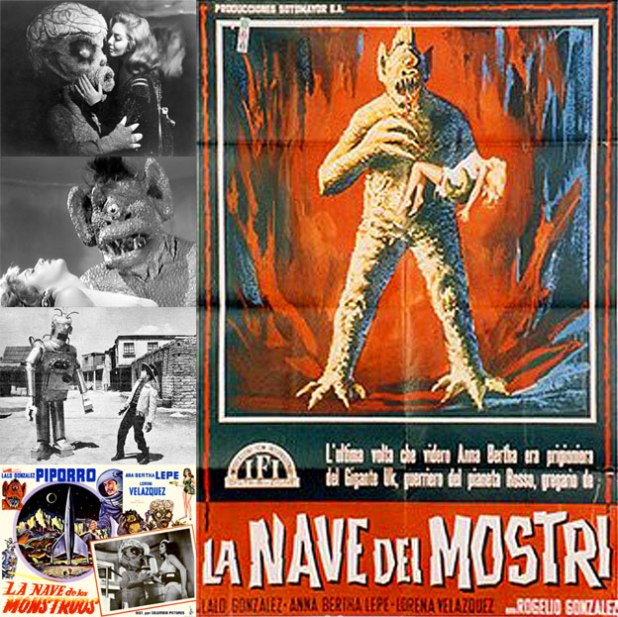
La Nave de los Monstruos (1960)

Rogelio A. Gonzalez made more than 70 movies, but I wonder if he ever made anything near as good as this movie, which is perhaps one of the strangest films I’ve ever had the delight to witness.

I was wondering how to even describe this movie. Basically, Gamma (Ana Bertha Lepe, Miss Mexico 1953 and a third-runner up for Miss Universe) and Beta (Lorena Velazquez, Miss Mexico 1960 and also Zorina queen of the vampires in Santo vs. Las Mujeres Vampiro) have come from Venus to find men to repopulate their planet. Of course, they can’t resist biting people or falling in love with Lauriano (Eulalio “Piporro” Gonzalez, one of the kings of golden age of Mexico comedy and the literal embodiment of Northern Mexican culture), a singing cowboy.

Sure, that would set up a great movie, but this is Mexico. Which means that the ship has a robot named Tor who is collecting a whole bunch of monsters — why, the title translates as Ship of Monsters, surprise! — and those monsters are about to go crazy. There’s Uk the cyclops, the many armed Carasus, Prince of Mars Tagual, Utirr the spider and the dinosaur skeleton named Zok. Also, Tor falls for a jukebox. And some of the special effects were ripped off from the Russian movie Road to the Stars.

Imagine if Ed Wood lived in Mexico, had a better budget, lucked out and had magnificent actresses willing to wear swimsuits and high heels, as well as a singing cowboy. Then we’d cut open slice open a peyote cactus and make him sit in a cave until he made this and it still might not this charming and odd.

You can watch this on YouTube.

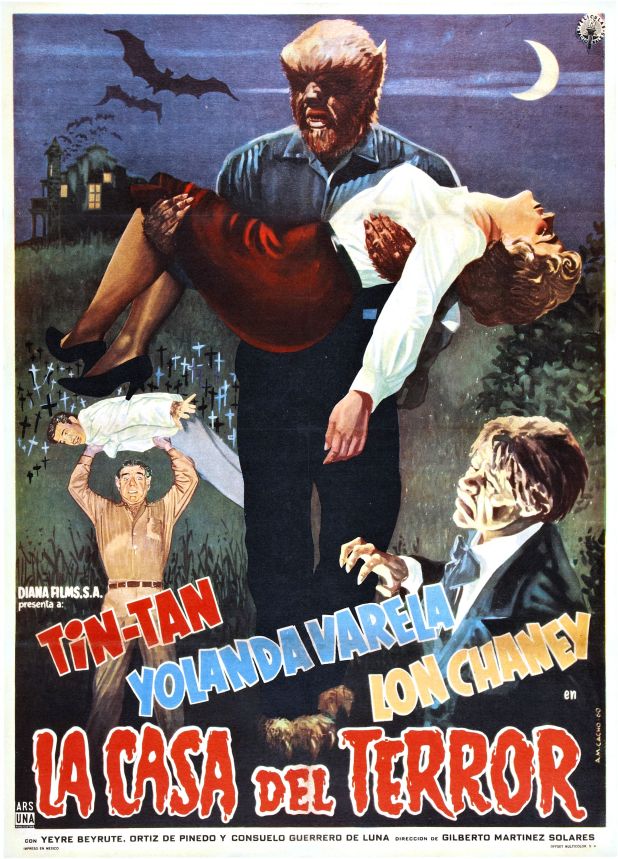
La Casa del Terror (1960)

Casimiro (Mexican comedian Tin Tan) is the lazy night watchman for a wax museum, but the reason why he’s been so sleepy is because his boss has been draining his blood and using it to bring the dead back to life, including a mummy who is also a werewolf! Yes, that’s Lon Chaney Jr., flying to Mexico in 1959 to make this totally bonkers movie.

It takes seeing his girlfriend get taken and his boss killed by the werewolf to get our hero to act, at which point he kills a werewolf in the traditional way: he beats it to death with a torch and sets everything on fire.

Jerry Warren bought the film and combined fit with La Momia Azteca, edited out all the comedy, kept all the Chaney, shot some new footage and renamed it Face of the Screaming Werewolf. Movies are amazing, huh?

You can watch this on YouTube.

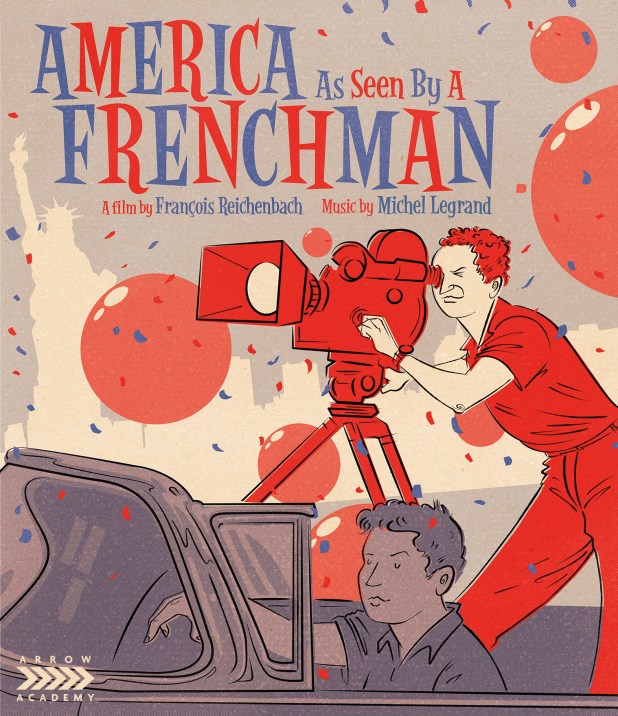
America As Seen By A Frenchman (1960)

Known in France as L’Amérique Insolite, or Unusual America, this film is all about the 18 month journey that Francois Reichenbach, who shot the video for Serge Gainsbourg and Brigitte Bardot’s “Bonnie and Clyde” as well as parts of F for Fake) took across America.

With a script by Chris Marker and narration by Jean Cocteau and June Richmond (Paul Klinger did the German version), this is a playful look at America before the many changes that the 60’s would bring. From prison rodeos to Miss America, Disneyland to a town of twins, this film captures the eccentric side of America, including a shocking moment where a rider continually pushes a horse to greater heights, diving into a small pool of water. While this image is upsetting, the dialogue juxtaposed with it is uplifting: “The golden age is the only time when magic is called by its proper name. It’s the only time when you need to believe in miracles. When pigeons fly, horses fly. Angels fly. Man flies.”

While this film was released two years before Mondo Cane, make no mistake. It is a mondo film. That said, this is the gentle side of mondo, a movie given to the celebrations of small dogs at play on Fire Island. It’s utterly charming.

This has just been released by Arrow Video with new English subtitles and a 1080p presentation. I totally didn’t expect to fall in love with this film, but I did. You can get it right here.

DISCLAIMER: This was sent to us by Arrow Video.