EDITOR’S NOTE: The Black Room was on Chiller Theater on Saturday, February 5, 1966 at 1:00 a.m., Saturday, September 24, 1966 at 11:30 p.m., Saturday, November 4, 1967 at 1:00 a.m. and Saturday, March 28, 1970 at 1:00 a.m.
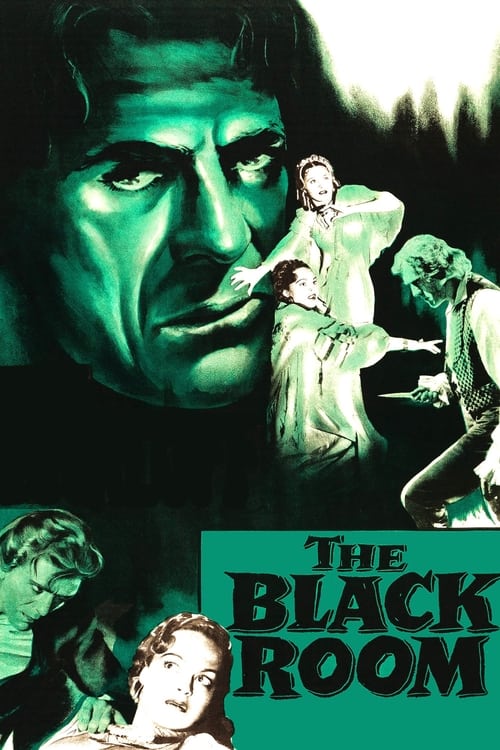
Directed by Roy William Neill — who gets mystery, after all, he directed eleven of the fourteen Basil Rathbone-starring Sherlock Holmes films as well as early noir like Black Angel — and written by Arthur Strawn and Henry Myers, The Black Room has a prophecy at its center: at some point, the younger brother of the de Berghmann family is cursed to kill his elder in the Black Room of the castle. Hmm — seems like something that would show up nearly forty years later in The Red Queen Kills Seven Times.
Boris Karloff seems to be having the time of his life in this movie, playing the dual role of the kindly Anton de Berghmann and his depraved brother Baron Gregor de Berghmann, who is about as blasphemous as the Hayes Code would allow. After all, he’s known for randomly killing the wives of the simple folk that make up his people.
When servant girl Mashka (Katherine DeMille) disappears, the people have had enough and take their pitchforks and torches to the castle. The Baron claims that he will be leaving forever, giving the kingdom to his more genial and popular brother. As they sign the papers in secret, the Baron leads Anton to his Black Room. By that, I mean he drops him like thirty feet into it and before Anton dies, he sees the dead body of Mashka and plenty more women.
Now, the Baron acts as Anton — even pretending only one of his arms works — and manipulates Thea (Marian Marsh), the daughter of family advisor Colonel Hassell (who also gets killed), into marrying him instead of her true love Lt. Albert Lussan (Robert Allen), who is jailed. Just when there’s no hope, Anton’s dog interrupts the wedding and basically shoves the man who killed his master into the pit that is the Black Room as the Baron is impaled on a knife held in his dead brother’s hand, fulfilling the prophecy.
This was shown often on TV as it was part of the Son of Shock package, along with Before I Hang, Behind the Mask, The Boogie Man Will Get You, The Face Behind the Mask, Island of Doomed Men, The Man They Could Not Hang, The Man Who Lived Twice, The Man With Nine Lives, Night of Terror, The Devil Commands, Black Friday, The Bride of Frankenstein, Captive Wild Woman, The Ghost of Frankenstein, House of Frankenstein, House of Dracula, The Invisible Man’s Revenge, The Jungle Captive, The Mummy’s Curse and The Soul of a Monster.
It’s a really fun — and fast moving — movie with a huge cast of extras, making it seem like a way bigger movie than it really is.
An ancient witch named Olena (Tetiana Malkova) from the Ukrainian town of Konotop has given up her powers to fall in love with a mortal man, Andriy (Taras Tsymbaliuk). However, as we all know, Russia invader the Ukraine, which also happens in this film. As they’re pulled over by a group of soldiers, her lover reacts strongly to them touching her — by the way, when they ask her what the name of her dog is and she replies, “Ozzie, like the band,” and they say, “What about Pantera?” I guess it’s become international shorthand for racist baddies to be Cowboys from Hell — he’s killed and she barely makes it to the home of her Aunt Evdokiya (Olena Khokhlatkina). She decides that it’s time to get her power back and along the way, kill every single soldier that sets foot in the Ukrane.
As the Russians literally rape and murder their way through what they see as enemy territory, Olena gives in to her ancient ways and starts to kill them off, one by one. Some see visions of her and drive tanks over the bodies of their fellow soldiers. Others are overcome by fear and kill themselves. And still others have centipedes crawl out of their dickholes, which is something that I have never seen before. You can still be surprised and you know, that’s nice.
It feels a little exploitative but isn’t that every movie I watch? How often will you get to see a tree covered with the skin and blood of several horrible soldiers that have dared to hurt women? The effects are pretty good, the gore is non-stop and it moves quickly enough. I laughed several times at just how far it goes and if you’re wondering, the dog survives to remind our heroine that she can be good. So many people in this can be killed and scarred for life but if that little pup got the slightest injury, I would have been so upset.
Fabio D’Orta’s The Complex Forms has such an interesting concept: A group of men, desperate for money, have come to an ancient villa where they are told all of their problems will be solved if they sell their bodies to a mysterious entity. What follows looks and feels unlike any movie I can think of.
With one creative force — and just a three person crew — doing everything from directing and writing to the cinematography, score and special effects, this is obviously a passion project.
Is it worth 10,000 lira for Christian (David White) to be possessed by something for 12 days? Not when the monsters come from the forests, huge dark ancient things covered in jewels and slouching in an inhuman march forward. These are some of the most unique effects I’ve seen in some time and I was taken aback by just how strange and horrifying they are. It sounds like hyperbole but it’s true: these are the most unique behemoths since H.R. Giger’s xenomorph.
This is something else and demands to be experienced. If you plays near you or when it starts online, make a point to see it.
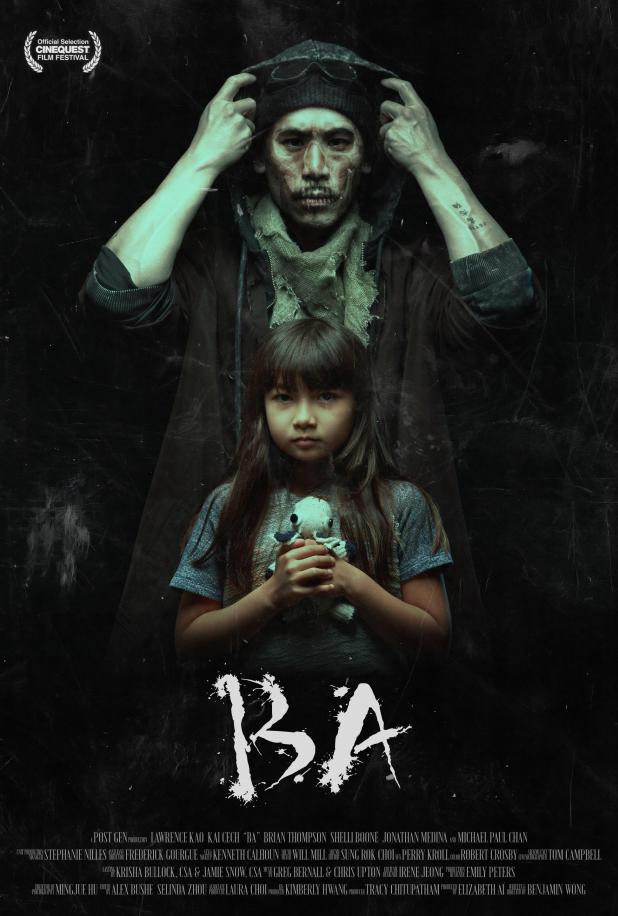
Daniel (Lawrence Kao) wants to remain with his young daughter Collette (Kai Cech) and the only way that he can make enough cash to do that is to become the Grim Reaper. When he needs to, his face becomes a skull and all he has to do is touch someone to kill them and he must never tell his child. I mean, how would you?
Director and writer Benjamin Wong has created a movie that isn’t about the herky jerky possession jump scares of modern horror, but instead about a relationship between a father and his daughter, as well as the love they have for each other. This also reminds me of the massive debt that so many of us have to take on, not just emotionally but monetarily, as a strange man keeps coming for tokens from each kill, reminding Daniel that he owes eleven times what he has borrowed.
By the end, Daniel must remain hidden so no one can see his face and he watches as a social worker by the name of Macey (Shelli Boone) takes Collette away to a foster family who can give her the life she truly deserves. What an intriguing concept and one well made, too.
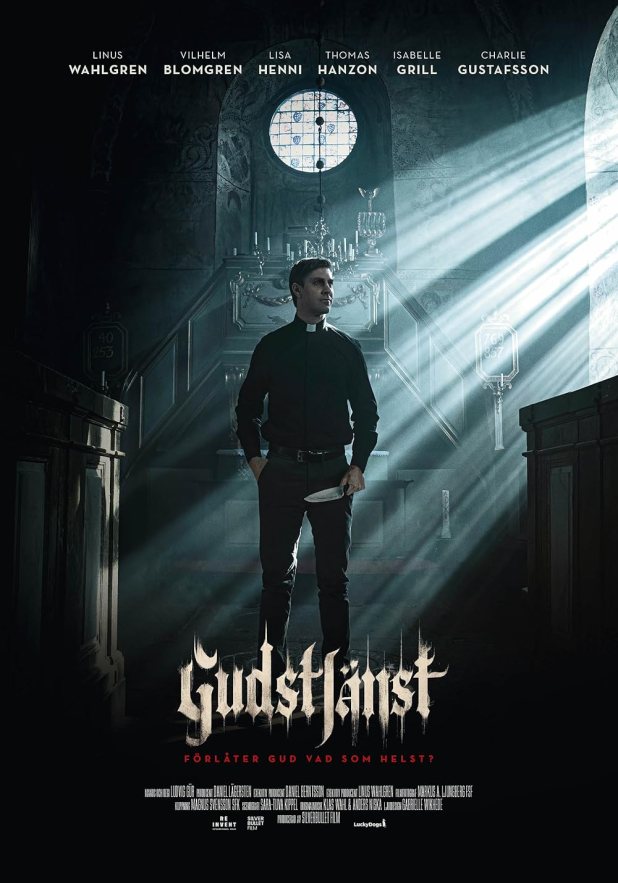
Directed and written by Ludvig Gür, Gudstjänst — which is being released in the U.S. as In the Name of God — is about Theodor (Linus Walhgren), a priest who is often the only person at his masses. The worshippers are dying off and his wife Felicia (Lisa Henni) wonders if they should move on. He’s happy that his mentor Jonas (Thomas Hanzon) has come to town. The problem is that it seems like he may be deranged. After all, he just killed a dove right in front of him and sprayed him with hot blood.
Yet when Felicia collapses and is soon hospitalized, dying from a mysterious ailment, Jonas offers to save her if Theodor follows him just as he did by going into the priesthood. Now, he must accept the true priesthood of God and kill sinners to save his wife’s life.
Jonas has already captured a rapist and all the younger man has to do is snuff out his sinful life. He does. His wife is healed. He becomes known as a faith healer and people come back to the church. His wife is with child. God has a plan.
Yet to make the prayers of his new followers come true, he must keep killing. Because the God who has listened to Theodor is the Old Testament one, the vengeful demander of sacrifice, the God that asked Abraham to murder his own son just to see how far he would go.
This is the very definition of a moral quandary. Isn’t murder a sin? Yet aren’t the people who Theodor is hunting and destroying evil incarnate? Isn’t all this murder making the world a better place? And if he can make miracles happen at the same time, isn’t that God’s will? Can you become addicted to creating magic happen in the lives of those who follow your teachings?
Witte wieven are the “white women” or “wise women” of Dutch Low Saxon origins. They were female herbalists healers who also could see the future.
In this film by director Didier Konings and writer Marc S. Nollkaemper, Frieda (Anneke Sluiters) is judged when she is unable to produce a child with her husband Hikko (Len Leo Vincent). Despite being a devout woman, when she emerges from a night of horror in the forest when Gelo (Leon van Waas) assaults a young girl named Sasha and almost takes her as well, everyone claims that she has become a witch.
The society that she lives in is one where she’s not even allowed to lead a prayer and where her husband can’t been infertile. Instead, she is the problem and even her self-flagellation isn’t good enough as he stops her and whips her the right way.
After visions of the white women, Frieda brings the forest to life, impaling Gelo multiple times and finding so many trees that have done the same to horrible men for centuries. Who blames her for running to those trees forever, leaving behind the patriarchy that has never seen her as anything other than property?
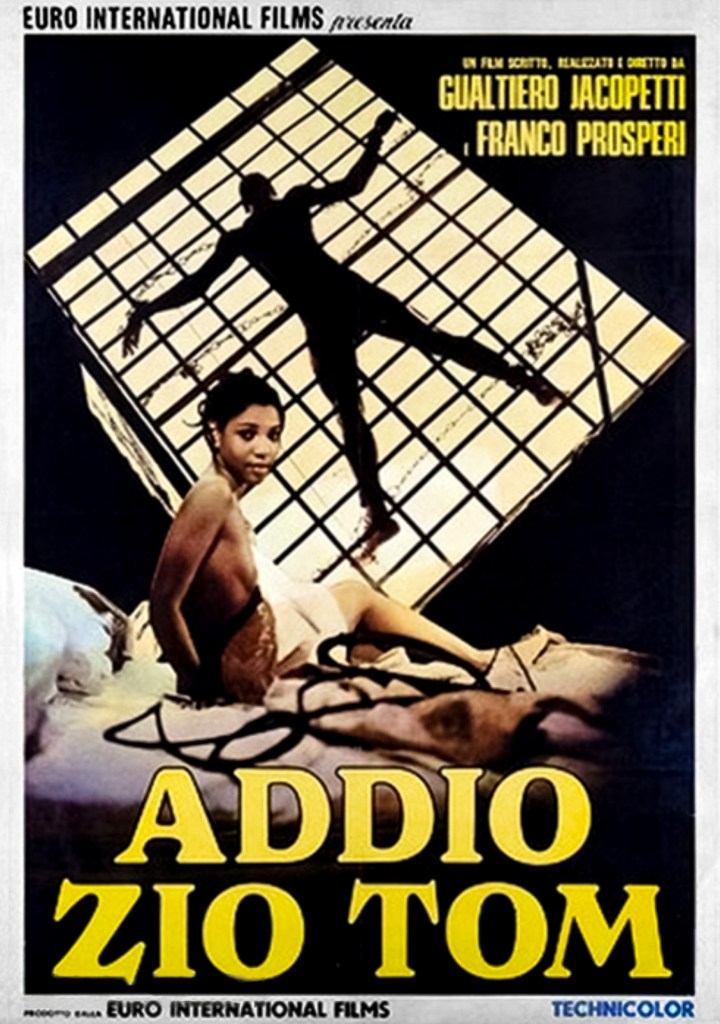
Goodbye Uncle Tom (1971): Five years after Africa Blood and Guts, Gualtiero Jacopetti and Franco Prosperi returned with this movie, which is pretty much one of the roughest films I’ve ever made it through.
This was shot primarily in Haiti, where the directors were the guests of Haitian dictator Papa Doc Duvalier, who gave them diplomatic cars, clearance to film anywhere on the island and as many extras as they required to be used as slaves being treated exactly as slaves were. They were also invited to a nightly dinner with Duvalier himself.
If your mind isn’t already blown, stick around.
Goodbye Uncle Tom is based on true events in which the filmmakers explore America in slavery times, using published documents and materials from the public record to make what they consider a documentary, even claiming to go back in time to achieve this level of realism.
This movie was made in opposition to the claims that Africa Blood and Guts was racist. It didn’t work, as Roger Ebert would say, “They have finally done it: Made the most disgusting, contemptuous insult to decency ever to masquerade as a documentary.” He also stated that “This movie itself humiliates its actors in the way the slaves were humiliated 200 years ago.”
The movie was originally released in Italy in a 119-minute version and was immediately withdrawn. I’ve read that the directors were sued for plagiarism by writer Joseph Chamberlain Furnas. It was then re-released with 17 more minutes of footage.
The director’s cut shows a comparison between the horrors of slavery and the rise of the Black Power Movement, ending with an unidentified black man’s fantasy of living out William Styron’s The Confessions of Nat Turner. In that book, Turned is divinely inspired and given a mission from God to lead a slave uprising and destroy the white race.
This ending upset American distributors so much that they forced Jacopetti and Prosperi to cut more than thirteen minutes of racial politics that would upset their audiences. Pauline Kael still said that the movie was “the most specific and rabid incitement to race war,” a view shared with former Ku Klux Klan leader David Duke, who said that Goodbye Uncle Tom was a Jewish conspiracy to incite blacks on white violence.
This movie is not for everyone. But I feel that it needs to be seen. I rarely get political on this site, but in truth, I feel that we as a country have not done enough to understand the roots of the black experience. While an Italian exploitation film isn’t the best way to learn more, it’s a start.
It’s no accident that Cannibal Holocaustwould eventually use the music of Riz Ortolani to juxtapose the horrific images on screen with the beauty of his compositions. The composer had been working with the duo since Mondo Cane, where his song “More” nearly won an Oscar.
But make no mistake that this movie, while intending to be educational and anti-racist, still employs the tools of the mondo and exploitation. How else do you describe the conceit that these filmmakers have gone back in time, taking a helicopter with them that they use to fly away from the terrors of the plantation at the end?
In 2010, Dr. David Pilgrim, the curator of the Jim Crow Museum of Racist Memorabilia, said that when he showed this film to a class, it led to some major traumas. “On the day that we watched Goodbye Uncle Tom three students had unexcused absences, several cried while watching, one almost vomited; most sat, sad and disgusted. I taught for another fifteen years but I never showed that movie again.”
He went on to say that the film “is a more truthful portrayal of the brutality and obscenity of slave life than was Roots; however, I have some major problems with the film. I find it ironic that a movie that explored the exploitation and degradation of Black people was filmed in a way that exploited and degraded Black people. In some ways Goodbye Uncle Tom was just a XXX movie set against the backdrop of slavery; the “peculiar institution” served as an excuse to show sexual and violent gore. Jacopetti and Prosperi told a great many painful truths about slavery but they debased hundreds of Blacks to make the film.”
“I said all of that to say this: Jacopetti and Prosperi were not the messengers that I would have selected, and their implied assumptions about Blacks are troubling, but they made a movie that accurately portrayed the horrors of slavery. Of course, it is the case that a realistic depiction of the savagery of slavery would be difficult to watch no matter who made it. This is why when you finish watching Roots you may feel that a family has overcome great oppression and a nation has become more democratic; whereas when you finish watching Goodbye Uncle Tom you just feel sick to your stomach.”
That says a lot about this movie in a better way than I can, but I’m still going to try to sum it up: this is a well-made movie that may have been made with the best of intentions, but was made by two people who only had the experience to make exactly what they made. It is a movie made about slavery that used slave labor. It is a movie that offended both liberals and conservatives, those that believed in tolerance and those that were racist, those that were black and people who were white. This is a message movie that had its message taken away by American producers, leaving two hours of shock with none of the moral it so desperately needed.
If this movie upsets you, perhaps you needed to be upset. You should be less upset about a movie made nearly fifty years ago and more upset about our nation’s history of racism and intolerance. And you should definitely be upset about the lack of civil rights in our country today, which no matter who is President continually must face challenges.
The Importance of Shocking: Gualtiero Jacopetti (2009): Included with the Goodbye Uncle Tom 4K set, this documentary by Andrea Bettinetti attempts to tell the story behind the man who made Mondo Cane.
Beyond the behind the scenes footage of the mondo films being created, this documentary gets into the journalism career of Jacopetti, which includes a scandal as the paper he worked for, Cronache, published photos so scandalous of Sophia Loren that he earned a one-year jail sentence. What I did not know was how influential his work on newsreels were, which went away from just reporting the news and expanded to cynically comment on events.
According to “Jacopetti’s Sexual Celebrity” by Dalila Missero, “Jacopetti was a famous journalist who was involved in a series of sex scandals, including episodes of paedophilia, prostitution and rape, which had made him a much discussed figure in the Italian media and entertainment system for almost a decade. ” The film does not shy away from this, as it explains how he had to marry a gypsy girl for some time before the marriage was annulled to escape from one of these charges.
This also goes deep into the 1961 car crash that claimed the life of his girlfriend, Belinda Lee, who Jacopetti was buried next a half century later. Beyond having compound fractures, his depression was so deep that American doctors were treating him with a cocktail of drugs that would stun several people.
He’s just as complicated as the films that he made. Hard to defend, yet also someone whose work has merit; if it were simple documentary and not exploitation, it would be celebrated. Yet the mondo genre is born in the gutter, even if it inspired today’s media. I walked away from this still unsure how I felt about Jacopetti, just like how I always feel strange watching his films. Beyond normal sleaze, you feel complicit in them as a viewer, as if you are condoning the ways in which they were made and the moments that they capture.
The Godfathers of Mondo (2003): Directed by David Gregory, this documentary attempts to explain not only the appeal of mondo and the films of Gualtiero Jacopetti and Franco Prosperi, but whether or not they were guilty of war crimes as they filmed their mondo films.
Originally part of Blue Underground’s Mondo Cane Collection, this makes a welcome return on their Goodbye Uncle Tom release. This film may reveal that Carlo Rambaldi was hired to create the burning monk in Mondo Cane 2, yet the subjects are more guarded when having to discuss the atrocities they captured on film. These things, they claim, would still happen if they shot them or not. This is not what unguilty people say.
The strongest part of this film is that Jacopetti and Prosperi were still alive to tell their stories. Shot on their own, they each have a point of view of why they did what they did and how they were intending much of their work to be a condemnation of what they were capturing. Often, the humor and commentary was lost, particularly in America, where these things were edited from their movies. Yet the mondo is based on danger and shocking people, so you have to expect them to be controversial. That said, it seemed like these filmmakers went further every time, all the way to Goodbye Uncle Tom, a movie filmed with slaves of modern times to decry slaves of the past, where Jacopetti and Prosperi take a time traveling helicopter to the American South and reenact the horrors of slavery while wallowing in it.
I wish this had gotten more into Mondo Candido and what the duo did afterward, but this is such a rich document that it’s hard to say anything negative. Just hearing Ortolani talk about these films is something I never thought that I would hear.
The Blue Underground 4K UHD release of Goodbye Uncle Tom has both the Italian and English versions of this movie, as well as the two documentaries discussed above. It also has interviews with Jacopetti, Prosperi and Ortolani, behind the scenes photos and footage, interviews with author Mark Goodall and Professor Matthew J. Smith, the soundtrack to this movie and a collectible booklet with new essay by Dan Madigan. You can get this from MVD.
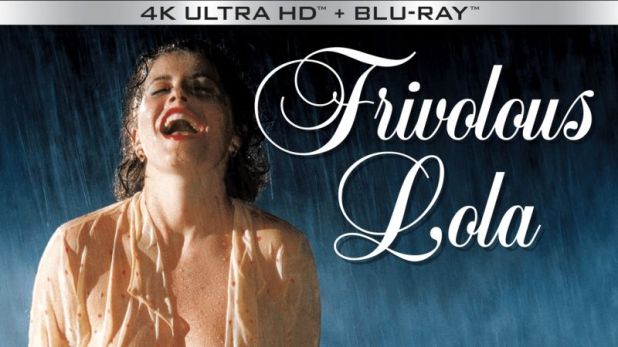
In a small town in 1950s Italy, a girl named Lola (Anna Ammirati, who director Tinto Brass met when he crashed his car into her as she was on her bicycle; she told him as a joke that if she wasn’t his next leading lady, she would sue him) rules the libido of every boy and man in town, riding her bike with her rear showing and acting as inappropriate as possible. She may be a virgin, but she doesn’t want to be. Her fiance Masetto (Max Parodi), however, is a traditional Italian man who wants to take a pure woman on his wedding night.
Her mother, Zaïra (Serena Grandi), has married Andre (Patrick Mower), a man who has raised Lola as her stepfather, yet she takes every opportunity to try to seduce him. That’s how Lola is with almost everyone, pushing men to their limits and then shocked when they want to be inside her. As for Masetto, he blows up and screams at her just about any time he’s angry, then goes and makes love to sex workers. He has different rules than his bride but she’s unwilling to embrace the past and looks to the future of how women will be treated in Italy.
There’s a great essay that comes with the Cult Epics 4K, “A Committed Brat: The Career of Anna Ammirati” by Eugenio Ercolani and Domenico Monetti. It explains who Ammirati was at the time and the actress she grew to be. I love that she says that she is the opposite of the “bionic blondes” at the time this movie was made; she looks real, feels real and even the song that she sings on the film’s soundtrack, “Mona Monella,” has an edge that you would not expect from someone who is trying with this film to be a sex symbol.
Along with a strong Pino Donaggio score, this soundtrack features plenty of era-appropriate songs, such as Carla Boni’s “Mambo Italiano,” Glenn Miller’s “In the Mood” and Curtis King Jr.’s “Let’s Twist Again,” a song that plays on a sweaty night with our couple and three American soldiers all interacting in a small bar.
Cult Epics is doing amazing things with these Tinto Brass releases. They’re like my Criterion collection, as they release the movies that I truly care about. The 4K UHD release of this movie has new audio commentary by Eugenio Ercolani and Nathaniel Thompson, trailers, an interview with Tinto Brass, a photo gallery, a double-sided sleeve with the original Italian art, a 20-page illustrated booklet with liner notes by Eugenio Ercolani and Domenico Monetti, a slipcase and lobby cards. You can get this from MVD.
23. FOR PEAT’S SAKE: Log one that takes place in a swamp or a bog.
Danny (John White, who would become the direct to video Stifler in the American Pie sequels), Phil (Dan Warry-Smith) and Angel (Charlotte Sullivan) live in a swamp where every kid talks about Gator Face. After a summer of having to behave, they decide to make a costume, dress up as the monster and prank the entire neighborhood. Then the National Guard gets called in. That’s when the friends learn that Gator Face is real and a part of the swamp.
Directed by Vic Sarin and written by David Covell, Alan Mruvka and Sahara Riley, this aired on Showtime and if I was the right age for it, I would have been obsessed by this movie. At the end, when Gator Face gives his life up to save Danny? I would have cried my eyes out. When the swamp saves Gator Face? I don’t know if I had that many years as a child.
This may be the most innocent swamp horror film that I’ve ever watched. I mean, I’m used to humanoids rising up during salmon festivals and violently assaulted women who later give birth to their clammy children.
Each October, the Unsung Horrors podcast does a month of themed movies. This year they will once again be setting up a fundraiser to benefit Best Friends, which is working to save the lives of cats and dogs all across America, giving pets second chances and happy homes.
Today’s theme: Hail Satan
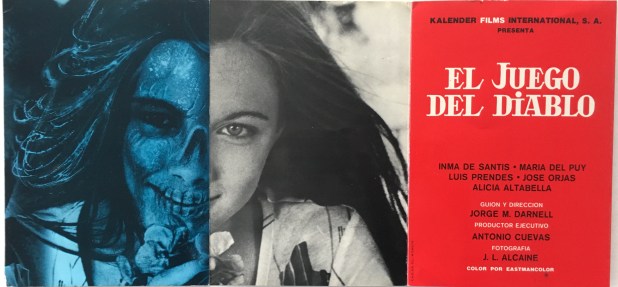
Teresita (Imma de Santis) may be a Catholic schoolgirl, but that doesn’t mean that she can’t be obsessed by a statue of a man in a dark suit, a man (José Lifante) that soon begins to follow her through her dreams. Her father (Luis Prendes) decides that she needs the help of psychologist Dr. Liza Greene (Maria del Puy), who tries to work with her but starts to lose control as Teresita becomes more violent, all while Dr. Greene’s secret lover Dr. Jack Morris (Jack Taylor) begins to abuse her.
That said, nothing will prepare you for how deranged Teresita becomes. She sneaks into a child’s hospital room and turns off his oxygen, kills her mother (Alicia Altabella) by shoving her off a balcony, murders the butler’s dog and then watches as he has a heart attack.
Of course Dr. Greene should adopt her.
There is no exorcism or religion in this. Just possession and people trying to deal with their lives because everyone in this treats one another horribly. And then, hands come out of the walls and grab young girls.
Also: How strange is it that this movie has a Tall Man in it who constantly appears well-dressed and surrounded by fog? You may known the actor who played him as the photographer in Let Sleeping Corpses Lie.
I want to know how Dr. Greene is a psychologist when we see her experimenting with electric eels and how a doctor could suddenly adopt one of their patients. I know it’s a movie, much less a Spanish ripoff, but man, these are the things that I worry about. Another question is why does Teresita have such weird stuffed animals that look like piranha?
By the end, the demon has transferred to the healer, who is frothing at the mouth and holding scissors. We don’t get any resolution, but for a film that is about a young girl and a woman unable to connect to others emotionally (and sexually, if we are to believe the things that Morris says to our doctor protagonist), ending with the idea that they’re about to use scissors on Teresita’s father makes it seem like the demon has helped at least one of them work through their problems. And look, even after being burned, those weird stuffed fish have come back.








 B&S About Movies
You must be logged in to post a comment.