Spider-Man Versus Kraven the Hunter (1974)

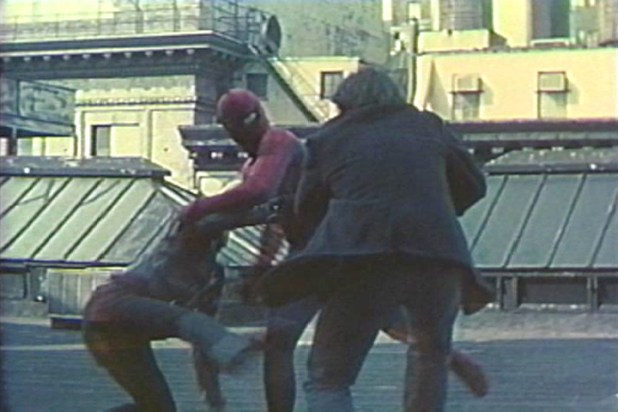
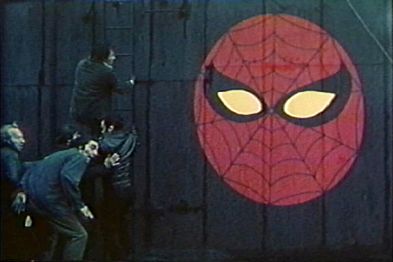
After this year’s Kraven the Hunter and Sony giving up on its Spider-Man-less Spider-Man Cinematic Universe, you may be surprised to learn that there was a fan film directed and written by Bruce Cardozo that was approved by Stan Lee.

Based on The Amazing Spider-Man #15, this all started with Cardozo writing to Lee and explaining the project. He received a very enthusiastic letter of approval — this would never happen today, least of all because Stan Lee is dead and it would be strange to get a letter back from him — saying that as long as the movie only played non-cmmercially, Cardozo could make it.

His experimental film class listened to his idea for a 16mm shot half-hour semi-professional Spider-Man and they thought it was impossible. Then, Cardozo created the  scenario, production direction and special effects while classmates Daphne Stevens and Marilyn Hecht sewed the costumes, Richard Eberhardt created the visual look — and played Spider-Man — and Art Schweitzer created the lighting effects which were to make this short stand out.

Sadly, we never see this. Cardozo, who eventually worked on The Avengers, Captain America and Thor, as well as Empire Strikes Back, Return of the JediRobot Jox and Superman IV died in 2015 and the computer that had the movie on it was destroyed. According to the Lost Media Wiki, this played in public just a few times, with “the final showings being at the Comic Book and Science Fiction Convention in Los Angeles in 2002 and 2005 at the Shrine Expo Hall.”

In that same article, it comes to light that the film was nearly stolen at one point by burglars who knew the value of the only print. Supposedly, “Cardozo had relocated to New Jersey and at that time, he entrusted the prints to his mother for safekeeping.”

I’d love to see this, particularly to see how the team handled the traveling matte effects of Spider-Man swinging across a neon New York. Keep in mind this was being made years before you could “believe a man could fly” when Superman was released in 1978.

The Hyperions (2022)

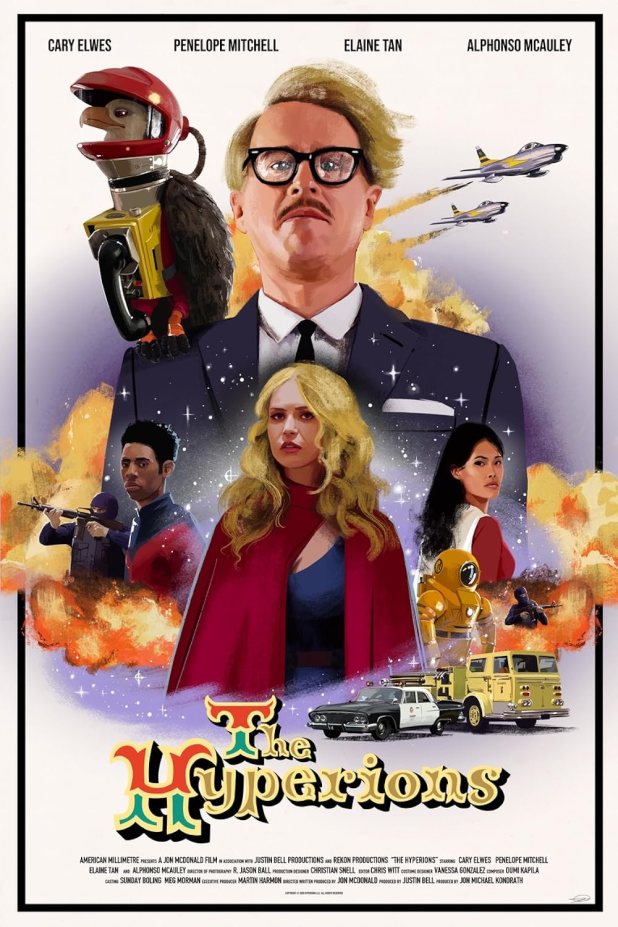
Directed and written by Jon McDonald, this film seemed to escape my radar when it came out in 2022.

Back in the sixties, Professor Ruckus Mandulbaum (Cary Elwes) invented the Titan Badge, which creates superpowers by changing the molecular structure of its wearer’s DNA. He started a family — America’s first family of superheroes — by adopting three street children: Ansel (Alphonso McAuley) who has increased strength, Vista (Penelope Mitchell) who can read minds and Maya (Elaine Tan) who can teleport.

Into the seventies, the team changes, as the children rebel against their father, sort of like how Professor X’s students, The Doom Patrol’s Chief and Sir Reginald Hargreeves of The Umbrella Academy all lost their students. Actually, this feels an awful lot like The Umbrella Academy if it were directed by Wes Anderson.

In 1979, Vista and Ansel decide that they want their powers back. It’s like a drug, one they’ve come down off of and now, they want that feeling back. They decide to steal two of the badges, not realizing that their father must scan them to make that happen. So they take the entire Hyperion Museum hostage, which brings back one of their old villains, Ares (Keli Price).

Their father has created three generations of the team by now and, like an even weirder Walt Disney, hosts a weekly show called the Hyperion Club that broadcasts the exploits of his many children. He seems unaware of the strain and damage he’s put his children through, robbing them of their powers when they decide to show any independence. He’s a more malevolent Charles Xavier, a character I never saw as much of a hero. That said, he may be so senile that his handlers are making every decision for him.

The success of this film is because of McDonald, a former animator and storyboard artist, who is able to create the visual look of two eras in this, as well a very unique take on superpowers. It’s a shame how close it hews to other comic tropes, as it feels like the lack of a third act and the way things emotionally instead of violently resolve is quite adult — and strong, to be frank — for a comic book movie.

This movie was part of the DailyWire+ streaming service, just like Run Hide Fight, Convicting a Murderer and Am I Racist? Because of that, this probably slipped under most radars. If you want to see a superhero movie that may not be perfect but has many ideas that keep it fresh, even if to get there it had to replicate some DNA, check it out.

Here’s a coincidence: Rafia Iqbal is a Canadian actress who doubled for Ritu Arya in The Umbrella Academy and is known for her role as Hyperion in the TV series The Boys.

You can watch this on YouTube.

Once a Hero (1987)

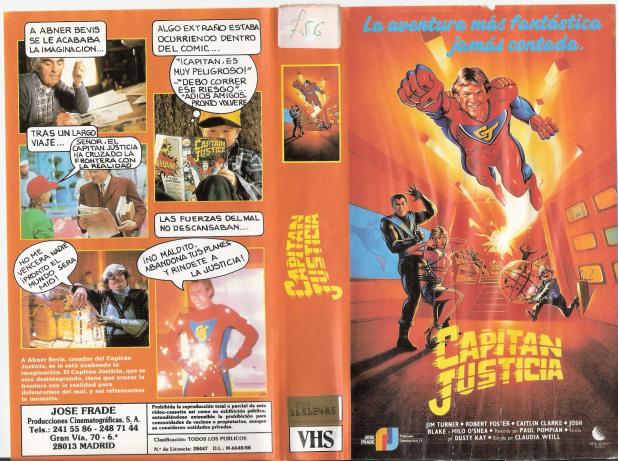
Premiering on ABC on September 19, 1987 and then lasting just three episodes, this series — created by Dusty Kay — has comic book creator Abner Bevis (Milo O’Shea) have a confidence crisis when kids tell him that his comic book hero, Captain Justice (Jeff Lester), should get with the times and start killing people. As for Captain Justice, much like the theories of Gardner Fox and how different realities would read the comics of other Earths — the Silver Age Flash knew who the Golden Age Flash was through reading and named himself for that hero — Pleasantville is a real place where things keep repeating, as Bevis is starting to lose it.

The Captain crosses over into our world to fight crime without his powers, which brings attention to him through reporter Emma Greely (Caitlin Clarke), whose son Woody (Josh Blake) is one of the kids who is part of Bevis’ focus group that wanted his heroes to get more with the times.

Why was I so excited about this? Another hero followed through the Forbidden Zone and it’s Gumshoe, played by Robert Forster! Yes, Robert Forster in a superhero sitcom! And how about when the main villain appears — Victor Lazarus — it’s Richard Lynch! There’s even an episode where the man who played the character on TV is no longer allowed to do publicity appearances and he’s played by Adam West.

This show failed before launch, as many ABC stations played Star Trek: The Next Generation instead. Marvel had planned a tie-in comic with the team of J.M. DeMatteis and Steve Leialoha, but it only made it two issues. The show was long over before that.

There were some interesting ideas, like how if people forget the heroes, they fade away forever; that the men who fought at the Alamo have become legends and live in the same world as superheroes and that Captain Justice’s girlfriend looks exactly like Bevis’ long dead wife. Yet only three episodes would air in America and there was a DVD release in Brazil, of all places, with all of the unaired episodes. A meta superhero feels a bit before its time here, but it’s quite the concept. I’d never heard about it until doing research on comic book shows I had never heard of. I was in my prime of buying comics at this point, so I have no idea how this show missed me. It would have been yet another comic TV show that I got excited about and would watch disappear.

You can watch this on YouTube.

Justice League: War (2014)

Directed by Jay Oliva and written by Heath Corson, the nineteenth film of the DC Universe Animated Original Movies and the second film in the DC Animated Movie Universe is based on the New 52 Justice League series by Geoff Johns and Jim Lee.

This is the original of the Justice League — Superman (Alan Tudyk), Batman (Jason O’Mara), Wonder Woman (Michelle Monaghan), Flash (Christopher Gorham), Green Lantern (Justin Kirk), Cyborg (Shemar Moore) and Shazam (Sean Astin and Zach Callison) — as they battle the forces of Darkseid (Steve Blum). These are new and younger heroes than you may be used to with Batman seemingly the lone adult teaching them how to work together and use their powers.

The New 52 may be gone but this cartoon formed the start of the new DC Animated Universe, followed by Son of Batman and Justice League: Throne of Atlantis. The kid in me is happy to see so much of Jack Kirby’s Fourth World in animated form, including Desaad and the Parademons.

You can watch this on Tubi.

Saturday Morning Watchmen (2009)

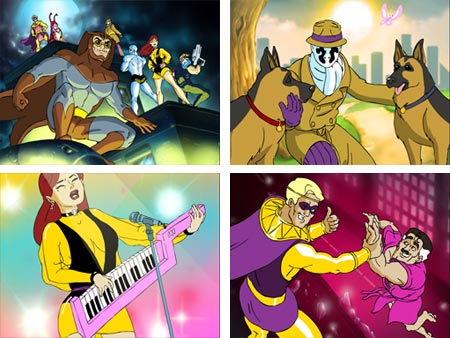
I love that this short — created by Harry Partridge and posted a day before the Zack Snyder movie was released — exists. It presents a happier version of the Watchmen, as if they were a Saturday morning cartoon, with a buff Nite Owl, Ozymandias saving the Comedian from falling, Rorschach being an animal-loving comedy character, Silk Spectre being Jem, Dr. Manhattan acting like Turbo Teen and Ozymandias and Bubastis being afraid of ghosts like Shaggy and Scooby-Doo.

There’s also the psychic squid, three Dr. Manhattans in bed and The Comedian being in love with Silk Spectre, who is his daughter. Dave Gibbons said, “The thing is, obviously they’re having fun with it but the way it was done, you know that the person really cared about what they were doing…really knew Watchmen in detail.”

Now I wish that this was an actual show, just like how I wanted the toys in the comic to exist.

You can watch this on YouTube.

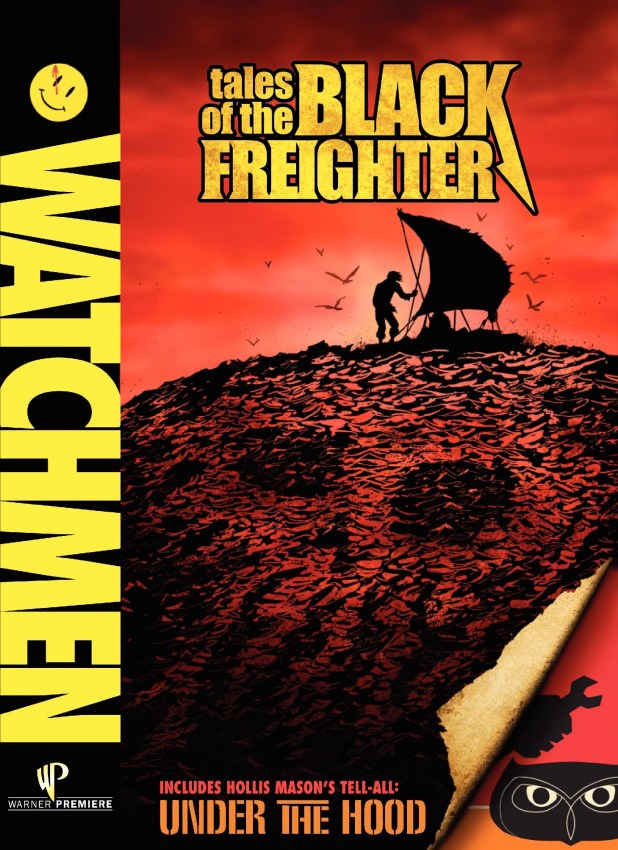
Tales of the Black Freighter (2009)

One of my favorite things about Watchmen is that in the universe of that story, superheroes are real, so comic books never needed to write about them. Instead, pirate comics became the best sellers. Published by National Comics (the original name for DC Comics in our universe) and written by Max Shea and artists Joe Orlando and Walt Feinberg (Alan Moore and Dave Gibbons in our world), Tales of the Black Freighter tells the stories of sailors who are damned by their encounters with the phantom pirate ship.

Named from a lyric from the song “Pirate Jenny” in The Threepenny Opera, the Black Freighter collects souls of men who become the crew of its blood stained decks, call at the command of a mysterious and demonic captain. At the time of its publishing in this universe, it was never seen as commercially successful as the EC Comics Piracy and Buccaneers, but as Shea developed in his writing style, his stories soon became dark and moralistic.

This cartoon adapts the story “Marooned,” in which a castaway’s increasingly desperate attempts to return home in time to warn them of the Black Freighter only lead to him being taken by it. As he rides a raft made of his dead crewmates, he fights sharks and kills numerous people, only to realize that he has murdered the very people he wanted to save.

Gerald Butler, the star of Snyder’s 300, is the voice of the man in this. Directed by Daniel DelPurgatorio and Mike Smith and written by Alex Tse and Snyder, it was intended to be part of the Watchmen movie. It’s added in the longer cuts.

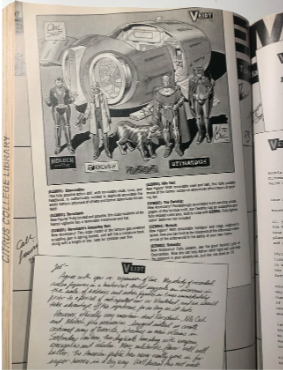
Why is this story so important? Because it’s the real story of Adrian Veidt, the villain behind everything. He is using the bodies of his former associates to get closer to the end of his world and fix things, even if he must go insane and compromise his morals.

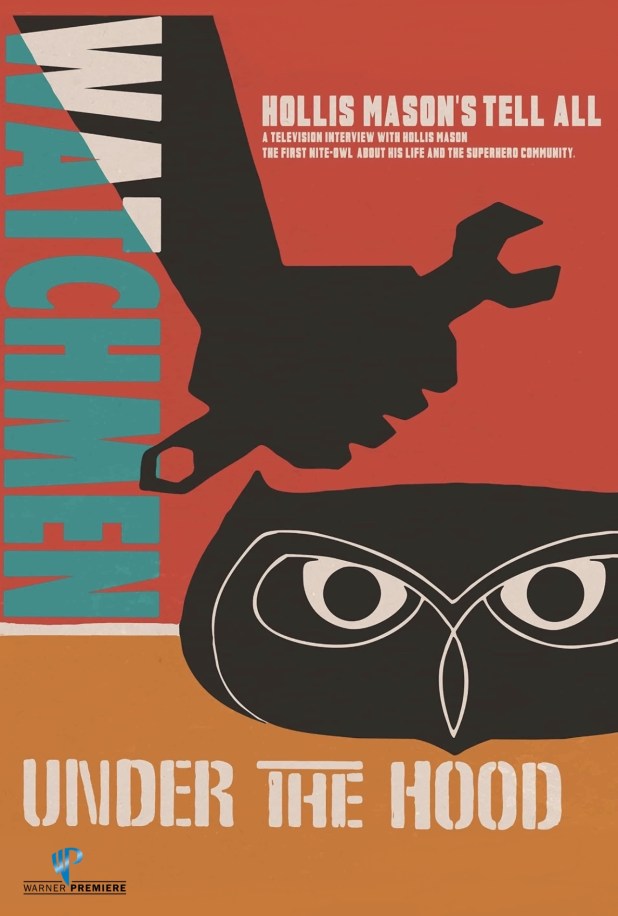
Under the Hood (2009)

Directed by Eric Matthies and written by Hans Rodionoff, who was also the writer of the two Lost Boys sequels, this was included on the Tales of the Black Freighter DVD. It’s an in-universe documentary featuring a television interview with Hollis Mason (Stephen McHattie, The People Next Door) the first Nite Owl, about his life.

Despite Ted Friend overacting as Larry Culpepper, this does an amazing job of bring an 80s TV show — complete with commercials — and telling more of the universe of Watchmen. Sure, I still have issues with the casting of the movie — Carla Gugino is way too young for Sally Jupiter — but McHattie is incredible and I enjoyed how William Long (William S. Taylor), the soon-to-be therapist for Rorschach, gets to share his thoughts on superheroes.

I wish that there was a Watchmen supplemental DVD that had more than this and the pirate comics, that gave even more background into the world of the story. But when you look at this part, it seems pretty worthwhile.

You can watch this on YouTube.

Watchmen Chapter One (2024)

Directed by Brandon Vietti and written by J. Michael Straczynski, the Watchmen animated movie gets a longer running time than the 2009 movie, which is the first good thing about it. Artist Dave Gibbons served as a consulting producer on the film, while Alan Moore, the writer, goes uncredited due to his displeasure with anyone adapting his work.

Following the script of the comic closely — almost word for word in some moments and as I’ve read the graphic novel so many times, I was definitely saying the lines as the characters did — this has Matthew Rhys as Nite Owl II, Katee Sackhoff as the second Silk Spectre (Adrienne Barbeau is her mother!), Titus Welliver as Rorschach, Troy Baker as Ozymandias, Rick D. Wasserman as The Comedian, Michael Cerveris as Dr. Manhattan and Geoff Pierson as the first Nite Owl.

The first chapter extends the entire way from the murder of The Comedian to Rorschach bring caught by the police inside Jacobi’s (Jeffrey Combs) apartment. It really feels like the original artwork coming to life, even more than the digital comic that was released in 2008. And it doesn’t shy away from the violence or anatomy of the comic; in fact it goes further, as the scene where Dr. Manhattan fights organized crime isn’t just a still image of him exploding a man’s head. We see it vividly explode and people scream when confronted by him.

This does a really great job of conveying the multiple timelines that Dr. Manhattan can see all at once, which would be hard to do in a motion picture, as it would feel as if it would grind the narrative to a halt. Instead here, I feel as if it works just as well as it did the original comic book.

Watchmen is a near-unadaptable story, although there have been three attempts now. This feels the closest, even if it’s basically like having someone read it to you. I’m looking forward to watching the second part to see how they wrap things up.

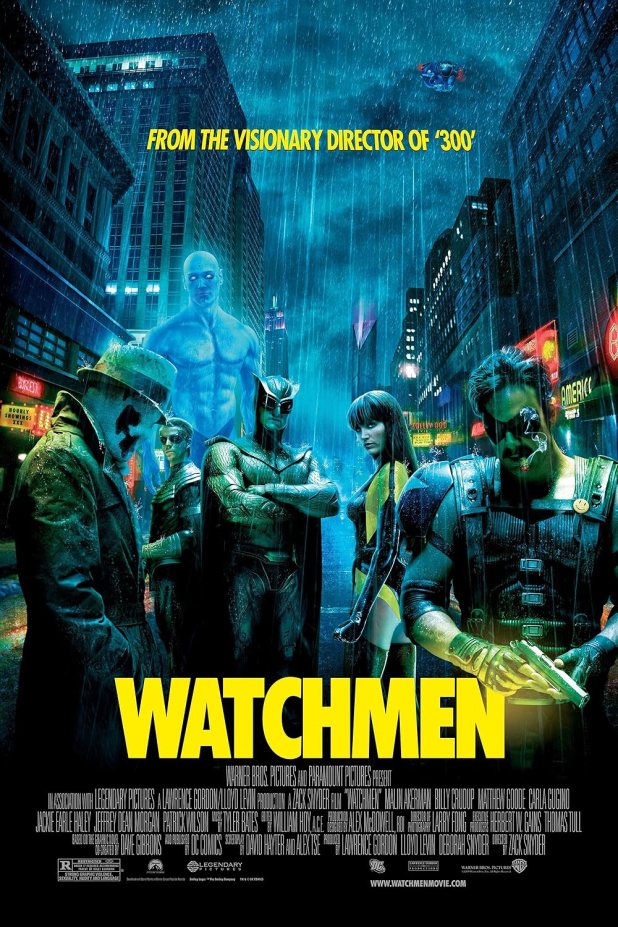
Watchmen (2009)

I saw Watchmen in the first row of a packed theater, my face feeling like it was shoved against the screen, as the sound was so loud that it felt like it had crawled inside my brain and was screaming inside my skull.

Watchmen probably should have never been made. The graphic novel by writer Alan Moore and artist Dave Gibbons is so far-reaching, filled with so many nuances and a necessary understanding of the history of American comic books that at times, it can feel obtuse. How do you make it into a two-hour blockbuster? Directors Terry Gilliam, David Hayter, Darren Aronofsky and Paul Greengrass all were going to make the movie but no one could agree on a budget.

Enter Zack Snyder, who had made another comic book movie, 300, and was able to get this made. Yet even when you watch the ultimate cut, which adds the Tales of the Black Freighter into the narrative as it was in the original graphic novel, making this 3 hours and 35 minutes long, it still feels like it’s missing something. That it’s all rather loud sound and fury and you wonder not “Who watches the Watchmen?” but “Why am I watching the Watchmen?”

Snyder misses a lot of the small moments of the comic. One of them is a drunken Comedian telling members of President for Life Richard Nixon’s staff that he had killed Bob Woodward and Carl Bernstein before they could write about Watergate and been the gunman who committed the assassination of John F. Kennedy on Nixon’s orders. That said, in that scene, it’s left up to the reader to determine if the Comedian is either wasted, literally being a comedian and telling a dark joke that only he finds humorous or trying to look like he means something when confronted by the god that is Dr. Manhattan and his possible daughter, Silk Spectre II. In Snyder’s film, during the credits, we see the Comedian (Jeffrey Dean Morgan) with a smoking gun standing on the grassy knoll as Dylan’s “The Time’s They Are A-Changin'” blares on the soundtrack, less needledrop than sledgehammer.

The film starts, like the comic, with the Comedian being attacked in his apartment and thrown to the street below. Again, as in the inspiration, the hero Rorschach (Jackie Earle Haley, one of the bright spots in this movie) begins to investigate the murder, which leads him to other heroes, such as the omnipotent Dr. Manhattan (Billy Crudup), Silk Spectre II (Malin Åkerman), Ozymandias (Matthew Goode) and Nit  Owl II (Patrick Wilson). Seeing as how this was 12 issues of a graphic novel as well as back-up features that expanded the universe — and revealed key secrets when explored — those are enough characters to get into without also going into the past, The Minutemen, who are Silk Spectre (Carla Gugino), the aforementioned Comedian, Nite Owl (Stephen McHattie), Dollar Bill (Dan Payne), Mothman (Niall Matter), The Silhouette (Apollonia Vanova), Hooded Justice (Glenn Ennis) and Captain Metropolis (Darryl Scheelar).

Meanwhile, at the funeral for the Comedian, Edgar Jacobi (Matt Frewer, also great) is there. A former villain, he’s interrogated by Rorschach and reveals that The Comedian came to him one night, obsessed with an island he’d found and a list of people connected to Dr. Manhattan with Jacobi’s name on it. At the same time, that list is revealed on a talk show with the god that is Dr. Manhattan, who escapes Earth and reflects on his origin on Mars.

This allows Silk Spectre II — aka Laurie Jupiter — and Nite Owl II — Daniel Dreiberg — to connect. Laurie has been the government-kept lover of Manhattan but now with him gone, she’s expendable. They start to wear their masks again, ending up as lovers and breaking Nite Owl II’s former partner Rorschach from prison with a mission: to investigate Ozymandias. At the same time, Manhattan teleports Laurie to Mars, where she argues for mankind being worth saving. He’s swayed when he learns that the Comedian is her father, despite the fact that he sexually assaulted her mother, the original Silk Spectre, who remains in love with him all these years later.

When they confront the former superhero turned CEO Adrian Veidt, he reveals his plan: to stop war by making Dr. Manhattan the enemy of humanity, killing 15 million people by setting off the nuclear reactors that he and Manhattan have built together. This ruse will stop nuclear war, so everyone agrees, other than Rorschach, who says “Never compromise. Not even in the face of Armageddon.” He’s blasted to atoms by Dr. Manhattan, who leaves for another galaxy, the heroes all complicit in a lie that will do more to save the world than wearing a mask and punching a bad guy.

Dave Gibbons became an adviser but cranky Alan Moore has refused to have his name attached to any film adaptations of his work, saying “There are things that we did with Watchmen that could only work in a comic, and were indeed designed to show off things that other media can’t.”

I’ll say something nice for this movie. Writer David Hayter came up with a cleaner ending that doesn’t rip off “The Architects of Fear” from The Outer Limits. That said, there’s no reason now for the Black Freighter or the pirate comics to be important, or the island, as everyone sent there was creating the squid monster that Veidt teleported to New York City in the comic and…see, this is too big to fit into a movie. The fact that Moore took this ending caused editor Len Wein to quit the comic, saying “I kept telling him, “Be more original, Alan, you’ve got the capability, do something different, not something that’s already been done!” And he didn’t seem to care enough to do that.”

So is the fact that this is commenting on the changes within the American comic book industry. DC had purchased the 1960s Charlton Comics characters. At the same time, Moore wanted to reimagine another older comic, as he had done with Miracleman. MLJ Comics’ — the publisher of ArchieMighty Crusaders seemed like a good fit, so he wrote a murder mystery that started with the dead body of The Shield. He wanted to play with the concept of four color heroes, so it would have the shock and surprise value when you saw what the reality of these characters was.”

Moore learned of the Charlton purchase and sent a pitch, Who Killed the Peacemaker? to DC managing editor Dick Giordano. After the acquisition of Charlton’s Action Hero line, DC intended to use their upcoming Crisis on Infinite Earths series to introduce the Charlton heroes to their mainline universe. As Moore would say, “DC realized their expensive characters would end up either dead or dysfunctional.”

Giordano convinced him to make his own versions, so Nightshade became Silk Spectre, The Question would be Rorschach, Peacemaker now The Comedian, Blue Beetle became Nite Owl, Captain Atom transformed into Dr. Manhattan and Peter Cannon Thunderbolt was now Ozymandias. They have gone from the happy adventuring days of comics to the grim and gritty graphic novels and been changed by the experience, something that never comes through in Snyder’s film. Sure, it look cool, but a lot of it is slow motion masturbatory super hero music video, exactly the opposite of the work that it is based on.
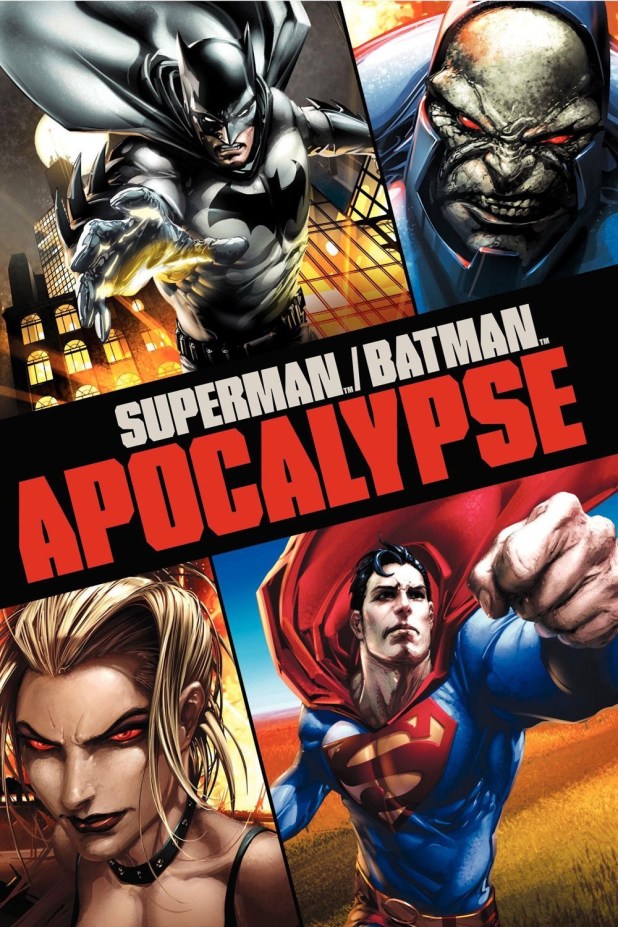
Superman/Batman: Apocalypse (2010)

Based on the “The Supergirl from Krypton” issues of Superman/Batman, this is the sequel to Superman/Batman: Public Enemies and has an art style based on the late Michael Turner. Directed by Lauren Montgomery and written by Tab Murphy, this is the story of Kara Zoe-El (Summer Glau), the heroine who will become Supergirl and how Superman (Tim Daly), Batman (Kevin Conroy), Wonder Woman (Susan Eisenberg) and other heroes like Habringer (Rachel Quaintance) and Artemis (also Rachel Quaintance) help to train her.

Soon, she’s attacked by Granny Goodness’ (Ed Asner) Female Furies — Gilotina (Salli Saffioti), Mad Harriet (also Salli Saffioti), Stompa (Andrea Romano) and Lashina (Tara Strong) — who Darkseid (Andre Braugher) wants to lead them. Superman and Batman turn to the last person who had this title, Big Barda (Julianne Grossman), to go to Apokolips and save the Kryptonian youngster.

This is a fast moving film unafraid to have death and violence in it, so if you have a child who loves superheroes, you should watch it with them and discuss it afterward. It’s very close to the comic, where writer Jeph Loeb has no issues killing off characters, which always surprises me, like Lyla, who was the Harbinger of original Crisis On Infinite Earths.

You can watch this on Tubi.