YOR WEEK IS NEXT WEEK!

If you’ve spent any time with me, you’ve no doubt heard me bring up this film. In fact, it was one of the first articles on this site. At one point, I thought that I had seen everything there was to Yor. But I was wrong.

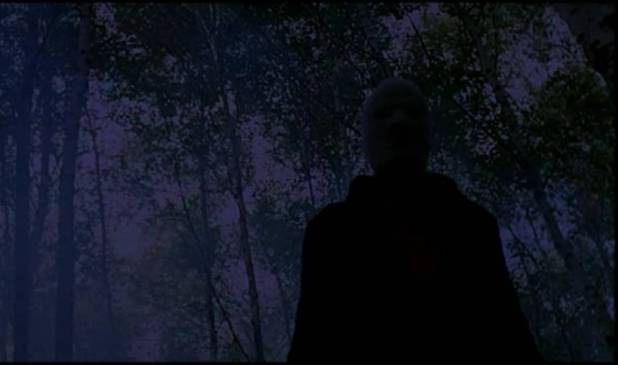
The Holy Grail of bad movies is in my grasp. Yes, Yor’s World, the 4 episode Italian mini-series that was truncated into the near ninety minute film Yor, Hunter from the Future. 

Will Yor be as big of an idiot? Will he still enjoy the choice meats? Are there more dinosaurs? Will the theme song play over and over again?

Show up on Monday and I’ll answer all of these questions and more!

Sergio Martino week starts Monday!

Next week, we’ll explore five movies from director Sergio Martino, particularly from his 1971-1973, when he made five different giallo in quick succession — all completely different takes on the form, so different that it seems like it could come from five different voices. These films are:

The Strange Vice of Mrs. Wardh — A married woman comes back to Venice for the first time in a year, bringing bad memories, bad relationships and murder into her life.

The Case of the Bloody Iris — A new apartment comes with plenty of baggage — namely murder.

All the Colors of the Dark — A woman loses her mother and a child, but could lose her mind, life and soul when she becomes involved with a Satanic cult.

Your Vice is a Locked Door and Only I Have the Key — A woman battles against her husband’s mistreatment with an interfamily affair and murder.

Torso — A masked killer stalks college students while obsessing over baby dolls.

It’s hard putting one sentence descriptions on some of these, as they go way against the giallo format. These are stylish, rich films packed with gorgeous — and grotesque — imagery and aren’t as well known as Argento’s films. They’re well worth discovering — and you can join us on Monday for the first one, The Strange Vice of Mrs. Wardh.

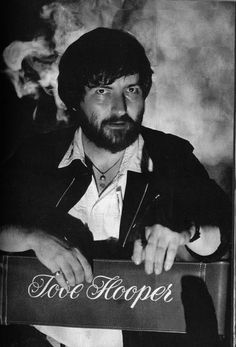
RIP Tobe Hooper

I keep a list of themes that I want to write about, movies that I feel group together well. Over the last few months, I’ve been sketching out a series about Tobe Hooper.

No hyperbole — I’d compare his career to Orson Welles, at least within the horror genre. His introduction to the world was The Texas Chainsaw Massacre (not his first film — he had made a short called The Heisters and another called Eggshells in 1964 and 1969) is quite literally the Citizen Kane of new horror — a film that is pure menace, able to convince viewers that it is full of gore while remaining quite bloodless. It’s also pure terror on celluloid, able to elicit scares 40 plus years later while other slashers only get chuckles. It’s a first shot that may be the best thing that he ever did — much like Welles, who would forever struggle for the same freedom and validation.

Not to say Hooper didn’t get the opportunity to do more or that he didn’t create some great films after. Eaten Alive and The Funhouse both have their merits. Salem’s Lot elevates the material it is based upon to create moments of sheer dread, such as when Danny Glick levitates outside Mark Petrie’s bedroom or when Mr. Barlow makes his first appearance. That’s even more shocking because Hooper was working in the constraints of television!

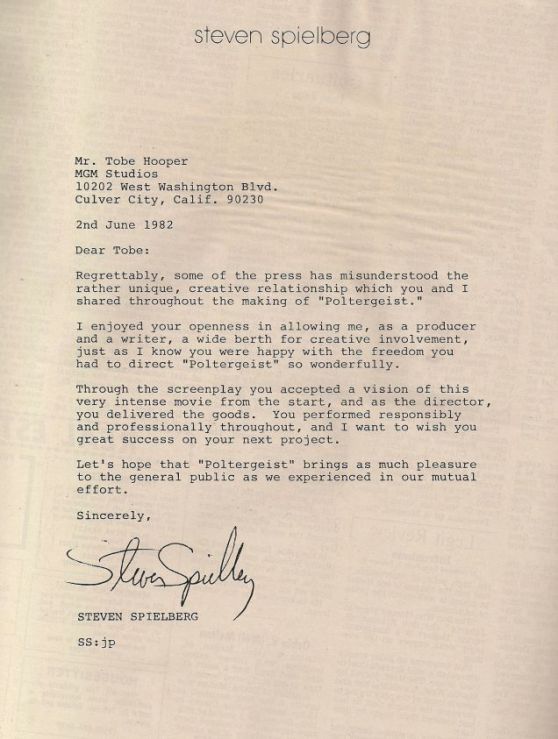
Then came the movie that gave Hooper the most money — it led to his Cannon Films deal — 1982’s Poltergeist. Even as recently as last month, on the Shock Waves podcast, it’s been discussed that Hooper was at best the second unit director for the film. It even led to Steven Spielberg placing this ad in Variety:

According to the great article The Failed Career of Tobe Hooper by Adam Simmons (you can read the whole thing right here), “Hooper allegedly had a substance abuse problem at the time which likely led to his dismissal from The Dark and 1982’s killer snake opus, Venom. Some reports say that Hooper entered an in-patient rehab facility immediately following Poltergeist. Whatever the facts are, it would be 3 years before Tobe Hooper made another movie and his career never really recovered.”

Following this, Hooper entered into either the most fruitful or strangest period of his career — three films in a row for Cannon.  Lifeforce, Invaders From Mars and The Texas Chainsaw Massacre 2 are all unique and insane films. Lifeforce was originally called Space Vampires and made a third of its budget back — it’s a bombastic effort dominated by special effects and the nudity of Mathilda May. Invaders from Mars is a remake that has a unique charm (and is one of Becca’s favorite movies). The Texas Chainsaw Massacre 2 is one of my favorites — an audacious fuck you to expectations, made in June for an August release, the only one of the three films to make any movie. It’s a Three Stooges-like Grand Guignol that features a man that snacks on his own scalp, a gigantic house made from the skeleton of a closed theme park and dead bodies and a scene where Leatherface basically fucks someone with his chainsaw (who even seems to like it, stranger still). The ending is literally a giant middle finger on the screen. Instead of the girl being catatonic and Leatherface alive to dance with his saw, it turns the tables, with Vanita “Stretch” Brock taking out the main killer of the Sawyer family and doing her own version of his dance — gloriously alive, having risen above simply screaming and now roaring, as the Texas flag flies high.

After this, Hooper’s career was mainly on TV, producing the endless remakes of Chainsaw and directing movies that never played theaters, such as 1995’s woeful The Mangler (again, one of Becca’s favorite movies). He showed some return to form with Showtime’s Masters of Horror and ended his career with 2013’s Djinn.

My dream over the last few years as that Hooper would make one more film — something to cement his legacy and the promise of his other work. I’d debated making the articles biting and sarcastic at times — The Mangler still upsets me for how bad it is. But with his death, I’m taking a step back and will not concentrate on his decline, but on the films that I feel best encapsulate why he was such an influence.

Rest in peace, Mister Hooper. Thanks for inspiring so many of us. Your films took me from a chubby 15-year-old teen who dressed as Leatherface for art school haunted houses all the way to the chubby 45-year-old man who obsesses over film today. Thank you.

A week of DANGEROUS WOMEN

All next week, we’ll be celebrating films that prove that the female is the more deadly of the species. We’re not looking to exploit beauty, but we will celebrate it where we find it. That said — next week’s five films share a few things in common. A female character who is either incredibly dangerous to know or who may be going through amazingly dangerous times. Or perhaps women, as viewed through the prism of early 70’s Eurohorror and giallo themes, who are fighting through the changes of the feminist and sexual revolution against existing mores. And at other times, they’re trying not to succumb to the wiles of vampires.

Next week’s films are:

Lizard in a Woman’s Skin (1971) – Lucio Fulci’s exploration of madness, infidelity, murder and dream identity.

Vampyros Lesbos (1971) – Jess Franco’s space jazz odyssey packed with insane visuals and a story that one can tell in under two words: lesbian vampires.

They Call Her One Eye/Thriller: A Cruel Picture (1973) – The film that Quentin Tarantino referred to as “the roughest revenge film ever.”

The Red Queen Kills Seven Times (1972): The relationships between sister and sister, husband and wife and everyone and knives.

Don’t Torture a Duckling (1972): The film that nearly ruined Lucio Fulci’s career — a graphic depiction of the failures of the Catholic church to adapt to the changing climate of the powerful lure of the sexual revolution and the potent shift in power toward the female on teh cusp of the 21st century.


Next week — MADE FOR TV MOVIES WEEK!

We’re turning back the clock next week to the thrilling days of TV movies — not those insipid SyFy ones — and bringing you some slabs of CBS and ABC goodness. This is but the first of many TV movie weeks — depending on your feedback — and we’re excited to share them with you!

The Night Stalker — Darren McGavin, 1970s Las Vegas, vampires and the power of the free press. Add them all up and you get one of my favorite movies ever.

Bad Ronald — What if a murderous teenager stuck in a fantasy world lived in the walls of your house? Find out!

Trilogy of Terror — Three stories, all with Karen Black, all awesome.

Satan’s School for Girls — Of course I’m gonna watch a movie with a title like this. But can it live up to such a great name?

Gargoyles — Satan’s children come back to life and attempt to take over the Earth…but first they have to deal with an author, his daughter, small town cops and a bunch of motocross guys.

The fun starts Monday!


GEORGE ROMERO WEEK IS NEXT WEEK!

In case you didn’t know, we’re from Pittsburgh (actually, I’m from Ellwood City, PA — feet away from where Day of the Dead was filmed and Becca is from Detroit/Las Vegas, but spent summers here). As we’re both horror fans, the passing of George Romero is a big deal.

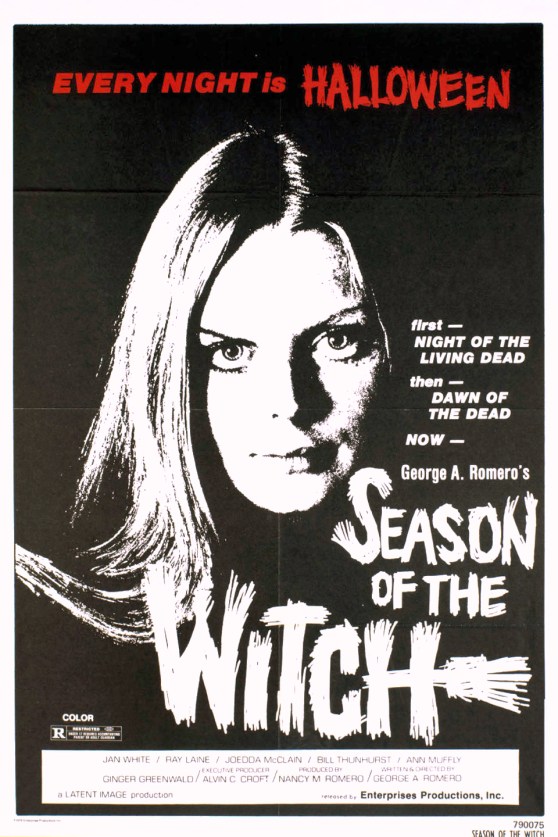
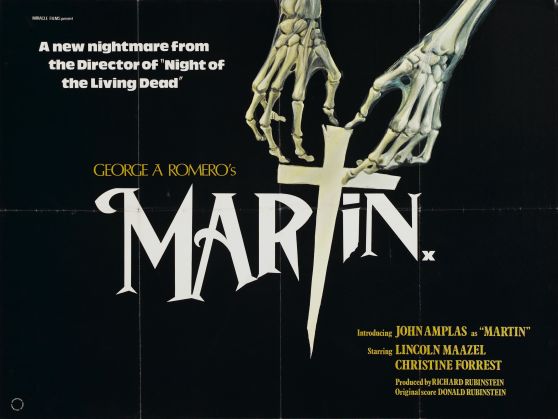
I’ve decided to watch some of his films — but instead of Night/Dawn/Day, movies that have had tons of ink and pixels devoted to their study, I’m going to concentrate on the films between Night and Dawn (and one directly after the success of the latter). We’ll get to the zombie films soon enough — I’ve gone on record in several podcasts that he loves Dawn and hates Day — but these films show the early growth of Romero as a filmmaker.

Starting Monday, those films will be:

There’s Always Vanilla

Season of the Witch

The Crazies

Martin

Knightriders

Join us on Monday! Please share your comments and thoughts too.

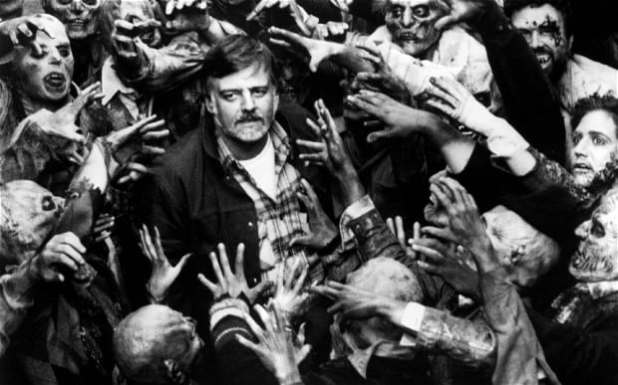
George Romero (1940-2017)

If you grew up in Pittsburgh loving horror movies, you knew who George Romero was. Even if you didn’t grow up here, you knew. Night of the Living Dead, his initial effort, made a lasting impression on not just the horror genre, but American film. It took awhile to create the follow up, Dawn of the Dead, which to me is the superior film. Sure, it’s rote today when you look back at it — zombies are consumers! — but in 1978, it was groundbreaking. From Tom Savini’s splatter gore to Goblin’s music to the tagline “When there’s no more room in hell, the dead will walk the earth,” Dawn remains one of the finest horror films ever made, decimating the 2004 remake and any zombie movie Romero would make after.

I’d been meaning to write this as a series — and as part of my rumination on how someone was so vital to my younger days, it seems so negative — but Dawn casts a long shadow on Romero’s career. I love his work before it came out — The Crazies, Knightriders and Martin are really good — but Day of the Dead suffers from being half the movie (and the budget) that Romero intended. I know plenty of folks who love it, but I’m not one of them, save for Bub and the great acting of Richard Liberty. It’s too dark, too pessimistic and too far removed from the perfect balance of Dawn. But that’s OK. I was growing up and learning what I love about film. Romero got me to my first stage, before I discovered Bava, Carpenter, Cronenberg, John Waters, Jodorowsky and more.

That’s not to say that he didn’t have some good films afterward. Creepshow remains one of my all-time favorites, the closest an EC Comic has ever come to being filmed (and that’s coming from someone who counts the Amicus Tales from the Crypt close to my heart). I like parts of his collaboration with Argento, Two Evil Eyes. And his Tales from the Darkside holds a special place in our DVD collection.

A transplant to Pittsburgh after attending Carneige Mellon University, Romero worked in advertising (directing one of the early “Ancient Chinese Secret” commercials for Calgon Soap) and even filmed several shorts for Mr. Roger’s Neighborhood (another local Pittsburgh personality, the beloved child host even went to a screening of Dawn, which he said was “a lot of fun”). After working on the film Bruiser, Romero left our city for Toronto. But in the hearts of yinzers everywhere, he’s one of us. The guy who put the salt mines of Wampum, the cemetery of Evans City, the Monroeville Mall up on the silver screen, for people all over the world to see.

This has been a rough past year for Pittsburgh horror fans — we just lost Bill Cardille a little under a year ago. Even a few notes from the Chiller Theater theme make my eyes well up. But we should celebrate these folks, the people who put the Steel City on the map, that made us the zombie headquarters of the world, that showed a younger version of me that magic could come from even the smallest of towns.

Thanks, Mr. Romero.

John Carradine vs. Mil Mascaras

It’s hard to write an article on lucha libre monster movies without feeling like you’re treading on already walked upon ground. I soul searched a bit and decided that anyone reading this should already know all about Santo and Blue Demon, as well as their battles with vampires and werewolves. I wanted to get in deep on enmascardo movies and discuss the third big star that movie producer Luis Enrique Vergara foisted on the public: Mil Mascaras, or the Man of 1,000 Masks. And I wondered, how did he ever come to engage John Carradine in combat?

By 1966, wrestling and horror provided quite the potent cocktail for Mexican movie audiences. However, the two biggest stars — Santo and Blue Demon — were unavailable due to a contract dispute and an injury. Enter bodybuilder Aaron Rodríguez Arellano, who would become Mil Mascaras, despite never competing in the ring. He would go into his career with a backward trajectory, with his entire persona and in-ring style established via the cinema, not the squared circle.

In his origin film, 1966’s Mil Mascaras, our hero gets Doc Savage’s origin story. As a newborn babe, he’s found in his dead mother’s arms after a European WW2 battle. A group of scientists adopts and raises him, giving him an intensive upbringing of physical and mental training. These scientists then send Mil out into the world to no sell the offense of other wrestlers (that’s an editorial note, Mil has had decades of negative sentiment in locker room worldwide) and improve the lives of the poor. Oh yeah — he should fight monsters, too.

In his first two outings, Mil fought common criminals. But he was about to content with (ominous music here) John Carradine! In 1968’s Enigma of Death, Mil tracks down an underground Nazi organization to a carnival, which he infiltrates. Carradine is, of course, the leader. What you may not expect is that he is also one of the clowns. And later that year, Carradine would return as the vampiric leader of a female coven that would bedevil Mil in Las Vampiras. As the “King of the Vampires,” Carradine spends most of the film locked in a cage, acting like a gorilla! That’s because Van Helsing got the staking wrong and staked him in the brain instead of the heart, leading to an entire film of scene chewing madness. Don’t worry — it’s all a ruse and Carradine’s Count Branos escapes and goes on a mad tear at the end.

So how did Carradine get to Mexico? It seems that Carradine was following in the path of Boris Karloff, who quickly filmed his scenes and appears as more of special guest star. Karloff couldn’t handle the high altitude of Mexico City, so he filmed his scenes in Los Angeles. Carradine would actually travel and film all of his work in country as part of his five picture deal with Vergara. The craziest title that he worked on sounds like Autopsy de un Fantasma — the final feature film of Basil Rathbone’s career — which also starred Cameron Mitchell of Blood and Black Lace fame (amongst many, many others). Due to the aforementioned rigors of Mexico City’s altitude and air quality, Rathbone would die of a sudden heart attack after filming.

Carradine ended up in these movies as a result of a money losing theatrical touring company. Needing money and as many roles as he could get, Carradine went from John Ford stock player to Ted Mikels movies in short order. He’d go on to play Dracula many, many times. But you know all that. Like I stated above — this is all about finding new ground and exploring Carradine’s jaunt to Mexico, well before Mil Mascaras would become an international wrestling sensation. After viewing these opuses, this author wishes that he’d filmed twenty, thirty, nay forty more outings!

This originally appeared in Drive-In Asylum #8.