TUBI ORIGINAL: Worth the Wait (2025)

In director Tom Lin’s Worth the Wait, “a group of Asian-American strangers’ lives fatefully intertwine as they navigate budding love, confront profound loss and encounter old flames.”

Written by Maggie Hartmans, Dan Mark and Rachel Tan, this begins with Kai (Ross Butler) grabbing an Uber when he suddenly has Nathan (Osric Chau), the ready to drop Teresa (Karena Ka-Yan Lam) and Teresa’s mother Mary (Kheng Hua Tan) all jump into his ride, diverting it to the hospital where he meets and falls in love with a nurse — or ER doctor, the movie is never sure — by the name of Leah (Lana Condor), who believes that life has a way of “connecting everything and everyone in ways we don’t even see.”

Along the way, we also learn about the romantic lives of Blake (Ricky He) and Riley (Ali Fumiko Whitney) — she’s the niece of the rideshare diver Curtis (Sung Kang) — as well as an actress, Amanda (Elodie Yung), who decides to take another chance with an old lover, Scott (Andrew Koji). Can these people all find love and make their stories work, no matter what the fates of life throw their way?

Set in Seattle but filmed in British Columbia, this glossy romcom feels classy for a Tubi Original. There are times when it tries to have tragedy right next to comedy, which doesn’t always feel right, but if you’re looking for a simple film that won’t put too many demands on you while you’re entertained, you could do worse.

You can watch this on Tubi.

Final Recovery (2025)

The Sage Treatment Center may be the last stop for Rodney (Jasper Cole) before jail or the ground. The only problem is that this is the kind of place that could kill him before it helps him get clean. It’s run by Louise “Nanny Lou” Stamey (Charlene Tilton of Dallas fame; her daughter Cherish Lee plays Tonya) and Rodney, who rooms with young Dustin (Damien Chinappi) as they suffer through group therapy and all of the other steps toward getting back out into the world. There’s also an insane doctor (Richard Tyson) who may as well be one of the patients and the sneaking feeling that Nanny Lou may just be getting rid of people instead of making them well.

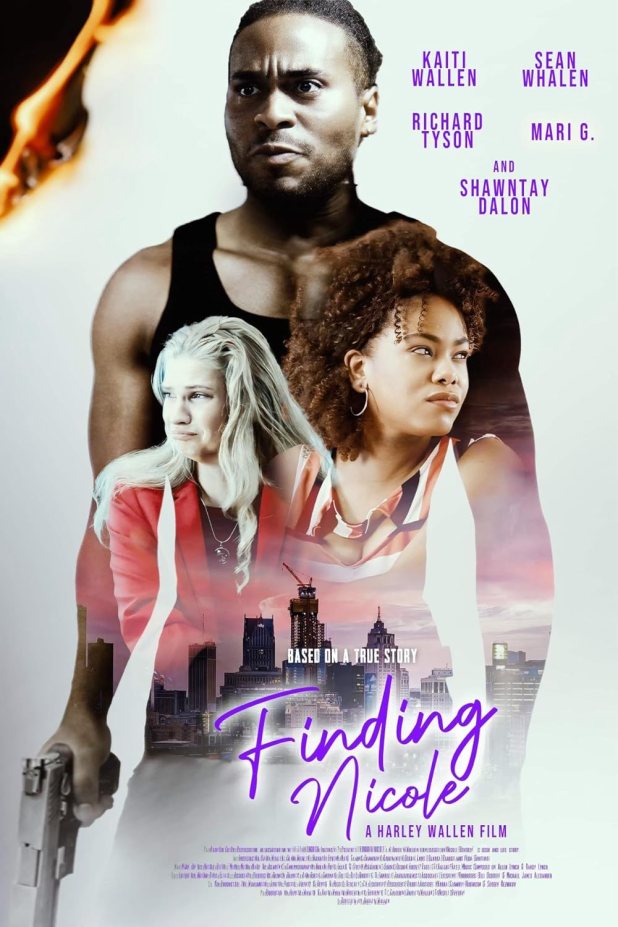
Directed by Harley Wallen (Ash and Bone) and written by Jerry Lee Davis and Nick Theurer, this film shows that addiction gets into everyone’s lives, from Rodney’s ex-wife and young daughter to Dustin’s sister and even Nanny Lou, whose childhood was decimated by an addict. But then the film somehow becomes a dark horror film — complete with a chainsaw — in the last twenty minutes, changing it all up.

Tilton is good, everyone seems doomed and this makes me glad that I never went to rehab.

You can watch this on Tubi.

Ambrogio: The First Vampire (2025)

ABOUT THE AUTHOR: Exploitation-film historian A.C. Nicholas, who has a sketchy background and hails from parts unknown in Western Pennsylvania, was once a drive-in theater projectionist and disk jockey. In addition to being a writer, editor, podcaster, and voiceover artist, he’s a regular guest co-host on the streaming Drive-In Asylum Double Feature and has been a guest on the Making Tarantino podcast. He also contributes to the Drive-In Asylum fanzine. His essay, “Of Punks and Stains and Student Films: A Tribute to Night Flight, the 80s Late-Night Cult Sensation,” appeared in Drive-In Asylum #26.

Ambrogio: The First Vampire is a microbudget horror film produced, executive produced (dude, you shouldn’t credit yourself as both), written, directed, and starring Alex Javo, a young Georgia filmmaker. The short 74-minute feature is, from its press summary, about “Ambrogio, a millennium-old vampire and the first of his kind, [who] encounters a woman who resembles his long-lost love. He calls upon the gods to shield her from rivals hellbent on revenge.” It’s ambitious, perhaps too ambitious, for its own good and tiny budget. Instead of writing a straight review, I’m going to give the filmmaker some notes. There’s some raw talent on display here, and I’d like to see another—and better—film from Javo soon. 

Now you’re asking yourself, what qualifies me to give notes to a filmmaker? Well, I’ve studied and written about film all my life (over 5,000 movies in my Letterboxd list). I have a huge collection of books on filmmaking. I’ve also been involved as an actor in corporate training films. And I’m a trained voiceover artist, with a supporting role in an animated feature on the way, and audio engineer. With that background out of the way, let’s analyze this film.
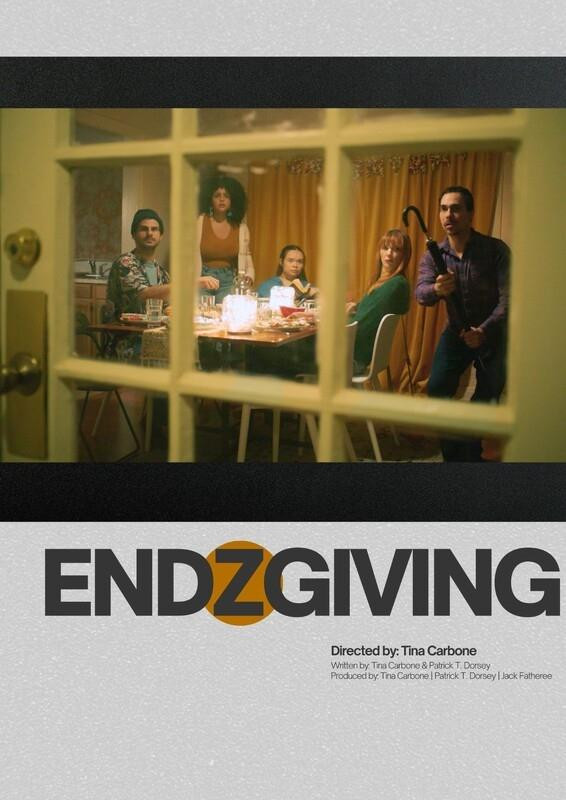
The basic concept of the film about an origin vampire or “vampire zero,” mixing traditional vampire lore and Ancient Greek and Roman mythology, is creative, and the attractive leads, Javo and Angelina Buzzelli, have nice screen presences. Javo gives it his all as the star—he’s not a bad actor and effects a decent pigeon Italian accent. Buzzelli, on the other hand, doesn’t get much to do; her part is woefully underwritten. The attempt to give her character a backstory as a battered woman doesn’t amount to much in the scheme of things. But the biggest issue I have with the film is that it’s a collection of scenes stuck together without transitions. Instead of a smooth, natural progression of a cohesive narrative, we get a bunch of scenes, sometimes like little sketches, separated by blackouts and whiteouts. You could take most of the scenes and reedit them in whatever order you wanted because they don’t hang together. This is not an uncommon problem, even for a huge-budget studio film, like the James Bond film, Spectre.

With this scene-drop approach, the film is a scattershot affair of origin story, doomed love story between human and vampire (an overused trope if ever there was one), and revenge-o-matic with Ambrogio, Dracula, and King Hades. I would’ve dumped the bad cosplay origin and boring love stories and focused on a single plotline with the three oddball supernatural characters. And while on the topic of oddball characters, I found Roland, Ambrogio’s loyal familiar/servant, to be the most interesting. He’s written to have a kind of droll, nonchalant presence in contrast to his master’s over-the-top emotionality. But while Zane Pappas tries his hardest to make something of the part, it’s beyond his grasp. The character, the film’s comic relief, needs funnier lines that hit harder.

As for the other supporting players, I admire their sincerity and dedication. But even compared to other microbudget films, the acting here generally ranges from not good to barely adequate. I enjoy seeing the now-familiar folks who pop up in these Texas-Georgia-South Carolina regional films. Caylin Sams, so good in David Axe’s excellent Left One Alive, is underutilized in a small part. One scene, featuring three characters with their accents really made my head hurt. (What type of accent does Niko’a Salas’s Dracula have? Pigeon Italian? Pigeon Italian-Czech? Todd Slaughter hammy?)
Moving on to the film’s technical credits, I applaud everyone for making, completing, and releasing a microbudget film. While we didn’t call them “microbudget” films back in the 1970s, we had them, and the foremost proponent was filmmaker Andy Milligan. Like Javo, Milligan was a one-man band who did just about everything, including sewing the costumes. He attempted ambitious period pieces set in England but which were filmed on Staten Island. And his films, while beloved by the craziest and most jaded of cult cinephiles (like me), always featured horrendous acting, modern light switches in “Victorian” mansions, out-of-focus shots or shots that cut off the tops of the actors’ heads, and screaming, lots of screaming. Ambrogio: The First Vampire is so much better made than that, but technically, it still has issues. 

As previously mentioned, the editing mostly just strings together black-out sketches. The cinematography, while competent, makes the film an overly bright affair, with no atmosphere, giving it the look of a telenovela. It’s also statically shot almost entirely in medium and medium-long shots, making for a tiresome watch: Everything’s too tight. (It’s okay to show actors’ legs and feet.) The film needs color timing to even out the way the shots look from scene-to-scene. In Milligan’s day, that was an expensive lab process, way beyond Milligan’s budget. Today, you can cheaply and easily do it using software.

A documentarian friend of mine once told me that while viewers will forgive a few flaws with video, like lens flares (hell, that’s director J.J. Abrams’s stock-in-trade style), audio mistakes are inexcusable. Unlike a lot of microbudget horror films I’ve seen, the audio here is clear. But in a couple of scenes—one with voiceover narration—the actors literally whistle some of their lines. This is what is known as sibilance, the harsh hissing or whistling sound you get when some people pronounce the letter “S.” (I saw a corporate training film once that had so much annoying sibilance that I had to leave the room; it was like needles in my eardrums.) Milligan would’ve had to rely on expensive hardware filters to remove the sibilance — and he had no money for that. Today, you can use a cheap computer plug-in called a de-esser (get it?) for a cleaner sound. As for the score, it seemed unmemorable to me, but then again, it was lost in the sound mix. That’s another thing that’s easily fixable.

Production design, using found locations, is what it is and is fine. The same with costumes and make-up, not bad at all. The few special effects on display are of the “not good, but I’m okay with it” variety. 

Finally, my overarching note. I can only imagine how much work Javo put into his labor of love: drumming up the production money, writing the screenplay, casting, directing, learning an accent, playing the lead, and otherwise hustling on behalf of his film. That unfortunately spread him thin, often a problem with multi-hyphenate filmmakers. (For example, as fantastic as Ed Norton is, he should have limited himself to acting and found someone else to direct Motherless Brooklyn.) For his next project, I would like to see Javo either direct or act, but not do both.

While that may seem like a lot of notes, with more negatives than positives, I like the folks involved with Ambrogio: The First Vampire, and I hope they take my suggestions to heart with their next film. Thanks to Alex Javo for sending me a copy of the film for this review.

The Forest Through the Trees (2025)

ABOUT THE AUTHOR: Exploitation-film historian A.C. Nicholas, who has a sketchy background and hails from parts unknown in Western Pennsylvania, was once a drive-in theater projectionist and disk jockey. In addition to being a writer, editor, podcaster, voice-over artist, and stand-up comedian, he’s a regular guest co-host on the streaming Drive-In Asylum Double Feature and has been a guest on Making Tarantino: The Podcast. He also contributes to the Drive-In Asylum fanzine and the Horror and Sons website. His most recent essay, “Of Punks and Stains and Student Films: A Tribute to Night Flight, the 80s Late-Night Cult Sensation,” appeared in Drive-In Asylum #26.

I enjoy regional horror films. Indeed, the modern age of horror films was kicked off in 1968 with the release of George Romero’s Night of the Living Dead, which was filmed in Pittsburgh. I’ve been watching a lot of Dixieland microbudget films lately. They often share cast and crew members, and while some are better than others, the biggest thing that they have in common is moxie. Their filmmakers each had a dream of making a film and not only hustled up the money (usually under $100,000), but also finished their films and secured distribution. To that, they have my sincerest congratulations on completing these Herculean tasks. Today, we look at the first film of Arkansas writer/producer/director Jason Pitts, The Forest Through the Trees.
Pitts has fashioned a satanic cult film where a young woman (Annie Sullivan), along with her lover (Alivea Disney) and her stepfather (James Stokes), runs afoul of a demon cult in that forest through the trees. Daughter and stepfather have not been on good terms, especially since the disappearance of the daughter’s mother (Anna Hardwick), who suddenly returned to the cult that controlled her as a young woman. Evincing some larger notes, the film progresses as an existential story of personal sacrifice for each of the main characters, with gory make-up effects and plot twists along the way.

At the screening I attended at the promising new Columbia, South Carolina venue The Babylon Kino, Pitts cited films like Hereditary, Poltergeist II: The Other Side, and Rosemary’s Baby and the TV show Lucifer as influences. While I get those references—particularly the homage to Julian Kane, the creepy preacher with the hat from Poltergeist II—I noticed touches reminding me of Enter the Devil (1972), a regional horror film about a satanic cult in the desert; Ti West’s much-loved 70s throwback film, The House of the Devil (2009); and The Prophecy (1995), with Christopher Walken as the Angel Gabriel on Earth.

Overall, this is an above-average film from a filmmaker whose previous effort was the well-received fan film Vorhees Night of the Beast (2021), where Friday the 13th’s Jason (Stokes) fought Bigfoot (professional wrestler Jacob Southwick). Low budget doesn’t necessarily mean low quality, and Pitts gets strong performances from Stokes, Disney, and Scott Doss, who, with hat, bolo tie, and malevolent cackle, does a grand job channeling the late actor Julian Beck from Poltergeist II. Pitts is a natural with casting and directing actors, and his dialogue generally sounds authentic. 

That said, my biggest issues with the film are pacing and consistency of style. The film runs 107 minutes, which is about 25 minutes too long. (Apart from saving money on shipping film canisters, Roger Corman knew that 82-minute films didn’t usually outstay their welcome.) Now, understandably, a microbudget doesn’t lend itself to big set pieces, and while Pitts does well with his violence and gore, some of which is unsettling, the film is a lot of talk before its neat hellzapoppin’ third act. Doss is so good doing his “we are here for the final sacrifice in three parts” (almost underscoring the padding), but he would have been even more effective with less speechifying.

The film’s technical credits are generally pro throughout—a shout-out to Italian composer Simone Cilio’s effective score—but I wish the film, especially some of the nighttime shots, looked a little more balanced. Though not a hindrance to enjoying it, skin tones, for example, shouldn’t look good in some scenes and like the actors had jaundice in others.

At the end of the day, Jason Pitts and his cast and crew should be proud of what they accomplished for so little money. I wish them well and look forward to their future film projects. 

The Forest Through the Trees from BayView Entertainment, the New Jersey distributor friendly to microbudget filmmakers, will soon be available on streaming services. Support regional filmmaking and check it out. 

TUBI ORIGINAL: Rhythm & Blood (2025)

Blue (Tyler Abron) is a singer who was once in the band Charm with Krystal (Joslyn Y Hall) and Jasmine (Zing Ashford), but has gone solo. However, she’s already having issues as she’s being stalked. Before you can say Whitney and Costner, she’s being protected by Raymond (Jibre Hordges) and starts to fall in love with him. But is he everything that she thinks he is?

Directed by Jaira Thomas (Played and Betrayed) and written by Yvette Wren, this also has a former boyfriend named Tripp (Jaylin Randolph) — the man who once introduced her to the business — insulting Blue and trying to ruin her. Her security sucks, by the way. It’s all her family and friends — sister Brianna (Kajuana S. Marie), stage mom Deborah (Bonita Brisker) and head of security brother Antwan (Kai Malik) — protecting her up until now. They think she’s changed, but maybe they don’t know the pressure that she’s under.

Then again, Blue is singing a new track called “Survivor” in a world where Destiny’s Child already had one with almost the same lyrics. Also: So much lip synching.

Blue is a tough heroine to get to love. She’s rude to almost everyone but can be nice out of nowhere. When Raymond ends up nearly killing a dude in the bar who wants her to sing, she starts to take to him just as her whole family begins to go crazy. Her sister is trying to speak the truth to her, but her mom is full Kris Jenner, filming her all the time. Then someone starts posting her new songs before she can release them, Tripp is posting pictures in bed with Krystal, the momager starts doing backdoor deals, Antwan dies eating a piece of poisoned cake…is this becoming Black Giallo? Yes, it is, with all the red herrings, murders — beyond cake, there’s someone pushed off a building — and how many people could be conspiring against Blue, from the sister who wants her own life to the ex-boyfriend who wants her back and the bodyguard who already lost one client because of how he took over her life.

You could make a double feature of this and Trap and somehow realize this is better.

You can watch this on Tubi.

TUBI ORIGINAL: An Unusual Suspect (2025)

Directed and written by Booker T. Mattison (Twisted Marriage Therapist), this is the tale of the impossibly named Viola January (Christie Leverette). Just out of law school and in a new job, she’s also working a case pro bono to free Will (Derrick J. Smith), a man she believes was wrongly accused of kidnapping a young woman. But the truth is more complicated, and now, the real criminal is after her.

I should have gone to law school, I think, after seeing this. Viola has no idea who the killer is, but somehow gets in the middle of this mess, dragging the police into things and screaming so much — so many screams — until we have numerous people drawing guns, cops in shadowed rooms with guns out and somehow, Viola gets to follow the cops in there.

If I saw this as a kid, the end scene of the dude hiding in the house’s air ducts would have given me nightmares. Also, a shower scene without nudity is bad directing. Also also: That headshot at the end was great.

You can watch this on Tubi.

CUFF 2025: Move Ya Body: The Birth of House (2025)

From the CUFF Guide: “In the chaos of Disco Demolition Night at Comiskey Park, a teenage usher named Vince Lawrence witnessed the fiery backlash against disco—a sound that defined freedom and pride. Undeterred by the hostility, Vince used his earnings to buy a synthesizer, setting in motion a journey that would change music forever. Venturing into the underground sanctuary of The Warehouse, where Frankie Knuckles spun revolutionary sounds, Vince teamed up with Jesse Saunders to form Z Factor, a scrappy collective of visionaries who captured the pulse of Chicago’s underground on wax. Their track, “On and On,” became the first recorded house music anthem, sparking a movement that transformed a local DIY culture into a global phenomenon. From those gritty Chicago streets to festival stages worldwide, Vince’s story is an electrifying testament to how a dream, born in the ashes of rejection, ignited a genre that continues to unite and liberate people across the globe.”

Directed by Elegance Bratton, this has Vince Lawrence tell the story of house and how it grew out of disco, which people believe died but come on. We know that isn’t true. This breaks down how rock bands felt threatened by disco and how Disco Demolition Night on July 12, 1979 was a way of fighting back. But what was a way for Steve Dahl to push back against disco replacing rock turned into racism, as this movie tells us. Some saw it as a targeted attack on black music.

Vince Lawrence was there that night working as an usher, saving for a synthesizer. He said when people were saying “Disco sucks,” it started to feel like they were saying it to him. And then he had to go home through Bridgeport, worried he would be made fun of, attacked or much worse. Steve Dahl got in trouble for a publicity stunt but it was out of control and an event that destroyed black art as some of the records were Motown, not disco.

In “The Flip Sides of ’79” in Rolling Stone, writer Dave Marsh said, “The antidisco movement, which has been publicized by such FM personalities as notorious Chicago DJ Steve Dahl, is simply another programming device. White males, eighteen to thirty-four, are the most likely to see disco as the product of homosexuals, blacks and Latins, and therefore they’re most likely to respond to appeals to wipe out such threats to their security. It goes almost without saying that such appeals are racist and sexist, but broadcasting has never been an especially civil-libertarian medium.” He also told Today, ““I was appalled,” remembers Marsh. “It was your most paranoid fantasy about where the ethnic cleansing of the rock radio could ultimately lead. It was everything you had feared come to life. Dahl didn’t come from Top 40 radio, he came from album rock radio, which was fighting to heighten its profile.”

In that same article, Gloria Gaynor said, “Disco never got credit for being the first and only music ever to transcend all nationalities, race, creed, color, and age groups. It was common ground for everyone.”

That’s where the movie gets into how disco gave birth to “a couple babies:” house and hip-hop. The difference, according to several in this, is that hip-hop led to violence and disrespect. House brought people together and house became a safe party with no gangsters, because, “everyone was gay.”

I really liked how the movie breaks down the song “Fantasy,” who thinks they wrote it and how the black artists felt disrespected by the white singer, Rachael Cain (who is also part of the Michael Alig NYC club scene and ended up owning Trax Records). I also liked how so much of early house was one drum machine and one synth. Nothing else. Just noise and beat; the DJ became the focal point; not a band. Not a real drummer.

Also an interesting point that this film brings up is how black culture is always stolen from. Today, the most famous house musicians are white. House was stolen by white culture. Techno was taken from Detroit. EDM stole from black music. The creators of house never saw the money that other musicians did after them.

This is recommended, as it shines a light into a form of music I’d always wanted to know more about. Now, I want to go deeper and learn more about the personalities and songs that this has introduced me to.

Move Ya Body: The Birth of House screens as part of the 2025 Calgary Underground Film Festival, which runs April 17–27. For more information, visit https://www.calgaryundergroundfilm.org/.

CUFF 2025: Reveries: The Mind Prison (2025)

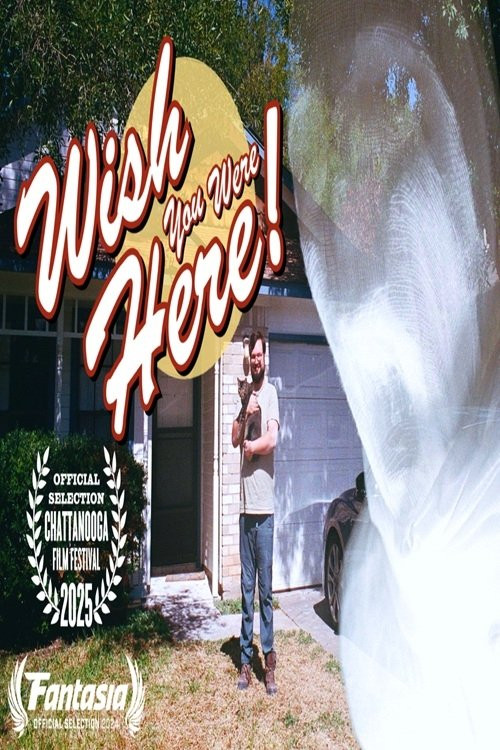
Directed by Graham Mason, who also created 2018’s Reveries and 2020’s Reveries: Going Deeper, this was co-written by stars Matt Barats and Anthony Oberbeck, who play two drifters wandering through a desert.

The quote on this film is: “Who are those guys? Poets or something? I always see them around coffeeshops…no laptops…weird…are they artists? Philosophers?…They seem like they must be around 40…”

Or, as CUFF put it, “Reveries: The Mind Prison is a comedy movie/art film hybrid, a sprawling experiment in unbridled creativity and collaboration. Told through a combination of narrative scenes, abstract video montages, and meditative voice-overs, it’s best described as Aki Kaurismäki meets a lo-fi Koyaanisqatsi narrated by Steven Wright, or as Vulture magazine put it, “Like an Ayahuasca session conducted by Mitch Hedberg.” CUFF will host the World Premiere of the feature-length culmination of an eight-year collaboration between CUFF alumni Matt Barats, Anthony Oberbeck, and Graham Mason. The trio have worked on several films that have recently played CUFF, including 2023’s Cash Cow (directed by & starring Barats), 2023’s Dad & Step Dad (produced by Mason and wrote & starring Oberbeck), and 2024’s A Joyful Process (produced by Mason and starring Oberbeck). This is the third movie in a trilogy that includes the comedy art films Reveries (2018, 46m) and Reveries: Going Deeper (2020, 60m).”

What you get here is a journey. Two sunglasses-clad wanders in the desert trying to escape wherever we are, wherever we ended up, and hoping to get out alive. This trip isn’t for everyone, but for those ready for it, it is here.

Reveries: The Mind Prison screens as part of the 2025 Calgary Underground Film Festival, which runs April 17–27. For more information, visit https://www.calgaryundergroundfilm.org/.

CUFF 2025: Sugar Rot (2025)

ABOUT THE AUTHOR: Joseph Perry writes for the film websites Gruesome Magazine, The Scariest Things, Horror FuelThe Good, the Bad and the Verdict and Diabolique Magazine; for the film magazines Phantom of the Movies’ VideoScope and Drive-In Asylum; and for the pop culture websites When It Was Cool and Uphill Both Ways. He is also one of the hosts of When It Was Cool’s exclusive Uphill Both Ways podcast and can occasionally be heard as a cohost on Gruesome Magazine’s Decades of Horror: The Classic Era podcast.

Synopsis from the 2025 Calgary Underground Film Festival site: A punk rock horror film where a girl turns into sweets — and everyone wants a taste. After a brutal assault by an ice cream man, punk girl Candy becomes host to a mutant baby. Her pregnancy accelerates at a horrifying rate, and as her body begins transforming into ice cream, those around her see her not as a person, but as something to be consumed. Fetishized by strangers, and betrayed by those she trusted, Candy fights to reclaim her body before she melts away completely. Fueled by a blistering punk rock soundtrack and dripping with grotesque body horror, this film oozes with raw feminist subtext. Blending midnight movie chaos with social satire, this wild exploitation film has it all—grindhouse grit, surreal shocks, and a heroine who refuses to be devoured.

It needs to be stated up front: Potential viewers of Canadian body horror/exploitation shocker Sugar Rot who wish to avoid films involving rape and other forms of sexual assault will want to steer clear of the film, as writer/director Becca Kozak subjects protagonist Candy (Chloë MacLeod) to numerous amounts of both. 

Kozak tackles social issues revolving around the exploitation and commercialization of women’s bodies, and she doesn’t hold back on pushing buttons and boundaries. There’s something here to offend almost everyone, and at the same time, there’s plenty of what exploitation film aficionados crave: nudity and sexual situations, over-the-top set pieces, and jaw-dropping practical gore effects, with plenty of goop and glop for good measure.

MacLeod gives an all-in performance in her lead role. Some of the situations in Sugar Rot are a bit on the nose, and that extends to character names, such as Candy’s punk-rocker boyfriend being named Sid (Drew Forster) — there’s even a Sid and Nancy reference, if you didn’t get the connection already — and a doctor named Herschell Gordon (Charles Lysne). Forster and Lysne join Michela Ross and Tyson Storozinski as the main supporting players, all of whom give the proper amount of camp and scenery chewing that their deliberately baroque characters require.

ery little is sacred and few targets are safe in Kozak’s debut feature. She had goals for this film and she reached for them, resulting in a colorful — in more ways than one — punk-fueled slice of cinematic anarchy. Sugar Rot will put you off of dessert while giving you food for thought.

SUGAR ROT screens as part of the 2025 Calgary Underground Film Festival, which runs April 17–27. For more information, visit https://www.calgaryundergroundfilm.org/

CUFF 2025: $POSITIONS (2025)

ABOUT THE AUTHOR: Joseph Perry writes for the film websites Gruesome Magazine, The Scariest Things, Horror FuelThe Good, the Bad and the Verdict and Diabolique Magazine; for the film magazines Phantom of the Movies’ VideoScope and Drive-In Asylum; and for the pop culture websites When It Was Cool and Uphill Both Ways. He is also one of the hosts of When It Was Cool’s exclusive Uphill Both Ways podcast and can occasionally be heard as a cohost on Gruesome Magazine’s Decades of Horror: The Classic Era podcast.

An After Hours-type comedy of misfortunes for the mid-2020s, writer/director Brandon Daley’s $POSITIONS finds less-than-lovable loser Mike (Michael Kunicki in an all-in performance) quitting his longtime factory job when his cryptocurrency hits in the $30,000s. Naturally, those figures don’t last for long, and neither does the newfound popularity that he found with his sudden wealth. 

To add insult to injury, his girlfriend Charlene (Kaylyn Carter) gets the better end of the deal when he suggests an open relationship — just ask new flame Lorenzo (Jeffrey A. Hunter). As caretaker for his brother Vinny (Vinny Kress), Mike tries desperately to reaccumulate crypto wealth, even though the brothers’ newly Christian, recovering addict cousin Travis (Trevor Dawkins in a strong supporting role), recently released from prison, tries to convince him that cryptocurrency is a scam.

$POSITIONS is the type of feel-bad comedy in which the protagonist is hard to root for and in which you know matters will only get continuously worse. Daley certainly heaps the challenges onto Mike. 

Daley keeps the proceedings going at a frenetic clip, though the suspense is often tied to shots of the crypto going up or down on Mike’s phone app, with the action doing what it needs to accordingly. If schadenfreude humor is your cup of bitter tea, $POSITIONS is certainly worth a watch.

$POSITIONS screens as part of the 2025 Calgary Underground Film Festival, which runs April 17–27. For more information, visit https://www.calgaryundergroundfilm.org/.