TUBI ORIGINAL: R.L. Stine’s Pumpkinhead (2025)

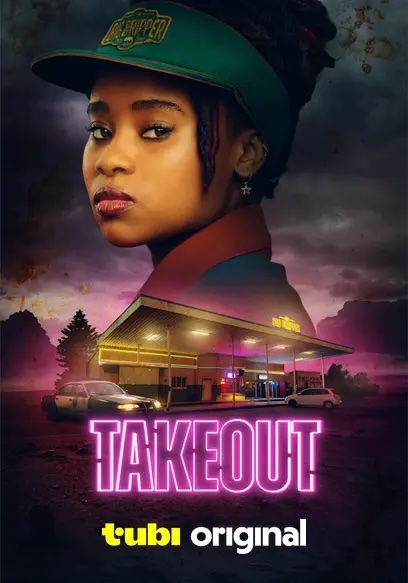
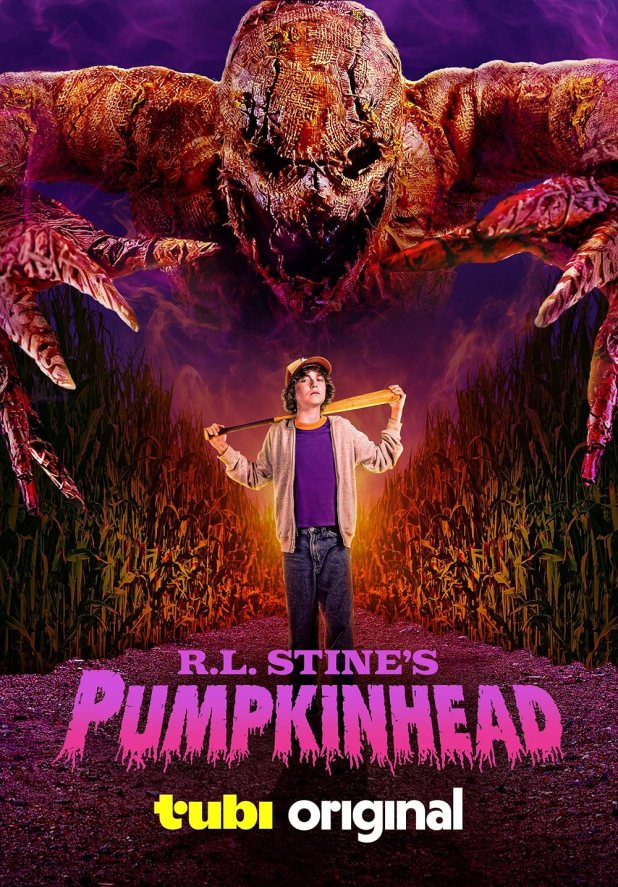
When his brother Finn (Seth Isaac Johnson) disappears and everyone forgets that he existed, Sam (Bean Reid) must unravel the mystery before his sibling is lost for all time. Directed and written by Jem Garrard (Slay, which a character watches in this movie, as well as Takeout and Invasive) and based on the R.L. Stine short story of the same name from Nightmare Hour, which was also adapted as part of The Haunting Hour TV series, R.L. Stine’s Pumpkinhead is a Tubi Original with a lot going for it.

The town of Redhaven is presented as a slice of heaven where the harvest never ends. However, this prosperity is built on a dark foundation. The secret horror of the child-stealing curse is psychological as much as it is supernatural; when a child is taken by the curse, they aren’t just physically gone. They are erased from the community’s collective memory, leaving only a few to live with the truth.

Sam and his family have just moved to Redhaven and know nothing of its secrets. The child-stealing ritual coincides with Mr. Palmer’s Harvest Festival, which is when the old farmer opens up his farm to everyone. There, as Sam is acting out, he steals a prize pumpkin. Finn brings it back for his brother under the sheriff’s order and is taken. Soon, no one but Sam remembers his brother, except for a girl named Becka (Adeline Lo), who will introduce our hero to the lore and legacy of her town.

I really liked this. It’s inspired by Stine but not slavish to his work. However, it gets the feel right. It’s a gateway horror movie, even if the ending may leave some kids upset, confused and disappointed. That’s why you watch films with them, so you can talk through the things that happened and see what you can learn from it.

The Palmer Farm is filmed on the same location as Pa Kent’s farmhouse on the WB series Smallville

You can watch this on Tubi.

TUBI ORIGINAL: A Mother’s Confession (2025)

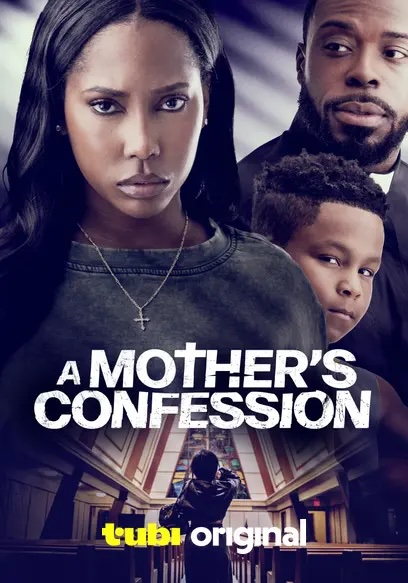
Directed by Maya Table and written by the duo of Donna Christopher and LisaBeth Willis, the movie centers on a tragedy that strikes at the heart of a family when a gang shooting leaves young Nathan (James Jay Alexander) — the son of Faith (Ciera Angelia) 00 fighting for his life in a coma.

The film sets up a high-stakes investigation led by a detective who admits the shooting is likely gang-related, but Faith has little confidence in working with the police. As the plot unravels, her internal conflict shifts from as she goes from a grieving mother to a woman seeking her own brand of justice.

Benny (Raymond Seay) leads the gang who shot Nathan, and he makes his henchmen follow a code of silence, betting on the fact that nobody’s going to talk. The film takes a surprising turn toward religious themes. While it begins as a standard urban thriller or revenge flick, the closing acts lean heavily into the spiritual battle Faith faces.

This was the top movie on Tubi for a few weeks, and you can see why: it tells a story people want to see, with an incredibly dramatic performance by its lead actress. 

You can watch this on Tubi.

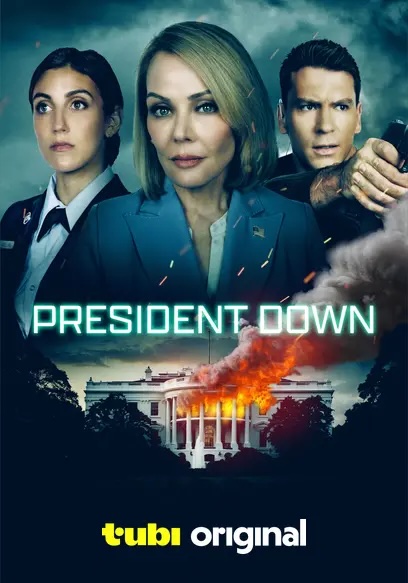
TUBI ORIGINAL: President Down (2025)

When the President of the United States (Gayle O’Grady) collapses during a historic peace accord with Russian President Kasparov (Jason Piette), all hell breaks loose. Yes, terrorists have hacked her pacemaker, threatening not only her life but also global stability as she attempts to negotiate peace with Russia. Now, a team of fearless agents — led by Jacob Pike (Jesse Kove) — must figure it out before either the President’s heart stops or she stops peace from finally happening.

Between Lorenzo Lamas and David Chokachi playing the security detail to the hacker terrorists known as the Patriot Front, this is packed with action, romance (of course,, the agent is dating the President’s daughter, Amelia, played by Gina Vitori), airplane derring-do and so much more. Sure, it’s a movie by The Asylum, but I had fun. Paul Logan as Agent Breacher and G. Anthony Joseph as the main bad guy also make this way better than it has any right to be. Give it up for director Nick Lyon and writers Geoff Mead and Kenny Zinn. 

You can watch this on Tubi.

TUBI ORIGINAL: Sidelined 2: Intercepted (2025)

Based on the Wattpad sensation The QB Bad Boy and Me by Tay Marley, and the sequel to Sidelined: The QB and Me, Sidelined 2: Intercepted finds USC freshman quarterback Drayton (Noah Beck) dealing with an injury rather than taking the field. His girlfriend, dancer Dallas (Siena Agudong), is attending CalArts and working toward becoming a professional dancer. Can they stay together despite the pressures of their new lives?

Directed by Justin Wu and written by Crystal Ferreiro, this is one of James Van Der Beek’s last roles as Drayton’s father. 

For Drayton (Noah Beck), his identity is tied entirely to being the “star QB.” Being sidelined by an injury isn’t just a physical setback; it’s a psychological one. The trailer hints at the friction this causes, with his coach telling him he can get with the twos or get out. This vulnerability makes him susceptible to the sparks he finds with his physical therapist, Charlotte (Roan Curtis).

A new layer to Dallas’s story is the soaring cost of her education at CalArts. With tuition increasing by roughly 30%, or around $18,000, she is forced to juggle a new job alongside her rigorous dance schedule. This professional pull makes her realize that Drayton is a dream, but not her only dream. Plus, she finds a good friend — and perhaps more — in coworker and musician Skyler (Charlie Gillespie)

It’s funny because I never dated in high school, yet I keep watching these romantic comedies and go through all the ups and downs with these kids without knowing what it’s like to really be in this world. Then again, I do the same with giallo films. At least these are less dangerous to my health.

You can watch this on Tubi.

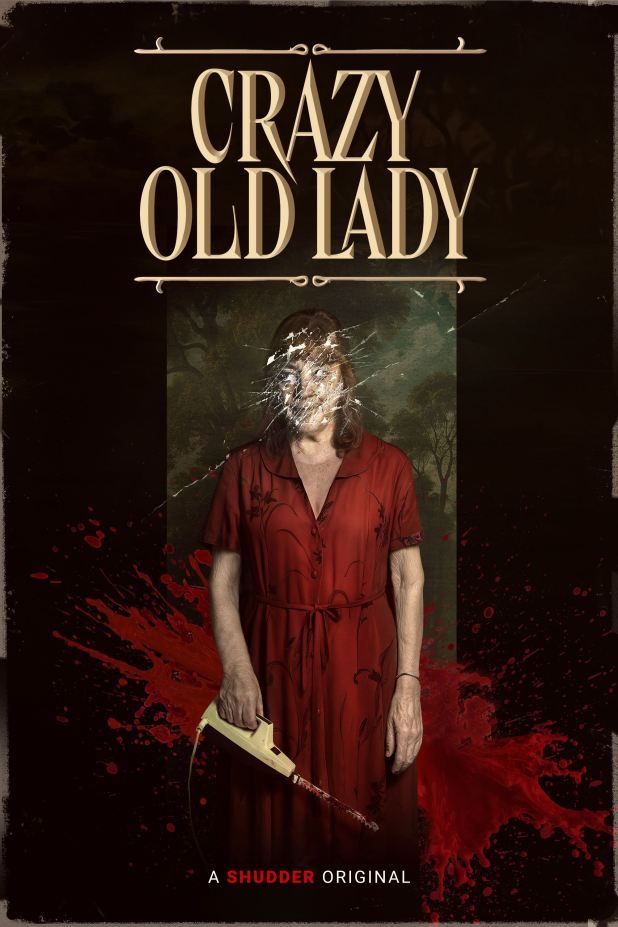
Crazy Old Lady (2025)

ABOUT THE AUTHOR: Joseph Perry writes for the film websites Gruesome Magazine, The Scariest Things, Horror FuelThe Good, the Bad and the Verdict and Diabolique Magazine; for the film magazines Phantom of the Movies’ VideoScope and Drive-In Asylum; and for the pop culture websites When It Was Cool and Uphill Both Ways. He is also one of the hosts of When It Was Cool’s exclusive Uphill Both Ways podcast and can occasionally be heard as a cohost on Gruesome Magazine’s Decades of Horror: The Classic Era podcast.

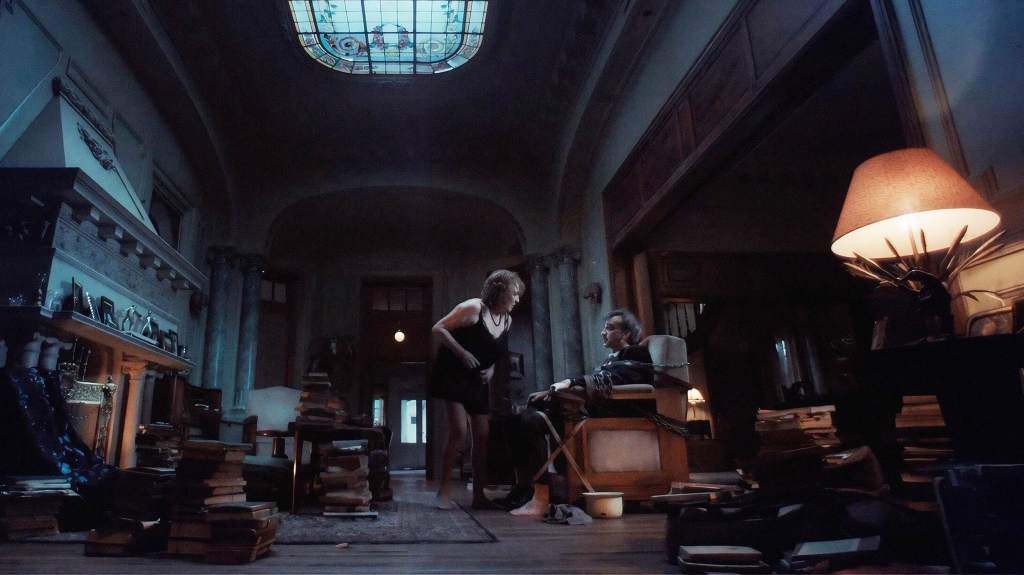
Official synopsis: Executive produced by J.A. Bayona, directed by Martín Mauregui, and starring Carmen Maura, the horror genre film follows Pedro (Daniel Hendler), after receiving a call from his ex-girlfriend asking for help looking after her senile mother for the night, Alicia (Maura). But what seems like a simple task soon turns into his worst nightmare: when Pedro arrives at the house, Alicia suggests they play an extremely sadistic game, and what happens next leaves you in SHOCK (this film contains explicit scenes which may be disturbing to some viewers).

Dear readers, the Shudder folks who wrote up that synopsis are not exaggerating about the shocking and disturbing aspects on display in this film, and the main two that I’m thinking about as I write this review don’t involve explicit gore. I don’t want to give anything away because Crazy Old Lady (Vieja loca; Argentina/Spain/U.S., 2025) absolutely lives up to its title and the reasons why are jaw-dropping. 

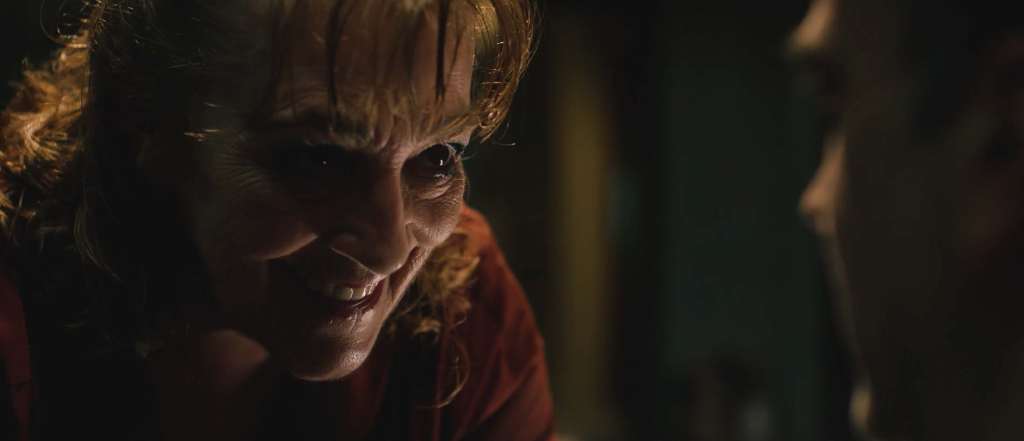
Suffice it to say that if you care for either humans or animals, or perhaps even both, something is bound to disturb and perhaps even offend many viewers in writer/director Martín Mauregui’s darkly comedic horror film. His work at the helm is one of aplomb, and the production values are terrific. The pacing and chilling set pieces are spot on. The cast is incredible, naturally with the great Carmen Maura rocking the titular character role of Alicia with fierceness and fearlessness, and Daniel Hendler as Pedro, the hapless ex-boyfriend of her daughter Laura  (Agustina Liendo), who is driving far away from Alicia’s home with her own young daughter Elena (Emma Cetrángolo).

The film’s depiction of a character with dementia is questionable, and that’s just the beginning of what some viewers will find upsetting. But those who are willing to take the challenge should find plenty of entertainment with Crazy Old Lady. It doesn’t quite reach the anxiety-inducing heights or pitch-black humor of the Spanish shocker The Coffee Table or its remake The Turkish Coffee Table, but darned if it doesn’t try.

Crazy Old Lady streams on Shudder from February 27

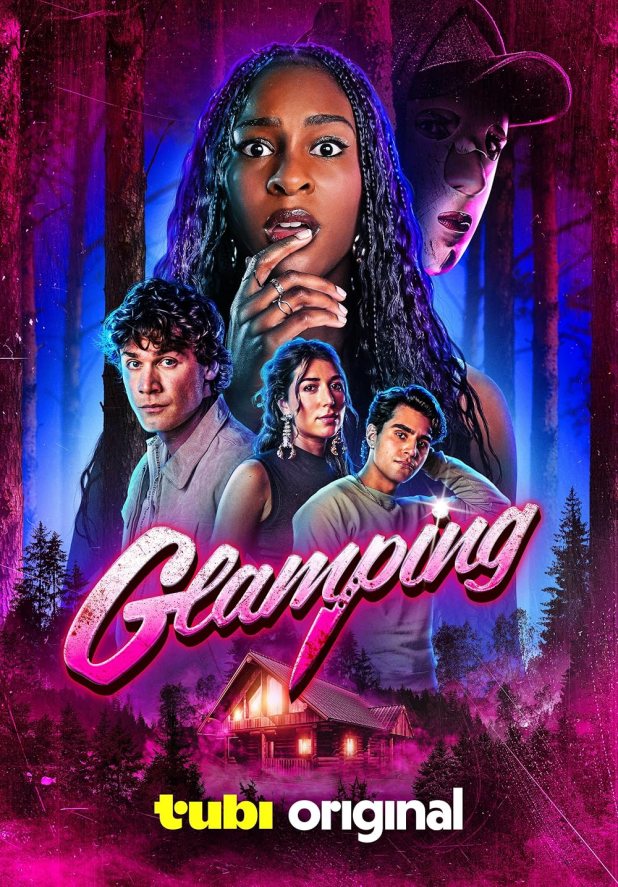
TUBI ORIGINAL: Glamping (2025)

Olivia (Rosemary Idisi) is an influencer, but her latest product demo has gone wrong. Seeking to escape the chaos and the negativity of her digital life, she organizes a glamping trip to a remote cabin to reset. However, the tension isn’t just external; the group is rife with internal friction, with friends openly admitting they are pretending to enjoy each other’s company.

The group finds the rental highly unsettling from the start, with one character noting that the vibes are off and another observing that they are all determined to ignore the warning signs of the spiritual plane. I just wish this had the slasher moments happen faster; you’re going to spend the first forty minutes with people you hate.

There is a twist at the end that somewhat redeems this. Directed by Niki Koss (Blood, Beach, Betrayal and Crushed) and written by Alexa Garster, this was inspired by an award-winning short of the same name by star Idisi. She is really great in this, much better than the movie that she finds herself in.

David Hernandez from American Idol is in the cast, and if the house seems familiar, it’s the Jarvis house from Friday the 13th: The Final Chapter.

You can watch this on Tubi.

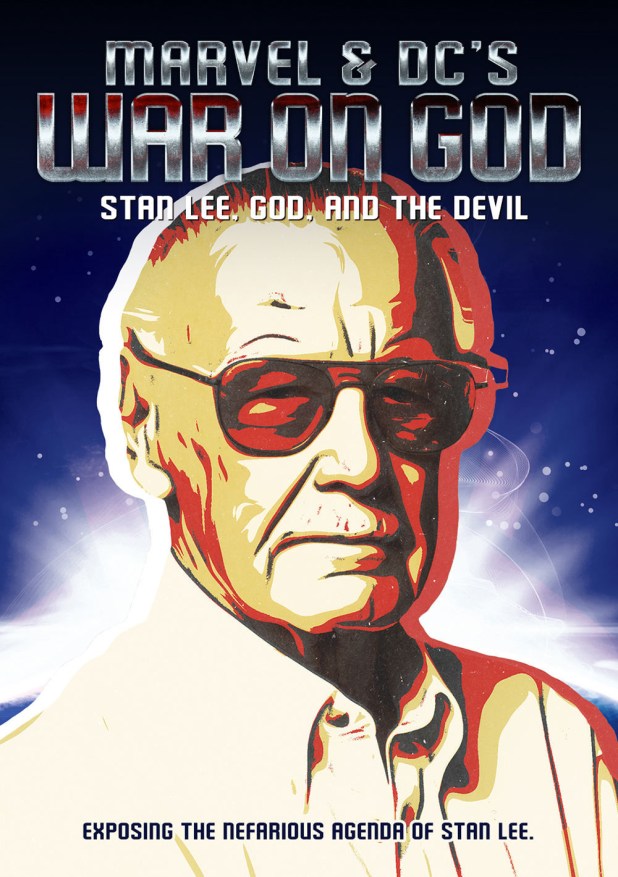
Marvel & DC’s War on God: Stan Lee, God, and the Devil (2025)

When people think of Marvel Comics or the Marvel Cinematic Universe, they think of Stan Lee as the creator of that universe, never mind the contributions of Jack Kirby, Steve Ditko or any of the other members of the Marvel Bullpen. But this documentary asks us to consider that Stan Lee is more than just the creator of Marvel (and Striperella; even I can argue that everything Lee did after 1970 or so).

Let me let them tell you.

“Many are unaware that Stan Lee purposely set out to repudiate God’s goodness and diminish His power. Lee not only sought to paint God as an inept and uncaring being but, driven by his own infamous ego, sought to exalt himself and his plethora of comic gods and superheroes above God. Did Stan Lee have a dark and nefarious agenda? Did Stan Lee seek to distort God into a bumbling creator unworthy of worship? Did Stan Lee and Marvel Comics portray Satan as the real hero or savior of humanity? Journey with us as we discover more troubling insights in Part 3 of Marvel and DC’s War on God series to discover how one of comics’ most prolific creative leaders, as well as his well-known associates Jack Kirby and Steve Ditko, continues to indoctrinate and perpetuate Satanic lies to hundreds of millions of young people among his unsuspecting fans.”

Directed, written and starring Joe Schimmel — “Since 1987, Pastor Joe Schimmel has been equipping Christians with the truth of God’s word. His testimony of the transforming power of Jesus Christ in his own life can be seen in the powerful exposé, They Sold Their Souls for Rock & Roll, and has been heard during live presentations at churches around the world in which he describes his own deliverance from the bondage and satanic influence of Rock Music at the age of 18.” — this breaks down the creation of the Marvel Universe but through a Christian lens.

This often calls Stan Lee Stan Lieber, which seems like a dog whistle to remind us that Lee was Jewish (as was Kirby). Let’s let that go and get into this, which explains that so much of Marvel is based on gnosticism, which is best described as a mindset that “emphasizes personal spiritual knowledge above authority, traditions and proto-orthodox teachings of organized religious institutions.” This might sound fine to you, but these docs always follow the rule that any rebellion is inherently evil.

The documentary’s obsession with Gnosticism is a classic Satanic Panic point. Gnosticism posits that the physical world was created by an inferior, often bumbling or evil deity known as the Demiurge and that true salvation comes through Gnosis or secret knowledge.

To understand why a documentary like Marvel and DC’s War on God exists, you have to understand the vacuum Lee and Kirby filled. In the 1960s, the Marvel Bullpen wasn’t just making funny books; they were crafting a modern American mythology.

Unlike the DC heroes who were often portrayed as pristine, god-like icons (Superman as a literal savior), Marvel’s characters were defined by their humanity and their flaws. Ben Grimm was a monster who hated himself; Peter Parker couldn’t pay his rent; Tony Stark was an alcoholic. To a rigid theological mind, humanizing the “miraculous” or giving “god-like” powers to fallible men isn’t just storytelling. It’s blasphemy.

Here’s an example. The Silver Surfer, who is a character whgo was not created by Lee, but instead drawn by Kirby starting in Fantastic Four #48, as the herald of Galactus, a space god who had come to eat Earth. Lee would eventually dialogue and later write the character, but based on Marvel Style, the plot for the issue was Lee giving Kirby a brief idea of what it could be about, then Kirby going to draw all of that and turning it back in to Lee to dialogue. We can argue Marvel Style if you want and who created who, but that’s not what this movie is about.

In short, from Wikipedia: “When Kirby turned in his pencil art for the story, he included a new character he and Lee had not discussed. As Lee recalled in 1995, “There, in the middle of the story we had so carefully worked out, was a nut on some sort of flying surfboard.” He later expanded on this, recalling, “I thought, ‘Jack, this time you’ve gone too far.” Kirby explained that the story’s agreed-upon antagonist, a god-like cosmic predator of planets named Galactus, should have some sort of herald, and that he created the surfboard “because I’m tired of drawing spaceships!” Taken by the noble features of the new character, who turned on his master to help defend Earth, Lee overcame his initial skepticism and began adding characterization. The Silver Surfer soon became a key part of the unfolding story.”

Kirby told Gary Groth the following:

JACK: I got the Silver Surfer, and I suddenly realized here was the dramatic situation between God and the Devil! The Devil himself was an archangel. The Devil wasn’t ugly – he was a beautiful guy! He was the guy that challenged God.

MARK: That’s the Surfer challenging Galactus.

JACK: And Galactus says, “You want to see my power? Stay on Earth forever!”

MARK: He exiled the Surfer out of Paradise.

JACK: And of course the Surfer is a good character, but he got a little bit of an ego and it destroyed him. That’s very natural. If we got an ego it might destroy us. People say, “Look at him – who does he think he is? We knew him when.” They throw tomatoes at you. Of course, Galactus, in his own way, and maybe the people of his type, are also doing that to the Surfer. They were people of a certain class and power, and if any one of ’em became pretentious or affectacious, they would do the same thing. We would do the same thing. If a movie star walked past you and gave you the snub, you’d give him a hot foot just to show him, “I paid my money to see you – and that’s what you’re living on.” You’re not just a face in the crowd – you’re a moviegoer, you plunk your dough down, and this guy lives off it.

He told an early San Diego Comic Con audience in 1970:

AUDIENCE: What was your inspiration for the Silver Surfer?

KIRBY: Gee, I don’t know. The Silver Surfer came out of a feeling; that’s the only thing I can say. When I drew Galactus, I just don’t know why, but I suddenly figured out that Galactus was God, and I found that I’d made a villain out of God, and I couldn’t make a villain out of him. And I couldn’t treat him as a villain, so I had to back away from him. I backed away from Galactus, and I felt he was so awesome, and in some way he was God, and who would accompany God, but some kind of fallen angel? And that’s who the Silver Surfer was. And at the end of the story, Galactus condemned him to Earth, and he couldn’t go into space anymore. So the Silver Surfer played his role in that manner. And, y’know, I can’t say why; it just happened. And that was the Silver Surfer, I suppose you might call it – I don’t know, some kind of response to an inner feeling.

The idea that the Surfer is the devil and Galactus is God, something Kirby says he moved away from, comes up here, as does the Lee and Moebius story Silver Surfer: Parable, which writes Galactus as the Old Testament-style, fire-and-brimstone God and the Silver Surfer as a self-sacrificing figure who lives poor and rejects anyone worshipping him; less like Satan and more like Jesus. Yet in this movie, this story is used as proof that the Surfer is the devil and Lee is against God. If anything, this story inspired me.

To wit:

  1. Galactus arrives and tells humanity he is their God.
  2. Humanity immediately falls into religious zealotry, war and chaos in his name.
  3. The Silver Surfer serves as a pacifist martyr, suffering so humanity can learn to think for itself.

If anything, Parable is a scathing critique of blind fanaticism. the very thing Schimmel’s documentary represents. It suggests that a God who demands worship through fear is not worth having and that true divinity lies in self-sacrifice and compassion.

Kirby wasn’t drawing from Gnostic texts; he was drawing from the Old Testament. Galactus isn’t a bumbling creator. He is closer to the Cosmic Awe, the I Am That I Am that is beyond human morality. Kirby was trying to visualize the scale of the divine, which is often terrifying.

“Many leading comic book writers have admitted that they are using seduction, manipulation, the occult, and even the Bible to influence children to view the God of the Bible from a twisted slant,” says Pastor Schimmel. “Our series aims to help families recognize these underlying messages and equip them with a biblical response.”

If you’ve seen They Sold Their Souls for Rock n Roll, this is very much the same, only about comic books. Ditko escapes most of the tarred brush here — oh wait, the second part is all about Dr. Strange — but this one goes hard after Kirby, saying that he was possessed by demons as a child.

When it comes to religion in comics, I found this quote — from Michael Kobre’s “The Common Man Is Coming Into His Own” — interesting: “Though Kirby and Lee—the former Jacob Kurtzberg and Stanley Leiber—were both first-generation American Jews (like so many other creators who built the American comic book industry), Judaism exists as a kind of lacuna in their published work, a fact of both men’s backgrounds that’s conspicuous by its absence.”

Why is that? The author says that it was about something simple: survival.

“My generation lied to survive,” Kirby told a group of fans in a 1972 conversation when he was explaining why he changed his name from Jacob Kurtzberg. “When I tell you my generation lied or died I’m not kidding,” he said, going on to explain how he was perceived as “a total alien” by the kind of men from the Midwest or Texas with whom he served in the army, even citing one soldier from a small rural town who refused to believe Kirby was Jewish because he didn’t have horns.”

It upsets me that Kirby gets insulted so many times in this, a man who worked back-breaking 14-hour days in his studio to take care of his family in a world where he was told he was disposable and not the man who truly created so much of what we know as the Marvel Cinematic Universe. Kirby often wrote of gods, Norse and New, Inhumans and end-of-the-world realities, places where he could explore how he saw religion in his head. I think Jack Kirby would be hurt by what was said here; a man can do a comic book called Spirit World or The Demon and still be a good man. That’s what I believe, if not the people who made this. A demon, Etrigan, is trying to work with a human, Jason Blood, and they are both looking for redemption. That seems something maybe worth celebrating.

Kirby, a man who literally fought Nazis in WWII and was nearly killed in the infantry, is being accused of indoctrinating children by a man sitting in a studio. Kirby’s work was obsessed with theology. From The New Gods (which features a literal Source or Godhead) to The Eternals, Kirby was a man constantly searching for the divine in the stars. To call his work demonic is to ignore the profound morality at its core: the idea that even a monster like The Hulk, The Thing, or yes, Etrigan can choose to do good.

It is a bitter irony that Kirby, a man who spent his life creating a universe where anyone, no matter how alien or different, could be a hero, is being painted as a villain by those who claim to preach love.

Buckle up when you watch this and other films in this series. They move quickly, change subjects more often than I do, and are just as scattered as having a conversation with me.

You can watch this on Fawesome.
Quarantine Cannibal (2025)

The film positions the pandemic not just as a health crisis, but as the ultimate permission slip. When Jimmy (director, writer and everything else Timothy J. Gray) loses his job, the social contract expires. The accidental death of his neighbor’s dog acts as a gateway snack, a moral crossing that convinces him that in a world that’s stopping, he can finally start.

Jimmy then kills and eats several people, many of whom are also Timothy J. Gray. If you’re someone who doesn’t deal well with SOV or pandemic cinema, filmed by a small crew of sometimes just one person, this may not be the movie to start with.

One of the most surreal elements of the film is Gray playing almost every role. This creates a bizarre atmosphere where Jimmy isn’t just killing strangers; he is essentially harvesting different versions of himself. Is Jimmy actually killing neighbors, or is this a psychological manifestation of his own self-loathing and isolation?

Knowing Gray is often the only person behind and in front of the camera adds a layer of genuine madness to the performance. You aren’t just watching a character lose it; you’re watching a filmmaker work through the logistics of a one-man gore-fest.

You can get this from Janice Click.

TUBI ORIGINAL: The Follower (2025)

I’ve said it before, I’ll say it again. Chris Stokes never lets you down. You know, when he and Marques Houston put together a Tubi Original, you’re about to get high entertainment, some level of sleaze, and the kind of viewing experience that quickly goes by. 

Sean Stevens (Nate Wyatt) is one of the world’s biggest pop stars. After being robbed and knocked out, he wakes up in an unfamiliar bed. That’s when he’s introduced to Stacy Freeman (Asia Holiday), who tells him he is in a safe place.” However, safety is an illusion; Stacy reveals herself as his biggest fan and claims she is the only one who can properly care for him. As you can imagine, she goes all Misery on him, keeping him locked up all for herself because she’s a megafan of his singing and makes him perform just for her. Sure, he only has one song, but come on. Just go with it.

Stacy isolates Sean from the outside world, gaslighting him by claiming his family doesn’t actually want him back, hoping to convince him that they only want to profit from his fame. While the world searches for the missing star, Stacy keeps him captive, driven by the fact that she has been waiting so long for this moment. Who can blame her when she builds a specialized room for Sean, not for his comfort, but as a studio where he is forced to write and record an entire album dedicated solely to her, Phantom of the Paradise-style.

Of course, like all Stokes’ projects, this ends with a cliffhanger, and I assume that the second — and third — films were all shot at the same time. I don’t see that as a bad thing. When a movie has a psychotic fake wedding ceremony, you can never hate on it.

I love that — like Italian exploitation directors of old — Stokes starts from a template, whether that be an erotic thriller, a child gone bad movie or, in this case, a kidnapping by someone with mental issues movie. Then, he fills his cast with people of color and goes from following the blueprint into his own thing, unafraid if things feel off or weird. These movies exist in their own universe, and if Tubi really were the mom-and-pop video store I dream it is, they would have their own shelf with his name above it. Kudos.

You can watch this on Tubi.

The Strangers – Chapter 2 (2025)

The beauty of this new Strangers movie is that somehow, some way, it has made The Strangers: Prey At Night into a much better movie just by virtue of its existence. Just like The Strangers – Chapter 1, this was directed by Renny Harlin, written by Alan R. Cohen and Alan Freedland, and shot in Slovakia. 

Does Renny Harlin have photos of studio heads with goats? Because seriously, how does one make some of the biggest bombs in Hollywood history and keep coming back? Who is demanding his movies? Who wanted three Stranger movies that start with the worst conceit: What if a home-invasion movie, centered on the randomness and lack of knowledge about the why of its antagonists, overly explained their motivations to the audience?

Anyways, we’re in Venus, Oregon, a place where we learn that Pin-Up Girl is really a waitress named Shelley (Ema Horvath) and she and the rest of the Strangers — Scarecrow and Dollface — are looking to finish off Maya (Madelaine Petsch), a victim who lost her husband (Froy Gutierrez) but survived their last assault. Now she’s in a hospital, which may as well be Haddonfield Memorial Hospital. She’s half-alive, the cops are covering things up, and she soon is chased throughout the place by the Strangers, even hiding inside a morgue drawer with the body of her dead boyfriend.

As her family makes plans to get her out of town and to Portland, she hooks up with Nurse Danica (Brooke Johnson) and her roommates Chris (Florian Clare), Gregory (Gabriel Basso) and Wayne (Milo Callaghan). Don’t get used to them or the cop who helps her, Billy Bufford (Joplin Sibtain).

At least Maya is able to kill a wild boar and eliminate one of the Strangers, but not before we learn that Shelley and the man who would become Scarecrow attended a school together, where they killed a girl named Tamara. And now you know, I guess.

This whole thing felt pointless, but I was trapped on a plane and couldn’t exactly walk out, so I at least finished it. I await the last chapter, as I will probably watch that on a long flight as well, my chosen place to see movies I feel obligated to watch.