UNSUNG HORRORS HORROR GIVES BACK 2024: The Giant Spider Invasion (1975)

Each October, the Unsung Horrors podcast does a month of themed movies. This year they will once again be setting up a fundraiser to benefit Best Friends, which is working to save the lives of cats and dogs all across America, giving pets second chances and happy homes.

Today’s theme: Animal attacks

1975 was the kind of time that we worried about insect attacks and meteors. This movie gives us both. It also gives us Alan Hale Jr. as the law in this town, Sheriff Jones. It also has Leslie Parrish in it, who was Miss Color TV early in her career and used as a human test pattern for early television to see how it displayed skin tones. She plays Ev, whose husband (Robert Easton) is sleeping with a waitress named Helga (Christiane Schmidtmer) instead of going to revival meetings. Yes, that is the same actress who plays the sexually charged piano teacher in Hot Bubblegum, one of the many Menahem Golan movies that have this particular fetish.

There’s a reporter, Davey (Kevin Brodie, who is in this with his dad Steve, we’ll get to him) and his girl Terry (Dianne Lee Hart) who spend most of the film running from giant spiders. And oh yes, brave scientists  Dr. Vance (there’s Steve Brodie) and Dr. Jenny Langer (Della Street! That’s Barbara Hale! Her husband Bill Williams is in this and man, I just found out that her son is William Katt) who figure out that the meteors have caused small black holes that bring spiders out of them because, sure, of course, and they get a neutron weapon because those are just everywhere and also the Skipper as sheriff has the power to call down B-52 bombing runs.

Richard L. Huff and Robert Easton wrote this but had one page complete just before filming. Director Bill Rebane locked Easton in a cabin, telling him he had to write ten pages a day or he would not be fed. He did not go to jail. The movie got made.

There are so many stories about this movie, like how one of the spiders was covered with gunpowder and wouldn’t blow up while the cameras were on, but as soon as they stopped filming, it blew up so good it sent crew members to the hospital. Or that one of the spiders was stolen by thieves and sold as scrap metal after it was restored in 2013.

As for the spiders, they are legs and a body on VW bugs. This is how movies get made.

This played enough on the CBS Late Movie that I was positive that I would be either killed by a killer bee or a giant spider by the bicentennial.

You can watch this on Tubi.

2024 Scarecrow Psychotronic Challenge Day 15: Monty Python and the Holy Grail (1975)

15. YOU TOO, SHALL PASS: …If the gatekeeper permits.

During the time between seasons 3 and 4 of their show, the Monty Python group decided to make a movie. Terry Gilliam and Terry Jones had never made a movie before, as And Now for Something Completely Different was a collection of sketches from the show. They got the movie for the movie from a variety of sources: Led Zeppelin, Pink Floyd, Jethro Tull’s Ian Anderson, Elton John, co-producer Michael White, Tim Rice’s cricket team and several record labels, including Charisma Records, who released Python’s early comedy albums. No movie studio would have funded them and rock stars were paying huge taxes in the UK, so it was a great write-offs. All of these groups would get a percentage from Spamlot, the musical that came from it nearly thirty years later.

When someone asked Eric Idle on Twitter, after he revealed who gave money to the movie, if he would reveal the profits, he replied, “Do I look like a fucking accountant?”

How to even go into this movie? I’ll try. King Arthur (Graham Chapman), his squire Patsy (Terry Gilliam), Sir Bedevere the Wise (Terry Jones), Sir Lancelot the Brave (John Clese), Sir Galahad the Pure (Michael Palin), Sir Robin the Not-Quite-So-Brave-as-Sir-Lancelot (Eric Idle) and Sir Not-Appearing-in-this-Film (a young William Palin) are ordered by God to find the Holy Grail and keep getting blocked, whether that’s by the Black Knight (Cleese), the French taunters (Cleese), a carnivorous rabbit, a three-headed knight (Chapman, Jones and Palin), the Legendary Black Beast and the Bridge of Death over the Gorge of Eternal Peril, which requires them to answer the questions of the bridgekeeper (Gilliam), which ends up claiming the lives of most of the knights.

For a movie where the camera broke during the first shot and where Chapman had the DTs and could barely walk, much less climb on his first day of shooting, things worked out OK.

Gene Siskel said, “Too many jokes took too long to set up, a trait shared by both Blazing Saddles and Young Frankenstein.” I guess Siskel and I saw different movies.

Unbelievably, this premiered on U.S. TV on the CBS Late Movie on February 25, 1977. So much was cut that the Pythons would only allow it to ir on PBS and cable afterward.

I watched this movie daily as a kid. My wife, who is 12 years younger than me, has no interest in watching it and didn’t grow up idolizing Monty Python. When I was two, I asked if I could start speaking like John Cleese and tried for a long time to have a British accent. At that time, it felt like knowing Python felt like a secret club, one beyond Saturday Night Live and maybe at the same level as SCTV.

Today, there’s a licensed slot machine.

Thanks to the DIA crew — Bill, Mike, Jenn and AC — for helping me figure out what movie to write about.

CHILLER THEATER MONTH: Footprints On the Moon (1975)

EDITOR’S NOTE: Footprints On the Moon was on Chiller Theater on Saturday, January 15, 1977 at 11:30 p.m.

Alice Cespi (Florinda Bolkan, A Lizard in a Woman’s Skin) watched a strange film in her childhood called “Footprints on the Moon,” where astronauts were stranded on the moon’s surface. Now, as an adult, the only sleep she gets is from tranquilizers and she starts missing days of her life. Get ready for a giallo that skips the fashion and outlandish murders while going straight for pure weirdness.

After losing her job as a translator, Alice find a torn postcard for a resort area called Garma. That’s where she meets a little girl named Paula (Nicoletta Elmi, DemonsA Bay of Blood) who claims that Alice looks exactly like another woman she met named Nicole, who is also at the resort. Slowly but surely, our heroine starts to believe that a huge conspiracy is against her.

This is the last theatrical film of Luigi Bazzoni (he has directed some documentaries and wrote a few films since), who also directed The Fifth Cord. There are only two murders, but don’t let that hold you back. There are also abrupt shifts in color and a slow doomy mood to the entire proceedings. It’s unlike any other giallo I’ve seen and I mean that as a compliment.

Klaus Kinski also shows up as Blackman, the doctor who was behind the experiment that Alice saw as a child. He’s only in the film for a minute or so, but he makes the most of his time, chewing up the scenery as only he can. And cinematographer Vittorio Storaro, beyond working on The Bird with the Crystal Plumage, also was the DP on films like Apocalypse Now, RedsLast Tango in Paris and Dick Tracy.

This isn’t like any of the films that came in the wake of The Bird with the Crystal Plumage and it’s a shame that its director didn’t make more films in the genre.

Here’s are two drinks to enjoy with Footprints.

To the Moon

  • .25 oz. Kaluha
  • .25 oz. Bailey’s Irish Cream
  • .25 oz. amaretto
  • .25 oz. high proof rum
  1. Stir with ice and strain into a chilled shot glass.

Footprints On the Amber Moon

  • 3 oz. whiskey
  • Raw egg
  • Dash of Tobasco
  1. Pour whiskey into a glass, then crack a raw egg and drop into the glass. Don’t break the yoke or the ghost of Klaus Kinski will haunt you.
  2. Add some Tobasco, do a count down and ignite the engines.

2024 Scarecrow Psychotronic Challenge Day 1: Moonrunners (1975)

1. JUMP-OFF POINT: Kick off the Challenge festivities by watching a movie that inspired a TV series.

The first time I watched Moonrunners, it was a strange realitization halfway through that I was watching The Dukes of Hazzard, except instead of being silly, it was depressing. I learned later — years later, the internet had to be invented — this was reworked four years later into the show that ruled childhoods in the late 70s.

The Balladeer (Waylon Jennings) sings to us about Grady (James Mitchum, who was in a movie with his father that influenced this, Thunder Road) and Bobby Lee Hagg (Kiel Martin), who run moonshine for their Uncle Jesse Hagg (Arthur Hunnicutt) in Shiloh County. A Baptist preacher, Jesse makes the same bootleg booze that his relatives have created since the Revolutionary War.

The two are lovers of fast cars and faster women, often getting arrested for fighting at The Boar’s Nest, the local bar. Grady has a stock car, #54, which is named Traveler for General Robert E. Lee’s horse.

The drama in this comes from Jake Rainey (George Ellis), the boss of the town, who sells liquor to the New York mob. He wants Jesse’s moonshine and he refuses to sell it, knowing he will mix it with poor booze to maximize profits. As he owns the local cops, he uses Sheriff Rosco Coltrane (Bruce Atkins) to railroad the boys, but they fight back.

Here’s where the sadness comes in. Uncle Jesse dies after a moonshine run and in anger, Grady and Bobby Lee take some explosive arrows and blow up all the stills of their enemies.

Directed and written by Gy Waldron, this was based in part on the life of ex-moonshiner Jerry Rushing, who was also a technical advisor. In 1977, Waldron was asked to create a nine episode replacement for CBS’ The Incredible Hulk and to develop a series based on Moonrunners.

Obviously, Bobby Lee and Grady became Bo and Luke Duke, with Uncle Jesse needing hardly any makeover other actor Denver Pyle taking over the role. Boss Jake Rainey, who is called a hog in the movie, because Boss Hogg yet kept Sheriff Roscoe P. Coltrane, down to almost the exact same dialogue that introduces him in the film and the first episode of the series, “One-Armed Bandits.” Daisy Duke, a female cousin, was added, as was a different mechanic character named Cooter who was played by Ben Jones, who was a revenue agent in Moonrunners.

The series that resulted would be the number two show on network TV and last seven seasons. A movie that feels a lot like a Roger Corman movie would be the perfect inspiration for people who conceived children at the drive-in and were now stuck at home on Friday nights, their stock cars traded in for station wagons.

CANNON MONTH 3: Hennessy (1975)

EDITOR’S NOTE: For the last two days of Cannon Month, I’m going to cover movies that weren’t produced by Cannon but which were distributed by them on one of their various home video labels including Cannon / MGM/UA Home Video, HBO/Cannon Video, Cannon Video, Cannon / Guild Home Video, Cannon / Rank Video, Cannon Screen Entertainment Limited, Cannon Classics, Cannon / Warner Home Video, Cannon/VMP, Cannon Screen Entertainment, Scotia/Cannon, Cannon International, Cannon/ ECV, Cannon / Showtime, Cannon / United Film, Cannon / Isabod, Cannon / Mayco and so many more.

Niall Hennessy (Rod Steiger) watched his family die in a Belfast riot. There’s only one thing he can do now. Kill the Royal Family and all of Parliament. As he coldly enacts his plot, both the police and the IRA want to stop him. Steiger is great, as he plays a man who just wants to avoid “the Troubles” — even though his brother is in the IRA — but when he loses those that he loves, he loses his humanity.

John Guillermin was the original director, but he left to make The Towering Inferno. Don Sharp (Psychomania) came on and worked from a script by John Gay. Lee Remick agreed to play her supporting role as it reunited her with Steiger and Gay, as they had just worked on No Way to Treat a Lady.

This was based on a story by Richard Johnson — who played Inspector Hollis — and the movie was accused of making entertainment from terrorism. Samuel Z. Arkoff for American-International Pictures said, “We do not consider this a pro-IRA movie but we are very anxious to avoid public opinion in Britain. I think the film is brilliant. I realize the bombing campaign in Britain must have made people very bitter about the IRA. I ask people to see the film before they make up their minds.”

The British Board of Film Classification refused to classify the film as there was newsreel footage of the Queen altered to appear as if she was reacting to a bomb explosion. Arkoff added a disclaimer stating that the British Royal Family had not participated, but Odeon Cinemas refused to show it and EMI would not distribute it.

It’s wild that this movie came out during such a politically charged time and was either very brave or very exploitative.

CANNON MONTH 3: La supplente (1975)

EDITOR’S NOTE: As the journey through Cannon continues, this week we’re exploring the films of 21st Century Film Corporation, which would be the company that Menahem Golan would take over after Cannon. Formed by Tom Ward and Art Schweitzer in 1971 (or 1976, there are some disputed expert opinions), 21st Century had a great logo and released some wild stuff.

How did American audiences react to this Italian commedia sexy all’italiana?

Well, it does have Dayle Haddon in it. Today, she’s known for ads where she sells anti-aging products for L’Oréal, but at one point, she almost played Dale in Flash Gordon and was Spermula. She was also nude in the April 1973 issue of Playboy, as the American poster reminds us.

For Italian film lovers, this is where singer Carmen Villani first started her sex comedy roles. She’s in this with Carlo Giuffré, Gisela Hahn (Mr. Scarface) and Gloria Piedimonte, who released the space disco song “Ping Pong Space.”

If you look carefully at the students, you’ll see Ilona Staller, who would soon become Cicciolina.

Replacing a science teacher who has died of a heart attack, the young and provocative substitute teacher Loredana Cataluzzi (Villani) has arrived to make every boy in the school instantly complete puberty. One of her students, Stefano Baldesi (Eligio Zamara), wants her so bad that he becomes a fool any time he’s near her. Her sister Sonia (Haddon) feels badly for the boy, so she gives herself freely to him. This angers Loredana, who misses the affections of Stefano.

Director Guido Leoni wrote the dialogue for Death Walks At Midnight and Four Times That Night. This was nearly charged with obscenity, as Roman officials wanted the director, producers and actors to go to jail for 2 months. As late as 1985, nearly four minutes of footage was cut — ten years after it first was released.

If you haven’t seen an Italian sex comedy, well, it has men losing their minds just looking at the women. You may or may not enjoy it. Think Porky’s with a bigger budget and more Eurosleaze women, which is a compliment. There’s also a sequel, La supplente va in città.

This was released by 21st Century as Substitute Teacher.

CANNON MONTH 3: Dolemite (1975)

EDITOR’S NOTE: As the journey through Cannon continues, this week we’re exploring the films of 21st Century Film Corporation, which would be the company that Menahem Golan would take over after Cannon. Formed by Tom Ward and Art Schweitzer in 1971 (or 1976, there are some disputed expert opinions), 21st Century had a great logo and released some wild stuff.

Born and raised in Fort Smith, Arkansas and making his living in Akron, Ohio and Milwaukee, Wisconsin as a preacher and dancer named Prince DuMarr before joining the Army and performing as the Harlem Hillbilly, Rudolph Frank Moore recorded R&B albums before becoming a party album pioneer and later found himself working at Dolphin’s of Hollywood record store.

That’s where owner John Dolphin created the center of R&B in the 40s and 50s, presenting live DJs and shows while customers shopped. The store hot its name because Hollywood wouldn’t allow blacks to own or operate any business in Hollywood, so this was Dolphin’s way of bringing the city to South Central Los Angeles, saying “If blacks can’t go to Hollywood, I’ll bring Hollywood to blacks.”

While working there, Moore met a unhoused person named Rico who would do toasts, or tell tall tales, for money to buy food. People loved his stories about Dolemite and eventually, Moore — who had already been doing stand-up and recorded his party albums, paid Rico in weed and wine to allow him to record and use his stories.

By the 70s, Moore was recording albums like Eat Out More OftenThis Pussy Belongs To Me and The Dirty Dozens in his apartment and selling them out of his car and under the counter at record stores. These albums became famous with no airplane and just word of mouth in the black community.

At the age of 47, Moore took the money he made from those party records and decided to make his own movie, despite never having made a film before.

Willie Green (D’Urville Martin, who also directed this movie), Detectives Mitchell (John Kerry) and Mayor Daley (Hy Pyke) have all worked together to send Dolemite (Moore) to prison for twenty years. Fellow pimp Queen Bee (Lady Reed) works for what seems like years to free Dolemite with the hopes he can stop all the drugs coming into the city. The odds are against him, but how many pimps have an army of martial arts sex workers at their command? Or a militant preacher named Reverend Gibbs (West Gale) supplying him with weapons and an F.B.I. agent (Jerry Jones) supporting him under cloak and dagger

This movie is beyond amazing, as Moore is just a force. Cinematographer Nicholas Josef von Sternberg had to be covered with a sound blanket during shooting because he couldn’t stop laughing. I can’t even imagine being on set. It took seventeen 18 hours days to make this movie, but it’s worth it. Sure, it’s rough, but it feels real.

“Way down in the jungle deep, the lion stepped on the signified monkey’s feet. The monkey said, “Motherfucker, can’t you see? You’re standing on my goddamn feet?” The monkey lived in a jungle in an old oak tree, bullshittin’ a lion every day of the week.”

Anyone that refers to this movie as cheap, boring, amateur, crude or stupid needs to get fucked up. I judge people based on how they feel about Dolemite.

You can watch this on Tubi.
CANNON MONTH 3: Mean Johnny Barrows (1975)

EDITOR’S NOTE: As the journey through Cannon continues, this week we’re exploring the films of 21st Century Film Corporation, which would be the company that Menahem Golan would take over after Cannon. Formed by Tom Ward and Art Schweitzer in 1971 (or 1976, there are some disputed expert opinions), 21st Century had a great logo and released some wild stuff.

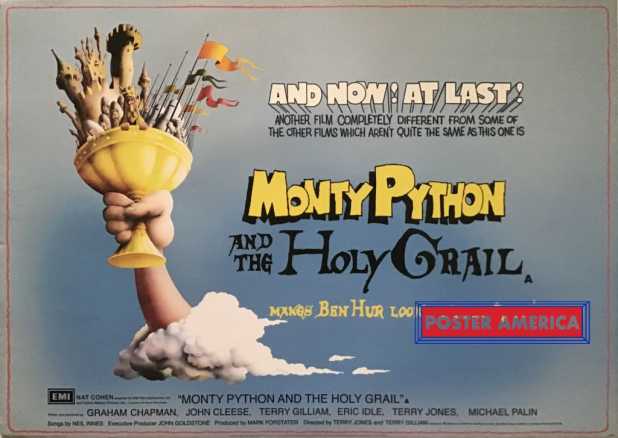
Directed by its star Fred Williamson, this film sees him as Johnny Barrows, a former football star and Silver Star winner who is dishonorably discharged after punching a superior officer. There’s nothing back home for him, as he’s attacked by cops and forced to live on the streets.

However, he’s not in such bad shape that he’s working going to work for mobster Mario Racconi (Stuart Whitman), who he meets while looking for a handout at an Italian restaurant. Instead, he works at a gas station where he’s ripped off again, which leads to him beating up his boss, Richard (R.G. Armstrong).

While Johnny is struggling, the mob has been at war. The Da Vinci family wants to start dealing drugs and the Racconis are an old school gang. They don’t want to get people strung out. A double cross leads to Mario being shot and his entire family being wiped out. Using his girlfriend Nancy (Jenny Sherman) as a go-between, he tries to hire Johnny, who still doesn’t want involved but this being a Fred Williamson movie, she soon sleeps with him. When the Da Vincis kidnap and assault her, that finally brings Johnny into the war.

Of course, it’s not all so simple.

This movie makes good use of cameos by Roddy McDowall as one of the Da Vincis and Elliot Gould as a wise man of the streets, Professor Theodore Rasputin Waterhouse. It also reminds me a lot of The Farmer, which is a better movie, except with the originally shot downer ending.

It ends with this: “Dedicated to the veteran who traded his place on the front line for a place on the unemployment line. Peace is Hell.”

Originally released by Atlas Films, it was rereleased by Flora Releasing and Dimension Pictures. 21st Century got this movie when they bought Dimension.

You can watch this on Tubi.

CANNON MONTH 3: The Sword and the Claw (1975)

EDITOR’S NOTE: As the journey through Cannon continues, this week we’re exploring the films of 21st Century Film Corporation, which would be the company that Menahem Golan would take over after Cannon. Formed by Tom Ward and Art Schweitzer in 1971 (or 1976, there are some disputed expert opinions), 21st Century had a great logo and released some wild stuff.

If you’re going to get into Cüneyt Arkin and you worry, “Will my fragile sensibilities be able to handle sub-VHS prints and an absolute lack of English and therefore no safety net for the absolute phantasmagorical leap into madness that I’m about to take,” permit The Sword and the Claw — or Lionman — to be your gateway drug.

King Suleiman may have conquered the Christians, but he’s a kind man who has spared the women and children. This pleases Princess Maria, who of course gives him a one night all expenses paid guided tour of her spoils of war before Commander Antoine (Yildirim Gencer, who is in Thirsty for Love, Sex and Murder) blackmails her into becoming his wife, then kills the King, but not before Suleiman wipes out nearly hundreds of people. Antoine cuts the hands off of his enemy and then hunts down the King’s wife, who gives birth all by herself in the woods, and servant Rhestim, who promptly loses the baby to some lions.

Antoine rules the land along with his son Altar (Cemil Sahbaz, who was Captain Kirk in Turist Ömer Uzay Yolu’nda, the Turkish take on Roddenberry’s space Western), placing his wife into the dungeon to die. Anyone who can’t pay taxes is crucified and killed, in that order, while Rhestim and his daughters have been starting an army. And the son of the King? Well, he was raised by lions to become a 38-year-old Cüneyt Arkin, a maniac ready to trampoline jump and claw his way into your face, if not your heart.

Of course, one of Rhestim’s daughters wants to get in with the rich and powerful, revealing that the Lionman and the King’s son have the same birthmark, one that can only come from the long-dead king. She narcs on her own sister and when our hero saves her, nearly losing his hands to acid.

This would end the fighting of almost any hero. This isn’t any hero. Now that he gets metallic lion claws, he’s ready to kill everyone — and seriously, I mean everyone and then some — to get his revenge.

Imagine, if you will, that this is the most restrained Cüneyt Arkin movie I’ve seen. Like I said, you should take your first steps into this world slowly. Do not dive headfirst into a shallow pool filled with only whiskey like I did. Take small sips, my friend, before you gulp deeply on films where hundreds of ninjas drive cars through brick walls for no reason at all.

The Sword and the Claw is the kind of movie that I could only dream of as a teenager, hopped up on Lemonheads and too many games of Bad Dudes, wishing of a film where people bounce off the walls and kill with aplomb. It feels like the kind of sub-Conan comic book, something even crazier than Warlord or Kull or even Claw the Unconquered.

Thanks to Temple of Schlock, I can tell you that William Mishkin Motion Pictures released this as Lion Man, Lion Man vs. the Barbarians and The Sword and the Claw. 21st Century also distributed it.

You can watch this on Tubi. Please do.
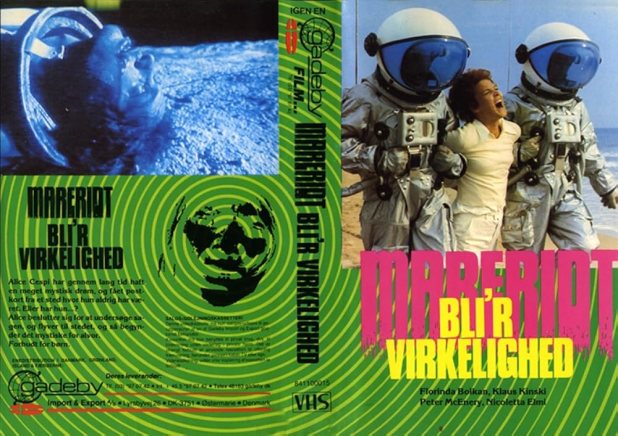
CANNON MONTH 3: Frozen Scream (1975, 1981)

EDITOR’S NOTE: As the journey through Cannon continues, this week we’re exploring the films of 21st Century Film Corporation, which would be the company that Menahem Golan would take over after Cannon. Formed by Tom Ward and Art Schweitzer in 1971 (or 1976, there are some disputed expert opinions), 21st Century had a great logo and released some wild stuff.

Directed by Frank Roach, written by Doug Ferrin, Celeste Hammond and Michael Sonye (the writer of Blood Diner, Cold Steel, Star Slammer) from a story by producer and star* Renee Harmon (Lady Street FighterCinderella 2000The Executioner Part II), Frozen Scream was originally shot for 28 days in Los Angeles before sitting until 1981, when Harmon did post-production shooting in Salt Lake City. Then it sat, unseen, until 1983, when it was released as a double feature with The Executioner Part II.

Harmon plays Dr. Lil Stanhope, who is working with Dr. Sven Johnsson (Lee James) to figure out the secret of immortality. They have a strange way of going about it, as they turn people into zombies and freeze them. When one of the scientists working with them, Dr. Tom Girard (Wolf Muser), refuses to work with them any longer, hooded men show up at his house and take him away, an act which makes his wife Ann (Lynne Yeaman) hysterical.

Lil informs her that men broke into her house, but they weren’t under hoods and no one injected her husband with drugs. Det. Sgt. Kevin McGuire (Thomas McGowan) wants to speak with her, but he keeps getting blocked by Lil. It turns out that in a moment of movie coincidence, she left him and married Tom the next day. There’s also the small matter of Ann watching a Halloween ceremony where people chanted “love and immortality” while fires were all over the beach. Is this next to Point Dume? As for where her husband was, he was confessing to Father O’Brien (Wayne Liebman), telling him that they were freezing rats and bringing them back to life. And when they returned, they had no souls.

The priest is soon killed and Ann is given a zombie caretaker nurse named Cathrin (Sunny Bartholomew). She starts getting phone calls from her dead husband, complaining that he is freezing, and more of the hooded men come to her and threaten to kill her. She escapes with Kevin and they make love. He confesses that he has never stopped caring for her. She says nothing.

Spoilers abound…but by the end, Lil has transformed Ann into a zombie and they come to Kevin’s hospital bedside. As she tells her lost lover that she has truly loved him all along, Lil injects him in the eye with the zombie formula. Is this next to Potters Bluff?

Roach went on to make Nomad Riders while would make Hell Riders and used footage from this movie in her movie Run Coyote Run, in which a psychic tries to find the murderers of her sister.

This was a Section 2 video nasty in the UK. This was not well-reviewed — many called out the narration over top of the dialogue — yet this is a movie where computer chips get put into peoples’ necks and they get frozen to become the living dead. Then, they get robes. And then a band turns Bill Haley and the Comets’ song “Rock Around the Clock into “Jack Around the Shack.”

There are movies that work way too hard to be strange.

This one was effortless.

*In Nightmare USA, she told Stephen Thrower, “I thought that if I wrote and directed and produced and starred, it would be too much, so I gave the credit away. Frank Roach was a cameraman but I decided it would be better to have another director on the film. I didn’t want to be credited as director, for business reasons. I directed the film.”

She also proclaimed, “It was filmed as I wrote it. No one could interfere with me.”

You can watch this on Tubi.