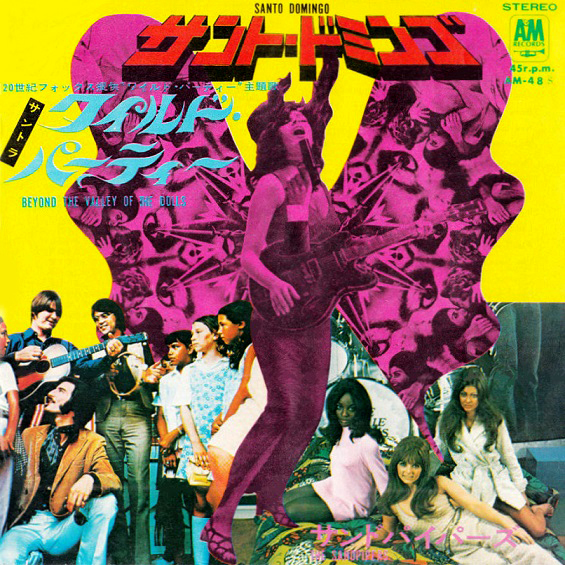
Beyond the Valley of the Dolls (1970)

A few things amaze me about this movie:

  1. That it was intended as a sequel to 1967’s Valley of the Dolls, a veritable smorgasbord of sleaze and stupidity that I adore with all my heart, but which was a sizeable mainstream success.
  2. That 20th Century Fox would hire Russ Meyer and Roger Ebert to make it. Ebert himself says that it wasn’t until after making the film that he realized how unusual it all was: “…in hindsight, I can recognize that the conditions of its making were almost miraculous. An independent X-rated filmmaker and an inexperienced screenwriter were brought into a major studio and given carte blanche to turn out a satire of one of the studio’s own hits.” When Fox producer Richard Zanuck greenlit the script, Meyer said, “I felt like I had pulled off the biggest caper in the world.”
  3. That anybody has ever made a movie afterward, because this is the literal ultimate film of all ultimate films, a movie awash in overwrought pathos, exploitation and you can’t believe they went there insanity, blows my mind.

Neither Meyer nor Ebert read the novel Valley of the Dolls, but they knew what the film was all about — young innocent girls get chewed up and spit out by the hard and violent world of Hollywood and not all of them find redemption.

Ebert said that the duo wanted to take that ever further: “We would include some of the sensational elements of the original story- homosexuality, crippling diseases, characters based on “real” people, events out of recent headlines…heavily overlaid with such shocking violence that some critics didn’t know whether the movie knew it was a comedy.”

Meyer wanted to appeal to all audiences under thirty with something for everyone: mod fashion, hip music, soap opera romance, amazing set design, lesbians, orgies, drugs, transgender characters, Nazis, comedy, serious drama, plenty of skin, violent exploitation and an ending that had a moral — the so-called square-up reel.

They changed some characters — Susan Lake and Baxter Wolfe are really Anne Welles and Lyon Burke from Valley of the Dolls — but some are real people, like Ronnie “Z-Man” Barzell being based on Phil Spector decades before he became a killer. Randy Black is Muhammed Ali. And the end of the movie was based on the Tate-LaBianca Murders, claiming the life of Valley star Sharon Tate at the hands of the Manson Family.

Complicating the movie — for the actors — is that Meyer wouldn’t let on if the movie was really serious or comedic. Some decisions — SPOILER WARNING like Z-Man being Z-Woman SPOILER WARNING — were made on the spot, despite it having nothing to do with the rest of the film.

Roger Ebert said, “It’s an anthology of stock situations, characters, dialogue, clichés and stereotypes, set to music and manipulated to work as exposition and satire at the same time; it’s cause and effect, a wind-up machine to generate emotions, pure movie without message.”

While Zanuck had asked for an R rated to pushed the boundaries toward X, the film did receive an X rating. So Meyer responded by deciding that he wanted to insert even more sex and nudity into the film.

So what’s it all about? Glad you asked.

Kelly MacNamara (Dolly Martin, Playboy Playmate of the Month for May 1966), Casey Anderson (Cynthia Myers, Playboy Playmate of the Month for December 1968, and a woman whose nude photo was taken to the moon by the crew of Apollo 12) and Petronella “Pet” Danforth are The Kelly Affair. Kelly’s man, Harris Allsworth manages them and they decide to travel to Hollywood to meet up with Kelly’s aunt Susan Lake, who stands to inherit a big fortune.

Her financial advisor Porter Hall thinks they’re just hippies out to get her money, but she doesn’t care what that old man thinks. Instead, she introduces them to Ronnie “Z-Man” Barzell. He’s played by John LaZar, who is also in Deathstalker II, so it’s kind of ironic that he’s in the sequel to a movie that stars Lana Clarkson, the woman killed by the person he’s really playing here, Phil Spector. Woah.

To top it off, Kelly is wearing one of Sharon Tate’s outfits from the original in this scene. Dolly Read nearly couldn’t do the scene as she was in tears when she learned that the outfit had belonged to the dead actress. The publicity for the film — the famous three on a bed shot of the band — also has them wearing clothes from that movie.

He becomes their manager, enraging Harris, and renames them The Carrie Nations. Kelly soon falls for Lance Rocke (Michael Blodgett, who after acting in movies like Disco Fever and The Velvet Vampire, would write Rent-A-Cop and Hero and the Terror) while her ex-boyfriend ends up in bed with pornstar Ashley St. Ives (Meyer’s wife, Edy Williams). But soon, Harris can’t perform because he’s all tied into the booze and the dolls, baby. The dolls! The one time he can get it up, he knocks up Casey, his ex-girl’s best girlfriend who then has a lesbian affair with Roxanne (Erica Gavin, the star of Meyer’s Vixen), who asks her to get an abortion. Whew! So much happens so fast in this movie you really gotta keep up.

Meanwhile, Petronella has a storybook romance with Emerson Thorne (Harrison Page, Carnosaur) that ends in a brutal fistfight and near vehicular homicide when he catches her in bed with champion boxer Randy Black (James Iglehart, Angels Hard As They Come). Susan gets back with her old fiancee Baxter Wolfe (Charles Napier!) while drugs and touring beat up The Carrie Nations, until one show Harris leaps to his, well, not death, but he loses the use of his legs. Kelly falls back in love for him after his stupid fall. Emerson and Petronella get back together. Casey and Roxanne have lots of sex. If it seems like it’s all going to end up fine, Meyer is here to play with your mind.

Z-Man invites Lance, Casey and Roxanne (the latter two wearing real outfits from the 1960’s Batman TV show) to another of his drug-fuelled parties. After Lance turns him down, he reveals that he’s been a woman all along before going off — beheading Lance to the 20th Century Fox theme before stabbing his servant and getting Casey to fellate his gun before murdering her and her lover (this is teased in the film’s opening). Kelly, Harris, Pet, and Emerson arrive too late to save them, but they kill Z-Man and Harris starts to move his feet again.

While an overly preachy voiceover squares us all up, like we’re watching Mom and Dad or something, we watch Kelly and Harris, who is limping on crutches, enjoy nature before all three surviving couples get married at the courthouse.

Between this movie and Myra Breckenridge, Zanuck lost his job at Fox. That said — despite an X rating and a meager $900,000 budget (Meyer came in $100,000 under) — it ended up earning more than $40 million dollars. Of course, they also had to pay out Valley author Jacqueline Susann’s estate for damages, which meant that the movie starts with this disclaimer:

THE FILM YOU ARE ABOUT TO SEE IS NOT A SEQUEL TO “VALLEY OF THE DOLLS.” IT IS WHOLLY ORIGINAL AND BEARS NO RELATIONSHIP TO REAL PERSONS, LIVING OR DEAD. IT DOES, LIKE “VALLEY OF THE DOLLS” DEAL WITH THE OFT-TIMES NIGHTMARE WORLD OF SHOW BUSINESS BUT IN A DIFFERENT TIME AND CONTEXT.

Needless to say, this is in my top films ever. If you ever visit and you’d like to watch while I scream the songs at the screen and jump up and down, you’re invited.
Toomorrow (1970)

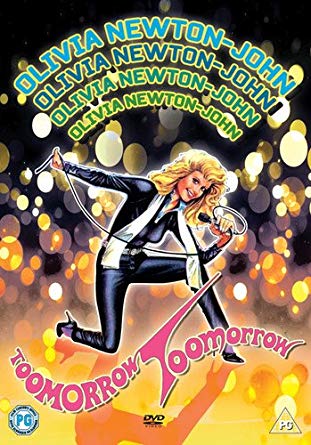
Harry Saltzman had produced James Bond and Harry Palmer films, but he wanted to work with Don Kirshner, who had just had a big success as the producer of The Monkees. They had a three-picture deal, but it barely made it through this movie.

Saltzman had originally brought on David Benedictus to write the film, but didn’t like the script and kept him writing it while he asked director Val Guest (The Quatermass Xperiment) to write his own script. Once the film started shooting, the writer did eventually learn that a new script had been completed.

Guest also had no idea that Benedictus hadn’t been informed. And it got worse for Guest, who would go six months over schedule on the making of the film and was never paid. He was smart, though. He waited until after the film’s premiere to obtain an injunction that stated that Toomorrow couldn’t be shown until everyone was paid. As of 1994, that hadn’t happened.

This meant that this movie was shown in one theater for one week, then on some British military bases in 1971 and 1972, then sat on the shelf until it played a special LA Film Festival in 2000. When Kirshner died in January 2011, Pickwick licensed the film from the estate of Guest and released the film on DVD. (Much of Kirshner’s catalog is under the tutelage of SOFA Entertainment & Historical Films.)

So how is it? It’s a hippie musical from 1970 about aliens, man. How do you think it is? It even has Roy Doltrice* (who was in Eliminators) as an alien that falls in love with humanity. Then again, if humanity includes Olivia Newton-John, here all of twenty-two years old, well, you can totally get his point. She is seriously angelic here. The production team told her that she would have to strip to her underwear for a scene in the film, which caused her to burst into tears. I wish I could punch every one of them in the taint to protect her modesty.

So why Kirschner? The goal was to transform the band Toomorrow from this film into its own band. But with no film — no band. Every member was paid for two years of the film’s production and had a three-picture contract, too.

It’s a movie of its time. That said, it’s silly and fun in all of the best ways. How can you even think a campy n’ trashy, sci-fi-bubblegum-pop blowout produced by James Bond’s Harry Saltzman and The Monkees’ Don Kirshner starring Olivia Newton-John could be anything but fun?

The maniacs at Deranged Visions had a video tribute posted on You Tube, which we posted. But that account has since left the platform. But no worries, since Pickwick’s 2011 release of the film, fans have ripped many clips of scenes and tunes from the film. Fans have also recently uploaded the full film — it comes and goes from You Tube, so watch it while you can.

Here’s some of the other uploads of songs from the film:
Olivia Newton-John w/Toomorrow – “If You Can’t Be Hurt”
Toomorrow – Open Credits from Japanese print
Toomorrow – The Complete Soundtrack
Olivia Newton-John “Toomorrow” interview

For more clips and songs, just You Tube “Toomorrow” and enjoy the fun!

As for Don Kirshner: His lone screenwriting credit was on the hippie-western parody The Kowboys (1970) made with the same production team behind The Monkees. As with Toomorrow, that TV movie served as a pilot for a failed U.S. Monkees-inspired music series. After his failures to transform The Kowboys and Toomorrow into the next Monkees, Kirshner set his sights on Kim Milford (of Corvette Summer and Laserblast fame) and his post-Jeff Beck Group endeavor, Moon. The band starred in two ABC-TV movies: Song of the Succubus and Rock-a-Die Baby. While Kirshner produced and music consulted a wealth of even more TV series and specials for the networks (such as creating The Archies, music for The Flintstones, working with Sid and Marty Kroffts, The Harlem Globe Trotters, the Hudson Brothers, and producing the Greg Evigan-Paul Schaffer starring series A Year at the Top (yep, B.J and Artie Fufkin!)), Kirshner produced his first dramatic movie proper with the Michael Parks-starring The Savage Bees (1976). He quickly followed up with the TV movies The Night the Took Miss Beautiful (1977), Terror Out of the Sky (1978), and The Triangle Factory Fire Scandal (1979).

Learn more about the movies of Don Kirshner with our “Exploring” featurette.

* The crazy career of Roy Dotrice lead him from Kirshner, to dubbing Harvey Keitel’s “Brooklyn accent” for his character Benson in Saturn 3, as well as serving as Commissioner Simmonds in Space: 1999 (which appears in the series’ theatrical films Destination: Moonbase Alpha and Alien Attack), Cheech & Chong’s The Corsican Brothers, Milos Forman’s 1984 multiple Oscar Winner, Amadeus, and King Baylor in Hellboy II: The Golden Army. Like we said: crazy!

The Deserter (1970)

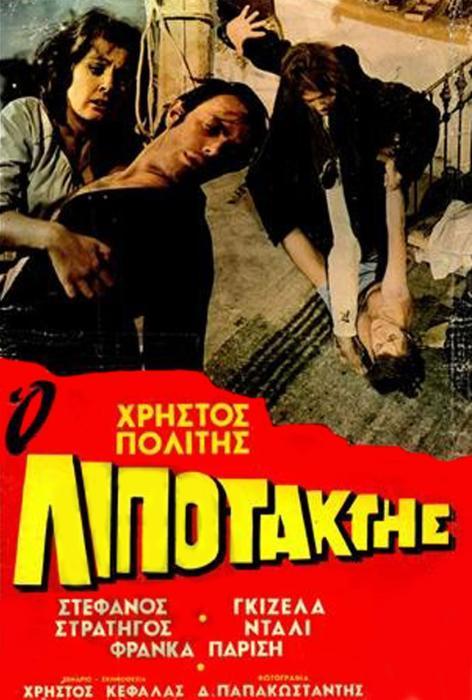
A young soldier escapes a seemingly endless war and winds up in the middle of an entirely different battle. Now he’s trapped between the desires of two desperate women.  It’s another lost Greek film found by the folks at Mondo Macabro, who seem to specialize in discovering movies that you never knew about that you suddenly find out you need to own.

Ermina (Franca Parisi, Atom Age Vampire) is trapped in a loveless marriage to a farmer who only cares about getting rich selling moonshine to soldiers. And the other woman (Greek singing star Alexandra Kyriakaki) is much younger and lives in a world of fantasy. They’re both in love with the soldier who has been hiding in a barn and falling for both of them.

I was really struck by how rapid the cuts are in some of these scenes, almost a strobing effect as the emotional anguish increases. This movie has the kind of insane love in it that causes women to pull knives and fight one another in the mud. There’s also a great scene in here when the younger girl casts a love spell to try and keep the soldier all to herself. Gisela Dali — the Greek Bardot — has a brief role here as the witch who aids her.

This film was edited — and perhaps directed — by Bruno Mattei, who remade it in Italy as Armida, a Wife’s Story with Parisi returning to star in the remake.

You can get this on a double blu ray disc along with The Wild Pussycat from Mondo Macabro.

NOTE: This film was sent to us by Mondo Macabro, but that has no bearing on this review.

Satanis: The Devil’s Mass (1970)

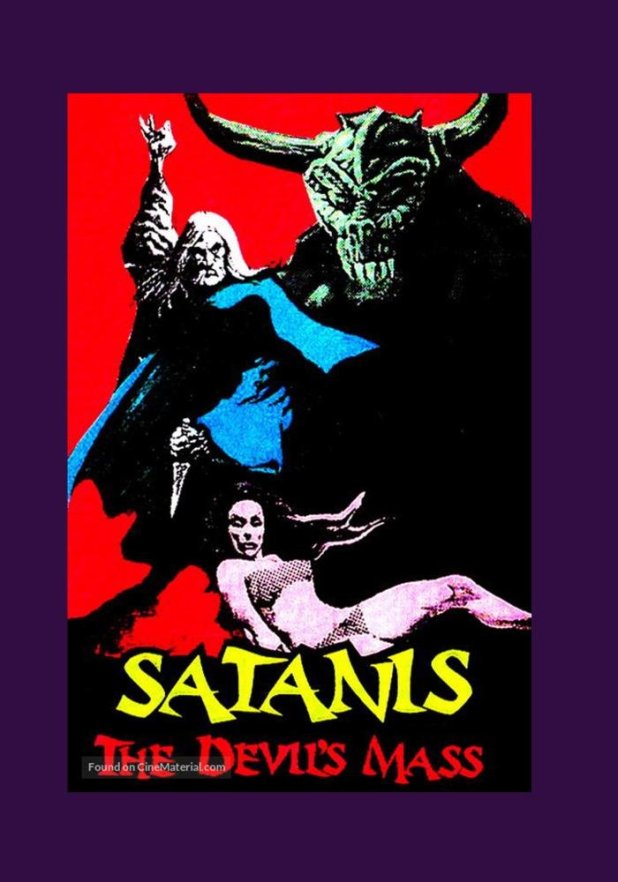
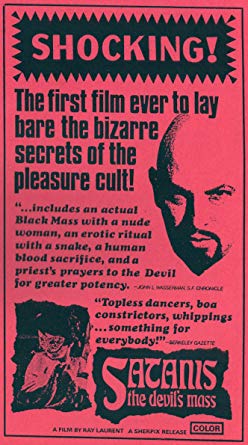
This 1970 documentary about Anton LaVey and the Church of Satan that was directed and produced by Ray Laurent, whose only other credits involve editing some films, including one of the Lemon Grove Kids films that Ray Dennis Steckler directed. Within this movie, there’s plenty of ritual footage, as well as interviews with LaVey, his family, church members and then his somewhat annoying neighbors and some priests and Mormon missionaries.

It’s really interesting to see how the people living next to LaVey saw things, less concerned about the people coming in and out than the upkeep and shingles of the Black House. This is a rare opportunity to see actual rituals of the early Church and hear from its members.

Also, the Church is very ahead of the cultural mores of the time — and even today — commenting on how they don’t tolerate homosexuality in the Church of Satan. Instead, they go further: “To tolerate is to infer they are different or less than, we just accept them as normal people because that’s exactly what they are.” Keep in mind this was made in 1970.

You can watch the whole film here:

The Bird with the Crystal Plumage (1970)

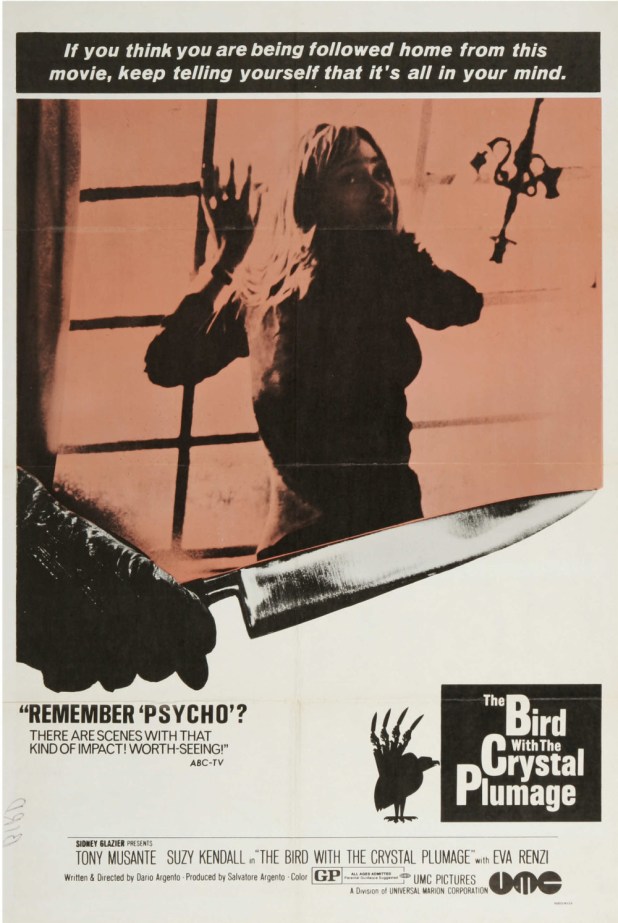
Other than the films of Mario Bava (Blood and Black LaceThe Girl Who Knew Too Much), there’s no other film that has no influenced the giallo. In fact, the most well-known version of the form starts right here with Dario Argento’s 1970 directorial debut. Until this movie, he’d been a journalist and had helped write Leone’s Once Upon a Time in the West.

Sam Dalmas (Tony Musante) is an American writer suffering from an inability to write. He’s gone to Rome to recover, along with his British model girlfriend (yes, everyone in giallo can score a gorgeous girl like Suzy Kendall). Just as he decides to return home, he witnesses a black-gloved man attacking a girl inside an art gallery. Desperate to save her, he can only watch, helpless and trapped between two mechanical doors as she wordlessly begs for help.

The woman is Monica Ranier and she’s gallery owner’s wife. She survives the attack, but the police think Sam may have had something to do with the crime, so they keep his passport so he can’t leave the country. What they’re not letting on is that a serial killer has been wiping out young women for weeks and that Sam is the only witness. That said — he’s haunted by what he’s survived and his memory isn’t working well, meaning that he’s missing a vital clue that could solve the crime.

As you can see, the foreign stranger who must become a detective, the missing pieces of memory, the black-clad killer — it’s everything that every post-1970 giallo would pay tribute to (perhaps rip off is the better term).

Another Argento trope shows up here for the first time. It’s the idea that art itself can cause violence. In this film, it’s a painting that shows a raincoat-clad man murdering a woman.

Soon, Sam is getting menacing calls from the killer and Julia is attacked by the black-clad maniac. The police isolate a sound in the background of the killer’s conversations, the call of a rare Siberian “bird with the crystal plumage.” There’s only one in Rome, which gets the police closer to the identity of who is wearing those black gloves (in truth, it’s Argento’s hands). It’s worth noting that the species of bird the film refers to as “Hornitus Nevalis” doesn’t really exist. The bird in the film is actually a Grey Crowned Crane.

Alberto, Monica’s art gallery husband, tries to kill her, finally revealing that he has been behind the attacks. Ah — but this is a giallo. Mistaken identity is the main trick of its trade. And even though this film was made nearly fifty years ago, I’d rather you get the opportunity to learn for yourself who the killer really is.

I may have mentioned before that my parents saw this movie before I was born and hated it to a degree that any time a movie didn’t make any sense, they would always bring up “that weird movie with the bird that makes the noises.” Who knew I would grow up to love Argento so much? It’s one of those cruel ironies that would show up in his movies.

An uncredited adaptation of Fredric Brown’s novel The Screaming Mimi, this film was thought of as career suicide by actress Eva Renzi. And the producer of the film wanted to remove Argento as the director. However, when Argento’s father Salvatore Argento went to speak to the man, he noticed that the executive’s secretary was all shaken up. He asked her what was wrong and she mentioned that she was still terrified from watching the film. Salvatore asked her to tell her boss why she was so upset and that’s what convinced the man to keep Dario on board.

The results of all this toil and worry? A movie that played for three and a half years in one Milan theater and led to copycats (and lizards and spiders and flies and ducklings and butterflies and so on) for decades. Argento would go on to film the rest of his so-called Animal Trilogy with The Cat O’Nine Tails and Four Flies on Grey Velvet, then Deep Red before moving into more supernatural films like Suspiria and Inferno.

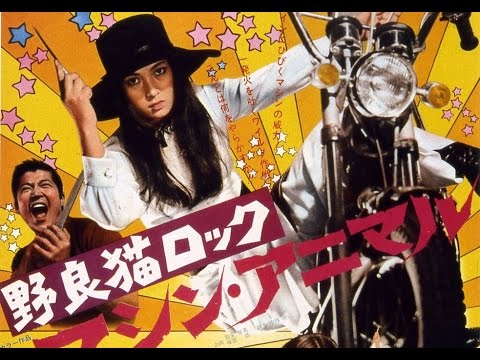
Stray Cat Rock: Machine Animal (1970)

In the fourth of five Stray Cat Rock (or Alleycat Rock) films, two Japanese men help a deserter from the Vietnam War escape to Sweden and fund their plan by selling LSD. But soon, rival gangs find out about the drug deal and want a piece of the action for themselves.

Meiko Kaji returns again, as does the jazzy rock and roll and elements of style established by the first four films in the series. Director Yasuharu Hasebe returns as well, filming this installment in just two weeks. It was released two months after the last one, so either they were rushing to get these out before the trend died or the Japanese public was demanding more and more girl gang group movies.

This one is a lot like the first two, other than the acid taking sequence, which has our heroes Maya and Nobu refusing to partake. Drugs were really becoming part of Japan’s culture here, but take it from someone that’s been there a few times. Thanks to incredibly strict prison sentences for even first offenders, any taking of them is kept incredibly secretive. That said — if you want to see a movie where Del Monte canned tomatoes turn into blood…

There’s also a lot of bowling in between all the motorcycle chases and go-go dancing. It just kind of makes sense, I guess.

You can watch this on Amazon Prime or get the Arrow Video box set.

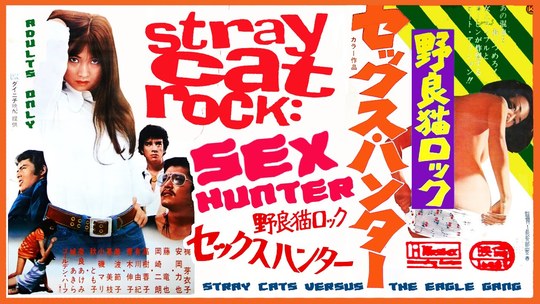
Stray Cat Rock: Sex Hunter (1970)

Shot at the same time as the second film in the Stray Cat Rock series, Wild Jumbo, this third film has the return of director Yasuharu Hasebe. This time around, the Alleycats — led by Mako, played by series star Meiko Kaji — battle the male gang the Eagles. Look — any movie that starts with a girl versus girl knife and flashlight fight and a girl gang robbing a salaryman is worth watching.

When one of the Alleycats named Mari turns down the advances of the Eagle’s member Susumu and hooks up with a mixed-race guy named Ichiro, the gang’s leader Baron goes crazy. Turns out his sister was attacked by several mixed-race men, so he decides to take out anyone that isn’t purely Japanese. It also doesn’t help that Mako falls for another mixed race stranger.

Race relations were a big deal at the time in Japan, as many Japanese/American babies were being conceived. The film was shot near the U.S. Naval base in Yokosuka and features the girl group Golden Half, whose five members all had Japanese mothers and gaijin fathers, which was their selling point.

From the first frame, I was happy to have Hasebe as the director. This is a cool, calculated film filled with violence and themes of male impotence and the actual melting pot of races producing a better future. Like all the Stray Cat films, the women are the strong ones, with men fighting to own and control them. But they just can’t — there’s no way they can tame them.

One question I have: were Jeeps really that big of a deal in 1970 Japan? These movies have more of them driving all over the place than any I’ve seen!

You can watch this on Amazon Prime or get the Arrow Video box set.

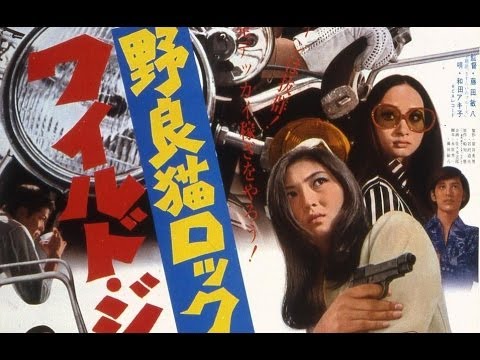
Stray Cat Rock: Wild Jumbo (1970)

Released only three months after the first film in the series, Toshiya Fujita’s replaces Yasuharu Hasebe for the second of five Stray Cat Rock films. No worries — they’ll split directing duties for the rest of these films. This one is concerned with five friends who come up with a plan to rob 30 million yen (about $270,000 in today’s exchange). Meiko Kaji returns from the first film, now the star and no longer the sidekick, although her character has no relation to the first film.

A group of wild young people called the Penguin Club (or Pelicans, I’ve seen it written that way in articles too) who love to play around in their Jeep shoot out the tires of a car driven by a wealthy woman named Asako. They soon set her free, but she’s already fallen for Taki, a member of the gang. She soon tells him that she’s part of a religious group called Shinkyo Gakkai and they could help her be part of a heist to make some real money.

The third entry in the series, Sex Hunter, was filmed at the same time, with Meiko Lee and the Alleycats running back and forth between the sets. That’s pretty crazy.

The Penguin Club goes from rebelling against nothing and doing stupid things like stealing dump trucks to something really foolish: digging up a stash of weapons from the end of the war and fighting the cops. The tone dramatically shifts by the end of the film. I didn’t enjoy this one as much as the first film in the series, but there’s still plenty of good parts.

You can watch this on Amazon Prime or get the Arrow Video box set.

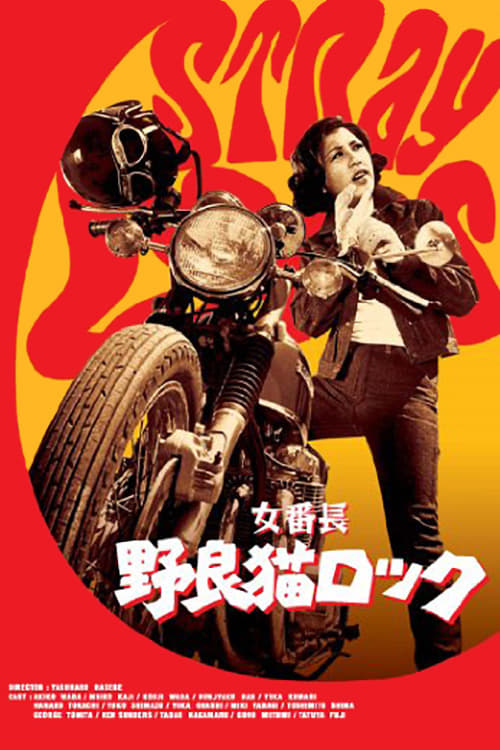
Stray Cat Rock: Delinquent Girl Boss (1970)

Also known as Alleycat Rock: Female BossFemale Juvenile Delinquent Leader: Alleycat Rock and Wildcat Rock, Yasuharu Hasebe directed this “violent pink” film, which is stylish yet grim, presenting a Japan that’s been through hell and refuses to look back. Everyone dresses well. Everyone is ready to fight. Everyone is prepared to die.

Roger Corman’s 1966 outlaw biker film The Wild Angels was a surprise hit in Japan. Toei cashed in with their film Delinquent Boss and the Nikkatsu studio went one further with this film, even aping the title of Toei’s film. Despite starting as a ripoff, the Delinquent Girl Boss series lasted for two years and give films which are fondly remembered.

Tough girl biker Ako (pop singer Akiko Wada, who was also the Japanese voice of Marge Simpson) meets Mei (Meiko Kaji!) and the Alleycats as they’re about to have a knife fight in Shinjuku with another gang of girls. Those girls have no honor and call in their men for help, but Ako helps the Alleycats to survive and becomes their leader.

Then, Mei’s boyfriend wants to join the Seiyu Group, a gang of right-wing Yakuza nationalists. To prove he belongs, he must convince his friend Kelly to throw a boxing match. However, the girls change his mind and he wins the fight. That leads to the main conflict of this movie, where the girls are on the run from this powerful gang.

Mei was just a supporting character here, but in the subsequent movies, she became the cool lead that she was meant to be. This movie is all about violence with style, as well as a girl gang that saves men instead of being saved by them. Everything is loud rock and roll, but it doesn’t feel like anyone is going to live forever.

Hasebe wanted to infuse his film with the culture of the time. He attended rock clubs and went to protests. The result was that Nikkatsu saw this movie as the new direction for their studio and moved toward more youth-oriented action films, including the sequel, Stray Cat Rock: Wild Jumbo, which was released only three months later.

The Alleycat Rock series came to an end when Meiko Kaji left the Nikkatsu studio to join Toei and become the star in the Female Prisoner: Scorpion series and Lady Snowblood. Hasebe made his mark, such as it is, on Japanese cinema with his series of even more depraved violent pink films, such as Assault! Jack the Ripper.

You can grab the Arrow box set of the entire series or watch this on Amazon Prime.

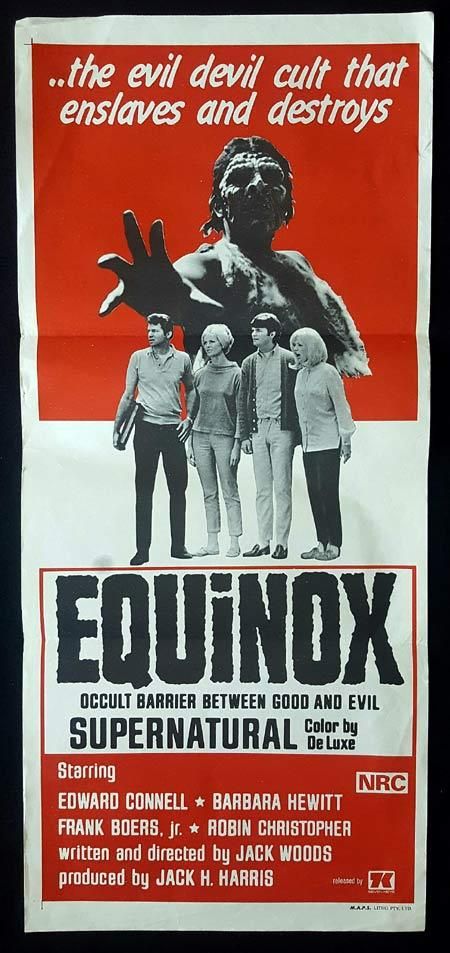
Equinox (1970)

Also known as The Equinox … A Journey into the Supernatural and The Beast, this movie was directed by Jack Woods and Dennis Muren. It started as a $6500 film that Muren made with his friends Dave Allen, Jim Danforth and Mark McGee while he was in business classes at Pasadena City College. Strangely enough, Ed Bagley Jr. was one of the cameramen!

Producer Jack H. Harris hired Woods, an editor, to add enough footage to make this a full length film. When the final movie was released, Muren was listed as the associate producer, even though he directed the entire movie and created much of the effects.

Four teenagers — David Fielding, Susan Turner, Jim Hudson (Frank Bonner, who would go on to be Herb Tarlek on WKRP in Cincinnati) and Jim’s girlfriend, Vicki — have gone looking for a lost scientist named Dr. Arthur Waterman, who is played by Fritz Leiber. Leiber isn’t just any actor. Nope, he’s one of the foremost fantasy authors of all time and the person who actually came up with the term sword and sorcery. He was brought into this project by Famous Monsters of Filmland editor Forrest J. Ackerman.

They have a picnic — as you do when you’re in the foreboding woods — then make their way to a mysterious castle. They also learn that Dr. Waterman’s cabin has been destroyed and even worse, the demon Asmodeus (played by Jack Woods, the new director, when he’s a park ranger at least) is hunting them with his army of monsters. He really goes after them once they get a book of spells from an old man inside a cave. Those monsters — a giant ape and a green-furred giant — are marvels of stop-motion. Our heroes barely escape as the ape kills the old man.

It turns out that the book belonged to Dr. Waterman, who used it to conjure up demons of his own, but lost control of a tentacled beast which destroyed is home. After Asmodeus kills Jim, he reveals his true form of a winged demon. Dave and Susan are killed before our remaining teens, Dave and Susan, make their way to a cemetery.

After a battle with Asmodeus, they destroy the demon with a giant cross, which causes the cemetery to explode, killing Susan. Another giant monster appears and tells Dave that he will die in one year and a day, which drives him insane. The movie quickly moves to that time, where we see Susan — now looking totally evil — showing up at his insane asylum.

The entire crew that made this movie did so much more afterward. Muren would go on to become a nine-time Oscar-winning visual-effects artist for his work on Star Wars and Jurassic Park. Danforth would create matte work and stop motion work for The Thing, Creepshow, Clash of the Titans and Prince of Darkness amongst others. Mark McGee, who was in high school when he worked on this film and already writing for Famous Monsters (he’s the one who got the connected with Leiber and brought Forry along to be a doctor’s voice) wrote the scripts for Sorority House Massacre II and Sorceress, both movies directed by Jim Wynorski. Finally, David Allen would go on to work on everything from Flesh Gordon, Laserblast and The Howling to Full Moon efforts like the Puppet Master series and The Dungeonmaster.

You can see the influence of Equinox on movies like Evil Dead and Phantasm. It’s the bridge between the Ray Harryhausen stop motion movies they loved and the occult-tinged efforts that would make up 1970’s genre films. This is a movie packed with ideas and talent.

You can watch Equinox as part of the Criterion Collection.