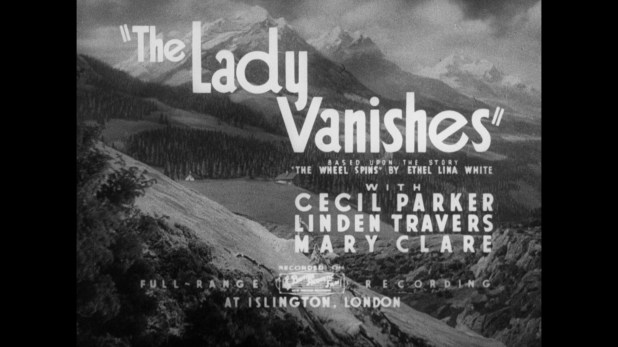
Based on The Wheel Spins by Ethel Lina White, this Hitchcock thriller is about Iris Henderson (Margaret Lockwood), who is traveling through Europe by train and soon learns that her fellow passenger, Miss Froy (May Whitty), has disappeared, and no one remembers her. Is Iris just seeing things? Has a hit on her head ruined her hold on reality? Will she fall in love with clarinet player Gilbert (Michael Redgrave) and leave her fiancé?
Originally called The Lost Lady, this was to be directed by Roy William Neill. A crew went to Yugoslavia to shoot some background shots, but when the police accidentally learned that the country wasn’t treated well in the story, they kicked the crew out. A year later, as Hitchcock was trying to fulfill his contract, he took on this story.
The characters of Charters and Caldicott, played by Basil Radford and Naunton Wayne, were so popular that they would appear in three more movies: Night Train to Munich, Crook’s Tour and Millions Like Us. While not called by name, they also played versions of the characters in The Next of Kin, Dead of Night, A Girl In a Million, Quartet, It’s Not Cricket, Passport to Pimlico and Stop Press Girl as well as radio appearances. The 1979 Hammer remake featured Arthur Lowe as Charters and Ian Carmichael as Caldicott, while a modern-day TV series from 1985 starred Robin Bailey as Charters and Michael Aldridge as Caldicott.
July 28 – Aug 3 Screwball Comedy: Just imagine, the Great Depression is raging and you’re getting less than a fin a week at the rubber boiling factory, but it only costs two bits to go to the movies all day, so let’s watch some quick-talking dames match wits with some dopey joes!
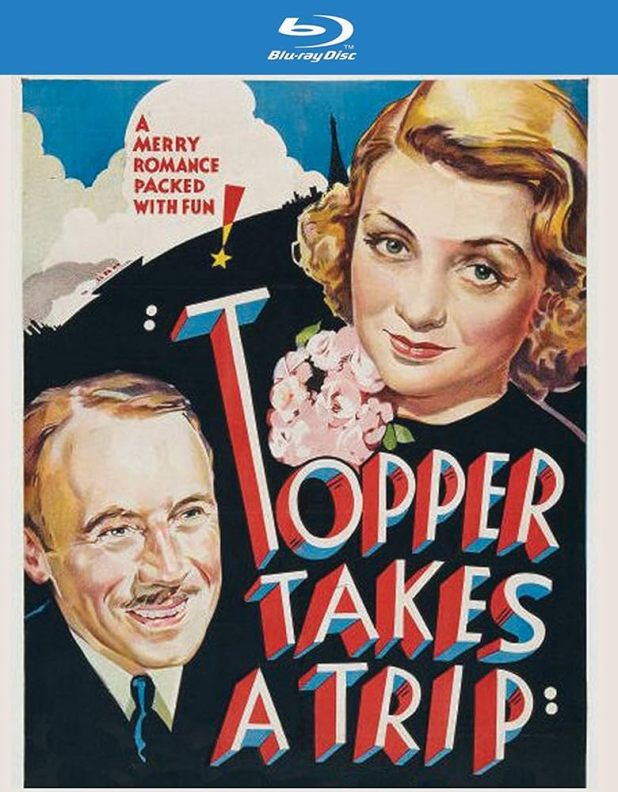
The sequel to Topper finds Marion Kerby (Constance Bennett) still on Earth with George already in Heaven and Cary Grant only appearing in reused footage. To get her own place in the hereafter, Mation must reunite Cosmo (Roland Young) and Clara Topper (Billie Burke). That said, Clara left him over a supposed affair between her husband and Marion.
The most famous actor in this might be Skippy the dog, who had been in more than a dozen movies before this and is best known as Asta in the five Thin Man movies. He was also in Bringing Up Baby and The Awful Truth. Check out the press he got: “His owner is Mrs. Gale Henry East, once a prominent movie comedienne…When Skippy has to drink water in a scene, the first time he does it he really drinks. If there are retakes and he’s had all the water he can drink, he’ll go through the scene just as enthusiastically as though his throat were parched, but he’ll fake it. If you watch closely you’ll see he’s just going through the motions of lapping and isn’t really picking up water at all. And, because he has a sense of humor, he loves it when you laugh and tell him you’ve caught him faking but that it’s all right with you.”
It was directed by Norman Z. McLeod, who also filmed the first film, and written by Jack Jevne, Eddie Moran and Corey Ford.
Roadshow Rarities (June 30 – July 6) In the old days of theatrical releases some of the more lavish movies would be promoted by holding limited screenings in large cities. These roadshow releases would generate hype before the nationwide release and allow producers to tweak the film to the audience’s reaction. This model also worked for low budget productions that may have had no intention of a wide release. These explo roadshows traveled an informal circuit of theaters, churches, revival tents, high school auditoriums and anywhere else they could run a projector. They frequently promised more than they delivered and left town before the angry audience could catch up to them. Through the restoration efforts of SWV many of these movies have survived to piss audiences off to this very day!
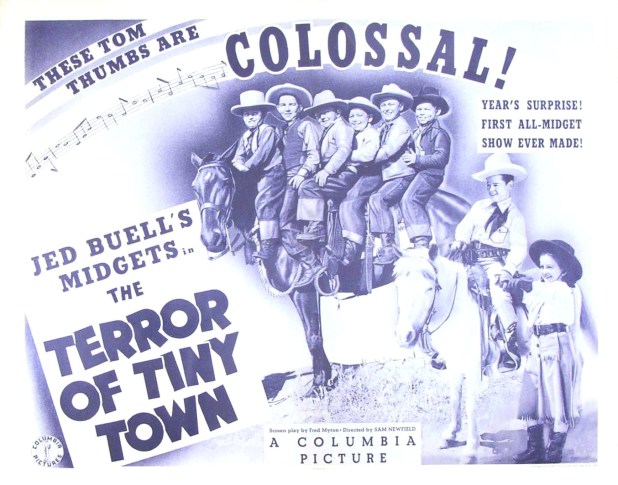
Sam Newfield directed around 250 movies. He didn’t specialize in a genre. He made about twenty movies a year. He made so many movies that he also used the names Sherman Scott and Peter Stewart so that it wouldn’t seem like he had made so many.
In fact, Fred Olen Ray even used the name Sherman Scott to make Tomb of the Werewolf, Haunting Desires,Super Ninja Doll, Girl with the Sex-Ray Eyes, Bikini-A-Go-Go, The Bikini Escort Company, BikiniCavegirl,Bad Girls from Mars and The Prophet. He used Peter Stewart for 13 Erotic Ghosts, Dear Santa and Mom’s Outta Sight.
Newfield heard someone say, “If this economic dive keeps going, we’ll be using midgets as actors.” That’s why he made a Western with little people.
It starts with a man (Stephen Chase) introducing the movie and stars Buck Larson and Bat Haines getting ready to fight before the story has even played. In that story, Haines and his gang are stealing the Shetland ponies of Buck’s father and selling them to another farmer, Tex Preston. Buck also falls in love with that man’s niece, Nancy (Yvonne Moray).
Buck was played by Billy Curtis, who started his career in the vaudeville and pro wrestling. In his fifty year career, he was in everything from The Wizard of Oz (as the Munchkin city father) to the AIP small person gang film Little Cigars and High Plains Drifter. He also played Mayor McCheese, Bark Bent and Superpup in the wild pilot The Adventures of Superpup, a Martian in The Angry Red Planet, a child ape in Planet of the Apes and appears in Eating Raoul.
The bad guy is played by “Little Billy” Rhodes, who was the Barrister in The Wizard of Oz, which also had Charlie Becker (the cook in this movie) play the mayor, John T. Bambury (Buck’s dad) was a soldier, Joseph Herbst (the sheriff) was a soldier, Nita Krebs (a vampire in this movie!) was one of the Lullaby League, George Ministeri (the blacksmith) was a villager, Fern Formica (Diamond Dolly) was a sleepyhead, William H. O’Docharty (The Old Soak) was a villager and Jerry Maren was a townsperson in both movies. He was also the last surviving cast member of The Wizard of Oz with an identifiable speaking or singing role before dying in 2018.
Many of the actors were former members of the performing troupe The Singer Midgets — I apologize for having to keep using that racially horrible term — which was founded by Leopold Singer. He even created Liliputstadt, a special town at the Venice in Vienna amusement park, where they could perform. Singer provided 124 actors and stand-ins to play Munchkins. While his employees called him Papa, some say he kept half their money. This movie’s star, Billy Singer, said that he “had a reputation for cheating his midgets.”
This is another movie that Harry Medved and Randy Lowell listed in The Fifty Worst Films of All Time (And How They Got That Way). It also won he P.T. Barnum Award for Worst Cinematic Exploitation of a Physical Deformity in the Medveds’ The Golden Turkey Awards.
As always, they are wrong.
This was written by Clarence Marks and Fred Myton, who wrote over 170 movies, including Nabonga.
Directed and written by Harry Revier — who also made Lash of the Penitentes and would come back in the 50s and 60s to re-edit movie serial Buck Rodgers into Planet Outlawsand The Lost City into City of Lost Men — this original exploitation movie was the first produced by Kroger Babb, who would go on to make Mom and Dad.
Star Shirley Mills, who was also the youngest daughter in The Grapes of Wrath, is nude in this movie. That’s pretty amazing seeing as how it was made at the time of the Hays Code. It was an educational movie and made outside of Hollywood, but Mills is also 12 years old in this movie. You can imagine how controversial it was.
Miss Carol (Diana Durrell) has come back to the Ozarks to be a teacher and to end child marriage, which is the shame of the movie. Jake Bolby (Warner Richmond) wants to marry Mills’ character and is stopped by the law and then killed by Angelo the dwarf (Angelo Rossitto). Rossitto is in a ton of movies, all the way from the 20s to the 80s. He may be best known as the Master part of Master Blaster in Mad Max: Beyond Thunderdome.
Babb tried submitting this movie for a certificate of approval, only to be told it was “a sexually abhorrent abnormality which violates all moral principles.” He released it anyway and when it played Indianapolis, film critic Anna Horn said that she was horrified that a “cheap, crude, mislabeled morality play would be shown in a major Indiana family theater.” Babb met with Horn and instead of her writing a review, they stayed together for thirty-six years. She would write his next film, Mom and Dad.
Based on the James Lee Wong series in Collier’s Magazine written by Hugh Wiley, Mr. Wong, Detective is the first in a five-movie series starring Boris Karloff — yes, from that Asian town of Dulwich, Surrey, England — as Mr. Wong. Then again, Karloff had already played Dr. Fu Manchu in The Mask of Fu Manchu and General Wu Yen Fang in West of Shanghai.
Simon Dayton (John Hamilton) wants protection from Mr. Wong but by the time he takes the case, it’s too late. It turns out that Dayton manufactured poison that foreign powers want. That very same poison is what killed him. Could it be them? Or perhaps his business partners, who stand to get rich? Or the inventor of that poison gas that Dayton cheated?
Made by the Poverty Row Monogram Studios, the budget on these films — which are somewhat derivative of Fox’s Charlie Chan series — was so low that several actors have no dialogue. That’s because they would have had to be paid $10 for their role, per SAG rules.
Director William Nigh (The Ape) directed all five of these films, while the sixth film in the series, Phantom of Chinatown, was directed by Phil Rosen and stars Keye Luke instead of Karloff. That’s interesting, as Luke was best known as Charlie Chan’s Number One Son. He’s a younger character, Jimmy Wong, and was going to be in four movies, but distributors weren’t interested in the series without Karloff.
The Kino Lorber blu ray release of the Mr. Wong Collection has new HD masters of each of the five films — with a 2K scan of the fine grains — and this comes with audio commentary for Mr. Wong, Detective by Tom Weaver and Larry Blamire. You can get it from Kino Lorber.
EDITOR’S NOTE: This was originally on the site on February 6, 2020.
This Universal movie serial — told in twelve parts — shares some similarities with the earlier serial The Vanishing Shadow, including the inventions of an invisibility belt and a remote-control robot.
That makes sense — at the time, Universal was all about recycling. This movie contains stock footage from The Invisible Ray and The Vanishing Shadow, as well as music from the Flash Gordon serials and Frankenstein movies, plus car chase footage that had been used in several other serials and newsreel footage taken from the Hindenburg disaster.
Eight years after his star turn in Dracula, Bela Lugosi’s career was in decline. He had been typecast as a horror star and was not seen as talented as his co-star — and possible rival — Boris Karloff.
This career downturn had many factors behind it. Universal changed management in 1936 and due to a British ban on horror films, they dropped the once popular films from their production schedule. Lugosi found himself consigned to Universal’s non-horror B-film unit — such as the team that made serials like this. And while the actor was busy with stage work, he had to borrow money from the Actors Fund to pay the hospital bills for the birth of his son Bela George Lugosi in 1938.
However, that year brought Bela back. California theater owner Emil Umann revived Dracula and Frankenstein as a special double feature, a bill so successful that it played to sellout crowds and Lugosi himself came to host the movies. The actor would say, “I was dead, and he brought me back to life.” Universal took notice of the tremendous business and launched its own national re-release, as well as hiring Lugosi to star in new films.
The Phantom Creeps — yes, we’ll get back to this movie in a minute — was the last of the five serials that the actor would make, shot right after he returned from making Dead Eyes of London. It was released a week before his comeback vehicle, Son of Frankenstein.
Sadly, by 1948, the parts dwindled again and severe sciatica from Lugosi’s military service was treated with opiates, causing a downward spiral that the actor would never really emerge from. He appeared in movies like Bela Lugosi Meets a Brooklyn Gorilla and Ed Wood’s Bride of the Monster. After making that movie, he checked himself into rehab, one of the first celebrities to publically do so. According to Kitty Kelley’s His Way: The Unauthorized Biography of Frank Sinatra, “Old Blue Eyes” helped with expenses, despite never meeting Lugosi before and visited him at the hospital.
The actor died of a heart attack in 1956, having just married his fifth wife. And yes, he was buried in his Dracula cape.
In this film, he plays Dr. Zorka, a man who loves to make weapons and refuses to sell them to anyone or any country. This upsets all manner of people, like Dr. Fred Mallory, his former partner, and government man Captain Bob West.
Dorothy Arnold, who plays love interest Jean Drew, was the first wife of baseball star Joe DiMaggio. Look for Edward Van Sloan, who always played the doctor battling the supernatural in Universal films. He’s Van Helsing in Dracula, Dr. Muller in The Mummy and Dr. Waldman in Frankenstein. In fact, that movie begins by him warning the audience that they can leave now if they’re too frightened. And Ed Wolff, the seven foot, four inch actor who played the robot, was also in Invaders from Mars and The Return of the Fly.
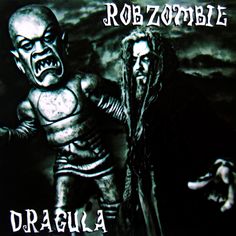
Speaking of the robot, you may have seen him in Rob Zombie’s work. The song “Meet the Creeper” is based on the movie and the robot often appears in the singer’s music videos and stage shows.
In 1938, King Kong was reissued in Japanese theaters and smaller studios — like Zenshō Cinema — took advantage of the popularity by making this film, broken up into two silent chapters.
On March 31, Edo ni Arawareta Kingu Kongu: Henge no Maki (The King Kong That Appeared in Edo: The Episode of the Monster) played theaters, followed a week later by Edo ni Arawareta Kingu Kongu: Ōgon no Maki (The King Kong That Appeared in Edo: The Episode of Gold).
Fuminori Ohashi, who assisted in the creation of Godzilla, as well as working on as a makeup advisor on Planet of the Apes and as a technical advisor and designer for the attractions at the original Disneyland, created the ape suit for this movie.
The first chapter is all about Chinami, the daughter of the rich Hyoue Toba, who has been mysteriously kidnapped one night. Magonojyō Gō, one of Toba’s workers, is the one who kidnapped her, using his father’s pet ape. In the second part, various money stealing schemes end with nearly everyone dead, including the ape.
This is a lost film, as the nuclear blasts and bombing of World War II destroying so much of Japan’s archived films. There was conjecture for years as to whether the film even existed until Ohashi spoke on it and still debate whether the ape in the film is normal-sized or a kaiju.
If he was giant-sized, this would make The King Kong That Appeared in Edo the very first Japanese monster movie of its kind.



 B&S About Movies
You must be logged in to post a comment.