If you know me, you know how much I love G.I. Joe and horror movies. Well, this new toy line is perfect!
Let Grindhouse Toys tell you all about it!
“World War HELL is a vintage-inspired 1/18 World War II horror O-ring action figure line. Combining the nostalgic fun of Friday nights at the video store, 3-3/4 action figures and ridiculously over-the-top low-budget horror movies. Featuring classic O-Ring construction with a twist. Extra articulation, killer sculpting, highly detailed interchangeable accessories, all with premium deco. Incorporating a VHS-style packaging design, every figure comes in a slipcase box that beautifully showcases the movie poster artwork. Our team has spent the last year and a half designing, sculpting, fabricating and painting to create these incredibly detailed prototypes.”
World War HELL tells the story of an alternate history World War II. An apocalyptic world filled with skeletons, demons, corpses, ghosts and all manner of hell beasts. CERBERUS (The Allied department of supernatural and occult) is fighting a losing battle against COLONEL MALLUM and THE REVENANT, to keep the 9 circles of hell closed. Spearheading the ground assault is SGT. GRAVES and THE DEVIL’S REJECTS. A highly trained special forces unit made up of questionable heroes.
World War HELL: Series 1 is coming, and hell is coming with it. Each character is armed to the teeth and includes multiple interchangeable parts, so that you can build your army the way that you want. These are all of the rewards available on launch: CORPSE, SGT. GRAVES, SGT. SPECTER, CERBERUS TROOPER, and the GREEN ARMY MEN FROM HELL!
I had the chance to speak with Chris Scott, the creative powerhouse behind this line. He has worked on multiple toy lines in the independent toy industry, including but not limited to: Operation: Monster Force, Eagle Force Returns, The Naughty or Nice Collection, Skeletron Red Shadows, Operation Recall, The Prisoner, Nancy Drew, Longbox Heroes, The Fresh Monkeys, and Soldiers of Fortune. Grindhouse Toys has also released two highly sought-after and now sold-out action figures. The Multiverse Massacre D.R.E.A.D. Trooper and Necromancer.
B&S About Movies: How did you make the jump from collecting toys to making them?
Grindhouse Toys: From collecting toys, I got into customizing as well. I had been doing a lot of Marauder (a line of customizable figures you can find at this link)stuff, but I was intimidated about painting them. But then I started doing a bit of it and took a few classes at Joefest, and I got good at it quickly. I started building up a little bit of custom work and working with different people. My friend Ed Hellman actually recommended me to Bill Murphy, who is in charge of Fresh Monkey Fiction — he does Eagle Force and Operation: Monster Force — and he needed a painter to work on Monster Force. He reached out to me and said, “Hey, do you want to do paint masters?” The line combines G.I. Joe and monsters, so I said, “Absolutely.” Beyond just choosing the colors, I also get to do the art direction. We’re now in wave four of those figures.
I started painting on other stuff for Bill. He gave me numerous opportunities to work on other lines like Long Box Heroes, which were Super Powers-style action figures but instead of batman and superman it was The Rocketeer and The Goon. I worked on the Naughty or Nice collection, which is the Santa Claus action figure line that Arlen Pelletier and Bill produce, and they just had me doing all kinds of stuff. I’ve also worked for several different companies, and I’ve been wanting to do my own thing for a while. It was fun to work on all that, but I can do my own. I want my own IP, my own stories, and it’s been pretty cool to get to this point already.
B&S: There have been so many toy Kickstarters over the past few years, but what’s really unique about your stuff is that there’s a unique vision and that you can tell that, like, it feels like the story comes first.
Grindhouse: Yeah, that’s what I wanted. Something to like really connect and you know — I’ve always been big into movies and storytelling. It goes hand in hand with the toys that we collect. I wanted to bring that to what I was working on.
B&S: It feels like Mars Attacks! in that it’s humans against the undead.
Grindhouse: As I came up with this line, one of the hardest things to do is- it’s so expensive — to tool the parts (mold the parts) in China. You know I can’t come up with a bunch of uniquely sculpted figures. It would not be a viable, so I started brainstorming around the idea of shared parts. I got into the concept of World War II being at the edge of modern technology; it’s a diesel punk time where we don’t have computers yet. I did the Multiverse Massacre figures with Bill — the D.R.E.A.D. Trooper and Necromancer — and when we got the figures back from the factory, they were just in plastic bags. That’s not packaging! I found someone who had clamshell boxes, and we made that into something different. Giving them VHS style packing.
For this line, instead of a modern body, I wanted to go back to O-rings. There’s something about 1980s G.I. Joes and renting horror VHS tapes that just seems to go together.
B&S: But you’ve taken the articulation beyond what we had as kids.
Grindhouse: Everybody’s doing really cool stuff already. We’re in an O-Ring renaissance. Delta-17, Operation Recall, Callsign Longbow, Skeletron, Strike Force Alpha — you know all of these different companies have done extraordinary things with O-ring. They’re creating fantastic items that complement our old Joes. I said, “Let’s go a different direction and update the articulation.” Adding articulation in the neck, ankles, wrists. Adding an overlay, which was former Hasbro sculpt supervisor James Carter’s idea, is a second piece over the body that adds a whole new dynamic. I wanted to add G.I. Joe Classified-style quality sculpting to this world.
B&S: What movies influenced these figures?
Grindhouse: I’m a big fan of Evil Dead, especially Evil Dead II, so I didn’t want it to be too serious. I wanted it to be both scary and ridiculous. That’s why it works so well as an O-Ring figure: you have this over-the-top gory corpse with its head exploding and you still see where the rivets go and the goofy O-Ring construction. I also love The Thing, and Aliens is one of my all-time favorite movies. I didn’t want the science fiction of Star Wars. I wanted it to be scary when I was a kid! (laughs)
Those are the big three there, but I also love all the ’80s action movies with their goofy taglines. I mean my phone case is John Matrix from Commando holding his giant rocket launcher utilizing the camera phone.
I did try to make some things realistic — the guns are especially — but these are Nazi experiments with zombies, so it can be goofy, like something Troma could have made.
B&S: Have you had a good reaction with the VHS cases?
Grindhouse:Oh yeah, yeah, so people love that. I want to go for a horror exploitation feel. The packaging is so important — just look at the G.I. Joe toys we grew up with, the paintings that Hector Garrido created for them. Plus, you have the file cards, the comic book, the cartoon…the world building.I wanted something special so Brian Sauer and I created the VHS packaging, and even won a best of category packaging award by the Art Directors Association of Iowa for the Necromancer VHS packaging.
B&S: Do you have plans for more after the Kickstarter?
Grindhouse: Oh yeah, absolutely. I have so many more ideas coming. And I did these at 3 3/4″ because I want vehicles and army building to be part of World War Hell. We need a tank. (laughs)
I have tons of ideas. There’s a lot of cool characters. Even though this is supposed to be a World War II movie, the sky is the limit. Ash goes back and forth in time, after all. My characters can too. No real rules and nothing is holding me back.
I’m so excited about these toys! Chris is a great guy and deserves your support and money!
If you haven’t picked it up from the movies I talk about on this site, I’m a big fan of Severin Films. I was so excited about this opportunity to speak with David Gregory, the man behind the label. In this interview, you’ll learn about their new Russ Meyer releases, what it took to make that happen and how movies are selected for Severin, as well as an exploration of the films of Bruno Mattei and Joe D’Amato, the video nasties era from a true expert and even a possible sneak preview of a few upcoming releases.
You can listen to this interview here or read it below, where it’s been edited for flow.
B&S About Movies: I talked to Kier-La Janisse a while back, and she referred to you as the filmmaker whisperer. That was her nickname for you. She said that so many of these people she spoke to would not give her the time of the day, but when you spent two minutes with them, they were suddenly like, “Yeah, take everything. Here’s all this footage.” Is that true?
David Gregory: Well, I think that’s a bit of an exaggeration. (laughs) I mean, she’s pretty good at tracking down filmmakers and rights owners herself. But there have been a few situations where I’ve been very persistent in going after titles in ways others might have given up on. When I get to the right person, I make an effort to make a case for why Severin is the best home for a given film or collection. And that was the case with The Meyer Estate. We had to go to some lengths in order to convince them that we were the right people to do this.
B&S: Was it years that you put into this to try to get them to release the films?
David: I first tried to get the films for other companies back while working at Blue Underground. So, in the early 2000s, a couple of companies tried to do it. And I was consulting for a couple of other labels as well.
I did put in a pretty substantial offer back then. It didn’t go anywhere. But no, this latest situation came around a couple of years before the actual releases, when an intermediary had been talking with the estate, and he came to us. And that was when we had to start, you know, making the case for why we’re the right company.
Janet at The Trust is the ultimate decision-maker there. She was concerned that we were more of a horror label, so it wouldn’t be a good match, but we could show our pedigree of all the various genres, including erotic films from around the world that we’ve restored, released and remastered as well.
B&S: I am so excited that these are coming out because my biggest worry was that it was tough for folks to find the Meyer films outside of the ones that Criterion had put out. The fact that these movies are somewhat reentering circulation is amazing. I never wanted him to become a lost director or somebody whose work was hard to find. Did you feel that kind of responsibility?
David: I’m not sure the Trust ever wanted that to happen either. It’s taken time for them to find a company that will do it the way they think is the right home for the place because other boutique labels can do the work just as well as we have. Still, they wanted things like retaining Russ’s graphic design for the covers, for example, and we designed them before we even signed the contract to show that we agreed. We want them to look like the way Russ had the VHSs but just updated to the Blu-ray and UHD sizing. We wanted to go to extra lengths before signing the deal to show we were on board.
B&S: That was my favorite thing when I got them. Wow, this is just like the videocassette I owned, you know, 25, 30 years ago.
David: And it’s funny, isn’t it? Because those videocassettes were everywhere back in the video era, it really wasn’t hard to see Russ Meyer’s films in the video era. Many were available on Laserdisc, too.
But he had started to deteriorate. His mental health had started to deteriorate in the early days of DVD. So he never really jumped, even though he was ahead of the game quite often in the previous technologies to get all of his stuff out there, distributing it himself, you know, taking the phone calls famously at his house, and you have to order copies from him. So, that just fell by the wayside when he couldn’t keep up once the DVD era kicked in. They did do some of the DVDs themselves, but they used the existing masters, which, of course, when VHS came in, were state-of-the-art transfers, but they are far from state-of-the-art now.
You know that technology moves on quite a bit and quickly, but there was no resistance on the part of the Trust—quite the opposite. They wanted to make sure that these were now state-of-the-art transfers. And that was another thing. They needed to ensure that these were beingå done to the best possible specs.
B&S: It’s amazing to have them because, in my head, I experienced them as the videocassettes. So I know how scenes and colors look. And now, to see these, it’s almost getting a chance to see a completely new movie without getting too hyperbolic.
David: Yeah, exactly. It was the same when we were watching the transfers as they were in the scan. Once we watched the scans as they were being color corrected and restored, it was leaps and bounds like above what we had seen before. That is the point of upgrading things like this. We went to extra lengths on these, particularly on Beneath the Valley of the Ultra Vixens, which was the one that had damage to the negative. But, you know, we certainly didn’t want it to look ropey when going to this trouble. So we had to put in a lot of hours to get rid of some of the moisture damage on the negative. Also, the aspect ratio, you know, they’d only been shown on their open matte versions before, which is not how they were shot and supposed to be exhibited.
B&S: That’s my favorite Russ movie. So it’s like seeing that in as perfect a format as possible… To me, it was the biggest story of physical media last year. This is the stuff that I want to come out.
There are other great labels, but you guys are like the Criterion collection of the movies that I like if you will. I was a big fan of Night Killer before you put it out. That is such a Severin movie. And then when you guys grabbed it, I was like, “This is perfect.”
David: That sort of thing is very much in our orbit. The umbrella of what we do has expanded quite a bit over the last few years. But I think we’ve stayed true to what we always were. You know, we’ve incorporated more voices and more people into deciding what that roster of films is.
B&S: I read an interview where you said that you feel like you’re almost putting together a team of people, almost like how studios had that group of folks, like a Corman kind of group of folks. And I think that’s amazing. What makes someone able to work for you? And also, what makes a film a Severn film?
David: Well, the first part was more kind of something I realized when we did the annual Super Shock Festival last year when I had, you know, the team of full-time employees and freelancers all gather together in Los Angeles. And we have this all-day event where we show three new releases. We don’t tell anybody what it is ahead of time, and they get to hear about them first.
It was then when we were all hanging out back, and I was looking around. I was like, I always really wanted, I always was inspired by John Waters, in particular in Shock Value when he talked about his stock company of like-minded people who would go on these adventures with him and make these movies, all bringing their kind of creativity and uniqueness to the package. It’s not all just John at the top; everybody does what he says. It’s like everybody brings something to it. And, you know, Ed Wood had that. Ray Steckler had that. And, you know, many independents have that for several reasons. You need people who will roll with it to be able to make low-budget movies and get them done.
But in this case, I realized that, yes, we have that now, and while we’re not necessarily going out and making movies the way they did, we’re definitely using our own unique charms and expertise to bring things to the table. And that’s what makes me really happy.
As far as what constitutes a Severin film, it’s often ultimately my decision. There are exceptions, such as the box sets that Kier-La does. She’s the one who’s making those choices. I mean, she still ultimately has to run them by me, but you know, in a lot of cases, I don’t even know what these films are, so I’m trusting her and her deep knowledge of cinema that is beyond mine to bring interesting stuff to the table. Really, that’s it. It’s stuff that interests us. We all are into the same movies. And there are slightly different age groups now, though. I realize now that I’m in the older age group. When some of the Intervision stuff came up, which was shot on video, that was not my cup of tea. But I could see in the people a decade or younger than me; they grew up watching that stuff and finding it interesting and fun. So it doesn’t get counted out just because it’s not my cup of tea. As long as it’s something that one of us is passionate about and it doesn’t look too out of place in the Severin line, which at this point, now that we’ve got, you know, Mike Lee movies and, and Overboard, it’s like, it can stretch pretty wide.
B&S: What was the reason behind Overboard? I’ve always been interested that that was a release. Was it just trying to expand?
David: It was a drunken license, that is what it was. I was in Santa Barbara with my partner and a couple of friends. One of the friends she started talking about how she loves Overboard. And we started talking about how that movie has a lot of gaslighting. There’s a lot wrong with that movie. And I somewhat facetiously said it wouldn’t look out of place next to The Sinful Dwarf. And we all laughed. Can you imagine if there was a Severin version of Overboard?
I texted my colleague, who was making an offer to MGM for some other titles, and put in an offer for Overboard. This would be hilarious, you know, and then they accepted the offer. So we ended up—there was no going back at that point—and so we did. And it was a movie I liked that we were happy to put out. But it is funny that it came about.
B&S: I like seeing it on con tables next to your other releases.
David: Now it’s one of those things that’s like, what’s the odd man out here? And it’s like, well, you say that, but if you look at the subtext.
B&S: What’s a perfect example of a Severin release?
David: Well, there are many, because there are films that we go to town on. Santa Sangre is a good example of that and it’s one of my favorite movies. It’s a masterpiece of cinema in general. Still, when we did the first Blu-ray and DVD, I wanted to interview as many people as possible from making the movie because I hadn’t seen anyone talking about it except for Jodorowsky. There were so many interesting characters in the making of this movie. So we did a full feature-length documentary on that. That was for the first release. So when we came to the UHD and got Jodorowsky to supervise the color correction in 4K, it was like, well, we need to do more stuff.
Many people on the Italian side of things hadn’t been interviewed and hadn’t been included on the previous disk. So, there was a whole host of more features on that. The packaging has become very important as well. So I think the design of that cover is beautiful, and we got the guy who designed all the tattoos, Sergio Arau, who is a filmmaker in his own right — he did A Day Without a Mexican — and he’s also a rock star in Mexico, a fairly famous rock star and also a political cartoonist. That’s why he was hired to draw the tattoos of the tattooed woman, and he now lives in LA. I asked him to do some of the stages of the cross, but only four of them were the backdrop of the four discs in there. Things like that made it something that we were very pleased with.
B&S: I was so excited when you put Santa Sangre out because it was a formative movie for me. My hometown mom-and-pop video store got that movie and put it in the horror section. And I was a 13-year-old kid who rented every horror movie. I brought it home and I had only seen slashers and traditional horror at that point, and suddenly, I was confronted with Santa Sangre. And it changed the way that I saw movies, right? So I think your label has done that for a lot of folks, too.
David: Well, I’m very pleased to hear that. I mean, Santa Sangre is a perfect example of that because it really is, you know, an Italian slasher movie, but done by Jodorworsky, so it’s not like an Italian slasher movie at all. (laughs) It has the kind of basics there but through his kind of phantasmagorical lens.
Even something like Hell of the Living Dead, which we just did. I’m very fond of that as Zombie Creeping Flesh as I saw it. As I mentioned on my podcast, it was also very formative for me because it was that film specifically where I realized that the government and the powers that be are liars and basically will say whatever fits their agenda. And so for that to be a realization at 11 or 12 years old, when I was watching it at home, and suddenly my dad comes in and sees that I’m watching it and says it’s been in the newspapers, this is to be banned.
I was like, “Just look at it. Why would you ban this film?” Particularly in the cut version that was out in the UK. So anyway, coming back to doing that, when we finally got the rights to that, I was like, “This we’re giving a super-duper special edition to because I’d worked on the previous editions from Blue Underground, and then the rights came to us. And so I wanted to go many steps further. I wanted to do the full treatment.”
I used the Zombie Creeping Flesh title on the back of the wrap. I had a seven-inch single by Peter and the Test Tube Babies, the punk band, when I was a kid, and I wanted to ask them why they did a song called “Zombie Creeping Flesh. And then, of course, we got Brad Carter to do a novelization. And he, boy, did he take that and run with it. I mean, it’s something like 500 pages that he did of a novelization of Hell of the Living Dead, which is quite something.
B&S: Being from Pittsburgh, Dawn of the Dead is essential to me. When Bruno Mattei gets this job to make a version of Dawn of the Dead that’s maybe a little happier. But it’s not; it’s even more depressing than Dawn.
David: And it’s probably inspired more by Fulci’s Zombie than by Dawn of the Dead, even though that whole beginning bit with the… (laughs)
Yeah, that’s a bit that could easily be cut out and means nothing to the overall film. But it is a bleak movie. And that was kind of the whole point that Claudio Fragasso and Rosella Drudi, who wrote it when they were very young, they wrote this epic treatment for what the film was going to be, like naively thinking that this is what they could make with the budget they had. Of course, it was completely thrown out for the script that was made. But that is what Brad used as the impetus for his novelization. He worked with Claudio and Rosella at the beginning stages to discover their original global world zombie apocalypse story.
B&S: I love Italian movies because they’re not what you expect them to be. You’re in a maniac’s hands and just go for the ride.
David: Exactly, and a lot of it was about, well, what elements do we necessarily need here? Often it seems like we don’t need it to make absolute narrative sense for a start. Then secondly, you know, as long as it’s got certain elements, but of course, all the filmmakers who were doing these things, no matter what resources the producers gave them, they were going to do it as well as they possibly could.
And that’s why interesting work came out of it, even though it’s rough around the edges. It’s so low budget, and they had to make do with what they had. They never like half-assed it, you know. So even if they knew what they were doing would turn out to be a little hokey, they’re not going to turn their back and say, “I’m above this.” They took it seriously.
B&S: This is why I like another film you put out, Shocking Dark. I love the idea that this may be a work-for-hire thing, and Mattei is making this movie as a rip-off of two other films. ut within that, there’s still room for art. Magic can come out of it. It’s almost like alchemy that when that happens, it can create a more memorable movie than the movie it’s stealing from.
David: That’s exactly right. Shocking Dark and Robowar, in particular, and the stuff they did in the Philippines, that’s not easy to pull off with little to no money. The actual infrastructure they had for filmmaking was very limited back then. But they did have things like helicopters and stunt people who didn’t mind jumping out of a house that was on fire or blowing up or those kinds of things. So you get this production value and imagery that you wouldn’t necessarily get in anything else.
B&S: What is a movie that you’ve worked hard to get and it didn’t happen?
David: We get plenty of films that we’re unable to get. Y ou know, often people send us lists of titles. These films haven’t been out for a while. There’s a reason that they’re not out often more often than not. They have already been considered explored, and usually, it’s because a major studio owns them, so we can’t get them, or it’s not worth getting them for the price that the studios need. But yeah, I can’t think of any example where we actually, except for right at the beginning of our career. When we ran a VHS label in England, Carl and I had a deal for the original Texas Chainsaw Massacre. We had an agreement in place, and the deal memo came through.
But I spoke to the censor at the time, James Ferman, asking him, “Don’t you think it’s about time that this film should be allowed now? The video nasties thing is now over a decade old. Can we accept this is a great film and not dangerous to society?”
And he said, “Absolutely not.”
And there’s no way even to cut the film because, you know, it would be under an hour long. And then you’d have to cut most of the second half out and blah, blah, blah. We had to let that deal go.
Fast forward a couple of years and Ferman has been walked out of the censor job, quite rightly, for just making decisions and ignoring all evidence. He got walked out of there, and a new guy came in. Well, okay, let’s go back and get this deal because surely nobody else on the planet thinks this movie is actually dangerous, which was correct. But another company had already licensed the film, knowing that the new guy was coming in, and they made a fortune out of it.
But the good thing from that was that I ended up making Texas Chainsaw Massacre: The Shocking Truth, just because I was like, “Damn it, I’m going to do something on my favorite movie no matter what.” That’s when I met Gunnar Hansen, and that started that documentary, which really kind of started me in featurette making.
B&S: Do you find as much joy in making the featurettes and the documentaries as you do in releasing things?
David: Yeah, but now I’m more inclined to find subjects where I can actually make a substantial feature out of, like Enter the Clones of Bruce or Blood & Flesh: The Reel Life & Ghastly Death of Al Adamson or Suzzanna, which is the one we just did for the folk horror set. Those are the things that kind of excite me because they’re not stories that have been told too many times before. I feel like they need to help because now so many of us have interviewed the same people about the same film so many times that it’s not quite as exciting to go back and do another interview with Claudio Simonetti about Suspiria.
I love Suspiria and Claudio Simonetti, but it’s like it’s been done a thousand times now. I’m more likely to get excited about stuff that hasn’t been done before, which is not as easy to find, of course. In the last twenty years, we have had thousands of times more interviews on camera than we ever had in the DVD era—not just interviews I’ve done. Tons of people have done it all around the world, you know.
B&S: I always worry that there isn’t this bottomless pit of stuff. Like, am I going to run out of movie drugs, as I call them?
David: I don’t think we are, just because there are so many things that when, even on my whiteboards over here, there are so many films that haven’t actually been out before, that certainly haven’t been out for a while. Or, you certainly haven’t been out with an English-friendly subtitle track or whatever it may be. There’s always going to be the need to upgrade Opera, you know when a new technology comes in, you’ve got to release a big film like Opera or Santa Sangre. That needs to be in the best possible format. You know, you can’t just leave Opera in the Blu-ray world. It needs to be brought up to date.
But even though I don’t do so much stuff for other labels anymore, hardly ever now, but Dawn of the Dead was one that I worked on for the Second Sight edition. Going to the Monroeville Mall with Tom Savini, Tasso Stavrakis, Mike Gornick and Tom Dubinsky, like walking around the Monroeville Mall with those guys, going, “This is where this happened, this is where this happened.” That was just phenomenal. Dawn of the Dead is a personal favorite of mine, so going to the Monroeville Mall itself was exciting enough, but then to do it as a feature, because again, Dawn of the Dead, a lot has been said about Dawn of the Dead, you know, over the years. So we had to find something that was a bit of a different angle.
B&S: But also a movie that hasn’t had a U.S. release in a while because of the rights issues. Martin, the same way.
David: We got to go to Braddock for Martin as well, with Dubinsky, Savini, and Gornick. Sadly, Tony Buba was not in Braddock that day, which is a real bummer because he is Mr. Braddock. I mean, he’s basically made tons of documentaries about Braddock. Had I been able to actually have the foresight, I would have actually changed the schedule so that we could actually have him there. But yeah, he’s in the documentary, but he’s not there when we’re walking around town. It was still fun with the other guys because they were still like, “Oh, isn’t this where this happened? Isn’t this where that happened?”
So that was still kind of fun. And the town still looks like the kind of run-down town they depicted in Martin. I really loved going to those, like the stuff I do with Stephen Thrower, where we go to all the Franco locations. I love doing that stuff because, you know, it really breaks it out from the talking head formats, which is everywhere. It’s still necessary to get people to tell the stories, but to actually go to a place and have them point things out just opens it up a bit.
B&S: As someone who grew up during the Video Nasties era and has been in England and now you’re here in the U.S., do you feel like the younger generation, like younger, feels more puritanical here?
By that, I mean when young folks get on “Film Twitter” and complain about sex scenes and movies. There were complaints about the Franco-influenced cover that Criterion released the other day; you have all these people being overly protective of a character when the director is the one who came up with all of it.
Does that kind of baffle you a little bit?
David: It does, but it’s not being done in a way where the government is taking it away from you. o everybody is allowed to, as is something I always said, it’s like, you know, you’re allowed to be upset by this stuff existing and even shout from the rooftops about why you don’t think people should be able to see it.
But it shouldn’t be the government taking it away from you. It shouldn’t be the powers that be taking it away from you. By all means, debate amongst yourselves about this particular film and why you think it’s wrong. And I’ll tell you why I don’t think it’s wrong or why I think I’m proud to have Emanuelle and the Last Cannibals on the label, you know, being from a product of its time.
The fact that people are up in arms about the Anora cover that’s inspired by Vampyros Lesbos is kind of fascinating. It’s just like they felt weirdly protective of the character. There was one guy who was actually arguing who hadn’t seen the film. He basically said, “From what I’ve heard about the film, this takes away her agency.” And so what are you even saying? It’s very hard to argue with you if you made up your mind without actually seeing the film. (laughs)
What was often the case with video nasties is that the people hadn’t actually seen the films. They just assumed that this was what was in them.
I understand entirely that certain people are horrified by some of the films we champion, but that is their prerogative. But we do try our best, particularly with things that probably wouldn’t be made now, like a lot of the Black Emanuelle films, we try to put context in there so that you do actually get to understand where this thing comes from and it’s not just blah, that’s it, but still. If you just want to watch the movie, that’s your prerogative. But if you want some context, we try to put that on there, too.
B&S: I first saw Emanuelle In Americaon Cinemax at probably 11 or 12 years old. I was definitely way too young to see it. But imagine seeing this and being like, okay, there’s the prurient content. But then it’s like all of a sudden, there’s snuff footage. It’s like, where is this coming from?
David: And, of course, I absolutely love that. The kind of analysis that Kier-La was able to get on these is second to none, you know, and exactly what they needed. But to me, I’m just thinking of Joe D’Amato and his writing friend (Maria Pia Fusco); I went to dinner with her before she died a few years ago, and I was asking, “Who came up with the idea of snuff footage and a horse basically in an Emanuelle film? Who was that for?” And she was just basically like, “Oh, Joe and I had a bottle of wine and we’re like, how can we mess with people?”
You know, it’s that simple. And I love that. Tickles immensely.
B&S: I love that Joe D’Amato is known for making sex movies but also says, “I’m also going to make you upset about it while you’re watching it.”
David: Yeah, exactly. And also, you know, these might not be the kind of movies I want to make over and over and over. So let’s keep it interesting.
He was a very cheeky chap. He obviously had an incredible sense of humor and people loved him. I mean, he was a very inclusive director. He was a director who, you know, gave a lot of people their start and, you know, break into the industry, their first directing jobs, like Michele Soavi, for example. And so he’s a guy who knew what he was doing. This wasn’t some cynical cash grab. He was actually a very cheeky artist.
Now, we have a lot more D’Amato coming. We’re huge, huge fans of D’Amato. But we’ve got more coming.
B&S: I know you probably hate getting requests from people, but I figured I would use this last part of the interview to make my request. Thunder. The whole trilogy.
David: Yes, and that’s the trilogy that stars Mark Gregory, right? Yes, yes. So he’s Marco Gregorio, and they were directed under a pseudonym for…was it Larry Ludlam? Yeah. That was the pseudonym of Fabrizio De Angelis, who produced Emanuelle in America. The problem with that is they’re owned by MGM.
Basically, you’ve got to – if a title like that comes up, chances are it’s owned by a studio, and a studio is just…
First of all, it’s too difficult to come to a reasonable arrangement with them for films like that. Secondly, they also don’t let you do the kind of extras we would want to do on something.
B&S: Mark Gregory is such a weird actor to get into. He’s not all that manly and he keeps getting cast in these macho roles. I mean, he’s the original man in Adam and Eve vs. the Cannibals!
David: What do you think of that movie?
B&S: I love that movie. I think that movie is so weird. The English dub, the snake has the wildest accent. Where did the devil get that accent? And supposedly, they stole the nature scenes from a documentary that was directed by George Miller. So that’s coming out?
David: I’m saying anything. (laughs)
B&S: I wanted to thank you. Severin has put our site on the back of a lot of stuff, like on Rats and Hell of the Living Dead. That legitimizes my decision to buy way too many movies and talk about them too much.
David: I love that. It goes both ways. That’s fantastic.
B&S: How many marriages have you impacted? The one fight my wife and I have is that I keep asking for the Black Emanuelle set, and she says, “You don’t need that.”
David: I like to think we bring people together. (laughs) I would also like to think we open people’s eyes to cinema that they never knew existed. They may not like it, but you know, yeah, it’s a wild and wonderful world out there.
Thanks to Danielle Garnier, Michael Krause and David Gregory for making this interview happen. You can buy all of Severin’s movies on their website, including the new Russ Meyer releases, Vixen, Supervixens and Beneath the Valley of the Ultravixens. There’s constantly something new and wonderful from this company and I’m so honored that I had some time to speak with Mr. Gregory.
A dozen years in the making, Before the End’s cryptic tagline sums up the three hours plus docu-mystery film: “One Man. Countless Myths. And in between lies the truth.”
It was created by Jeff Finn, who has been working for decades not just to tell the story that the world knows of Jim Morrison and the Doors but striving to break “the decades-long hermetic seal on the traumatic formative years that forged a brief hellacious life.” Finn labored to explain his theory of “Morrison the nonconformist as neurodivergent” and show the difference between the rock god we put on our walls as the Lizard King and James Douglas Morrison, an introverted outsider.
He’s not in this alone. Finn conducted hundreds of interviews over the decades, including UCLA classmate Philip Oleno and Richard Blackburn, UCLA roommate Ron Cohen, UCLA professor Dick Adams, Florida State University roommates Bryan Gates and John McQueen, FSU professor Ralph Turner, Alameda High School swim coach Ash Jones, childhood friend Jeff Morehouse, Paris-era acquaintances Philippe Dalecky and Gilles Yepremian and Morrison’s cousins, Ellen Edwards and David Backer. He also spoke to past lovers such as Anne Moore, Gayle Enochs, Judy Huddleston and Suzanne Roady-Ross; friends Mirandi Babitz and Salli Stevenson; and industry people like Elektra Records founder Jac Holzman, The Doors booking agent Todd Schiffman, roadie Gareth Blyth, screenwriter Randall Jahnson, rock critics Ellen Sander and Richard Meltzer, as well as conducting exclusive interviews with Jim’s brother Andy Morrison, Morrison’s enigmatic Paris-era assistant Robyn Wurtele and “Mr. X,” a mind-blowing anonymous source.
I had the luck to sit with Finn for nearly an hour and learn what led to this project and why telling Morrison’s authentic story is so important.
B & S About Movies: I’ve just been through this three-and-a-half-hour journey with you as I watched the docs. It’s interesting now to meet you in person. I’ve always been passionate about what Jim Morrison’s life was about.
Jeff Finn: After watching the entire three and a half hours, I’ll gladly pay for any therapy bills you may incur. I should finish my own therapy bills if and when I can afford that, then we’ll move on to yours. (laughs)
B&S: How did you go from loving the music to deciding, “I’m going to make something of this?”
Jeff: How much time do you have? It’s been with me my whole life. It can be argued that whoever your favorite performer is, they’ve probably been with you through the trajectory of both of your lifespans. We pick things up by osmosis.
The Door’s music is some of the earliest I remember hearing. I was in my cousin’s garage, who was much older and had a Mustang — not as awesome as Jim’s Mustang, but, you know, pretty cool, and it was blue for what it’s worth — and I remember he had the transistor radio on the workbench in the garage. At the same time, he’d be working on that Mustang, which was always falling apart. I remember hearing those songs through that tiny transistor radio, and they just haunted me. You fast forward through various progressions, and here we are.
B&S: The Doors are a very obsequious band. Most have heard “Light My Fire” or seen the Oliver Stone movie, but that’s the surface, and there’s so much below the surface for those ready to go there.
Jeff: Those very first nascent songs, I distinctly remember. And I was like, you know, four or five years old in the early 70s. I will be 58 in a couple of weeks in February, but as a little kid hearing “Riders on the Storm” in the dark, I thought of it as a five-year-old kid in my own tiny way. It’s Halloween music. It just had that eerie suspense, that edge, which I loved. I still love it. My favorite Doors albums to this day are the first two and then parts of the third. I like to think of their music as a progenitor to what became goth rock and post-punk, an influence on everyone from Joy Division to The Pixies.
B & S: There have been different versions of Doors fandom over the years after their heyday, from those who got into the Greatest Hits reissue in the 1980s to those who watched the movie. Yet you’ve stayed with it even when it may no longer be in fashion.
Jeff: Yeah, you know, it’s interesting riffing on the music, which is so fun. It’s ironic. As you know, there’s next to no Doors music in Before the End. Because, again, it’s about Jim Morrison. First and foremost, The Doors are a part of that story and a significant part but just a part at the end of the day in my doc, which is about Jim’s span of his life.
I had a band in the 1990s in Chicago; I was the singer and lyricist for that band, Peep, like P-E-E-P. It stood for People Eat Elvis Presley, but…long story somewhat short, I was in that band, and a guy approached me at one point after a show and said, “I need you to be my Morrison. I want you to be my Morrison.”
And I had long hair then, so I don’t know. But I was flattered. He was putting together a Doors tribute band. And, you know, in my early 20s, I was, you know, not cocky, but I was. And I later joked, you know, I probably could have made some damn good money if I’d done that. Yeah. As opposed to my band. (laughs)
There was a silver lining. When we broke up, I was like, what the hell do I do now? That band was a massive part of my life. Nine Inch Nails’ first label nearly signed us. So, it was a big deal at the time. And when it fell apart, I was crushed. And I regrouped and thought, what the hell do I want to do now? I dove headfirst into making the inroads to writing a book about the honest Jim, the human Jim. And this was 1996. I didn’t even have a computer! Now, we’ve come full circle with the doc and the book.
B & S: Interestingly, The Doors have tried to replace him with different singers over the years. But as much as I like Ian Asbury in The Cult, he’s not what I want for The Doors.
Jeff: I’m sure some people love that, just like some people love the two albums — Other Voices and Full Circle — they released after he left the planet. But for me, the mold was broken. You can’t go back and try and repair it.
B&S: What was the reaction of some of the folks you interviewed for the doc when they watched it?
Jeff: It’s great. I’m in touch with several of them; some have even become friends; it’s just an absolute hoot to get their reaction. And it’s fantastic for me, and I’d like to think for them because this doc was a tangible chance for me to give these people a voice. Youse people who knew who loved who knew and person as opposed to the persona. You know, these have only been names in books. These people knew him, Randy Maney and Bill Thomas, who went into high school with Jim in Alexandria, Virginia. They’ve been mentioned in a couple of books here and there, but this is the first time you get to see and hear these people and their side of it. And I think that’s wonderful. I was honored to be a part of that.
B&S: It was nice to hear their perception of what he was like when they knew him. You gave a rich picture of his life that other books and docs haven’t, as they only concentrate on the stage persona.
Jeff: Oh, thank you, man. I appreciate it. You know, I’ve said this a million times. I’ll say it a million more if I’m allowed while the planet is still spinning. With all due respect to the countless biographies, articles, books and what have you, everyone’s just in a rush. Let’s give to the sex, drug and rock ‘n roll. Let’s get to The Doors. His formative years end up being half a footnote.
I don’t want to call it laziness on the part of those biographers, but you know it’s hard to get granular, as I always say, to drill down, way down into who Jim was—going deep into his childhood. And that’s a thorny path, you know? It requires real effort and the turning over of stones, no pun intended. And I did that. And that’s partly why it took so long, you know, that’s not quickly done, at least for me.
I’m a one-man band. I’m a one-man production company. I don’t have a crew. So, you know, the pace was glacial, as I always say.
B&S: I think what’s interesting, too, is that a lot of stories that you would hear about his past vary from interview to interview, where it felt like he was almost playing games within interviews or playing different roles where facts, like his relationship with his father, would change. As a result, we’ve all created our own concept of who Jim Morrison is.
Jeff: I say this in every interview because it’s the truth, you know, I’ve been called a Jim Morrison expert for many years, and I appreciate that, but it’s silly because, you know, it’s just like how Jim said about film: “There really are no experts on film.” It could be argued that there are no experts on any person because I’m always humbled and grateful to learn new facts about Jim, which I do every day. It’s been 39 years, as of October 2024, I’ve been doing this research.
B&S: You’re speaking with people who knew a 3D, real Jim Morrison at one point in time and not the legend we created.
Jeff: I appreciate you watching the whole thing and absorbing it. I connected with over a thousand people who knew Jim in whatever way, from intimate lovers to his cousins, his brother Andy Morrison, his sister Ann, to people who just may have worked on, you know, one album for The Doors in 1970 or whatever. And of those thousand-plus people, everyone had their own Jim.
They’re very proprietary in that regard and fiercely so. Like, I got into almost arguments with people. I don’t want to argue with anybody. Life’s too short. But, like, they’d feel, “It’s not my Jim. You’re not showing my Jim.” I said, “Well, with all due respect, you know, I’m showing everyone’s Jim, at least everyone I connected with.” So, yeah, it’s fascinating, the psychology of it.
B&S: Without giving too much of the movie away, “Mr. X” is fascinating. Who is he? Even if he’s not Jim Morrison, he knows him at a level more than a super fan. Is he playing with you and giving you the answers you expect? For example, when someone is looking for a UFO, is it easier for them to see one? I watch so many documentaries lately, like Exit Through the Gift Shop or F for Fake, where there’s a point where the filmmaker lets you in on the joke that they’ve been manipulating you.
I get the feeling that you’re not doing that. So is “Mr. X” playing a character so that he can be part of a legacy? Yet he feels so unassuming and natural that no one can act that well. It feels like you are trying to lead him into a revelation, and when it does, it’s so close to what Jim would say it blows your mind.
Jeff: The part I found fascinating was that you’re trying to do almost gamesmanship as you interview him. I mean, it was like Alice in Wonderland, going down the rabbit hole. Years before I even met “Mr. X,” I was down the rabbit hole. And as I’ve said countless times, you know, real-life rabbit holes, there’s not just one hole that goes down. It goes down into the warrens. (laughs)
Meeting “Mr. X” was a rabbit hole unto itself. It was an entirely new production of Alice in Wonderland, to the point that, as I say in the document, I literally had to rebuild the entire production from scratch.
That’s how vital his storyline was to me. For all intents and purposes, I was done with the doc and told the fans about it on Facebook. Then I met “Mr. X” and had to hit the brakes. That’s when people started getting really shitty, and the haters and trolls came out, saying that I would never finish. One guy wrote, “I’ll be dead before your movie’s done.”
B&S: Have we reached the end of the cult of personality where we want celebrities to live past their deaths? Elvis, Morrison, Andy Kaufmann and Tupac feel like the last people who live past their end.
Jeff: I have people who say to me, “You’re stupid for even thinking he’s not dead.”
If I’m being honest, I can just come right back and say, “You’re being stupid for taking — at face value — a controlled narrative that’s been out there for 53 years.” Every show, over a thousand nights, Jim would scream, “Wake up!” That’s what I’m trying to do with my doc: get people to — in my own small way — shake themselves out of their complacency or stop taking the information about Jim at face value. Bill Siddons came back from Paris. He said there was a sealed coffin. Jim was dead at the end. And everyone, the mainstream media, the masses, they bought it. By and large, they had the hook in their mouth, and it was like, whoo! Exit, you know, stage right.
Jim was brilliant, and he would look deeper. So, I’m asking everyone else to follow Jim’s lead and dig deeper. Look further, question authority, question your own authority, and question everything until you know the real truth, which, in my view, is different from the truth.
It’s the real truth that I’m after.
B&S: Just a few years after they argued that Paul was dead, people quickly accepted this truth: They were questioning authority. They quickly accepted what they were told.
It anticipates that the sixties generation will become their parents. We will go from The Beatles being bubblegum to Sgt. Pepper, and then within ten years, the Bee Gees remake Sgt. Pepper and it’s total bubblegum.
Jeff: I think Jim Morrison was anticipating punk. Even John Lydon, Johnny Rotten has said, you know, he respected Morrison, and that’s saying a lot because, in the early days of the Sex Pistols, Lydon was like, fuck everybody. But he didn’t say it about Jim. And that’s a lot. And Jim directly inspired Iggy Pop.
My daughter likes to tease me because I’ll be like, “What’s going on with your generation? Where are The Doors of today? Where are people today? Why aren’t they rising up and forming bands and, you know, the way it was in the late 60s, early 70s and protesting?” And I’m sure they’re out there. I’m probably unaware of them, but I keep my ear to the ground and haven’t seen anything. It could be just as Jim said, an incredible springtime, that moment in the late sixties, it couldn’t be replicated.
There is Pussy Riot; I mean, they’re brilliant, and it could be argued that they’re edgier than Jim and his prime with The Doors. But even Pussy Riot’s been around for over a decade. Kathleen Hanna, she’s amazing. But she’s my age. Where are the 22-year-olds of today rising up against the obligatory powers that be?
I hope that my docu-mystery, as I call it, will inspire Gen Z or the TikTok generation to dive in and discover Jim and form a connection with him via empathy. I’ve been fascinated to find that the TikTok movement has embraced the Menendez brothers of all people. It’s like they are literally drilling stone to go into the sexual abuse that was at the core of that case. And that was totally whitewashed. Who could have ever fathomed that we would reach this point? The youth is doing it in a way, maybe not through rock bands but through social media. I hope they do the same with Jim; take a deep, long, hard look at who he was.
B&S: Better than the fact that the people of my generation only know him through Oliver Stone.
Jeff: I think Oliver Stone’s a brilliant filmmaker. JFK, Natural Born Killers. I think his documentary work on the Kennedys that came out recently is amazing. But that brilliance is not displayed in the movie he made in 1991. And you know what? He made his film, and it was his vision and more power to him. But we don’t have to like it. I certainly don’t.
I was the first one in line for that when it came out. And I was just so disappointed because it just clearly presented a one-dimensional view of Jim as this dark, narcissistic, self-absorbed asshole. And that’s not to say Jim didn’t have his asshole-ish moments. Of course, he did. And many people, we all have a dark side. But they never even showed him with a pen, like holding a pen or pencil and writing a lyric or a poem.
I was doing man-on-the-street interviews in Virginia, outside the library Jim went to as a child, asking people if they knew who he was. One young man replied, “He was an asshole.” And he knew that from the movie.
So, I’ve done a lot of damage control regarding Jim’s legacy from the fallout of that biopic.
It comes back to what we said before. Everybody has their version of him. That’s not the version that I want people to understand. I don’t wish to only the dark side. I don’t want people to like him because he was calm and did drugs. The notion of Jim as an introvert, as being neurodivergent decades before the phrase was even coined, is not what we generally think of when we think of Jim Morrison. They think of the guy in the black leather pants screaming into a mic, the guy who invented stage diving, the guy from the Oliver Stone movie.
I want them to know the Jim that Gayle Enochs, one of his lovers, knew. A man who drank wine and read poetry. A contrast to this rock god.
B & S: Everyone has an outline of Jim Morrison, and your work has filled in some of the colors.
Jeff: I’ve said that a million times. It’s like these black-and-white presentations. Nobody’s black and white. We’re all made up of gray matter, literally. There are nuances to people, and those nuances just get blown out.
In almost everything that’s recorded about Jim, because they’re in a rush to get to the rush, the rush that we get from the, you know, from rock and roll. And again, is that legit? Of course, it is. The music is huge, but there’s so much more to him and everyone than just a black-and-white perception. That’s what I mean when I get granular and go into the gray areas of nuance and what shaped and forged him in his formative years. What brought him to the point of, you know, becoming Jim Morrison of The Doors, you know? , he lived 21 years before The Doors formed. And those 21 years are usually glossed over or just ignored. I went deep into them because they are hugely important to history.
Before the End: Searching for Jim Morrison will make its global TVOD/Digital release on January 13, 2025, following Morrison’s 81st birthday. It will be available on all the major platforms like Amazon Prime Video, AppleTV, Google Play and YouTube TV, with more to follow.
In the final part of my interview with Johannes Grenzfurthner, we discuss his new film, Solvent, in more depth.
B & S About Movies: What else shaped Solvent from your own life?
Johannes Grenzfurthner: There are moments in the film that are direct quotes or anecdotes from my life. For example, the story about my grandmother is true. I went to see E.T. with her, and she was so overwhelmed.
(Editor’s note: In the film, the character Bartholdi recalls seeing E.T. with his grandmother. Flabbergasted by the movie, she tries to make sense of it, saying: “Spielberg. Hmmm. A Jew.”)
She wasn’t anti-Semitic in the way we typically think of it—she hated Hitler, often cursed him because her brother died in the war, and she never forgave him for that. But she was born in 1923 and grew up in an era saturated with Nazi propaganda. Like most kids at the time, she was part of the Nazi youth organizations—it was mandatory. While she never openly spoke badly about Jewish people or subscribed to Nazi ideology, there was still a residue of that indoctrination in her thinking. When we saw E.T. back in 1982, she was genuinely fascinated but completely baffled. It was probably the first science fiction movie she’d ever seen in a cinema. She had grown up on films from the ’40s and ’50s that aired on Austrian television—none of them were anything like E.T., she tried to make sense of it, and her explanation was, “Spielberg… he’s Jewish. Maybe that’s why it’s so strange.”
It’s such a weird anecdote, but I felt it perfectly captured the ambivalence of that generation’s thinking. Even when they weren’t openly hateful, there was still this ingrained framework of “otherness” and attempts to rationalize anything unfamiliar through those old, biased lenses.
I included it in the film because it reflects something larger: the lingering traces of ideology, the subtle ways it persists. Especially now—with Austria’s far-right gaining traction again, and looking at things like Trump’s election—it feels like history is echoing back to us. We’re literally in the 2020s, but it feels disturbingly like the 1920s all over again.
B&S: My dad was an art teacher. Kids in class would make pottery of swastikas. They didn’t know what it meant they were being rebellious. And my father would make a point to break every single one of them. He told me you can’t ever let that happen again.
He had a stroke and one of the hardest things to deal with was his memory loss, explaining where America was heading every day. He learned about January 6th and the riots months after it happened; it broke his dementia for a bit. I had to explain to him several times how we got here. And I always thought, “What was it like to be in Nazi Germany as things slowly progressed?” I worry that I know now.
With your different background and learning about it in school, what do you think? How could we be doing this all over again?
Johannes: There are so many ways to look at it, but I think, fundamentally, it always comes down to economics. People are afraid. They can’t afford things. And fear—especially economic fear—makes them vulnerable to manipulation.
I’ve heard people mocking voters, saying things like, “Oh, you’re choosing your candidate because of the price of eggs?” But for some people, the price of eggs is survival. That kind of mockery is incredibly classist. If you’re struggling to put food on the table, fascism feels like an abstract concept—it’s not what you’re thinking about when you’re hungry or when your family’s future is uncertain.
In German, we have a saying: “First you think about what you’re eating, then you think about morality.” And it rings true. For many people, politics boils down to economics. Take rural areas, or places devastated by mill closures or other industries disappearing. When people are desperate, they’ll vote for whoever promises relief, no matter the long-term consequences.
It was the same in the 1920s. The economy was in shambles, and people were suffering. They voted for the person who promised them bread, not realizing that meant voting for the person who would later send them off to war. That next step—what fascism truly entails—is something most people don’t think about when their immediate needs are so overwhelming.
That’s why, at my core, I’m such a neo-Marxist. If you don’t take the economic realities of people seriously, you’ve already lost the fight. The root of so much political instability, and even fascism, is tied to economics. Addressing that fear is the only way to truly counteract it.
B&S: As you said, I live in the Rust Belt, and we’ve barely recovered from the 1980s steel mill closures. But if somebody with power says I’m going to bring steel and coal back, you will vote for that if that’s your dream. But if you know the industry, you know that the heyday of steel and coal in Western Pennsylvania can’t come back. It’s a different world. So you set up people to vote for you because of a promise you can’t deliver, and when these disenfranchised people are energized and disenfranchised again, what happens?
Johannes: Yes! I even have a Pittsburgh story about Solvent. So, I came across this review on Letterboxd from a user called Porridge MD. It stuck with me because of how the movie resonated with him and what he decided to do afterward. He starts by describing this little dive bar where he likes to hang out—classic working-class vibe. You shoot some pool, have a drink, chat with the regulars. Among the crowd, there’s this one guy, a skinhead type with Nordic runes tattooed on his arm. And, you know, it’s clear what kind of ideology he subscribes to. Most of the time, this guy talks about football or whatever, but every so often, he starts spouting Holocaust denial nonsense—stuff like “the gas chambers never existed.” Porridge MD said he usually ignored the guy because… well, America, right? Bars like that sometimes let people like him stick around. But after watching Solvent, something changed. The next time he saw the guy, he walked right up to him and said, “The biggest traitor is the Holocaust denier. He insults the cunning of the German people.” That’s a quote by the Nazi character in my film. And apparently, the guy’s face just crumpled. Like he’d been hit by a bazooka. Porridge MD gave the film five stars, saying, “Cheers to you!” That’s the kind of thing that gives you goosebumps as a filmmaker. The idea that something you created can spark that kind of subversive reaction in someone—that’s just lovely.
B&S: Back to movies, we’re not getting the end of the world we wanted.
Johannes: A few years ago, I made a documentary called Traceroute. You can find it on Vimeo-On-Demand. It’s essentially a political nerd road trip—I traveled from the West Coast to the East Coast of the U.S., visiting locations and meeting people who influenced me as a nerd. One of the stops was the Monroeville Mall in Pittsburgh, famous because of Dawn of the Dead.
I even did an interview with a researcher in the parking lot there until security kicked us out. That was an experience. (laughs)
In the film, I talked about this idea that people are obsessed with end-of-the-world scenarios. Zombies, nukes, alien invasions—we love these big, dramatic collapses. But the truth is, the world doesn’t really end. It just keeps getting worse, incrementally, bit by bit. We’re like the proverbial frog in the pot, with the water heating up slowly.
I think people are waiting for this defining moment, this boom, where everything collapses in one go. But that’s not how it works. Instead, we’re already living through constant, rolling apocalypses. Look at 9/11. Symbolically, for many Americans, that was the end-of-the-world moment. It doesn’t get more hardcore than that, at least in a symbolic sense.
What’s the next step? A city being nuked? Sure, that’s possible. But honestly, the way things unfold is rarely as cinematic as we’d like to imagine. It’s more subtle, more pervasive. The real apocalypse is just this endless decline—the systems we rely on slowly breaking down, society eroding, while we all hope for a clear moment of resolution that will never come.
B&S: What movies influenced your nerd life?
Johannes: After makingMasking Threshold, I was invited by Letterboxd to create a list of films that influenced me. I welcomed the challenge. I am a nerd for “lists.” But when I sat down, it was pretty overwhelming. Every movie I’ve ever watched has shaped how I view film and the world. Some films are, for various reasons, enormously present in my memory.Poltergeist, for example, because I first saw it when I was 9, alone on late-night television in our dark living room while my parents and friends had a BBQ outside. I felt I was dying of fear throughout the entire experience. OrRoboCop, because as a 12-year-old nerd in a shabby theater in my Austrian hometown, it kindled my interest in politics, technology and toxic waste that melts your face off. I didn’t include those films (and moments) in my compilation because they feel too big and too dominating. Instead, I chose films that, for whatever biochemical reason, my brain goes back to when it is wandering, digesting and scheming.
Thanks to Johannes for spending so much time discussing his films with me. I can’t wait to see what he makes next. Please take the time to experience his work; it’s quite amazing.
In the next part of this wide-ranging discussion, Johannes discusses his new film Solvent and how it was made. If you haven’t seen the movie yet, there are some major spoilers regarding its ending.
B&S About Movies: What I’ve enjoyed about your films is their density. They create their own universes and logic. Throughout the three films, you’ve ramped up the intensity by the time Solvent arrives.
Johannes Grenzfurthner: Yes, by the end of Solvent, it really becomes something else—even compared to the craziness and bizarreness of the previous two films. Solvent ultimately creates its own messed-up reality. A critic friend of mine had an interesting reaction: he could only watch the first half-hour in one sitting because some unforeseen work came up. He told me later he almost felt disappointed by how “normal” the beginning seemed. It feels like a very classic found footage film at first, with the helmet camera and the search for stuff. I told him, “Come on, watch the rest of it!” When he finally did, he said, “It totally lived up to what I was hoping for by the end. I can never look at my penis the same way!”
B&S: What was it like to watch with Jon Gries on Solvent? He’s not a big star to the rest of the world, but to me he is.
Johannes: Jon Gries is such a veteran—he’s been acting for 50 years and has been in everything! When we started casting, it was fun because we only needed someone for one day of voice recording for the main character. Since the talent wouldn’t have to come to Austria for weeks, we could afford a more prominent name. We reached out to a lot of actors—it could have been someone else in the end. But thanks to Tom Gorai and Tim League, we connected with Jon Gries.
When we started working with him, I was so glad it worked out the way it did. Looking back, I can’t imagine anyone else in that role. Jon was perfect—his voice, the brittleness in how he talks, everything about it felt right. Watching the film now, hearing his voice, it’s like the perfect storm. Funny enough, I didn’t even realize at first that Jon was Uncle Rico! (laughs)
The crazy part is that Jon was in Thailand when we recorded. I was sitting in my little office in Vienna, directing him remotely while he was in a sound booth in Thailand. Because of the time difference, I got up at 2 a.m. to work with him. It was incredibly hot in the sound booth, and Jon was sweating so much. Because we recorded chronologically, you can hear him getting more and more exhausted as the film progresses.
It ended up being perfect, though. He had to repeat lines, focus, and deal with the heat, and by the end, he was sweating like a pig. Jon even joked that it was almost like method acting—melting away just like the character. We both laughed because, in the end, it felt so right for the role. (laughs)
B&S: I love the end of it! I love how it looks!
Johannes: Thanks! But some guy in a review didn’t. Honestly, I was a little offended by that. He said the melting at the end looked “so CGI.” And I was like, what the fuck? It’s not CGI! We worked for three days in a studio to make that effect. It’s actual wax—our special effects guy created a wax puppet, like in Indiana Jones: Raiders of the Lost Ark.
We melted it with industrial-strength hair dryers, filmed it, and sped it up. It’s such a hands-on, old-school effect. There was so much melted wax on the ground by the end that it almost caught fire! The industrial dryer made it incredibly hot, and there was liquid wax everywhere. At one point, we thought we might burn down the poor special effects guy’s studio. (laughs)
B&S: That’s why I like practical effects; at one point, this effect existed.
Johannes: Exactly. And then, after the shot, you look around the room, and it’s filled with debris. You’ve created something, but now you have to clean it up. You have to deal with it. After you’ve nailed the perfect shot, your next thought is, “What now?” Oh no. (laughs)
Nobody gets into filmmaking to stand around in a green room with dots on your face. Nobody wants that, honestly. But from a production standpoint, I get it. I mean, Marvel couldn’t pump out their movies so quickly if they didn’t rely on CGI and post-production. It makes everything cheaper because it’s more feasible than doing it all practically.
We’ll see where AI takes us in the coming years, but there’s something special about being on set, knowing this is the one moment in time where we can do this. It’s like I’m channeling my inner Whitney Houston. If we mess up the take, that’s it. I love that. There’s something tremendously energizing about a whole team of people focused on that moment in time.
There’s an entire crew—special effects, camera, lighting, everyone—all focused on making those 20 seconds, that one minute, perfect. That’s why I’ll never give up on making films in the real world, in reality. It’s just the best.
B&S: Where did Solvent come from?
Johannes: The idea for Solvent came from this moment when I stepped into my grandfather’s old farmhouse after not having been there for ten years. There had been a rift in our family—my mother and her sister didn’t speak for a decade, partly due to inheritance disputes and family drama. When my aunt passed away, her daughter came back to Austria for the first time in twenty years, and we went to see what she inherited. It felt a lot like the story of Solvent.
When I stepped into that house, I could feel the mold attacking my lungs—it was horrendous. The smell was unbearable, and everything was decaying. But I spent some of my best childhood days there, so walking into that house again, seeing what my aunt had or hadn’t done with it, hit me hard. I saw it through this nostalgic lens—how it used to look in my childhood, compared to how it was now, in ruins. Something in my brain shifted, and I thought, I need to do something with this. It felt like the perfect setting for a horror story.
I’ve always been fascinated by Austrian history, and the movie was born out of a need to confront Austria’s historical baggage—not in a traditional or sanitized way. The farmhouse, tied to my family’s history, became a metaphor for exploring guilt, complicity, and how the past still seeps into the present. Austria has this unique way of dealing with its Nazi past. When I was in school in the 1980s, we didn’t learn a lot about the Nazi era. The German school curriculum, by contrast, was much more proactive about it. But in Austria, it was as if the country didn’t exist between 1938 and 1945. Austrians were very eager to forget, despite the fact that most of the concentration camps were run by Austrians.
Austria was never good at confronting the past, and I saw this gap in my conversations with friends, their parents, and grandparents. It was as if Austria had this hole in its soul, this thing that no one wanted to talk about. The more time passes, the more people forget. And that’s the core of the film—there’s something in the ground in Austria that never goes away, something that still affects us. It doesn’t matter if you talk about it or not—it will catch up with you. It’s very Freudian, embedded into everything, this festering wound that never heals.
In the final part of this interview, we’ll get into the concepts of Solvent, inspirations and Johannes’ favorite films.
In the next part of my discussion with director Johannes Grenzfurthner, we discuss his film Razzennest and many, many other ideas.
B & S About Movies: I watch a lot of commentary tracks, and bringing the commentary track forward like you did in Razzennest was such an interesting way to tell the movie’s story.
Johannes Grenzfurthner: The idea for Razzennest came to me in the shower—which is unusual for me because I’m not one of those people who typically gets inspired in the shower. But this time, I did. At the time, I was thinking about several different ideas, and a couple of them started to merge into what would eventually become Razzennest.
I’ve always wanted to make a film about the Thirty Years’ War. It was such a pivotal yet horrifying event in European history, and it reshaped the world in profound ways. The war’s sheer brutality forced Europe’s powers to rethink how they interacted, leading to the Peace of Westphalia in 1648 and the modern ideas of nation-states, borders, and diplomacy. But despite its significance, it’s rarely talked about today.
That said, I can’t exactly afford to make a grand historical epic about the Thirty Years’ War. So I asked myself: How can I distill the essence of this topic into a film that’s feasible to produce? That’s when I came up with the idea of the commentary track as the narrative engine—a way for the plot to unfold through audio rather than traditional visuals.
At the same time, I was reflecting on a specific type of arthouse documentary filmmaking. For example, Nikolaus Geyrhalter’s Homo Sapiens—a 2016 documentary where the entire film consists of static shots of desolate places, like abandoned suburbs in Fukushima or decaying shopping malls in Detroit. There’s no narration, no people, no action—just 100 minutes of atmospheric imagery. It’s like a coffee-table book of disaster zones.
I found the film both frustrating and oddly fascinating. On the one hand, it’s audacious in its minimalism and breaks traditional storytelling rules—something I respect. On the other hand, it left me thinking, “What even is this? Is it a movie?” That tension stuck with me.
So I thought: What if I applied that style to a fictitious film? Imagine an arthouse documentary filled with decaying landscapes, old farm equipment, creepy things crawling on trees—all presented with that stark, detached aesthetic. And over that, you hear a commentary track about the Thirty Years’ War, even though the war itself is never depicted visually. That satirical juxtaposition—of historical chaos with visual stillness—became the foundation for Razzennest.
In the end, the film is a collision of these different ideas: my fascination with the Thirty Years’ War, my critique of certain arthouse tendencies, and the creative challenge of telling a story in an unconventional way.
B&S: I think about it every time I record a commentary track.
Johannes: The process was fascinating. In the story, they begin by recording a straightforward commentary track. But as the narrative unfolds, it shifts—ghosts attack or materialize, and the session transforms into an audio horror experience. For me, crafting this felt much closer to creating an audio play than making a traditional film. We did multiple takes, leaving space for improvisation, which gave the project a dynamic, experimental energy.
Audio plays operate with a different set of rules for depicting reality, and that’s something I leaned into. For example, I enjoy found footage films, and to some extent, all my movies borrow from that genre. But found footage has this almost obsessive fixation on realism—often to its detriment. Take the way characters in found footage films handle cameras: they shake them violently, supposedly to make things look more “authentic.” Yet in real life, even if someone were fleeing from a monster, they wouldn’t be that erratic with their filming. People know how to hold their phones or cameras, and modern devices even have built-in stabilizers to smooth things out.
It’s ironic: found footage films try so hard to mimic realism that they end up undermining it. They create a version of realism that feels forced and artificial. That’s where I deviate. For me, realism isn’t the goal. It’s about creating a compelling experience, even if that means breaking away from those so-called “rules” of realism.
B&S: Totally – it’s almost like they’ve built their own visual language within the genre.
Johannes: Exactly. But at the same time, they’re so obsessed with this idea of realism—except it’s not realism at all. For example, I’ve had people say, “The voice acting isn’t realistic; this is a found footage film, so it should sound like a real audio commentary track.” And when I ask them, “What do you mean by that? What kind of realism are you looking for?” they can never articulate it.
For me, this is a classic issue, especially in the horror genre. Fans often have very rigid ideas of how things should look or sound. If something deviates even slightly from their expectations, they become skeptical. Horror fans can be incredibly conservative about how stories are presented.
You see this with the reactions to the recent Halloween films. They’re solid movies that try to do something different, but fans hate them because they’re not the originals or don’t replicate the ’80s vibe. It’s as though fans are chasing a feeling from the past that can’t be recreated. They don’t want something new—they want more of the same.
B&S: People hated the third one at one point.
Johannes: Exactly. The mistake was that they didn’t make the shift earlier. If they had done it with the second film, it would have been clear that Halloween was evolving into a series of standalone, Halloween-themed horror films. But by defining the franchise so firmly around Michael Myers, they locked themselves into that narrative.
B&S: Your movies don’t fit into any easy category. There’s a fine line between arthouse and grindhouse, but if you put a Neon or A24 logo on it…
Johannes: This absolutely gets to the heart of it. Fucking elevated horror. There’s no term I hate more because it’s just pretentious bullshit. Especially in Austria and Germany, where this kind of distinction was ingrained for decades.
In the States, it’s different—you’ve always had a market-driven approach. If it sells, it’s valid. But in Austria and Germany, there was this ridiculous divide, even in music. We had terms like E-Musik (Ernst, or “serious” music) and U-Musik (Unterhaltung, or “entertainment” music). Classical music, opera—those were “serious.” Pop music or anything commercial? Lesser, disposable. The same thing happened with literature. Science fiction, horror, and other genre works were completely dismissed. Even someone like Philip K. Dick didn’t get taken seriously.
And then there’s television. Sure, Austrian public broadcasters did show horror or sci-fi, but it was either cheap Italian stuff they could afford, or it aired very late at night. And when they did show something more significant, it was completely butchered by the German dubbing process. Dubbing often ruined the tone, turning something serious or creepy into unintentional comedy. It was like genre cinema wasn’t even given a fair chance to breathe.
What’s maddening is that we finally started moving past this nonsense. There’s been real, meaningful discussion about the value of science fiction, horror, and genre works. These things are no longer stuck in the cultural ghetto. And sure, 95% of science fiction is crap—but guess what? 95% of everything is crap. It’s about finding the 5% that speaks to you. That’s personal. But the term elevated horror? It drags us right back into that old mindset.
Suddenly, we’re dividing horror into “quality” and “non-quality.” Eggers makes the “good” horror, while everything else is trash? Give me a break. It’s infuriating. Horror doesn’t need a pretentious sublabel to justify its existence. It’s already valid.
B&S: George Romero wasn’t making elevated horror when he started. It was to make money.
Johannes: He’s the patron saint of Pittsburgh, yeah? (laughs)
B&S: I like when art can come out of trying to make money.
Johannes: Of course! Look, we’re living in capitalism. Everyone’s trying to make a living, and Romero wasn’t any different. He didn’t set out to create some highbrow genre redefinition—he made films that could sell. And honestly, that’s one of the reasons his work resonates. It was raw, unfiltered, and tapped directly into the zeitgeist of his time.
Now, take something like A24. It’s also a profit-oriented business. They’ve carved out a niche and a target audience, and they’re incredibly smart about it. They package their films in a way that screams “prestige” or “art,” even when those films are tackling the same themes and ideas as the so-called “lowbrow” stuff. It’s still about making money, but the branding is the trick.
And sure, from a marketing perspective, I get why they lean into terms like “elevated horror.” It’s neat. It’s tidy. It puts things in a drawer so you can say, “This is for the artsy crowd. This isn’t just horror. It’s sophisticated.” But is that helpful? Not really. It creates this artificial divide, suggesting some horror is “better” or “smarter” just because it has a slow pace, a melancholic score, and someone crying in a wide shot.
Night of the Living Dead was a bunch of people making something gritty and intense on a shoestring budget. And yet, it’s one of the most influential films ever made—not just in horror, but in cinema, period. That’s the beauty of genre—it can tackle big, meaningful ideas without putting on a suit and tie and asking for permission to be taken seriously.
The problem with “elevated horror” as a label is that it reinforces these old hierarchies. It tells people, “This is the good kind of horror,” while everything else gets dismissed. It’s the same elitist nonsense we’ve been fighting against for decades in art, music, literature—you name it. Horror doesn’t need elevation. It’s already valid. It doesn’t need permission from the arthouse crowd to matter. It’s a genre that can be as brutal, poetic, or ridiculous as it wants—and that’s exactly what makes it great.
In the next part of this interview, we’ll get into Johannes’ new movie, Solvent.
In part 1 of my interview with Johannes Grenzfurthner, we discussed his time in America, especially Pittsburgh, and how the media depicts the future. Now, we will discuss his films.
B & S About Movies: I’ve seen so much of your work from a first-person point of view, as if you were the camera. What is the intention of that?
Johannes Grenzfurthner: That style is quite specific to the three horror films I’ve made: Masking Threshold, Razzennest and Solvent. While they don’t share a connected plot, they form a kind of trilogy—like strange siblings, aesthetically and philosophically linked.
It all started with Masking Threshold. At the time, I was frustrated because I couldn’t secure proper funding in Austria, so I had to work with a limited budget. Some people call it a “COVID movie,” but we actually wrote and shot it before the pandemic. The timing was just uncanny—I ended up editing during lockdown, which gave me the time to obsess over every detail. The result resonated with audiences in 2021, likely because it captured something of the collective mindset during that strange period.
The film’s style and storytelling approach were deeply influenced by my long-standing fascination with H.P. Lovecraft. I first encountered Lovecraft’s work when I was around 13 or 14. Even at that age, I recognized his deep flaws—his racism was glaring, even by the standards of his time. This aspect of his legacy is impossible to ignore, and it’s been rightly scrutinized in recent years. However, what captivated me was his nihilistic worldview: the notion that humanity is utterly insignificant, just a fleeting speck in a vast, uncaring cosmos. Lovecraft’s horror doesn’t come from traditional monsters or gore but from the indescribable—forces and entities so alien and incomprehensible that they shatter the human mind. For me, this was a revelation. At a time when most of the horror I encountered was about tangible threats—vampires, werewolves, serial killers—Lovecraft introduced the idea that the greatest terror lies in the unknowable. This concept, that there are things beyond our capacity to comprehend or control, fundamentally shaped how I think about storytelling and the boundaries of fear.
That said, engaging with Lovecraft today requires a nuanced perspective. His work is both a product of its time and deeply tied to his personal prejudices, which seep into his stories in ways that are uncomfortable and harmful. It’s important to acknowledge and critique this, especially given how pervasive his influence has been in speculative fiction. At the same time, I think there’s value in wrestling with the contradictions of his legacy. His ability to evoke existential dread remains unparalleled, and I’ve tried to capture some of that sensibility in my own work—but always filtered through a critical lens. For me, Lovecraft represents a dual lesson: on the one hand, the dangers of uncritically glorifying flawed creators, and on the other, the enduring power of ideas that force us to confront our insignificance in the grand scheme of things. That tension is something I find creatively inspiring and endlessly challenging. However, I’ve always been critical of how Lovecraft is often adapted. Many films try to visualize the madness he describes, but I think that misses the point. Lovecraft’s genius is in what’s left unseen, what can’t be comprehended. His use of adjectives and emotional descriptions creates a sense of dread that visual representation often fails to capture. Unfortunately, his creations—like Cthulhu—have been reduced to pop culture symbols. I mean, Cthulhu as a crocheted teddy bear? (laughs) It’s sad because it trivializes what was once so terrifying.
With Masking Threshold, I wanted to capture that Lovecraftian sense of horror without showing the thing that drives the protagonist mad. The story is about a man who descends into obsessive madness, but you never really see what’s causing it. Is it external—something cosmic and incomprehensible—or is it just his own mind collapsing in on itself? That ambiguity was key. The film’s aesthetics—macro shots of his experiments, the claustrophobic single-room setting—reflect his mental state as he creates his own little universe and falls into it.
B&S: It felt like you were falling into a YouTube hole where you’re watching someone’s work, and suddenly, you almost have to take a step back and empathize with them to a certain degree. But after some time, this person has taken it too far.
Johannes: Exactly. That was very intentional. I love asking audiences at Q&As when they stopped sympathizing with the character. Responses vary widely. Some say it’s when he starts killing animals, which is already pretty late in the story. Others mention his neighbor, which is even later. It’s fascinating to see where people draw the line.
This moral ambiguity is something I explore in all my films. None of my protagonists are “good” people—they’re flawed, sometimes irredeemably so. I find clear-cut heroes incredibly dull. There’s this book called Save the Cat that’s been a bible for screenwriters since the ’90s. It’s all about formula: your protagonist has to do something likable early on, like saving a cat, to make the audience root for them. But that kind of formulaic storytelling doesn’t interest me.
I prefer characters who challenge the audience. It’s like a puzzle—figuring out whether you trust this person, what makes them tick, and how far you’re willing to follow them. I want viewers to question their own complicity. At what point do you stop justifying the protagonist’s actions? You get completely different answers. You get people who say like, well, I mean, he starts becoming nasty when he starts killing animals. And that’s late in the game when he starts killing animals. One guy said, “Well, I mean, he shouldn’t have killed the neighbor.” Oh, my. Yep. That’s late! (laughs)
B&S: It’s like you almost put the person. I know you’re listening to someone, but you almost put the person on a complicit journey with this person. How much will you take from them? Many movies today, as you know, are like, “Here’s the good guy, here’s the bad guy. This is what it is.”
I’ve enjoyed that in all of your films, where almost none of the heroes or the main characters are good people.
Johannes: That’s absolutely true, and it’s very intentional. I find clear-cut heroes and villains incredibly dull. To me, storytelling isn’t about spoon-feeding the audience who to root for or against. It’s about creating morally complex characters that challenge viewers to confront their own boundaries. How far will they follow someone? At what point do they pull back and say, “This is too much?”
I like to think of the audience as being on a journey with the character—not as a passive observer, but as an active participant. They might start out feeling sympathy or pity, but as the story unfolds, that relationship shifts. There’s a point where the character crosses a line, and it’s fascinating to see where different people draw that line. This approach also subverts the formulaic storytelling that dominates so much of cinema today. Save the Cat essentially lays out a formula for writing “perfect” scripts. One of its principles is that your protagonist should do something nice early on, like saving a cat, to make them likable. That’s fine if you’re writing a blockbuster, but I think it reduces characters to caricatures.
I’m more interested in ambiguity. In my films, the audience has to do some detective work. Who is this person? Can I trust them? Should I even want to trust them? It’s not about good or bad—it’s about complexity. And I think that makes for a more engaging, thought-provoking experience.
B&S: It rewards multiple watches, too. People today want things so spelled out within this film structure that they won’t go back and watch it again to see what they missed unless you’re obsessive about film, like I am, like you’re going to buy it and, you know, watch the commentary track and dive into it and live it.
Johannes: It’s interesting to see how platforms like Letterboxd provide such direct and immediate feedback. I really enjoy using it—not because I rely on it for critiques, but because it gives you an unfiltered glimpse into people’s reactions. For example, with Solvent, the response on Letterboxd has been great. You can see it right after a film festival screening—within an hour or two, people start liking, rating, and reviewing the film. It’s a kind of instant feedback that wasn’t possible before.
Making films is so different from theater. In theater, you feel the audience’s reaction in real time—it’s immediate. But with a film, you create this product, put it out there, and wait, often with no idea how it’s landing. Platforms like Letterboxd offer a small window into viewers’ minds, which is fascinating. Take Masking Threshold as an example. It’s a very polarizing film—you see a lot of half-star and five-star reviews, sometimes right next to each other. That doesn’t surprise me. What I find particularly interesting, though, are the people who give it a low rating—like half a star or two stars—yet write a positive review. In those reviews, it’s often clear that they hated the main character. Because they hate the character so much, they seem to feel compelled to give the film a bad rating, even though they were deeply engaged with the story. And to me, that’s a success. The character is meant to be an asshole—I wrote him that way intentionally. So when people react strongly, even negatively, it means I’ve done my job. It’s funny, though, how some viewers can’t separate their feelings about the character from their evaluation of the film.
B&S: It’s like saying, “I hated the main character, so it’s a terrible movie.” (laughs) I hated Vader, so I hated Star Wars.
Johannes: Exactly, exactly. I had the same feeling that those people would now hate Taxi Driver.
In the next part of this interview, we’ll discuss the democratization of film criticism and more of Johannes’ work.
Artist, filmmaker, writer, actor, curator, theatre director, performer, lecturer, founder, conceiver, and artistic director of monochrom, an international art and theory group and film production company, Johannes Grenzfurthner has accomplished so much in his time in this reality. He started as a zine publisher, with monochrom emerging as a zine that used art, technology, and subversion to react to the rising conservatism in cyber-cultures, while also exploring the Austrian punk and antifa movements.
He also developed what he calls “context hacking,” which “…transfers the hackers’ objectives and methods to the network of social relationships in which artistic production occurs, and upon which it is dependent. In a metaphoric sense, these relationships also have a source code. Programs run in them, and our interaction with them is structured by a user interface. When we understand how a space, niche, scene, subculture, or media/political practice functions, we can change it and ‘recode’ it, deconstructing its power relationships and emancipating ourselves from its compulsions and packaging guidelines.”
I discovered his work when I saw his film Masking Threshold at a festival. It was disturbing, but in the best possible way, waking up parts of my mind. I’m beyond excited that we had the chance to have a rambling, insightful conversation, which I’ve edited into the multipart article you’ll find below.
B&S About Movies: I’ve picked something up from watching your films, especially your new film, Solvent. That’s the idea that we won’t always get the future we want or were promised. Movies have led us to believe that we are getting this post-apocalyptic or Orwellian future and that what we have is what we have. You’ve spent a lot of time in the U.S. lately. Did you feel that?
Johannes Grenzfurthner: It’s always been this way, but it feels more obvious now—the growing sense of people being controlled by powerful forces. The shift after recent elections really highlights it.
I visit the U.S. regularly, two or three times a year, and this trip has personal roots as well. My first horror film, Masking Threshold, is set in a small town in Florida, a place I’ve been visiting since my parents bought a condo there in the early ’90s. It’s near Orlando—cheap, warm, with minimal hurricane risk. I’ve spent a lot of time there, and it’s a town called Apopka, which serves as a bedroom community for Orlando workers. That’s the base for my protagonist in Masking Threshold. All the products and settings used in the film come from what I learned over decades of visiting. My first trip to the U.S. was actually around the time RoboCop came out, which is a film I think brilliantly satirizes the ’80s and its political climate. It imagines what would happen if you turned the issues of that time up to 1000%, and, looking around now, it’s clear we’re living in that RoboCop world.
B&S: Other than in RoboCop 3, where he leaves the force and fights for the common man.
Johannes: I don’t think that would ever happen. I think RoboCop would stay within the police and within this structure. (laughs)
B&S: The film’s end is shot right beside where I live. On the commentary track, Nancy Allen says it’s the shittiest town she’s ever been to.
Johannes: I actually like Pittsburgh! It’s a gritty city, but it’s one of the few in the Rust Belt that managed to transition from an industrial economy—steel and coal—to a knowledge-based economy. It’s not doing badly compared to other Rust Belt cities, and the shift to universities, tech companies, and Google’s campus helped a lot. I lived there for about half a year during the coldest, darkest part of the year. I stayed near the Boulevard of the Allies, and it was so cold and bleak. I used a Panera Bread place as my office. Comfortably dystopian! The person I was living with didn’t realize how bad the cold could get. We had this basement bathroom, and she didn’t know the toilet water could freeze. Well, she ended up being stuck with it frozen for three months! (laughs)
B&S: A Pittsburgh potty.
Johannes: I really like Pennsylvania. I was driving through Pennsylvania after a film festival and made my way through Amish country near Lancaster. We ate Thanksgiving dinner at a place that was very German. I was very pleasantly surprised to learn that not only are the Amish very German, but they also have long German names. I’m obsessed with the Amish! I feel like there are not enough Amish horror movies out there. I think a Rumspringa horror film would be interesting.
B&S: There’s like an American term, like once someone’s off the farm, how do you get them back on?
Johannes: They’re scared out of their minds, I think. It’s fascinating reverse psychology. The Amish let their children experience a year of freedom, a kind of “Rumspringa,” where they can do whatever they want—drink, party, try drugs like snorting Coke—and live without rules. But after that taste of the outside world, they often can’t deal with it. The sudden exposure to all that excess and freedom is overwhelming for many. In the U.S., you still feel the weight of that Puritan culture everywhere, especially when it comes to the judgment of vice and the role of morality in everyday life. It’s an ingrained aspect of American society.
Growing up in Austria, I had a different experience. It’s not something I’m particularly proud of, but I had my first alcohol poisoning when I was 14. It wasn’t unusual to get exposed to vices early in life, whether it’s alcohol or tobacco. You grow accustomed to these things at a younger age. It’s part of the culture, especially when it’s treated casually, and it’s viewed as part of growing up. I went through that phase too, but eventually, I moved past it, got it out of my system, and didn’t feel the need to keep pushing those boundaries.
The Amish, though, they get no preparation for that kind of transition. When they go out during their Rumspringa year, they are thrust into this intense and unregulated freedom with no prior experience to help them navigate it. It’s a sudden and overwhelming immersion, and for many, it’s just too much.
Adding to that, the Amish education system is extremely limited. They only go to elementary school, and once they hit a certain age, their education stops because they are taught not to believe in things like evolution, or modern science, which they consider at odds with their faith. This lack of education limits their opportunities if they choose to leave the community. If you leave the Amish, your prospects are somewhat grim—you can work in a gas station or perhaps a simple manual labor job, but there’s not much else beyond that unless you go back and inherit the family farm. It’s a stark choice, really, between staying within the community and working the land or stepping outside and finding yourself without the skills or qualifications to thrive in the modern world.
That said, they are extraordinary craftspeople. They excel at traditional trades, like raising roofs and constructing barns with precision and care. Despite the limits on technology in their everyday lives, they do use cell phones, but only for work and only under specific conditions. They might use them in the barn or the stable, but not in their homes. It’s a funny juxtaposition: they are isolated from the modern world in so many ways, but they also need these tools to make a living and maintain their farms.
Some Amish communities even set up little phone booths outside their homes, where young people can sit and make calls to the outside world. It’s almost as though they’re physically separate from the modern world, but in small ways, they’re allowed these tiny points of contact.
And then there’s this strange detail: Amish kids can use roller skates or inline skates to go to school. But here’s the catch—they can only use them for transportation, not for fun. It’s bizarre, isn’t it? They’re allowed the tool, but the purpose is strictly functional, with no room for recreation. It’s a weirdly strict line they walk between the permissible and the forbidden, one that’s hard to fully understand unless you experience it.
And the issue of buttons… it’s something that’s always fascinated me. The Amish avoid buttons because they associate them with military uniforms. During the time when the Amish community was formed, they were fleeing the German military draft, and buttons were seen as a symbol of the military and the state’s control. Instead of buttons, they use pins to fasten their clothes. It’s a small, subtle rebellion against the imposition of the state, a way to maintain their cultural identity in the face of outside forces that they see as a threat to their way of life.
B&S: You mention the U.S. being puritanical. Now we have younger Film Twitter complaining about sex scenes in movies.
Johnnes: I’ve been teaching at a university for many, many years, until I just got to the point where I said, “I’m done with that shit. I don’t want to do it anymore.” And looking back, I always felt like it should have been the other way around. I felt like I was the one constantly shocking my students with what I was teaching, but shouldn’t it be the students who come up with crazy ideas to shock me? Isn’t that how it should work? The role of the teacher is supposed to be one of guidance, but there’s something unsettling when the younger generation seems to be less willing to push boundaries, when they seem more concerned about protecting their comfort zones. It’s almost as if they’re not challenging societal norms but instead reinforcing them.
And this “new normcore,” as I like to call it, it’s a strange phenomenon we’re witnessing today. There’s this term in Germany and Austria—Biedermeier—and I’m not sure if it’s as commonly known outside of these countries, but it really helps explain what I’m seeing in today’s younger generation. Biedermeier refers to a period that followed the 1848 revolutions, which failed miserably across Europe, particularly in Austria and Germany. These revolutions were largely driven by the bourgeoisie, the rising middle class, who were fed up with the aristocracy and the old imperial system. The revolutions were anti-clerical and anti-imperial to varying degrees, and they were hoping for more civil rights, social reform, and political change.
But, as we know, the revolutions failed. In Austria and Germany, many were executed, and the reforms they sought never materialized. The revolutions didn’t have the same success as the French Revolution, for example, where there was a much clearer dismantling of the old order. In the case of Austria and Germany, the rebellion fizzled, and nothing truly changed. The political and social structures remained in place, and people were crushed for having participated in these movements.
So, after these revolutions failed, there came a period of stagnation, of quiet retreat into the private sphere. For about 15 to 20 years, those who had been part of the revolutions didn’t speak out publicly anymore. Instead of meeting in public spaces to continue their political or philosophical debates, they retreated into their homes. It was as if the state was always lurking, ready to punish them for any sign of dissent, so they began meeting in secret. All the ideas, the discussions, the controversial materials that could have sparked real change were now happening behind closed doors—among friends and intellectuals in their living rooms. This period of silence and hiding, where the public space was stifled and everything became private, was called Biedermeier.
Now, a friend of mine, a historian who’s doing a lot of research on popular culture, has pointed out something interesting. He argues that we are experiencing something similar right now. He believes that we’re living through our own 21st-century version of Biedermeier. The COVID-19 pandemic has altered our social landscape in such profound ways that, just like in the past, we’ve retreated into our homes. Instead of gathering in bars or going to parties, young people today are meeting in private, either in their own homes or virtually. The very concept of social interaction has become fundamentally different. It’s not about the public space or the collective experience anymore; it’s about staying at home, often in isolation, with limited socialization.
Take, for example, the situation with kids today. A friend of mine’s child, who is only nine years old, hardly ever sees his friends in person. But here’s the strange part—he’s constantly connected to them, just not in the traditional way. The moment he gets home from school, he turns on Zoom, and that’s how he stays in touch with his friends. They might not even talk to each other, but they’re still “together,” in a way. They keep the Zoom call going until it’s time to go to bed, and then they say goodnight before closing the connection. It’s like they’re together, but not truly hanging out. It’s as though they’re physically separate but emotionally tethered through this invisible connection, like an umbilical cord that keeps them grounded in each other’s lives.
This digital connection is very different from how we used to think about friendships or relationships. It’s not about shared experiences or hanging out in the traditional sense. It’s almost like a strange social periphery—where you’re in touch, but you’re also distanced in a way that’s hard to explain. It’s not the same as meeting in person, where you can read body language, have spontaneous interactions, and physically share space. Instead, these interactions are more controlled, more structured. They’re mediated by technology, and while they keep people connected, they also create a barrier that can feel isolating in its own right.
In some ways, it’s a bit disturbing. It’s like we’re reverting to a more privatized way of being, where social interactions are happening behind closed doors, shielded from the broader, messier world. And just like the Biedermeier period after the failed revolutions, it feels like the interesting, controversial, or boundary-pushing stuff isn’t happening out in the open anymore. It’s happening in private spaces—whether that’s in a Zoom call or behind closed doors at home—where there’s less risk of confrontation or disruption from the outside world.
It’s all very strange, this shift from public spaces to private spheres, and it makes me wonder if we’re entering a kind of cultural cocoon. Just as in the past, when people were hiding their revolutionary ideas from the state, today it feels like we’re hiding our true selves, our desires, and our pushback against societal norms from the outside world, and confining it to the safety of private, digital spaces. We’re connected, but we’re also more isolated than ever before.
B&S: An umbilical cord. But I worry they won’t have a shared culture like our generation. We’ve just met, but we’ve already had a few cultural touchstones that allowed us to get to know one another.
Johannes: I’ll be 50 in 2025, so we’re from the same generation, and I can really relate. We’ve both witnessed the growth of the internet, from fax machines and bulletin board systems (BBS) to the digital world we live in now. I remember using a 1,200 baud modem when I first went online—slow, screeching connections, but it felt exciting to be part of something new.
monochrom, my art group and film production company, started on one of those early BBSs. We used text-based forums to connect with like-minded people and collaborate on projects. Back then, the net was a niche, raw space for building communities without the social media platforms we have now. It was about exchanging ideas, making real connections, and forming friendships across the globe. Looking back, it’s fascinating how the shift from analog to digital has transformed how we interact. We went from in-person communities to digital ones, yet the core desire for connection has stayed the same. Even with all the changes, the excitement of those early days remains—a time when we were building the internet brick by brick.
B&S: You were tying up your parents’ phone line.
Johannes:Yeah, I was definitely tying up the phone line, but that’s actually how I met Franky Ablinger, with whom I later founded monochrom. Back then, I was looking for others who shared my interest in creating a punk rock fanzine. Most of the other fanzines I found were all about people getting drunk or partying, which, honestly, was boring to me. I wasn’t into that scene. I was a bit of a nerd, really—more into RoboCop, tinkering with electronics, soldering things together, and reading science fiction. I was more of a cyberpunk kind of guy.
Franky and I were from different worlds—he was 23, I was 17—but we clicked instantly. We started collaborating, and two years later, we published our first fanzine together. That’s when monochrom was born. It was a slow process at first, but we were passionate. We didn’t just want to do a fanzine; we wanted to create something unique, something different from what everyone else was doing.
You know, it was so different back then. When you took an analog photo, you’d have to go to the supermarket, drop off the film, and then wait a week for the prints to come back. It was frustratingly slow for someone like me, who was eager to see results right away. So I bought a Polaroid camera. Sure, it was past its prime by then, but the beauty of it was that I could take a picture and see the result instantly. That instant gratification was something I craved.
And then, I was the first in my friend circle to get a laser printer. People would line up to come to my house just to print things out, and my mom, she was so sweet about it. She’d open the door and ask, “Are you coming here to print something?” (laughs) It became this little hub where people could get things done. It was an exciting time. It felt like everything was moving so fast, and we were part of something new, something emerging.
B&S: When you think of zines then — and movies — they again promised a future that we may not have received.
Johannes: Yeah, when I think of zines and movies from that era, it’s true—they promised a future we may not have gotten. As an example: If you look at the current Star Wars franchise, it’s kind of sad. Everything is so reduced, and they’re all forced to adapt or copy this strange retro aesthetic from the mid-70s. It’s like that’s the standard now, that’s how the universe is supposed to be presented. Even though they have things like hyperspace drives and advanced technology, it’s all framed in this pixelated, low-resolution style, like they’re stuck in a 320×200 display. It’s as if they’ve taken this vision of the future, but instead of pushing boundaries or imagining something new, they’re just regurgitating what came before, hoping that nostalgia will carry it. It’s a weird, backward-looking future. In many ways, it’s almost as if the promise of what we could achieve, in terms of technological or artistic progress, just hasn’t materialized.
B & S: If Jodorowsky’s Dune had been made, would we have a different lexicon for what science fiction is? It’s always weird to me that Star Wars is the tent pole it all became.
Johannes: Well, there could definitely be worse tentpoles, I’ll give Star Wars that. The first two, at least, were really good. They have a kind of grittiness that was unique for its time—almost like a space Western. They’re rough around the edges, not all shiny and polished like the typical futuristic visions of the past. In that sense, they kind of broke the mold. That grittiness informed other films too, like Alien and Blade Runner. These films depict a future that’s not all utopian and sleek but rather run-down, where the idealism of earlier sci-fi is replaced with something more realistic and less optimistic. The sci-fi of the 50s and 60s, by contrast, was all about sleek, shiny futures—this belief that we were heading towards some sort of utopia. Even films like Logan’s Run, with their dark undertones, still showed a future where everything was glossy and perfect. But Star Wars marked a shift. It’s like the future wasn’t necessarily bright or utopian anymore; it was gritty, flawed, and full of imperfections.
The problem is when retro aesthetics, like those from Star Wars, define the boundaries of what we can imagine for the future. We’re stuck in a nostalgia loop, unable to project truly original visions. Mainstream sci-fi has become a stale copy of a copy of a feeling, rather than a space for innovation.
In the next chapter, we’ll go deeper into Johannes’ films while still making the time to have this interview go anywhere and everywhere.
I had the opportunity to discuss these books with Brad, as well as his love of horror films, what movies he’d like to adapt and so much more.
B&S About Movies: What’s your background in writing?
Brad Carter: My first novel, The Big Man of Barlow, was published in 2012. I worked at a steady clip after that, writing a novel per year until 2019, when the publisher I’d been working with went under. My other novels are (dis)Comfort Food, Saturday Night of the Living Dead, Only Things, Barlow After Dark, Uncle Leroy’s Coffin, and Human Resources. My goal for 2025 is to get those back in print. As far as film novelizations go, I’ve done Cruel Jaws, Night of the Demon, and Mardi Gras Massacre for Severin, as well as an as-yet-unpublished Phantom of the Mall. That last one got held up in some irritatingly boring bureaucratic red tape. Hopefully, 2025 might be the year it finally sees the light of day.
Before that, I majored in Creative Writing at the University of Arkansas. It was a great program, but not very open to genre fiction. Although I sort of resented that at the time, I appreciate it now, because it taught me to write without my usual crutches of blood and gore, ghosts and goblins. Now I’m free to write all the exploitative trash my heart desires.
B&S: Were you always a fan of Italian films?
Brad: I’ve been a horror fan for as long as I can remember, but I was in my teens before I got serious about exploring horror movies as works of cinematic art. That coincided with my discovery of Italian horror. My favorite movie was (and still is) George Romero’s Dawn of the Dead, so seeing Dario Argento’s name in the credits led me to Suspiria. From there, I discovered Lucio Fulci. Then I went down the rabbit hole, and I’m still tunneling my way down. There’s an otherworldly quality to lots of Italian films that fascinates me. From the zombie gut munchers to giallo to cannibal movies, I love so many movies from that golden age of Italian genre film. Happily, there’s about a million of them. Every time I think I’ve reached the finish line, I discover another gem.
B&S: What was it like to get to see the original scripts for Rats and Virus, then have the chance to bring them to life?
Brad: Well, I never actually saw the full scripts. I’m not really sure if they even exist anymore. What I worked with was the original film treatments as remembered by Claudio Fragasso and Rossella Drudi. We corresponded pretty extensively about the original ideas for the movies, which were considerably larger in scope than what ended up on the screen. Had they been given a Hollywood budget, the movies would have been nearly indistinguishable from the final product. That’s why the books are so different from the films. Calling them film novelizations is almost inaccurate, because they bear little resemblance to the films. The ideas Rossella and Claudio conveyed were very broad and open-ended, so I had lots of room to expand on them and add in new material. It was a fun process. There were genuine sparks of creativity flying around.
B&S: Claudio Fragasso and Rossella Drudi, if they are known to Americans, are mostly remembered for Troll 2, which is seen as a joke at best. Has your experience of working on these books changed your opinion of their abilities?
Brad: If there’s a single searing indictment of the dire state of the American education system, it’s that kids these days don’t know more about Claudio Fragasso and Rossella Drudi. There is so much more to them than Troll 2.
Working on these books didn’t change my opinion of their abilities, because I never held them in low esteem to begin with. As far as Troll 2is concerned, I challenge someone to make a film under similar circumstances and have it fare much better. Language barriers, a nonexistent budget, an amateur cast…not exactly an ideal situation for anyone involved. And say what you will about the movie, but it’s entertaining. For me, the cardinal sin in filmmaking is to be boring and unremarkable. There are loads of films that can be viewed as competent and even good by the standard metrics, but the vast majority of those films are also forgettable. I’d much rather watch Troll 2than some Merchant Ivory snoozer or Avengers Part 100: Captain America Changes His Drawers or whatever the Marvel movie of the week is.
Believe it or not, Troll 2wasn’t my introduction to Claudio and Rossella’s filmography. I came to know their stuff through their collaborations with Bruno Mattei first, and then movies like Zombie 4: After Death and Robowar. I didn’t get to Troll 2until much later. I had the opportunity to meet Claudio and Rossella some years ago at a horror convention, where they were Severin’s special guests. Claudio was a bit annoyed that people only wanted to talk about Troll 2,so Severin’s head honcho, David Gregory, introduced me to Claudio and Rossella, saying, “This is Brad. He’s seen nearly all your movies.” A few hours later, I was sitting with them for a screening of Zombie 4: After Death. For me, it was one of those moments where I needed to pinch myself to make sure I wasn’t dreaming.
So the short answer is no. I went into the project as a genuine admirer of Claudio and Rossella’s work, and if anything, that admiration has only deepened. Their filmography is like the cinematic equivalent of music by The Melvins or Napalm Death: it’s completely out of left field and truly compelling.
B&S: Without giving too much away, what’s something in the books that fans of the original movies will be surprised by?
Brad: I think they’ll be surprised by how completely different the novels are from the films that inspired them. I think they could more accurately be called “re-imaginings” rather than “film novelizations.” But I’d like to emphasize that the source material for the books is the same source material for the films. I definitely put my own spin on things and blew the storylines up to ridiculous proportions, but I stayed true to the spirit of what Claudio and Rossella originally intended. I’d like to think that the books stand on their own. Someone with no knowledge whatsoever of the films
However, I sincerely hope that fans of the movies appreciate the books as well. They were written by someone with a deep love for the material.
B&S: What was the biggest challenge when it came to writing the books?
Brad: The challenge with any film novelization is capturing the spirit of the source material without simply regurgitating the screenplay in a different format. People who’ve read my prior novelizations know that I’ve always had a pretty long leash when it comes to additions, changes, and expansions to the films. My approach has always been to consider what the filmmakers might have done had budget not been a factor in any of their decisions. So my Cruel Jaws is bigger than what Spielberg could have filmed. Night of the Demon and Mardi Gras Massacre also would have required much larger budgets if they had been filmed as I wrote them. This isn’t to say my versions are necessarily better, but a novel doesn’t really have budgetary restrictions. I don’t have to make the same concessions that filmmakers have to make.
For these two books specifically, I saw my work as a kind of redemption for what Claudio and Rossella were forced to compromise. They had an epic vision, so I wrote a couple of epic novels. The only reservations I had involved how readers might react to something so different from the films. Ultimately, I had to put those fears aside and focus on writing something that would make Rossella and Claudio proud. If everyone but them hates what I’ve done, I’ll still feel good about my work. Of course, I’ll feel a hell of a lot better if loads of other people enjoy them too. Any writer who claims to not enjoy that sort of validation is a goddamn liar. But aside from my own ego, I’d love for these books to lead to other similar projects, and the only way that can realistically happen is for Virus and Rats to be somewhat successful. Encyclopocalypse and Severin both put a lot of faith in me by publishing these huge books without demanding any cuts. I hope the public’s reaction proves that their faith wasn’t unfounded.
B&S: Do you have a dream movie to novelize?
Brad: I’d love to have a crack at a big horror franchise like Evil Dead, Phantasm, or Friday the 13th. I’m not sure that’s a very realistic goal, however. After writing Virus and Rats, I’ve actually thought about how I might approach another entry in Mattei Fragasso Drudi Cinematic Universe. I could really do something with Zombie 4: After Death or Shocking Dark. Lots of folks in the Severin Films family have joked about me novelizing The Sinful Dwarf. To me, it’s not so much a joke as a challenge. In the end, my dream is to keep writing these sorts of books. It’s incredibly fun and the reactions to my novelizations thus far has been overwhelmingly positive. I’m grateful for any opportunity to keep doing what I love.
Thanks to Severin, I had the amazing opportunity to discuss how this set came together with its creator, Kier-La Janisse. You can also listen to this conversation as part of two special episodes of our podcast:
Beyond this set, Ms. Janisse is an author, critic, film programmer, podcaster, publisher and producer with an emphasis on genre cinema. According to Tim Lucas, her book House of Psychotic Women is one of the 10 “most vital” horror film books of all time, and Ian MacAllister-McDonald of the LA Review of Books called it “the next step in genre theory, as well as the most frightening and heart-rending memoir I’ve read in years.”
All the Haunts Be Ours Volume 2 can be ordered now from Severin.
B&S ABOUT MOVIES: Has your definition of folk horror changed from working on these two sets?
KIER-LA JANISSE: Not necessarily compared to when I made my documentary, Woodlands Dark and Days Bewitched. When I first started working on the documentary, my definition of folk horror was very closed and very focused on Anglo-centric folk horror. I have found since making the film and also the subsequent box sets that there is a force of people who really want to keep it Anglo-centric. There’s been kind of backlash, in a certain ways, to the movie, saying that the movie opens it up too much. And that’s never what folk horror was supposed to be. It’s really supposed to be like this type of film in this type of place and that all this other stuff is not folk horror. And so, of course, that is a very Anglo-centric way to look at it. So you have to take that into consideration that most of the people who have that opinion are coming from that culture.
When I started interviewing people for the movie, it became really obvious that the definition I went into it with was not the definition everybody in the world had. I started interviewing people from all these different countries and places and there emerged these kind of two distinct schools of folk horror.
One has much more to do with folklore, like sort of folkloric creatures. The other branch of it tends to be the more Anglo-centric. And by Anglo-centric, I mean British, American, Australian…places that the English went and colonized. Where the people themselves, the folk, the beliefs of the people are the thing that is scary. Because in the other type of folk horror, where it is much more dealing with folklore, usually the beliefs of the people are the things that are actually the powerful and positive things. They are usually the things that vanquish whatever the darkness is or whatever the threat is, whereas those beliefs are the things that are demonized in the more Anglo-centric type of folk horror.
Since making the film, I don’t think my definition of folk horror has changed. I just think that making the film gave me an impetus to really put together these box sets. Ultimately, it’s just up to people themselves, right? I don’t want to prescribe some definition of folk horror and I tried not to do that in my documentary. At no point do I say this is what folk horror is. I just kind of let everybody talk, and then I use editing and illustration to support that. Then it’s up to the audience to determine how they interpret it.
In the newer box, I wanted to go a little bit further afield. Even more than I did with the first box set, focusing a lot more on cultures that were further away from my own.
I kind of love how much people argue over it. They’re so concerned with what’s folk horror and what’s not folk horror. That was never as much of a concern to me, like nailing down a definition for it because it was really, to me, so much more about exploring the things that people think are folk horror.
B&S: Was there a plan in having movies like Bakeneko and Sundelbolong on this set and show how different cultures relate to women’s needs, and how women often have to get their own justice?
Kier-La: Not specifically. I think in horror, in general, women’s issues are dominant. I don’t know if that’s just because I’m a woman. That’s how I look at horror films, but I tend to see women’s issues as dominant in horror compared to other genres.
It’s not surprising to me that those kind of themes come to the forefront in the films that were chosen. But Sundelbolong was definitely picked because we wanted a Suzzanna film. We weren’t sure which one we were going to put in the set and we went with Sundelbolong because I really liked the interview with Katrina Irawati Graham and Dr. Rosalind Galt that I did for the extra in Hantu Retribution — Female Ghosts of the Malay Archipelago.
I was familiar with their work and so I knew that they had some interesting things to say about that film in particular. So I knew that if we got that film, it would be an excuse to kind of have them on board to talk about it. That piece made a really nice compliment, I think, to David Gregory’s documentary Suzzanna: The Queen of Black Magic. It’s very like unifying in its themes, so I was really happy at how that turned out.
Originally, David Gregory’s doc was going to be an extra, but he’s the owner of Severin so he can do anything he wants. But he still pitches me on projects like it’s up to me. He said, “Can I do a feature about Suzzanna?” And in typical Severin fashion, it grew into its own movie.
B&S: I loved the documentary about Suzzanna, because she’s nearly a folk legend all on her own, like how she drank jasmine water and the mystery of her life and death.
Kier-La: I loved that part of the documentary, the fact that it ties in the way people look at her as at the actress is very similar to how they look at her characters.
B&S: She reminds me of Barbara Steele, in that they have a similar look with the long black hair and that stare.
I’ve heard some people ask why Psychomania is on the set, as it feels a bit more known than the other movies.
Kier-La: We’re huge fans of Psychomania. City of the Dead is another movie that’s been released a lot on other labels. People were like, “Why bother to release that?” It’s because we’re mega fans of and those movies became available. It was as simple as that.
We wouldn’t have necessarily gone after it first, because we were looking for rarities. But when the opportunity presents itself to release one of your favorite movies, why not do it?
B&S: Speaking of rarities, Born of Fire is so amazing. Then I read reviews online and people said, “It’s boring.” What movie are they watching?
Kier-La: It’s interesting. Because Andrew, who is our post-production supervisor at Severin…we have a Severin podcast and he’s always on the podcast. He was saying, of all the movies on the set, this was the one he did not get. He did not understand why we chose this movie. And I was like, really? Because I don’t know anybody that doesn’t love that movie. I mean, I’m sure there are lots of people who think it’s boring and don’t like it, but anybody I know that I would hang out with usually is like, mesmerized by that film.
B&S: There are movies in this set that I’ve wanted to see forever, like Who Fears the Devil (AKA The Legend of Hillbilly John).
Kier-La: I love The Legend of Hillbilly John, but it’s funny. That was a film that grew on me. When I first saw the film, which was a couple of decades ago, I thought it was a terrible film. I had the same opinion about it that, like many people did at the time — and many Manly Wade Wellman fans who would just think the movie is a joke — so when I first saw it, I kind of saw it as this really dumb movie with bad effects.
Then over time, I just completely fell in love with everything about the movie, including the cheap effects, the folk music. I actually think Hedges Capers as John is a perfect John. I’ve read many of the Silver John stories. I haven’t read the ones where Manly Wade Wellman revisited the character, like in the early 80s, and gave him this whole kind of Green Beret background. And so I have not read those novels, the later ones, but based on the earlier stories, the ones that would have been licensed to make that film, I think that Hedges Capers is the perfect actor. He has the perfect sense of innocence and curiosity and defiance and just everything all mixed in. And I love the music in it, too.
B&S: The theme song is amazing.
Kier-La: That’s Hoyt Axton, the dad from Gremlins.
B&S: I always think of his voice as being this warm, gentle thing. And in that song…
Kier-La: He has a really strong voice when he wants to. I’ve heard a lot of his music where he’s almost whispering and then other music where he has a thunderous voice.
B&S: I’m overjoyed that Litan is also on this set. To find so many of these movies, you had to be an archaeologist to hunt them down. And now here these movies are, all in one place, looking better than they ever have.
Kier-La: It is bizarre if you’re used to watching old VHS tapes. Nang Nak, the Thai film in the set, someone posted a frame grab from an old DVD they had and commented that they were positive that we must have changed the color grade so much that we deliberately changed a night scene into a day scene. No, that scene takes place in the day, like, that’s how bad the previous version was that it looks like it’s set at night. It’s not how the director intended it. The director oversaw the transfer that we have and that scene takes place during the day. It’s supposed to look like daytime, but it’s a drastic difference from the previous releases of the film.
I think there’s a real nostalgia for when films looked like shit. (laughs)
Yes, this is how I saw most of those movies. To be able to see a 4k of a movie…I remember the first time I saw The Texas Chainsaw Massacreproperly remastered. I was like, holy shit this is a different movie. Before it was just muddy. The night scenes were so muddy, you would occasionally see a flash of a character. Then, when it was all cleaned up, I remember even then, people were complaining. “It ruins it that you can see everything.” You know, you’re never going to please anyone.
But it’s also good, because we have so many blu ray labels and they’re constantly upgrading. Everybody’s doing a better job and a better job and a better job. It’s part of the story of that movie, all the different releases that it’s had, and the way that people have chosen to restore each version. That’s part of that film’s story now. Whichever version you want to watch the movie in, that’s what it should really be about.
It should be about your enjoyment of the film, not about arguing over it. That’s what you should focus on.
B&S: Was putting this together like making a mix tape? Was there a flow that you had in mind?
Kier-La: To a certain extent. I definitely chose Sean’s movie, To Fire, You Come At Last to be first because that was an original production that we had made for the box. If we had known that David’s Suzanna: The Queen of Black Magic was going to be a full feature, we would have put that probably first.
I really wanted the indigenous disc to be second. Because to me, Edge of the Knife is such an important film. I know a lot of people are probably going to argue it’s not horror enough or whatever, but the way that people in different cultures tell stories — tell horror stories — is different, the way that they deal with horror themes. They don’t all tell films in the same way that a North American Hollywood film would tell their stories, you know? And so the pacing is different and the types of things they focus on is different, but it’s such a unique film.
It’s got this great like, 25-minute documentary about the making of the film and how making the film itself revitalized an endangered language. I really wanted to showcase that as much as I could. So I knew I always kind of wanted that disc to be the second one in the set along with The White Reindeer.
We have regions in the discs and so I feel like it moves a little bit. It’s like things are kind of clumped together a bit geographically, until you get to the last disc, which the two movies are completely mismatched. That was because they were the last movies to come in, so they ended up going on a disc together, even though The Rites of May and City of the Living Dead don’t really go together. It’s hard!
B&S: Is there anything in these movies that shocked you?
Kier-La: The ending of Io Island, for instance, was not something I was expecting at all. A movie made in Korea in the 70s, during a time when they had a lot of censorship on films. I just didn’t see that ending coming from that film.
Some of the imagery in Born of Fire. The director, apparently, had to sneak that into the film. They had to shoot all the nudity secretly.
There is shocking and challenging imagery all through these films. And I would say, even films I have seen a million times, they sometimes still have that effect on me. Once you watch a film, you have a certain impression of it. But the next time you see it, depending on where your head’s at, or what kind of day you’re having or whatever — the movie could be totally different to you, you know?
That’s one of the good things about physical media. You can just keep revisiting things and you could potentially have a unique and different experience with the same film.
B&S: Was there a dream movie that didn’t make it into the set?
Kier-La: The Rites of May was a film that we were trying to get on the last box set. It took us so long and the director kept changing his mind. He would say, “Yes, I agree.” Then, “No, I’ve decided I’m not going to release any of my films ever again.” And then, six months later, “Okay, I think I want to do it.” And then he’d be like, “No, I don’t want to do it. I think Criterion might do it be better for a box set.”
Eventually, Carlotta Films in France, who had done a Mike De Leon box set, they really spoke up. They vouched for us because he liked them. He was very happy with their box that they did. And so the guy from Carlotta Films said to him, “It’s a good company. They’re going to do a nice job on your film.” And so it was really thanks to them that he came through.
There was another film that we got. I can’t say what it is, but another company ended up getting it. That’s all that I’m going to say. We actually had the film, we had done all the extras,and then we ended up having to give them over to another label.
It happens all the time. There’s so much competition.
The biggest thing when you want a film is being able to find elements for the film. Sometimes you can find the rights holder and they want to work with you, but they don’t have access. They don’t know where the negatives are. All the existing film prints are crap. Trying to find usable film elements is usually the biggest problem and then only secondly to that is the fact that it’s a very competitive market. There are so many blu ray labels out there now that a lot of them are going after the same films. And so when you’re doing a really ambitious project where you’re trying to get a bunch of things that are thematically connected and you lose one of the films, it can kind of throw off your curating because you’re like, “No, this other film doesn’t make sense because it was supposed to go with that film.”
That kind of stuff happens, but there’s always so much more stuff out there. You know, there are so, so so many movies that have never been on blu ray so even when you lose one, it’s kind of like you can’t cry about it for too long because there are a million other movies that you could be giving all that energy to. I think that’s the beauty of it.
David Gregory is like — I don’t even know how to describe it — he’s like the filmmaker whisperer. A lot of the filmmakers who just don’t even answer emails from anyone you know, like people trying to get a film, like Eyes of Fire, for instance. Every label had been trying to get that movie. All kinds of people had been trying to find the director and trying to pitch him on releasing. For whatever reason, he was unresponsive to so many other people before David Gregory.
David Gregory contacted him. He said yes instantly.
I was like, “How the hell did you get that to happen?”
David Gregory is like that with all kinds of people. Severin just announced some Russ Meyer films, so that, I mean, that’s David Gregory, right? He is a very charming and very sincere person, like, he’s a very honest person and a very straight-shooting person. I’ve worked for him now for like, seven years or something. And I’ve never worked for a better boss than David. He has an enthusiasm and a sincerity and all these qualities that I think just come across instantly to whoever he’s trying to get a movie from. I face a lot more when I’m trying to get a movie. I face a lot more challenges than he does.
B&S: Since your documentary came out, Hollywood has seemingly embraced the term folk horror. Are they making any quality films?
Kier-La: I don’t know. Which movies are you talking about?
B&S: It just seems like they’re using a phrase they never used before.
Kier-La: Sure. It’s a label. These labels are just things that you know, you just can’t get to attach to them. They’re made by sales agents most of the time, you know.
I remember everybody getting upset about elevated horror, you know. And it was like, who cares? I was literally in the room when that move word was used for the first time. It was at a pitch at the Cannes Film Festival. And I remember everyone in this audience groaned, because somebody said, “My movie is more like elevated horror.” And everybody in the room were genre film fans and genre press, and they were all just like, “Ugh…”
These are just words people use to try to sell things. When you look at genre in general, all these categorizations are used because somebody needs to convince somebody else of something. And it’s like shorthand that they use, you are trying to tell somebody that they’re going to like this movie, because it’s this category. And then they can connect it to other things they like. So it can be useful that it gets somebody to go like, “Oh, okay, I get it. I like those kind of movies.”
That’s a good thing. You know, so it’s like, who cares? It doesn’t matter. It’s not bad. It’s never bothered me, whatever stupid terms people come up with. But with folk horror, it’s like, yes, there’s all kinds of people who are going to be like, “My movie could count as a folk horror. I’ll start selling it as a folk horror, because folk horror is hot right now.”
If anything, the people interviewed in my movie showed how broadly that term can be used. Sure you can market your movie as a folk horror. It can be a folk horror as well as being five other things. It’s not inaccurate, you know, like it can be a drama or a comedy or a romance and also be a folk horror.
That’s one of the great things about horror. People who don’t like horror, they always think horror is stupid or it’s superficial or it’s one-dimensional. No, because horror films, ultimately, are some other genre of film with horror in it. It’s a drama with horror or a comedy with horror or a Western with horror. It’s never just horror, there’s always a human dram usually at the center of it.
There’s more violence or threat or dread, or, you know, darkness or something like that in it that exaggerates whatever the stressors are that people are dealing with in normal movies. But those stressors are actually the same, whether it’s like, you know your daughter died your husband died or you don’t have money to pay the rent, or whatever, you know, whatever the problems are in like a Ken Loach movie, the same problems are in a horror movie. (laughs)
B&S: As a kid, the ghosts in The Amityville Horrorwere frightening to me. As an adult, what’s scary is how are they going to pay for their next house and deal with the insurance for this home? Because they’re all in on this one.
Kier-La: As a kid, I was obsessed with the drawings in the book. There were drawings of Jody the pig and all these maps of the property. I would just look at those images over and over and over and over again. I was, like, obsessed with, like, just the floor plan of the house. As an adult, I love maps. I love floor plans, like, I love the aesthetic of a floor plan, and it probably comes from that from the Amityville book.
What’s scary is the sense of space that gets changed. In House of Leaves, when they call the police because there’s an extra door and the police are like, “What are you calling us for?” It’s like, this door was not here. Are you saying somebody broke into your house and built a door? What are we supposed to do here?
B&S: I’m still working my way through the box set. The extras are next.
Kier-La: All the bonus features on this disc, I think, overall, are like, even stronger than the last disc. So, yeah, I remember when. Alison’s Birthday came out on blu ray and bluray.com somehow ended up reviewing the discs individually, as though they were, like, standalone releases. They said it really didn’t have that many extras or whatever. And it was like, well, it didn’t have many extras because it was on a disc with another movie and that film also had two extras.
We packed out the disc as much as we could, but they reviewed it as though it was like a standalone movie that we only put a couple of extras on. And I think that actually made me try even harder this time to make the extras even stronger for each movie.
Thanks again to Kier-La for her time and answering all of these questions. Remember — All the Haunts Be Ours Volume 2 can be ordered now from Severin.

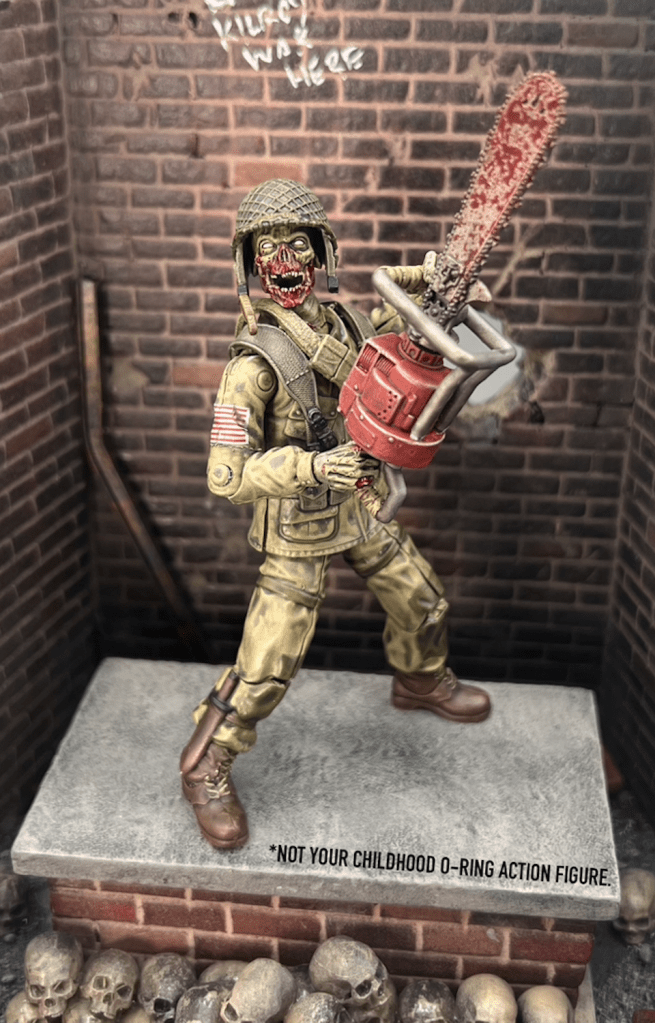


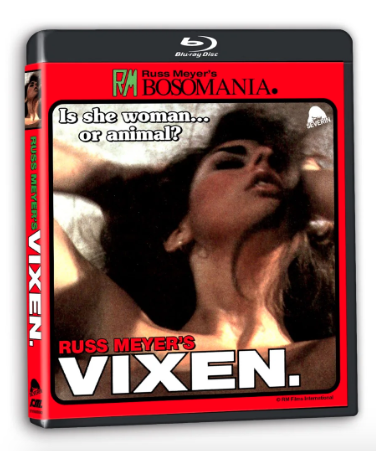
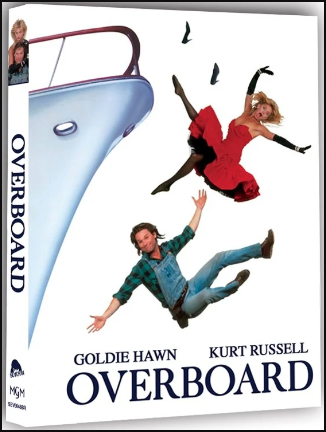
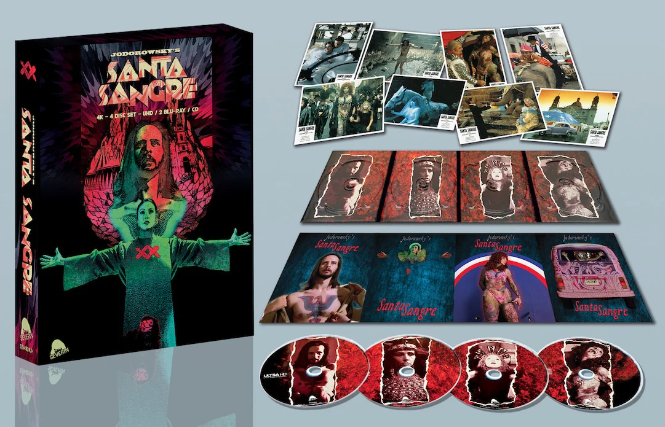

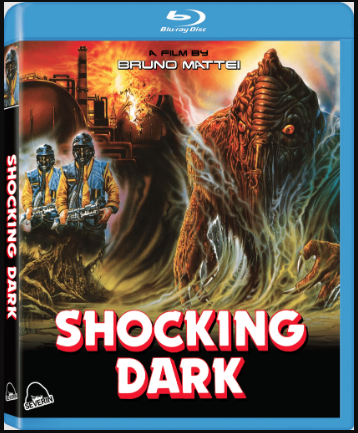

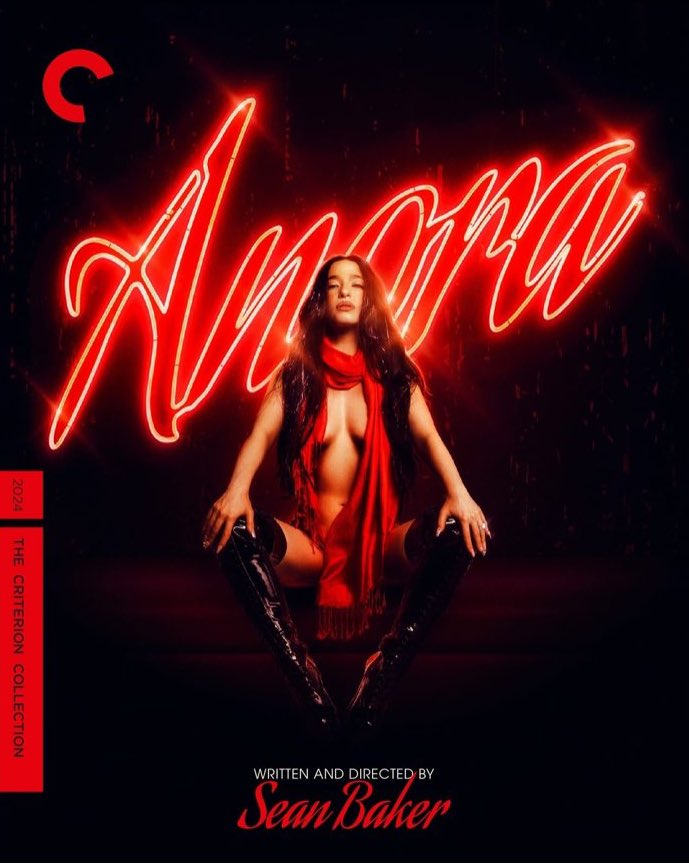

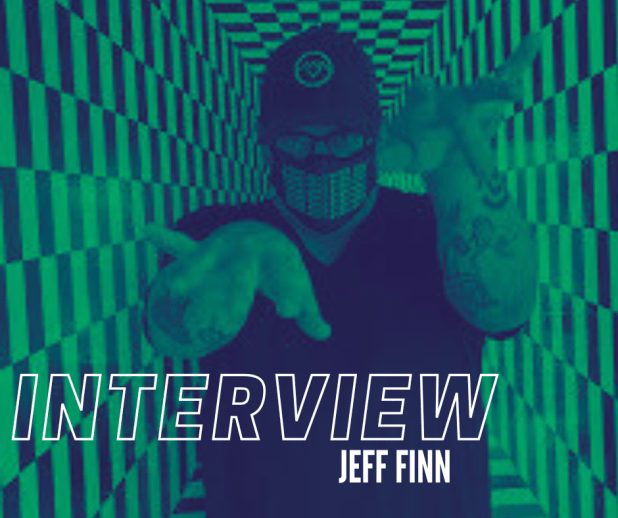


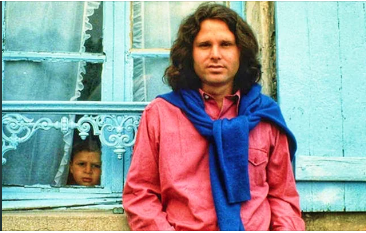
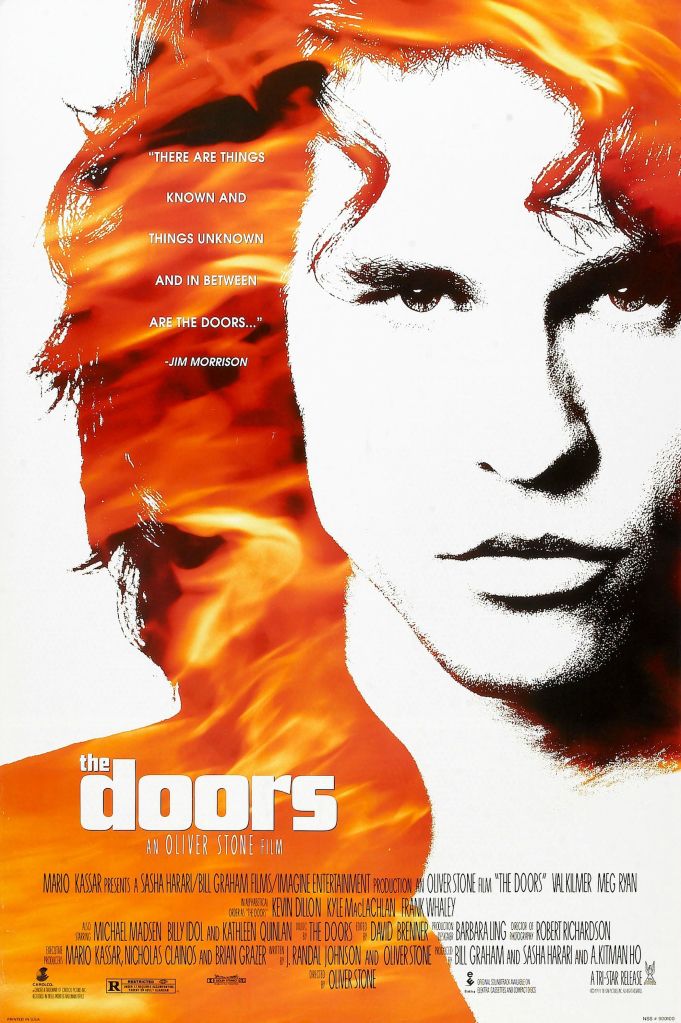







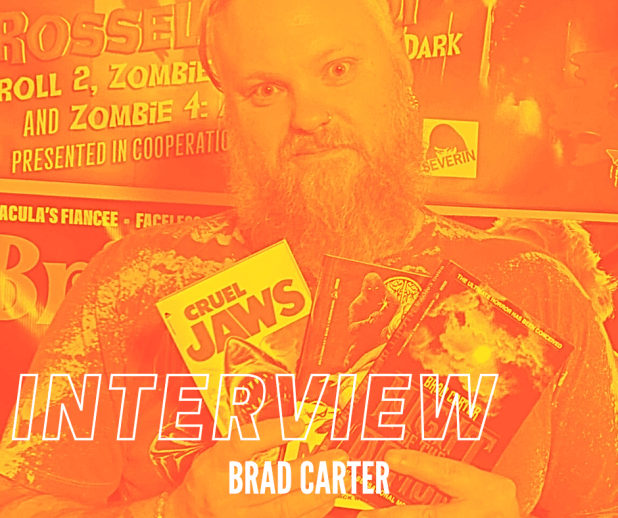
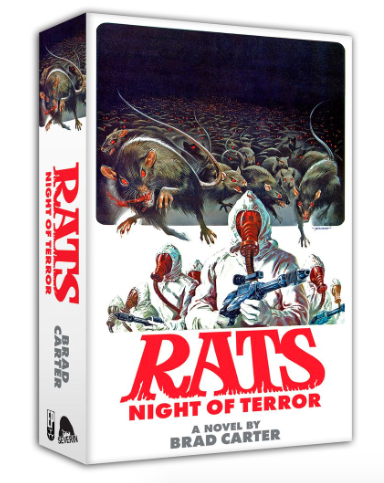

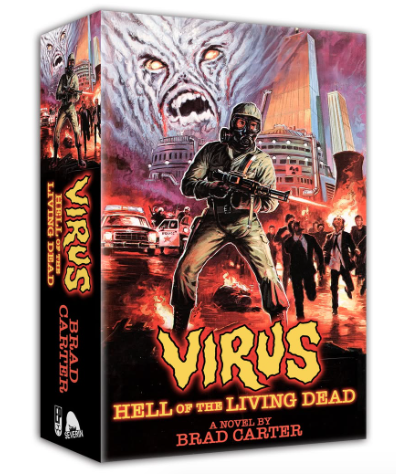



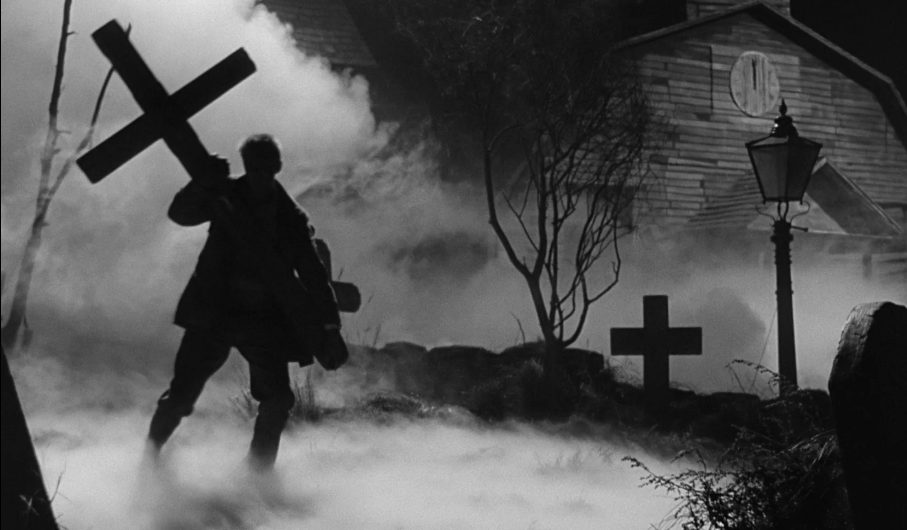
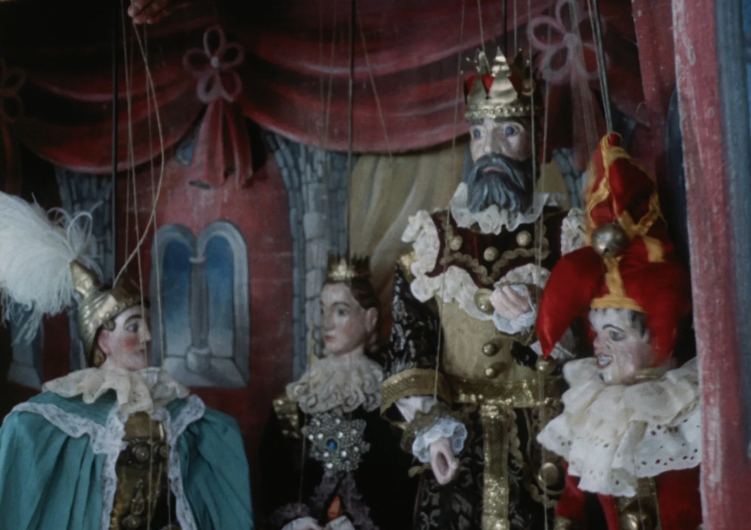

 B&S About Movies
You must be logged in to post a comment.