The Beatles: Influence on Film 3

This is the final segment of our three-part series. We’ve discovered 33 films in the series, with 11 films each over the past three days — at 3 PM — as part of our third “Rock ‘n’ Roll Week” installment.

The films are listed by year of release.
“Rubber Soul Black & White” image courtesy of Veronica Kim-Pinterest (pinimg.com) via Esty/logo courtesy of 60s Girl Deviant Art/banner design by R.D Francis

Nowhere Boy (2009)
Imagine This: Growing Up With My Brother John Lennon by Lennon’s half-sister Julia Baird fuels this tale. Sam Taylor-Johnson — who earned a Golden Raspberry nod for Worst Director on her sophomore film, Fifty Shades of Grey (2015) — makes her directorial debut with this examination of John Lennon’s (an excellent Aaron Taylor-Johnson) adolescence, his relationships with his aunt Mimi Smith, and his mother Julia Lennon, and the creation of his first band, the Quarrymen, and its evolution into the Beatles.

Lennon Naked (2010)
After watching the early years of Lennon in Nowhere Boy, and one’s left wondering what the final year of Lennon’s life was like in the Beatles, this BBC-TV produced TV movie, which ended up on the U.S. pay cable network Showtime as a first-run movie, answers those questions. Christopher Eccleston as Lennon is excellent throughout; chilling, in fact.

George Harrison: Living in the Material World (2011)
Look, Hollywood is too busy mucking up the histories of Elton John, Freddie Mercury, and Nikki Sixx to give “The Quiet Beatle” a bioflick or Netflix mini-series proper. Besides, when Martin Scorsese takes a break from the mobster flicks to pay tribute to the life and times of George Harrison, you break editorial rules and include the documentary on the list.

This is buoyed by Paul and Ringo showing up, along with Harrison’s widow Olivia, and his son Dhani, as well as Tom Petty and Eric Clapton. Not only do we learn about George’s time with the Beatles; the seven-years-in-the-making film delves deeply into his solo career, including his work with the Concert for Bangladesh and the delightful Traveling Wilburys project.

An interesting Harrison side-bar to pair with this documentary is Paul McCartney Really Is Dead: The Last Testament of George Harrison (2010), mockumentarian Joel Gilbert’s (Elvis Found Alive!) speculation on the urban legend that — via secret, rare tapes made by George Harrison, himself — Paul did, in fact, die in a 1966 car crash and was was replaced by a double.

Good Ol’ Freda (2013)
The subject matter here is such an out-of-left field twist in the history of Beatles flicks, we had to break editorial policy for a third time to mention this fascinating documentary on the life of Fredy Kelly: a fellow Liverpudlian hired by Brian Epstein as the Beatles Fan Club secretary. What makes this all work is the lack of sensationalism, courtesy of Kelly’s humble soul in respecting the privacies of her world-famous friends, but still telling us many things we did not know.

Danny Collins (2015)
In 1971, 21-year old Bristol, England, folk musician Steve Tilston released his critically acclaimed debut album, An Acoustic Confusion, and the 1972 sophomore follow up, Collection.

In a 1971 ZigZag magazine interview, Tilston admitted — inspired by the editor/writer’s accolades for Tilson’s work — that he feared wealth and fame might negatively affect his songwriting.

Inspired, John Lennon wrote to Tilston — in care of ZigZag — to offer the upcoming musician encouragement, “. . . Being rich doesn’t change your experience in the way you think,” Lennon wrote. It was signed, “Love, John and Yoko.” It turned out that, upon receipt of the letter, the magazine’s editor, believing Lennon’s letter “had value,” greedily kept the document; it was never turned over to Tilston.

How wicked the Fates: If the Lennon letter had been turned over to Tilston, would he and Lennon have forged a friendship? Would Lennon’s words have encouraged Tilston not to give up on the music business?

Tilston did not become aware of the letter’s existence until 2005, when a collector contacted him to verify the document’s authenticity. When the story was officially reported in the music trades in August 2010, it inspired this 2015 Al Pacino-starring film.

While the movie has it charms, and Pacino is endearing as a non-folkie, but poppy-ersatz Neil Diamond (check out the great original, “Hey, Baby Doll,” which was purposely crafted as a Diamond soundalike to “Sweet Caroline”), the excitement over a movie with such an obscure Beatles connection quickly fades due to us being treated to a film “based on Steve Tilston’s life” and not about Steve Tilston.

No, we don’t see Lennon or Yoko, either.

The Lennon Report (2016)
Pair this Beatles flick with either of the Mark David Chapman flicks to learn of the aftermath of Chapman’s motives. It purports to be the “true story” of the moments after John Lennon was shot. Lennon’s murder is seen through eyes of a young news producer poised to break the biggest story of the year, and the emergency room staff of Roosevelt Hospital realizing the true identity of their “John Doe,” and their race against time to save his life, all the while keeping his identity, private.

Eight Days a Week — The Touring Years (2017)
Okay, so we’re doing Ron Howard solid by mentioning his documentary because of his rock flick pedigree with the very cool NBC-TV movie Cotton Candy (1978). Howard explores the Beatles’ touring years and answers the questions as to why they stopped touring in 1966 to focus solely on recording in the studio. It’s expertly assembled, as expected with a Ron Howard production, and well worth the watch — even for those who eschew documentaries of any subject.

Paul Is Dead (2018)
Paul McCartney didn’t die in a car crash, as commonly rumored, in this comedic “What If . . .” flick. And he wasn’t murdered by Billy Shears, either. Paul simply died from a drug overdose during an experimental, countryside musical retreat — the drugs were George’s — and replaced by the look-alike, local sheep herder, Billy Shears.

You can learn more about the film and free-stream it on the film’s official website, or watch it on Vimeo. There’s also two, wonderful fiction books that play with the myth of Billy Shears: The Memoirs of Billy Shears (2018) by Thomas E. Uharriet, and Billy Shears: The Secret History of the Beatles (2020) by Bruce “Doctor” Lev. Either book would make for a wonderful feature film.

Scrambled Eggs (2019)
Produced as part of the U.K.’s SKY Network’s Emmy Award-nominated series Urban Myths, the installments delve into fictionalized stories about the legends of the acting and music industries. Writer Simon Nye (who also wrote the Season 2/Episode 8 installment, “The Sex Pistols vs. Billy Grundy“) weaves this tale (Season 3/Episode 7) based on interviews Paul McCartney has given over the years about how he developed the melody to “Yesterday.” In comical twist: Paul is so dumbfounded that he came up such a mature melody, he drives everyone crazy over his paranoid that he “stole” the melody from another, popular song.

You can learn more about the Urban Myths series at Sky.com. You can also stream it on U.S shores via Showtime and Hulu. You can also stream the full 20-minute film on You Tube and sample the film with its highlights reel.

Yesterday (2019)
So, was it worth shelling $10 million dollars for the rights to the Beatles’ catalog in this Richard Curtis-penned romantic comedy (Love Actually and The Boat that Rocked) directed by Danny Boyle (Oscar-winner Slumdog Millionaire, Trainspotting)?

Yes. We said “romantic comedy.” Yes, by Richard Curtis, who gave us Bridget Jones movies and hooked up the likes of Hugh Grant and Julia Roberts in Notting Hill.

And “the Beatles” . . . well, an actor portraying John Lennon (John Lennon scene/You Tube) shows up. But he’s not the “John Lennon” we know: he lives a quite, non-musical life as an artist (at the age of 78) in a beach side cottage sipping tea. Why? Because we’re in an alternate timeline (caused by a bump on the noggin’ during a worldwide blackout) where the Beatles don’t exist . . . but struggling musician Jack Malik, does. And he records a worldwide smash, debut album comprised of Lennon-McCartney compositions, well Jack Malik compositions. (Oh, and SNL’s hamfisted-and-not-funny Kate McKinnon from those annoying and not funny Tostitos and Verizon commercials is in the mix as the trite and troped “manager” of Jack’s career. You’ve been warned.)

The Beatles: Get Back (2021)
Yeah, we know we said “no documentaries.” But after breaking policy for Martin Scorsese and Ron Howard with their high-quality theatrical documents, how can we pass up Lord Peter Jackson restoring and reediting Michael Lindsay-Hogg’s Let It Be (1970) for a reissue under its original work title. And, as it turns out, in Jackson’s cut, the Beatles were getting along better than we were lead to believe.

Seriously, which you would want: the Beatles getting the “Freddie Mercury” or “Elton John” treatment, or a Peter Jackson document on the Beatles?

If only George and John were here to experience it with Paul and Ringo.

Because our reviews to go “12,” Nigel.

The Beatles and India (2022)
Yes. We are breaking the “no documentary” rule, yet again. But since that promo MVD Blu-ray of the film came in the mail, we might as well.

Filmed across India at all the sites of the Beatles’ visits — Mumbai, New Delhi, Rishikesh and Dehradun — accompanied with an array of unseen photographs, footage and interviews uncovered in India, The Beatles In India tells how George, John, Paul and Ringo took a break from their lives as the biggest band in the world to travel to a remote Himalayan ashram in search of spiritual enlightenment — and ended up unleashing an entirely new level of creativity from the band.

I don’t know about you: but I’d like to see a narrative film about this phase of the Beatles’ career.

The Lost Weekend: A Love Story (2023)
Argh! Another Beatles film?

Yes, it’s been 59 years since Beatlemania captured our hearts. And here we are. Dare we ponder what films will be unleashed on the 60th anniversary in 2024?

As with The Beatles and India, I would enjoy this seeing this documentary expanded upon — when thinking of, to name check a recent film, the transition of Marwencol (2010) to Welcome to Marwin (2018) — produced as a narrative film about this long-forgotten time of John Lennon’s life. When is Apple or Netflix going to produce a long-form streaming series on Lennon’s life? I’d subscribe to either service to see that series.

So, the love story goes that, at the request of Yoko Ono, May Pang, John Lennon’s then 19-year-old assistant at Apple Records, had a whirlwind, 18-month romance with John Lennon in the 1970s during a break in his marriage to Ono.

You can watch the official trailer on You Tube, with articles and reviews abound on the web. The film had its debut at the Tribeca Film Festival in 2022, and will hit theaters in April 2023. We’ll save you the aisle seat. But you buy the Clark Bars. And we love Clark bars as our go-to movie nosh: so hit that ATM.


Brian and the Beatles” image courtesy of Keystone/Getty Images via the New York Times.

Midas Man (202?)
In July 2020, industry trades reported Grammy Award-winning, Swedish music video director Jonas Akerlund (Madonna’s “Ray of Light”; the films Lords of Chaos, the drug-epic debut, Spun, with Jason Schwartzman, the Dennis Quaid-starring thriller Horsemen) was hired as the director of this biographical drama on the Beatles’ manager Brian Epstein. Starting his management of the Beatles at the age of 25, Epstein also oversaw the careers of Gerry and the Pacemakers, Cilla Black, and Billy J. Kramer and the Dakotas — until his death at the age of 32.

By November 2021, it was reported filming, which began in October 2021 in London, shut down in mid-production — with Akerlund either fired or quitting the project. Filming, taking place in London, Liverpool, and New York, after a break, restarted in Los Angeles in January 2022. The film was taken over by director Sara Sugarman (Vinyl); she began her career as an actress in Alex Cox’s Sid and Nancy (1986) and a variety of British television series.

Epstein’s life — and his personal relationship with John Lennon — was previously explored in The Hours and Times (1991).

In My Life (202?)
In December 2020, industry trades reported actors Wyatt Oleff (Guardians of the Galaxy and It franchises), Kevin Pollak (Outside Ozona), and SNL’s Janeane Garofalo (Lava) would star in this Beatles-inspired comedy-drama that draws from writer-director Mark Rosman’s (Evolver) personal experiences (his father was a Beverly Hills dermatologist) — with a dash narrative license that weaves true events with fiction.

The story follows Evan, a 16-year old John Lennon fan who discovers the Beatles move in next door to his Beverly Hills home prior to their 1965 date at the Hollywood Bowl. While Rosman never met John Lennon, young Evan does — and helps Lennon fulfill his dream of meeting Elvis Presley.

Reported to start production in Vancouver and Los Angeles in May 2021, the COVID pandemic derailed its production. As of this writing — which was written to commemorate the release of Peter Jackson’s The Beatles: Get Back — the film does not appear on Mark Rosman’s IMDb or Wikipedia pages.

Courtesy of 1000 Logos.

Thank you for joining us in our three part series on the influence of the Beatles on cinema.

Here’s the complete list of the films we reviewed in the series.
Clicking the “Part 1” and “Part 2” clicks will take you to the reviews, noted.

Part 1

Yellow Submarine (1968)
All This and World War II (1976)
All You Need is Cash (1978)
I Wanna Hold Your Hand (1978)
Sgt. Pepper’s Lonely Hearts Club Band (1978)
Birth of the Beatles (1979)
Beatlemania: The Movie (1981)
John and Yoko: A Love Story (1985)
Concrete Angels (1987)
The Hours and Times (1991)
Secrets (1992)

Part 2

Backbeat (1994)
That Thing You Do! (1995)
The Linda McCartney Story (2000)
Paul Is Dead (2000)
Two of Us (2000)
I Am Sam (2001)
The Rutles 2: Can’t Buy Me Lunch (2002)
Across the Universe (2007)
Chapter 27 (2007)
Walk Hard: The Dewey Cox Story (2007)
The Killing of John Lennon (2008)

Part 3

Nowhere Boy (2009)
Lennon Naked (2010)
George Harrison: Living in the Material World (2011)
Good Ol’ Freda (2013)
Danny Collins (2015)
The Lennon Report (2016)
Eight Days a Week — The Touring Years (2017)
Paul Is Dead (2018)
Scrambled Eggs (2019)
Yesterday (2019)
The Beatles: Get Back (2021)
More films
The Beatles and India (2022)
The Lost Weekend: A Love Story (2023)
Upcoming films
Midas Man (202?)
In My Life (202?)

Oh, yes. There’s a plethora, a cornucopia of films about Elvis that do not star Elvis.

About the Author: You can learn more about the writings of R.D Francis on Facebook. He also writes for B&S About Movies and publishes short stories and music journalism pieces on Medium.

The Beatles: Influence on Film 2

This is the second installment in our three-part series. We are discovering 33 films in the series, with 11 films each over the next three days — at 3 PM — as part of our third “Rock ‘n’ Roll Week” installment.

The films are listed by year of release.

“Rubber Soul” image with logo courtesy of 60s Girl Deviant Art/banner design by R.D Francis

Backbeat (1994)
Ian Softley (Hackers) makes his feature film writing and directing debut in this chronicle on the early days of the Beatles in Hamburg, Germany — the relationship between Stuart Sutcliffe (Stephen Dorff, S.F.W.), John Lennon (Ian Hart, again), and Sutcliffe’s German girlfriend Astrid Kirchherr (Sheryl Lee, U.S. TV’s Twin Peaks), in particular.

While the movie’s production values are stellar and the accents are spot-on (well done, Mr. Dorff) — and it’s based on interviews conducted by screenwriter Stephen Ward with Astrid Kirchherr — the real gem of the film is the Backbeat “alt-rock supergroup” on the soundtrack. The band is comprised of Dave Pirner of the Soul Asylum (as Paul McCartney), Greg Dulli of the Afghan Wigs (as John Lennon), along with Thurston Moore of Sonic Youth and Don Flemming of Gumball on guitars (Moore and Fleming also worked in a “supergroup” capacity on Velvet Goldmine), Mike Mills of R.E.M on bass, Nirvana’s Dave Grohl on drums. On lead vocals for Dorff’s Sutcliffe: Black Flag and the Rollins Band’s Henry Rollins.

Steven Dorff lip syncing Henry Rollins? Awesome.

That Thing You Do! (1995)
Okay, so the Beatles’ personas or music doesn’t show up (but they’re mentioned several times) in this writing and directing debut love letter to the Beatles and the Beatlemania-inspiring “one-hit wonder” craze of the 1960s. Our “Fab Four,” here, are Erie, Pennsylvania’s the Wonders — who shoot to the top of the charts with their ersatz-British Invasion rave-up, “That Thing You Do.” The film works its wonders (sorry) courtesy of its spot-on production design in conjunction with a brilliant soundtrack composed by bassist Adam Schlesinger of the alt-rock bands Fountains of Wayne (with their own “one hit wonder’ in 2003’s “Stacy’s Mom”) and Ivy (whose music appears in There’s Something About Mary; they also scored Shallow Hal). Mike Viola of Sony Records’ the Candy Butchers (later of Panic! at The Disco and Fall Out Boy) provides the vocals for the Wonders.

Sadly, we lost Adam Schlesinger on April 1, 2020, due to COVID compilations. Listen to this soundtrack — and anything from Fountains of Wayne — for great, goes-down-like-gumdrops tunes.

The Linda McCartney Story (2000)
Armand Mastroianni — yes, the one and the same who made his debut with the ’80s slasher He Knows You’re Alone (yep, the acting debut of Tom Hanks!) — directs this adaptation of the best-selling book Linda McCartney: The Biography that dispels of the Beatles — even Paul’s solo career — instead centering on Linda’s life with Paul.

The soundtrack, featuring the Beatles’ originals “I Wanna Hold Your Hand” and “Please Please Me,” along with the Beatles’ covers “Kansas City,” “Yeh Yeh,” and Willie Dixon’s “Back Door Man,” are interpreted by acclaimed Southern California-based Beatles tribute band, the Fab Four.

Paul Is Dead (2000)
The Google rabbit hole that opens for the “Paul Is Dead” legend is twisted and deep, so search with caution — or least do it on your day off, because you’ll be instantly hooked and surfin’ until sunset.

If you know your basic Beatles trivia: The band left “clues” in the 1968 John Lennon-composition “Glass Onion,” on the cover of Abbey Road, and in the backmasked grooves of “Revolution 9,” all which fueled the urban legend that Paul McCartney died on November 9, 1966, in car crash. To spare the public from grief, the Beatles replaced Paul with a lookalike, alternately known as William Campbell and the more widely accepted, Billy Shears. While the rumors got off and running in 1967, it really took off on Detroit radio stations in 1969 (which also birthed the “Jim Is Alive” urban legend in 1974 — and that Morrison recorded albums as “The Circuit Rider” and “The Phantom”), then spread via U.S. college newspapers.

In this German-shot/language film, Tobias, our young Beatles fan in an early 1980s German town, describes (in the scene, below) his conspiracy theory about how Paul McCartney died in the 1960s and was replaced his murderer.

The tale, while with its share of against-the-budget faux pas, is intelligently written and enjoyable, with imaginative plot twists: Paul is not only dead and replaced by Billy Shears, Shears murdered Paul; Shears — still alive — arrives in town driving a yellow, ’60s VW Beetle with the license plate “LMW 281F” — the car from the cover of Abbey Road.

While this impressive movie plays as a mystery-drama, the urban legend returns in a comedic take in 2018.

Two of Us (2000)
This Beatles “What If” comes courtesy of MTV’s softer sister station, VH-1, back in the days when the music channel produced original movies to a meandering-shrug effect. (However, their Def Leppard bioflick, Hysteria, is pretty good; Daydream Believers, their take on the Monkees, is also decent enough.) In this, the channel’s third film, the smart bet was placed on hiring Michael Lindsay-Hogg, the director of the Beatle-chronicle Let It Be (1970). What makes this all work: Jared Harris and Aiden Quinn as Lennon and McCartney are excellent in their roles — especially Harris, the son of the great Richard Harris (Ravagers). No, we do not see them sing, well, lip sync, in the film.

As with 1978’s I Wanna Hold Your Hand using the Beatles’ 1964 New York television appearance, and 1987’s Concrete Angels using the historical folklore regarding the Fab Four’s first Toronto concert appearance that same year, this time, the folklore concerns the mid-’70s public demand for a Beatles reunion show. One of those offers came from Saturday Night Live producer Lorne Michaels on April 24, 1976, who made an on-air offer of $3,000.

The script is based on a 1980 interview with John Lennon in the pages of Playboy, in which Paul McCartney, then on the road with his Wings Over America tour (promoting 1975’s Venus and Mars and 1976’s Wings at the Speed of Sound), visited with John Lennon at the Dakota when Michaels made the offer. And they almost took up the offer. . . .

VH-1 was unable to obtain the rights to the Beatles’ catalog, so none of their songs appear in the film. And the ghost of Let It Be is coming back a little later in another film.

I Am Sam (2001)
If you’re searching for a primer to help you swallow Across the Universe, the later-produced “film based on the Beatles’ songs,” and if All This and World War II wasn’t enough to send you reeling back to your VHS copies of Sgt. Pepper’s Lonely Hearts Club Band, this overwrought, saccharine hokum, is it.

Sean Penn’s performance (Tell it, Sgt. Osiris!) as a Beatles-obsessed, mentally-challenged man fighting for the custody of his bright, young daughter is outweighed by the Beatles tunes expertly covered by alt-artists such as Nick Cave, Ben Folds (of the Ben Folds Five), Heather Nova, Paul Westerberg (of the Replacements), and Pearl Jam’s Eddie Vedder. Not the same as the original verison-Beatles, but what is?

Writer-director Jessie Nelson, she, the force behind 1994’s incredible Corrina, Corrina (her daughter is Molly Gordon, of Booksmart), later produces a tale based on ’70s folk musician Steve Tilson almost meeting John Lennon. . . .

The Rutles 2: Can’t Buy Me Lunch (2002)
Is there such a thing as Rutlemania? Well, not in the U.S. where the 1978 original, All You Need Is Cash, bombed with the lowest ratings of any show on U.S. prime time television that week. However, in the U.K., the film’s intended audience, the mania led to Eric Idle and the Python troupe to embark on tours and recording full-lengths albums as their mock-Beatles.

As with Spinal Tap diluting the brilliant joke with an ABC-TV spoof concert special, The Return of Spinal Tap (1992), this Rutles sequel also dilutes the once brilliant gag — and it’s nothing more than a new edit of All You Need Is Cash, presented in the same chronological order, with a few new interviews, a couple faux celebrity insights (SNL’er Jimmy Fallon and Steve Martin show up; even Tom Hanks of That Thing You Do!), and a couple scenes cut from the first movie, as the Rutles embark on a reunion tour of America.

Across the Universe (2007)
As Robert Stigwood’s debacle based on Sgt. Pepper’s Lonely Hearts Club Band wasn’t enough . . . and with Sean Penn’s Oscar-bait still wormed in your brain . . . we get another musical drama written “around the music” of the Beatles. As with the later “alternate universe” romp, Yesterday . . . the Beatles “don’t exist” in this film’s verse: a “jukebox musical” that features 33 Beatles songs to weave the tale of two lovers, Jude and Lucy.

While it had a tumultuous studio vs. creative post-production process over the film’s length (it was intended to be longer), the film none the less won over Paul McCartney, Yoko Ono, and George Harrison’s widow Olivia.

Still no word on what Ringo thinks.

Chapter 27 (2007)
Jared Leto gives a bravo performance as Lennon assassin Mark David Chapman in this adaptation of the best-seller Let Me Take You Down (1992). While the book pinches its title from the Beatles’ “Strawberry Fields Forever,” the film’s title references J.D Salinger’s 1951 novel The Catcher in the Rye, which has 26 chapters — with the film’s title suggesting a “continuation” of the book, which was an obsessive favorite of Chapman’s. Another Lennon fan is portrayed by Lindsay Lohan — and she’s actually good, here, for you Lohan detractors.

Chapman’s psyche is also explored in 2006’s The Killing of John Lennon — but we didn’t see it U.S. theaters until after the release of Chapter 27.

Walk Hard: The Dewey Cox Story (2007)
“Spinal Tap” does not strike twice in this Judd Apatow-backed mockumentary concerning an ersatz-hybrid of Johnny Cash and Bob Dylan. The film barely cleared $20 million against is $35 million budget.

The Beatles appear in the form of Paul Rudd as John Lennon, Jack Black as Paul McCartney, Justin Long as George Harrison, and Jason Schwartzman as Ringo Starr. Sadly, their time is brief . . . and we wished the producers realized what they had, ditched John C. Reilly (an acquired taste that inspires more passes than watches), and just gave us a “What If” Beatles flick about the band moving on after the death of Paul McCartney . . . of which there is one. . . .

The Killing of John Lennon (2008)
While this was completed first, and released first in the U.K. and overseas markets in 2006, it was released in the U.S. in 2008 — after the 2007 release of the (much) better and better known, Chapter 27. Lennon, Harrison, McCartney, and Starr appear as themselves via 1960s archive news footage, but actors Richard Sherman and Tom J. Raider dually portray John Lennon against Jonas Ball’s Mark David Chapman.

Courtesy of 1000 Logos.

Join us tomorrow for our third installment with our final batch of films.

If you missed “Part 1,” you’ll find it, here.

About the Author: You can learn more about the writings of R.D Francis on Facebook. He also writes for B&S About Movies.

The Beatles: Influence on Film 1

This is the first in a three-part series. We are discovering 33 films in the series, with 11 films each over the next three days — at 3 PM — as part of our third “Rock ‘n’ Roll Week” installment.

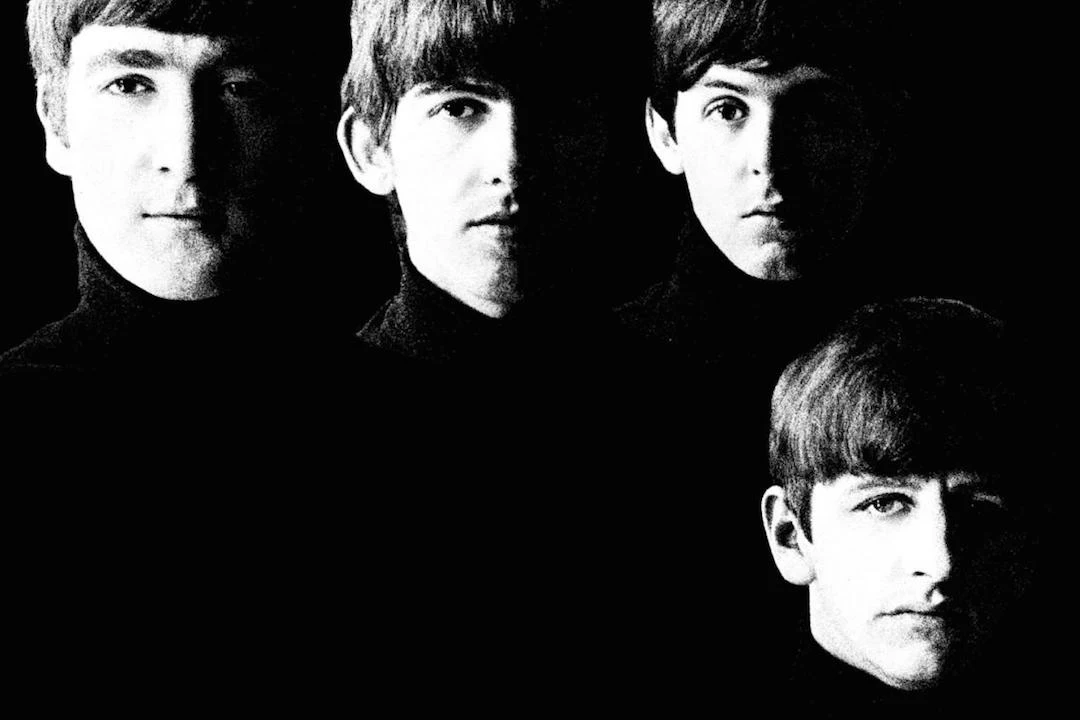
Image courtesy of Parlophone/Town Square Media via Ultimate Classic Rock/logo courtesy of 60s Girl Deviant Art/banner design by R.D Francis

As we developed this third “Rock ‘n’ Roll Week” in February, the 52nd anniversary of the Beatles’ final live performance in 1969 — shot for Let It Be (1970) — passed on January 30.

As you can tell by this article’s title, this isn’t about the Beatles’ movies, such as A Hard Day’s Night or Help! or Magical Mystery Tour or Yellow Submarine (well . . .) or Let It Be or any of the wealth of theatrical, television, and direct-to-video documentaries on the band.

And we are passing on John Lennon in Richard Lester’s How I Won the War (1967) and his work with the “supergroup” the Dirty Mac in The Rolling Stones Rock and Roll Circus (1968/1996), as well as Paul McCartney’s vanity piece, Give My Regards to Broad Street (1984).

And we are passing on chronicling the works of George Harrison’s Handmade Films, so nothing on Monty Python’s Life of Brian (1979), The Long Good Friday (1980), and Time Bandits (1981), or his production of Shanghai Surprise (1986), in which he appeared and recorded five new songs.

And we are passing on Ringo Starr’s resume with Candy (1968), The Magic Christian (1969), and Blindman (1971), as well as his co-starring roles in That’ll Be the Day (1973) and Son of Dracula (1974), his work as the Pope in Lisztomania (1975), his starring role in Caveman (1981), his appearance as Larry the Dwarf in Frank Zappa’s 200 Motels (1971), and his work on Harry Nilsson’s animated film The Point! (1971). We’re also passing on Ringo’s appearances in Martin Scorsese’s The Last Waltz, his document on the 1976 farewell concert of the Band, and the Who’s The Kids Are Alright (1979). And how can we forget, Ringo (1978), Starr’s made-for-television adaptation of The Prince and the Pauper, and Princess Daisy (1983), with wife Barbara Bach. And Ringo’s appearance in Sextette (1978), and directing debut of the T.Rex concert document, Born to Boogie (1972).

This exploration is concerned with the speculative biographical flicks, the films using the legend of the “Fab Four” as plot fodder, and the historical sidebars to their careers — both as a band and solo artists.

The films are listed by their year of release.


Yellow Submarine (1968)
We each have our fond memories of this sort of . . . and it’s not . . . but it is . . . Beatles film. Sam the Bossman remembers watching it on UHF-TV as his dad and grandad fixed the furnace. Me? My sister still doesn’t let me live down my nightmares . . . of the Blue Meanies coming to get me. What did my parents know about LSD trips? It’s those loveable moptops from A Hard Day’s Night, after all . . . and it’s a cartoon. What’s the harm . . . and I am still scarred by it, for life.

Initial press reports stated that the Beatles themselves would provide their own character voices. But all was not well at Apple Corp. and the lads weren’t enthusiastic about working on a new motion picture to fulfill their three-picture deal with United Artists, having been dissatisfied with their second feature film, Help!.

So, the Beatles bailed on project, giving the over 200 artists — who crafted the film across 11 months — all the creative space they needed. John, Paul, George, and Ringo composed and performed the songs (a mere six that comprises 22 minutes of Side One; the other half was comprised of George Martin orchestral compositions). As actors, the “real” Beatles only participated in the film’s closing scene, while their animated doppelgangers were voiced by other actors.

Obscure Beatles cover song hokum: There’s been a LOT of covers of Beatles tunes over the years . . . but one of the coolest covers of “Yellow Submarine” was done by Philadelphia, Pennsylvania’s More Fiends from their album, Toad Lickin’ (1990). Here’s the rub: The song, titled “Yellow Spades,” is actually a cover of Motorhead’s “Ace of Spades” backing Paul McCartney’s lyrics.

I wonder if Paul has ever heard it? Did Micheal?

Micheal Jackson sold Northern Songs, Ltd., the publisher of the Beatles’ catalog, in 1995; the More Fiends, it seems, escaped the Gloved One’s legal wrath. The same can not be said of New York’s SST recording artists Das Damen. On their Marshmellow Conspiracy EP (1988), they recorded “Song for Michael Jackson to $ell,” which was actually an uncredited cover of the Beatles’ “Magical Mystery Tour.” After discovering the unlicensed cover, Jackson’s lawyers assured the track was removed from future editions of the album.

Still, I wonder if Micheal would have unleashed the legal hounds of war on the More Fiends? “Yellow Spades” is still commercially available on Apple Music or Spotify. So, either no one cared or the legalese was settled.

And yes. There is a band called, Blue Meanies, a ska-core band from Illinois, U.S.A. that recorded several albums between 1988 to 2007 — with no illegal Beatles covers from Yellow Submarine.

All This and World War II (1976)
So, before the creation of the abyssal Sgt. Pepper’s Lonely Hearts Club Band, the sappy-hokey I Am Sam, and the not-much better Across the Universe — and before Robert Stigwood gave record executives a bad name by ravaging the Beatles — Russ Regan, president of both UNI Records and 20th Century Records, and vice-president of A&R at Motown, came up with the idea to document the horrors of war through newsreels. He wondered, “What if The Beatles provided the soundtrack?”

Uh-oh.

Instead of real Beatles tunes — and in a warm up for their later work with Robert Stigwood — the Bee Gees stand in for the Fab Four, initially contracted for the entire soundtrack. In the end, the Brothers Gibb recorded six songs; three ended up in the film: “Golden Slumbers/Carry That Weight,” “She Came In Through The Bathroom Window” and “Sun King”; their versions of “Lovely Rita,” “Lucy In the Sky With Diamonds,” and “She’s Leaving Home” didn’t make the cut. Elton John, Ambrosia, Rod Stewart, and a host of other chart-topping musicians take care of the rest.

All You Need is Cash, aka The Rutles: All You Need Is Cash (1978)
Eric Idle and the Monty Python troop devised rock mockumentary of skits and gags chronicling the fictional tales of Dirk, Stig, Nasty, and Barry, aka the Rutles, a band whose career mimics the Beatles’. Airing as an NBC-TV special, the movie earned the lowest ratings of any show on U.S. prime time television that week.

Are the proceedings are better than that? Yes. On equal with Spinal Tap’s exploits? No. But it’s darn close.

The ersatz Beatles tunes were written by ex-Bonzo Dog Band (friends of the Beatles appearing in Magical Mystery Tour) member Neil Innes, who portrayed John Lennon to Eric Idle’s Paul McCartney. Ex-Beach Boys drummer Rick Fataar portrayed George Harrison; Lou Reed band member John Halsey (1972’s Transformer) parodied Ringo Starr.

Yes . . . as with Spinal Tap, there is a sequel.

I Wanna Hold Your Hand (1978)
Robert Zemeckis, later of the Back to the Future franchise and awards-sweeper Forrest Gump (and Used Cars is pretty fine, too), makes his feature film writing and directing debut with this examination of the hysteria of Beatlemania. It’s seen through the eyes of four teenagers (headed by Nancy Allen and the always-great Wendy Jo Sperber) as they try to meet the Beatles during their time in New York to appear on The Ed Sullivan Show on February 8, 1964.

The Beatles show up, as well as Brian Epstein, in archive footage, while William Malone cameos in an uncredited role as George Harrison. And yes, we are taking about the writer and director behind Creature. And we get a “Ringo” in the form of Eddie Deezen’s nicknamed Richard Klaus in the film, so all is well. The soundtrack features seventeen original recordings — covers and originals — by the Beatles.

Sgt. Pepper’s Lonely Hearts Club Band (1978)
The Beatles’ cover tunes by the Bee Gees and Peter Frampton, as well as Aerosmith showing up for an “evil” rendition of “Come Together,” for this tale about Billy Shears and the “band” of the title, are quite good; it’s the celluloid wrapped around it that stigs, uh, stinks. Oh, the overwrought Frankie Howerd (as Mr. Mustard) and ham-fisted Steve Martin (murdering “Maxwell’s Silver Hammer”), why?

It’s been 43 years since seeing this in a theater — and never on cable or tape, no way; for once was enough for me. For the memory . . . the horror . . . is still burned into my cerebrum. I need a Beatles lobotomy, Joey. Where’s the Pepperland-invading Blue Meanies to stop the Bee Gees when we need ’em?

Birth of the Beatles (1979)
Dick Clark (who also made Copacabana . . . based on the Barry Manilow song) hired ex-Beatles’ drummer Pete Best as a Technical Advisor and Richard Marquand (Star Wars VI: Return of the Jedi) as his director to give us this take on the early history of the Beatles — then known as the Silver Beatles. The film is noted as the first biographical drama on the band, released nine years after the announced break-up of the Beatles themselves, and is the only Beatles biopic to be made while John Lennon was still alive. While it was released as a worldwide theatrical feature, this was issued as a TV movie on ABC-TV in the States.

Courtesy of a publishing loophole — unlike the later and similar early-days-of-the-Beatles Backbeat, which used songs the Beatles recorded as covers — the songs in Birth of the Beatles were written by the Beatles themselves, only interpreted by the Beatles tribute act, RAIN.

The “loophole” of using cover versions of Lennon-McCartney compositions, of course, backfired. As result, Birth of the Beatles has fallen out of print and will more-than-likely never be reissued to DVD or Blu-ray. But there’s a TV rip uploaded to You Tube.

Marquand, who made his made his debut directing Roger Daltry in The Legacy, also directed ’60s folkie Bob Dylan co-starring with ’80s pop singer Fiona (the 1985 Top 15 hit “Talk to Me”) in the pretty awful, Joe Esztherhas-penned flick, Hearts of Fire (1987).

Beatlemania: The Movie (1981)
A smash Broadway musical-rockumentary advertised as “Not the Beatles, but an incredible simulation” that ran for 1,006 performances from May 1977 to October 1979 is a sure bet for a theatrical film adaptation.

No, it’s not.

The show — a multimedia production consisting of backdrops and projected images of art and video footage from the Beatles-era, as well as numerous clips of the Beatles — consisted of 29, chronologically-played songs, complete with costume changes.

So — with a Broadway hit on their hands — the managerial impresarios behind the production, Steve Lever and David Krebs (known for their handling of the Rolling Stones, Joan Jett, and Aerosmith; remember “Boston’s Bad Boys” appeared in Sgt. Pepper’s Lonely Hearts Club Band), decided that — Apple Corps. lawsuits, be damned — it was time to take on the albums charts and the silver screen.

The original cast of Joe Pecorino (rhythm guitar, John), Mitch Weissman (bass guitar, Paul), Les Fradkin (lead guitar, George), and Justin McNeill (drums, Ringo), and the second cast of Randy Clark as John, Reed Kailing as Paul, P.M. Howard as George, and Bobby Taylor as Ringo, headed into the studio for a 1978 Arista The Album release — which bombed with record buyers as it scrapped into the lowest regions of the Billboard 200.

Seriously? Who wants to buy a Pickwick (Discogs) budget sound-alike of Beatles tunes?

Okay . . . well, maybe a movie would work, better.

Uh, no it won’t. Remember All This and World War II?

Production began in late 1980 — shortly before John Lennon’s December 8 murder — under the tutelage of TV director Joseph Manduke (Harry O, Hawaii Five-O, Barnaby Jones). The cast featured a mix of musicians from the Broadway production and album, with Mitch Weissman back a third time as Paul, David Leon as John, Tom Teeley as George, and Ralph Castelli as Ringo.

Released in the summer of 1981, Beatlemania: The Movie quickly became a critical and box office bomb. Apple Corps, who launched their first legal volleys regarding publicity rights and trademarks in 1979, finally won in damages in 1986.

And Ringo hated the concept, in whole.

You can learn more on the making of Beatlemania (the Broadway show) with this Chicago news station-produced TV documentary on You Tube.

John and Yoko: A Love Story (1985)
This NBC-TV effort chronicles the relationship between John Lennon and Yoko Ono. The movie was made with the co-operation of Yoko Ono, who controlled the song rights. The film begins on August 19, 1966, in the wake of a protest initiated by Lennon’s (misunderstood) comment that the Beatles “were more popular than Jesus” and end with Lennon’s murder in 1980.

In a production twist: Actor Mark Lindsay booked the role of John Lennon. When Ono discovered that was his professional name — and that his birth name was Mark Lindsay Chapman — the similarity gave her “bad karma,” so he was recast with Mark McGann.

In 2007, Mark Lindsay was cast as an “older” Lennon in Chapter 27 (2007) — the tale of Lennon’s assassin, Mark David Chapman.

Concrete Angels (1987)
Robert Zemeckis scripted his Fab Four tale, I Wanna Hold Your Hand (1978), around the Beatle’s historic February 8, 1964, appearance on CBS-TV’s Ed Sullivan Show. In that tale, a group of friends schemed to meet the band.

This time, a quartet of ne’er-do-well teens from the wrong side of Toronto’s tracks form the Concrete Angels to enter a radio station’s battle of the bands contest and win the opening act slot for the Beatles’ gig. Will they win and escape their poverty or will they fall back into their juvenile acts of crime?

The Hours and Times (1991)
Christopher Munch makes his writing and directing debut with this fictionalized account of “what might have happened” during a real holiday taken by John Lennon and (the homosexual) Beatles’ manager, Brian Epstein, in 1963. Ian Hart, who stars as John Lennon, portrays him one more time, in Backbeat. The film was restored for a 2019 DVD release.

Secrets, aka One Crazy Night (1992)
As with the previous Beatles-inspired films I Wanna Hold Your Hand (1978) and Concrete Angels (1987), this Australian production works as a coming-of-age drama — a retro ’80s John Hughes coming-age-drama — backed by Beatles folklore. Now, instead of trying to meet the Beatles at their first New York and Toronto concerts, we have five teens who sneak in, then find themselves trapped in the bowels of a Melbourne concert venue where the Beatles are set the make their June 11, 1964, Down Under debut. Saccharine soul bearing, ensues.

As with most Beatles films, you’re getting covers (most outside of the timeline of the movie) — this time from Dave Dobbyn, of New Zealand’s Th’ Dudes (their hit, “Bliss“) and DD Smash (their hit, “Outlook for Thursday“) (DD Smash would sweep the New Zealand Music Awards in 1982 and 1983, but a Men at Work or Split Enz crossover to America wasn’t meant to be). The Judd Nelson/John Bender of the bunch comes in the form of an antithesis Elvis fan stuck in the ’50s. Another looks like Wolowitz from The Big Bang Theory — only with out the nose (because he’s obsessed with George, not Ringo), who always wears Fab-inspired suits.

Impossible to find on U.S. shores as a VHS or DVD on home video shelves, we found copies on You Tube HERE and HERE.

Courtesy of 1000 Logos.

Join us tomorrow for our second installment with our next batch of films.

About the Author: You can learn more about the writings of R.D Francis on Facebook. He also writes for B&S About Movies.