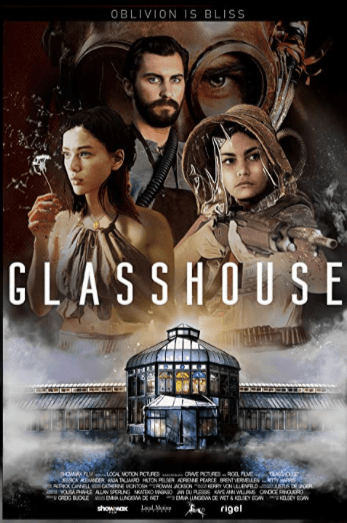
You think the pandemic we’ve had has been strange? Well, in the world of Glasshouse, an airborne dementia known as The Shred has left humanity adrift with no memories left inside their brains, unable to even remember who they are. Meanwhile, a family has remained inside their airtight glasshouse until a stranger arrives who changes — and maybe ruins — everything they’ve worked so hard to build.
Director Kelsey Egan said, “I’ve been working towards directing features since I made my first short back in 2008, so to end up directing my first film in 2020 of all years feels like some form of dramatic irony. To shoot this intimate post-apocalyptic fable during the pandemic was a surreal experience.”
Even the location for this movie is strange and eerie. The Pearson Conservatory is a Victorian glasshouse marooned in the Eastern Cape of South Africa since 1881.
The occupants of this glasshouse are Mother, her three daughters and one son. Their days are spent tilling the garden that keeps them fed, protecting one another from the outside world, conducting story rituals and creating stained glass windows to remind them of the past. But when one of the daughters, Bee, takes in an injured man, his manipulative ways may spell the end of this idyll.
Yet the girls are not without the ability to protect their family, as we see them murder an interloper and use the body to fertilize their crops. And their brother has begun to lose control, as exposure to The Shred has destroyed his mind.
At once post-apocalyptic, folk horror and even a riff on The Beguiled, there hasn’t been a film quite like Glasshouse ever. It’s a future without the need to show massive effects or change. Instead, it traps us inside the walls of the home as those very walls close in around its characters.
Glasshouse is playing during Fantastic Fest this week. We’ll update this post with information on how to see it for yourself when it goes into wide release.
What do hired killers do on their days off? I’ve always wondered that and hey — here’s a film ready to fill in the gaps. Chisato and Mahiro are teenagers who pull of a double life worthy of Donna Wilkes or Betsy Russell, as they’re high school graduates with menial jobs by day and killing machines battling the yakuza by night, which arises when a battle breaks out at the theme maid cafe that they work at and gets worse from there.
Martial artist and stunt person Saori Izawa — whose stunts were amongst the few highlights in Snake Eyes — plays the caustic Mahiro, with the laid-back Chisato played by Akari Takaishi. The team has great odd couple chemistry as well as the ability to move from moments of humor to action setpieces. The action moments take their time to get on screen, but when they do, they are more than worth the time we’ve spent with our lead characters.
Known as Baby Walkure in its native Japan, this is the first — but by no means the last — film that we’ll see exported to our shores by creative force Yûgo Sakamoto.
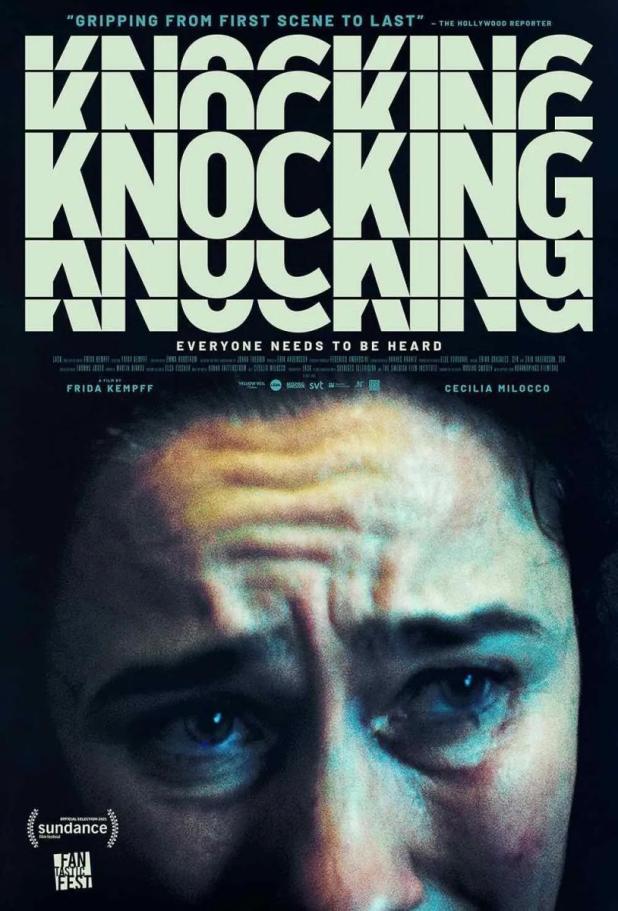
After leaving a tragic accident — the film begins with our heroine embracing her girlfriend who runs into the water and is never seen again — and a stay at the mental hospital, Molly moves into a new apartment where a strange knocking keeps on getting louder and louder. No one else can hear it. And it’s not going away.
Adapted from a novel by Johan Theorin, this movie lives and dies by the intense performance of lead Cecilia Milocco and the so tight you’re face-to-face cinematography of Hannes Krantz. The tension keeps increasing and much like so many “is it supernatural or mental illness” movies, the questions keep increasing as Molly begins taking increasing risks to determine where the knocking and sobbing is coming from.
At just 78 minutes, this is a short film that nearly begs for even more time and it’s rare that I feel that way. The end just arrives after the slowest of builds, but I’ve been obsessed with the moments that exist between waiting for something to happen and the actual second that everything changes.
Knocking is playing Fantastic Fest this week and will soon be available on a wider basis. We’ll update this post when it’s streaming.
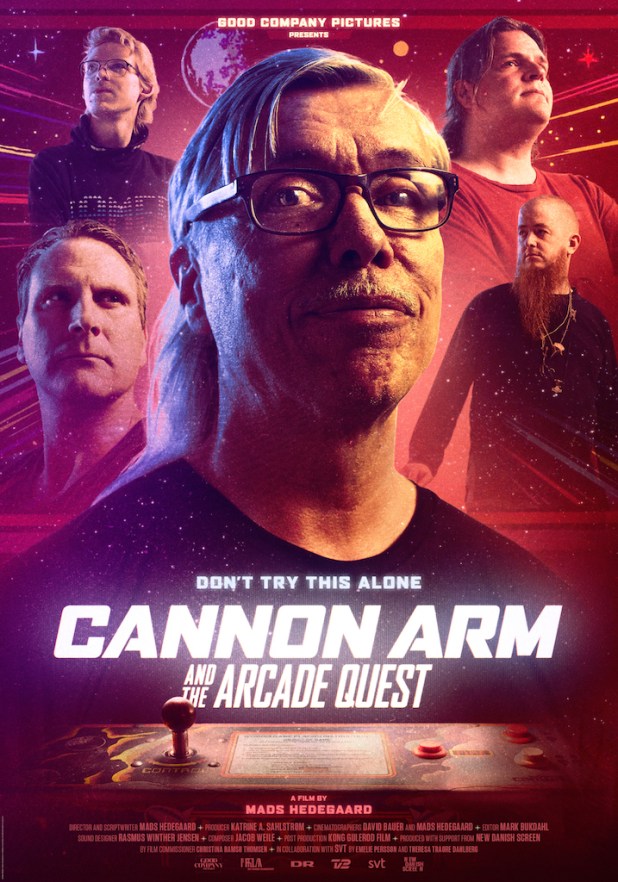
Kim Cannon Arm is a lover and collector of arcade cabinets. He’s also a legend in the world of competitive video games, as he and his friends at Copenhagen’s Bip Bip Bar are all masters at their own games — and unique life skills — while Kim excels at playing Konami’s Gyruss. He’s made it to 49 hours or more on a single quarter, but now, at 55 years old, he has set the goal of playing for a hundred straight hours with only quick breaks on a mattress in the corner. This is more than some kind of quest — it’s a meticulously planned mission aided and abetted by a cadre of true friends.
Director Mads Hedegaard says of the film, “Probably not everyone in the audience has an interest in video games or arcade games, but that’s okay, because you don’t need to – I don’t either. Ultimately, I feel that it has ended up as a film filled with warmth and subtle wit as well as the natural excitement that comes from all record attempts. Will our hero Kim Cannon Arm succeed in the challenge before him? The characters will hopefully over the course of the film emerge as actual people, who the audience will end up caring about, and perhaps also remind the audience that there is more to all of us than is apparent at first glance.”
The players, beyond Kim — who is a laboratory technician, a grandfather and has a beyond world-class mullet, include epistemological rationalist, Bach student and Donkey Kong player Carsten, poetry slam and Puzzle Bobble champ Dyst, data analyst and Donkey Kong champ Svavar, tech and musical wizard Emil, The Shed arcade owner Trier and Bip Bip Bar owner Chrisstoffer.
Yet this film is about more than just video games. It’s about who we are in the world, what we leave behind, quantum physics and pattern recognition and what friendship can do. I totally expected nothing from this film and was astounded by the energy and emotion that it imbued within me. What a treat!
As the director said, “The film is my little tribute to these people, who in their own quiet ways are larger than life. I hope that the audience will go and see the film with their friends, their significant other, or perhaps even with their mother, if they are in need of a life-affirming and touching experience. And I hope that people will leave the film feeling uplifted, with a bit of food for thought to talk more about, and a warm feeling in their stomach.”
Seriously — some of the most mind-opening and happiness-inducing cinema I’ve seen this year.
Cannon Arm and the Arcade Quest is playing Fantastic Fest this week. When it’s available to a larger audience, we’ll update this post.
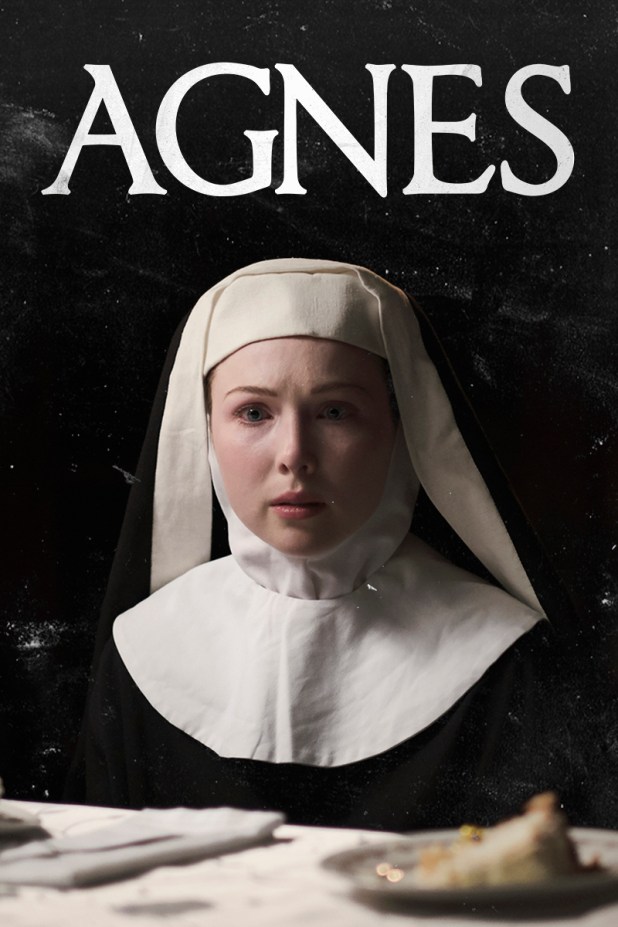
In the time that you’ll read this, Mickey Reece may have already made a new movie. For four years in a row, he’s had a debut at Fantastic Fest. You may have seen his Climate of the Hunter a year or so ago — time no longer makes sense, so it could have been months — and the first moments of this movie seem to rail against the slow boil of that movie by starting with a profane cake throwing rant by its titular character, Sister Agnes (Hayley McFarland, The Conjuring).
For the first half of this film, I was fairly riveted by a tale that combined the Byzantine — or Roman, right? — politics of the Catholic Church as it struggles in the dawn of a new century, even as the possessions that defined the old church and the exorcisms that became pop culture decades ago rear their head again.
As she serves at St. Theresa’s convent — which remains rooted in the old ways of the church, with nuns not allowed to leave the grounds and men being limited — she finds herself in the grip of something demonic. But what has she done other than upset the natural order and asked her fellow sisters to confront who they are? Well, yeah, and foam at the mouth. One could arhue that Mother Superior (Mary Buss) is the real power destroying the lives of these women.
Father Donahue (Ben Hall) has been selected by the powers that be — he was sure they’d caught on to his secrets and crimes — to exorcise the demon that he doesn’t believe in, bringing along an acolyte named Benjamin (Jake Horowitz) who is the one person in the film that seems actually close to the divine. Donahue continually harangues the young not-yet-a-priest, demanding that he look into his heart to determine whether or not God offers him the life he really wants to live. This is an interesting take — the priest at the end of his road and the young man just starting his first steps.
But like much of this film, it’s a fleeting notion. Donahue’s half-hearted exorcism ends with his nose being bitten off and blood covering everyone, leaving him no choice but to call in Father Black (Chris Browning), an excommunicated priest who has created his own cult of personality, complete with him being bound to the demon Bune — who in the Lesser Key of Solomon we learn is a duke of Hell with the ability to move the dead, make people rich and answer a variety of questions — and a beehive-hairdo-having, chain-smoking henchwoman who really deserves her own movie. If this entire moment of the film feels like it came straight out of El Dia de la Bestia that’s a compliment.
Just like every man in this movie, his exorcism is pretty ineffectual and feels cobbled together from every Italian ripoff of The Exorcist, such as Enter the Devil and The Return of the Exorcist. And then, when all seems lost, the film dissolves and becomes an entirely different film after Agnes and Mary (Molly C. Quinn, We’re the Millers) have a moment that’s more arthouse than Alucardaand suddenly the film becomes her story, cast down from a world of faith into the magicless world that we live in today, a place where hack comedians (Sean Gunn) let you down, where bosses demand sexual favors in the stockroom of grocery stores, where rent goes up, where even a demonic voice and being possessed yourself can barely change things. However, the return of Benjamin, now a full brother in Christ, may give her the faith — or at least a momentary respite — that she needs.
There’s a theme of losing love — a lover, a child — and having to turn to God even to discover that that may not be enough that runs through this movie. But the narrative shift and the lack of focus near the end of the film — it gives up on a been there, done that exorcism story with some new wrinkles to, well, tell another story that feels like we’ve been told before — damn the efforts.
It looks great. It sounds amazing. But I get the feeling that by the end, Reece was already bored and thinking about what he was going to make next instead of finishing this one off. It’s so disappointingly close to a movie that I’d tell people to watch but you can’t make a recommendation like “watch the first forty minutes” or “fast forward a bunch” because that’s not a recommendation, it’s a litany of excuses.
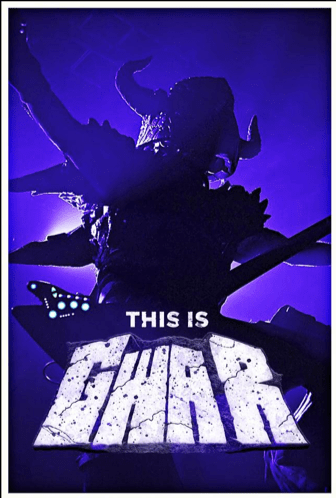
17 year old me discovered Gwar and life finally made sense. What other band outright claimed that they were going to murder you when you saw them in concert? Coming from space, destroying the ozone layer, that had game shows on stage that gave the people what they want — “the senseless slaughter of the gutter-slime that litters this nation for cash and prizes” — and could somehow turn lyrics like “you know I snuffed a million planets, but I still find time to cry” into a tender ballad?
Gwar went on Joan Rivers and made fun of everything thrown at them. And in a world that didn’t make much sense, they made sense. It was a badge of honor to see them in concert. Sure, the band has changed — I haven’t kept up honestly since Oderus went on to the next world because it just doesn’t feel the same — but I’m glad they’re still out there.
Director Scott Barber has put together the interviews and stories that form the real story of Gwar and by and large, it’s intriguing stuff, punctuated by stories by celebrity fans like Weird Al, Thomas Lennon, Bam Margera, Alex Winter and Ethan Embry.
As an art collective with a 35-year history, there’s plenty to learn here about how some art school punks went from playing small shows to becoming an industry. Of course, personalities clashed, egos grew and the band may not have lived up to what some members wanted it to be. By the end of the first sixty minutes, the doc starts to grind a bit, as various members feel the urge to tell you exactly how much they contributed even if they weren’t onstage. I understand, as this may be their one opportunity to do so.
A major oversight — in my eyes — is that no mention at all was given to new singer Vulvatron, played by Kim Dylla, who was in the band from 2014 to 2016, leaving under not the best of terms. Perhaps by the end of the film, everyone was tired of the constant drama that was getting dredged up. But for a band with previously only two female members, this felt like a glaring omission.
Even if Gwar’s music isn’t for you, you can hopefully appreciate their sense of humor and the fact that they took their art beyond expectations. They still do.
This is Gwar debuted at Fantastic Fest this week. When it becomes available for streaming, we’ll update this post.
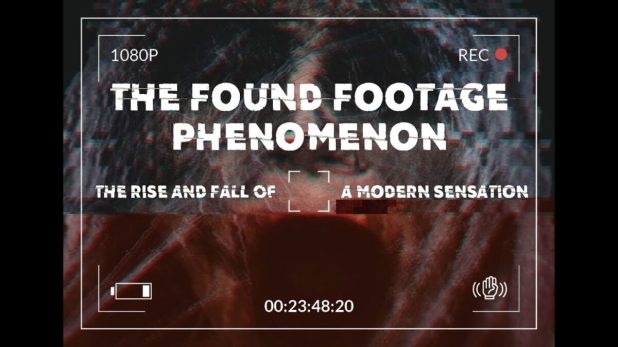
Written and directed by Sarah Appleton (who has worked on many documentary shorts and DVD extras, as well as being the cinematographer of Woodlands Dark and Days Bewitched: A History of Folk Horror) and Phillip Escott (who wrote and directed Cruel Summer), The Found Footage Phenomenon has done the impossible: take a genre that I saw no value in whatsoever and prove to me that not only its merit, but also showing me moments of films that I love that relate to the found footage genre.
The film looks the whole way back to Bram Stroker’s Dracula as an early use of found footage, as the letters and documents in the story were a way of making the unreal real. Other points in the genre’s creation were within Orson Welles’ War of the Worlds broadcast, the film within Peeping Tom and perhaps the first movie that claimed to have real footage as its central narrative, Cannibal Holocaust. There’s an astounding moment here that asks us to check our morality at the door and realize that if we recontextualize the animal violence within that film, we see that by placing it next to special effects, we started to wonder what was real and what was a movie. And that’s really at the heart of what all found footage is.
If there’s a creator that has made these films, chances are they show up here. Everyone from Mr. Cannibal himself, Ruggero Deodato to Troll Hunter director André Øvredal, Blair Witch creator Eduardo Sánchez, Jaume Balagueró of (REC) fame, Kōji Shiraishi, Aislinn Clarke, Patrick Brice (who made Creep and also has There’s Someone Inside Your House premiering at Fantastic Fest), Rob Savage, Ghostwatch‘s Leslie Manning and Stephen Volk Michael Goi, The McPherson Tape‘s Dean Alioto and The Last Broadcast‘s Stefan Avalos and Lance Weiler — along with several writers and critics — gets the opportunity to share their found footage love and knowledge.
Whether you love these films or — like me — you greatly dislike them, this documentary is engaging, entertaining and even mind-altering. Well done.
The Found Footage Phenomenon is playing Fantastic Fest this week. When it is released, we’ll update this post with information on how you can watch it.
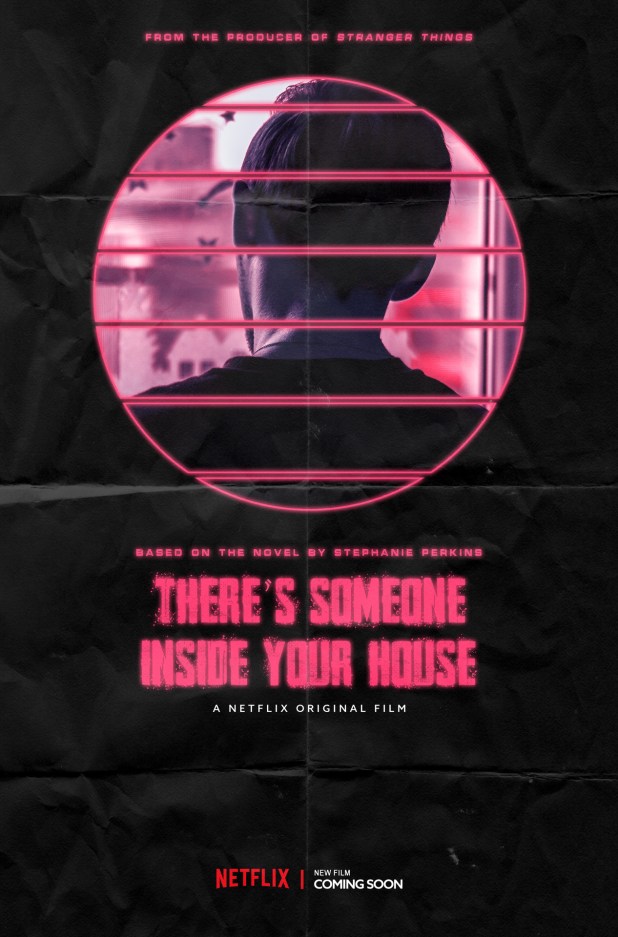
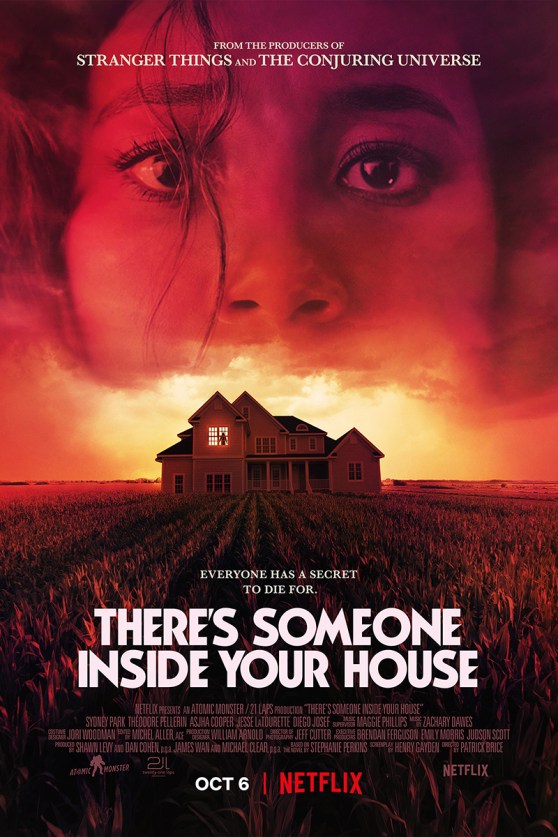
Based on the book by Stephanie Perkins, this Patrick Brice-directed (Creep) film is exactly the kind of movie for people who wish that the 90s and early 00s slasher boom never ended. Seriously, this film has major vibes of I Know What You Did Last Summer and if that’s a good thing for you, then this is exactly the kind of comfort food that you’re going to absolutely devour.
Makani Young has moved from Hawaii to Osborne, Nebraska — there’s a secret as to why — to live with her grandmother and finish high school. Yet as the school year grows closer to graduation, the secrets of her classmates become fair game to a killer who exposes them and then murders them while wearing a 3D printed mask of his victim’s face.
Starting with an ankle slashing worthy of Pet Sematary, the film has some nice setpieces like a party where everyone reveals their shameful skeletons in an attempt to take away the power of the killer. Complicating things is that Makani’s love interest just might be the killer.
The intriguing thing is that the victims aren’t the put-upon outcasts, but the popular kids, the ones who bullied everyone in their path. And the gimmick of each person worrying that their own face will soon come their way with murder in their eyes, well, that’s a pretty great idea that’s well-used by this film, which is not shy about showing off some violent kills.
The writeup for Fantastic Fest said that this film is “Smart, woke, but utterly cynical, these kids know the tropes they’re operating within, aware of their particular chances of survival based on their race, sexuality, and socioeconomic status.” And I guess there are some audiences that will cheer that sentence. There are others that enjoyed Scream and will be excited to watch a film that has the same energy. And there are still others who will yawn and just put on The Prowler again.
There’s Someone Inside Your House premiered at Fantastic Fest and will debut on Netflix on October 6,
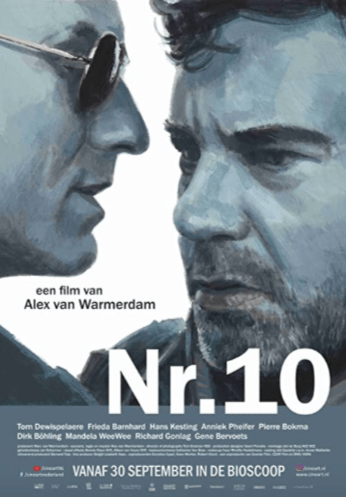
Alex van Warmerdam, who also made Borgman and Schneider vs. Bax, has really made one of the strangest films I’ve seen at Fantastic Fest, which is a real testament. That’s because it starts like some sort of highbrow art film, as a director worries about the opening night of his new play. One of the actors has a dying wife and can’t keep his mind on his lines. And speaking of wives, the director’s wife is currently having an affair with Günter, the lead actor, whose daughter Lizzy has just discovered that she has a rare disease. And oh yeah — he thinks that the world is against him.
And then everything changes on a level that doesn’t just change the story of the film, it fundamentally changes the way that everyone on Earth views the entire universe.
If you want to be as surprised as I was stop reading right now.
When Günter was four years old, he was found alone in a German forest. Raised by a foster couple, he’s never wondered about his past until a man walks up to him in the street and utters the phrase “kamaihí.” Now, he wants to know exactly who his mother is. And he wants to know what that word means. And he wants to know why so many Catholic priests are following him.
Seriously, this movie does beyond a rug pull. It changes not only the story but the viewer. I know that sounds like pure hyperbole, but that’s what this movie deserves. I watched the last scene several times and blown away by just how audacious it is.
While Nr. 10 has just debuted at Fantastic Fest, this is a movie that you need to mark down on your watch list and get ready for when it’s released. I really don’t want to say much more, because I feel like you owe it to yourself to be surprised.
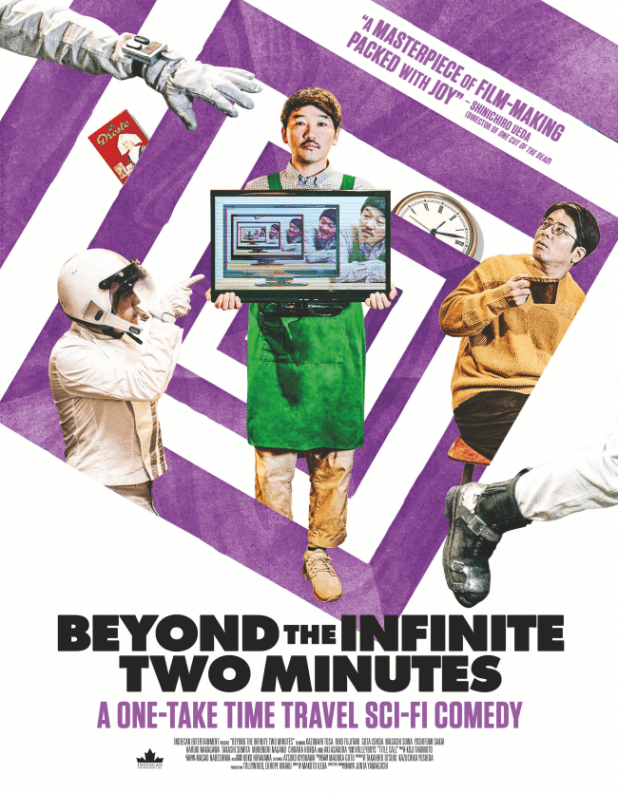
Kato lives above the shop that he owns in Kyoto, Japan and spends whatever time he has left after working playing in a band and thinking of the Megumi, who works at the shop next door. Somehow, in the midst of the ordinary that is his life, Kato learns that the computer screens within his cafe and apartment allow him to receive messages from himself two minutes into the future. Calling this strange experience Time TV, Kato and his friends begin to explore what they can do with this power.
Years ago at San Francisco MoMA, there was an installation that captured moments of time as you walked through it and redisplayed the time that you appeared and interacted with the art, so that it seemed like you were appearing and disappearing at times that didn’t match up to your short term memory. It was incredibly disconcerting and probably what Kato feels like as he shouts messages to multiple versions of himself minutes apart from one another.
Somehow, this movie was made with an iPhone, some Apple TVs and the amazing directing, editing and cinematography of Junta Yamaguchi. This comes from Third Window Film, who also made One Cut of the Dead, and this continues their one cut style, as the film seems to be one continuous shot, which is astounding when you get to the scenes where mirrors extend the future messages into the near-infinite (or at least ten minutes).
This movie absolutely flies through its near 70 minutes but it never feels too fast, never gets boring and gives plenty of time for its characters to display emotion, heart and the joy of discovering something strange and new — pretty much just like any viewer who tracks this down.
Beyond the Infinite Two Minutes debuted this Thursday at Fantastic Fest. When it becomes available for streaming, we’ll make sure to adjust this review so that more people can track it down. You can learn more about this movie at the official site.

 B&S About Movies
You must be logged in to post a comment.