WEIRD WEDNESDAY: Autopsy (1975)

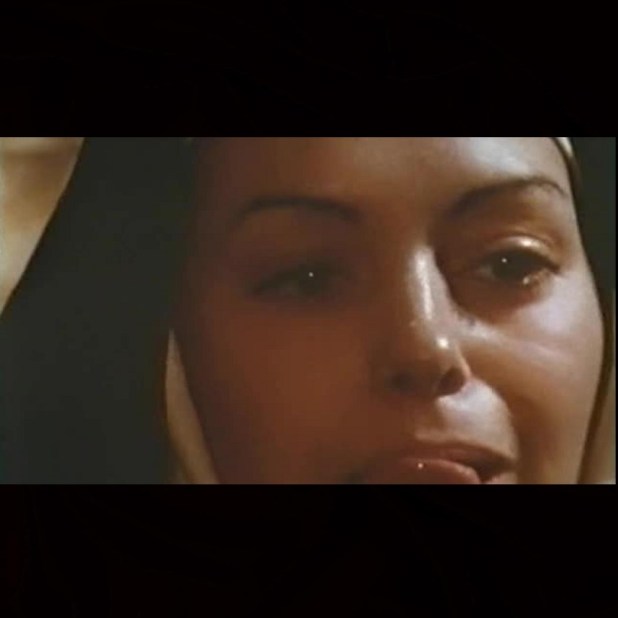
Armando Crispino really only did two horror films, 1972’s The Dead Are Alive and this 1975 giallo, which is a shame, as this is a pretty decent entry in the genre. Known in Italy as Macchie Solari (Sunspots), it does indeed feature sunspot footage from space before we see any major murders. And if you’re looking for a movie packed with autopsy footage, good news. It totally lives up to its title.

Simona Sana (Mimsy Farmer, who is also in Argento’s Four Flies on Grey Velvet and The Perfume of the Lady in Black; I am legally and ethically forced to remind you that she is a perfect angel somehow on Earth, a fragile flower of magic and splendor) is a pathology student who is trying to work on a theory about suicides, one that’s disputed by a young priest, Father Paul, whose sister — Simona’s dad’s latest fling — has recently killed herself. It turns out there’s been a whole series of self-killings which are being blamed on, you guessed it, sunspots.

I mean, what can you say about a movie that starts with several of said suicides, like sliced wrists, a self-induced car explosion and a man machine gunning his kids before turning the gun on himself? Obviously, this is a rather grisly affair, with real corpse photos spread — quite literally — throughout the film.

In between all of the gore, corpse penises, two bodies falling to their deaths and crime museums, there’s also Ray Lovelock (The Living Dead at Manchester Morgue) as Simona’s boyfriend, an out there Morricone score and a heroine who hallucinates that the dead are coming back to life.

The plot gets pretty convoluted, but if you’re on this site, you obviously appreciate films like this and will get past it. This is an Italian 70’s murder movie, though, so if you get easily upset about the way men behave, well, be forewarned.

WEIRD WEDNESDAY: Adios Amigo (1975)

Richard Pryor may have co-written Blazing Saddles, but didn’t star in it. Fred Williamson thought it was too silly, so the two of them got together and made their own Western comedy. The script was just 12 pages, and Pryor ad-libbed most of it.

Williamson said, “I wanted to give him an idea, a concept, and then just turn the light on him and let him do whatever he wanted. You know what they say about comedians—that you can just open the refrigerator door, and the light comes on, and the jokes roll on out. Well, Richard’s light didn’t come on.” Pryor also said, “Tell them I apologize. Tell them I needed some money. Tell them I promise not to do it again.”

Only the second movie Williamson would direct after Mean Johnny Barrows, he plays Big Ben and Pryor is Sam Spade. Ben is always making up for Spade’s schemes and, well, that’s the movie. You’ll hear the song “Adios Amigo” many times. Like, so many times that you’ll have no problem remembering the name of the movie. Too bad it’s nowhere near as good as it should be.

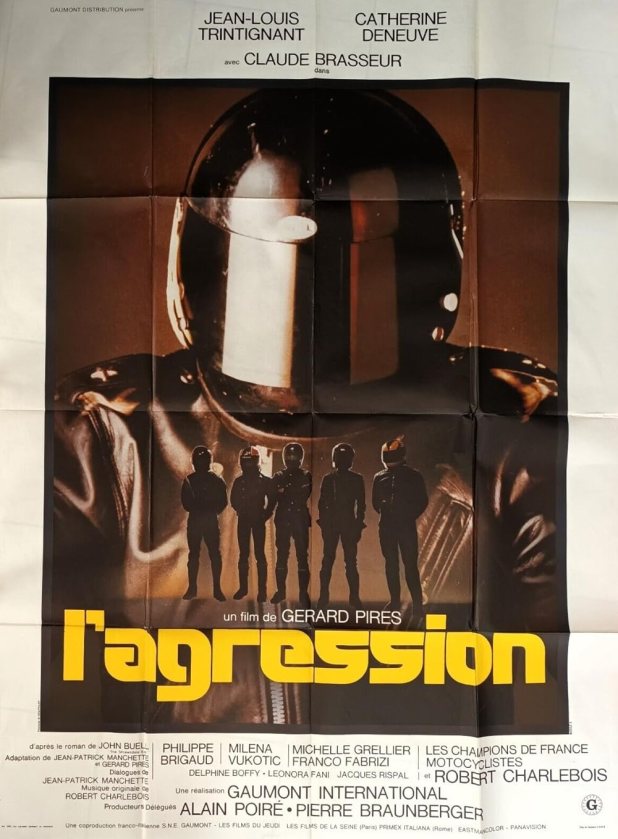
WEIRD WEDNESDAY: Act of Aggression (1975)

Directed by Gérard Pirès — who wrote the story with the author of the book that it’s based on, Jean-Patrick Manchette, although John Buell’s novel The Shrewsdale Exit has also been cited as an inspiration in other places — L’agression is the story of Paul Varlin (Jean-Louis Trintignant), who obviously has road rage issues. Well, after some bikers hit on his wife, those very same men end up nearly killing him and his family.

Stay tuned. As Paul pulls over, he charges the three helmeted motorcycle maniacs, who knock him out and then assault and kill his wife and daughter. Yes, Paul has screwed up and he can’t admit it to himself. All he wants is revenge.

There’s also Sarah (Catherine Deneuve), the sister of Paul’s dead wife, who realizes that her brother-in-law is going about this as badly as you can imagine. He’s no Paul Kersey. She even saves them both at one point, as she’s a better physical fighter — and maybe even mental — than he is.

Pirès went on to make the comedy series Taxi in France. There’s no hint of that in this movie.

JESS FRANCO MONTH: Les chatouilleuses (1975)

Loulou (Lina Romay), Fifi (Brigitte Monnin), Gigi (Anna Gladysek), Mimi (Maria Mancini), Simone (Monica Swinn) and Coco (Pamela Stanford) — an all-star team of Jess Franco’s actresses — work at a brothel where they protect the rebels and their leader Carlos Ribas (Fred Williams). But when the government comes back into power, they arrest these women and plan on using them as a joy division for their troops until they escape and live in a convent.

As you can imagine, these ladies of loose morals get into some shenanigans. I wrote that sentence as if it were a one-line review in the TV Guide.

There’s a statement in this about government authoritarianism, but really, Line Romay, Pamela Stanford and Monica Swinn were all I needed to read to make me watch it. Also, if you looked at Maria Mancini’s name and wondered if she’s Carla’s sister, I want to thank you for making me not feel alone in my complete nerdiness. She’s also in Giallo in Venice and Seven Women for Satan.

No nuns in my childhood looked like Lina Romay, but I don’t think that ever existed outside of this movie.

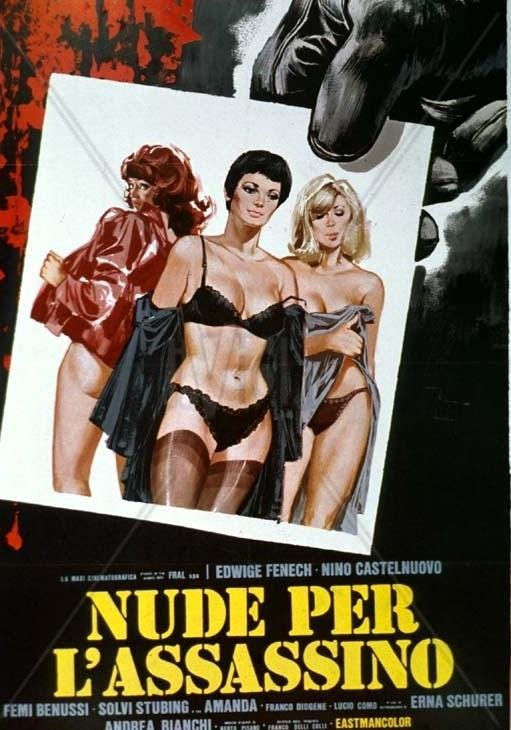
Cinematic Void January Giallo 2025: Strip Nude for Your Killer (1975)

EDITOR’S NOTE: Cinematic Void will play this Saturday, Jan. 4 at 7:00 p.m. at Central Cinema, Knoxville, TN with The Psychic (tickets here). It’s also playing on Friday, Jan. 24 at midnight at The Belcourt Theatre in  Nashville, TN (tickets here). For more information, visit Cinematic Void

When a movie starts with a fashion model dying during a back alley abortion and it being covered up as a drowning, all before the opening credits, you know that you’re in for something demented. When you realize that the film was written and directed by Andrea Bianchi, who brought us Burial Ground, you will either run screaming or sit down and pay attention.

The doctor who performed the operation is killed by a maniac in a motorcycle suit, but nobody at the Albatross Modeling Agency cares. All Carlo, the head photographer, cares about is using his modeling connections to pick up women. That’s how he meets Lucia (Femi Benussi, Hatchet for the Honeymoon), whom he takes from the steam room to the modeling agency.

Magda (Edwige Fenech looks better than I’ve ever seen her look in any movie) is jealous, so she surprises Carlo with some black lace, and they begin an affair. We then see a photo of the main agency members, like Mario, Magda, Carlo, Stefano, Dorris, Maurizio and his wife, and the owner of the studio, Gisella. There’s one other person in the photo—Evelyn, who we saw die in the beginning.

Mario heads home, and the killer shows up. When their helmet is removed, Mario knows the killer. But it’s too late. He’s dead now. The killer takes the photo so that they have a checklist of who to kill.

So then there’s Maurizio, who is cheating on his wife with a prostitute. He takes her on a crazy ride through the streets and then takes her back to his place, where he begs and threatens her life before she suddenly wants to have sex with him — because, you know, that’s how things worked in the 1970s — before he lasts all of a minute and starts embracing his blow up doll. Honestly, what the fuck? Of course, he’s killed right afterward. Good riddance.

Carlo later witnesses Gisella being murdered and even photographs the attack, but he’s hurt in a hit-and-run accident. While he’s recovering, Magda develops the film, but the killer ruins the negatives.

After killing Doris and Stefano, the murderer tries to kill Carlo and Magda, but the killer is knocked down the stairs. So who is it? New model Patrizia — Evelyn’s sister — blames him for her sister’s death. However, she dies before she can tell the police of his involvement.

The movie ends with Carlo playing around by mock choking Magda before initiating anal sex with her, as she tells him not to, in a scene meant as a comedy but lost in translation and the fact that forty-plus-year-old Giallo could never anticipate the #metoo movement.

The title of this film says it all. It’s the most nudity I’ve ever seen in a movie. And it’s one of the most lurid I’ve seen, too. I do not know if Bianchi intended this as a comedy, but it feels like one.

It’s almost incredible that a movie with this much nudity and mayhem moves at a glacial pace. It felt like the film’s first hour was the entire running time and contained wall-to-wall misogyny. I know, I know, that’s the majority of Giallo, but it feels so overwhelming and alien when seen with today’s eyes. I mean, should I be shocked that a movie called Strip Nude for Your Killer is so sexist? And why do I love it so much? Maybe it’s because Edwige Fenech makes me watch anything that she is in.

Spider-Man Versus Kraven the Hunter (1974)

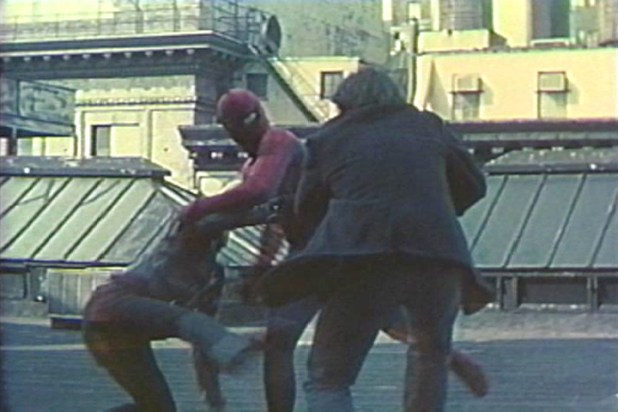
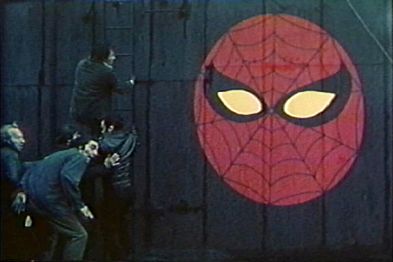
After this year’s Kraven the Hunter and Sony giving up on its Spider-Man-less Spider-Man Cinematic Universe, you may be surprised to learn that there was a fan film directed and written by Bruce Cardozo that was approved by Stan Lee.

Based on The Amazing Spider-Man #15, this all started with Cardozo writing to Lee and explaining the project. He received a very enthusiastic letter of approval — this would never happen today, least of all because Stan Lee is dead and it would be strange to get a letter back from him — saying that as long as the movie only played non-cmmercially, Cardozo could make it.

His experimental film class listened to his idea for a 16mm shot half-hour semi-professional Spider-Man and they thought it was impossible. Then, Cardozo created the  scenario, production direction and special effects while classmates Daphne Stevens and Marilyn Hecht sewed the costumes, Richard Eberhardt created the visual look — and played Spider-Man — and Art Schweitzer created the lighting effects which were to make this short stand out.

Sadly, we never see this. Cardozo, who eventually worked on The Avengers, Captain America and Thor, as well as Empire Strikes Back, Return of the JediRobot Jox and Superman IV died in 2015 and the computer that had the movie on it was destroyed. According to the Lost Media Wiki, this played in public just a few times, with “the final showings being at the Comic Book and Science Fiction Convention in Los Angeles in 2002 and 2005 at the Shrine Expo Hall.”

In that same article, it comes to light that the film was nearly stolen at one point by burglars who knew the value of the only print. Supposedly, “Cardozo had relocated to New Jersey and at that time, he entrusted the prints to his mother for safekeeping.”

I’d love to see this, particularly to see how the team handled the traveling matte effects of Spider-Man swinging across a neon New York. Keep in mind this was being made years before you could “believe a man could fly” when Superman was released in 1978.

SEVERIN BLU RAY RELEASE: Russ Meyer’s Supervixens (1975)

I’m struggling for a way to explain what a big deal Severin releasing this movie is to the uninitiated.

For years, I’ve worried that because it was so difficult to see the full catalogue of Russ Meyer’s movies that he’d be relegated to a director only remembered for a few images seen in books, but movies never seen.

So to me, the biggest event in film in 2024 was the fact that Severin Films, in conjunction with The Russ Meyer Trust, was bringing these films back to the public, newly scanned in 4K from the original negative stored at The Academy of Motion Picture Arts & Sciences.

We’re so lucky to have this.

After the dramatic films The Seven Minutes and Blacksnake were failures at the box office, Russ Meyer went back to what worked best. Sex comedies.

He said, “I’m back to big bosoms, square jaws, lotsa action and the most sensational sex you ever saw. I’m back to what I do best — erotic, comedic sex, sex, sex — and I’ll never stray again.”

He wrote this himself and claimed it was based on Horatio Alger’s tales. “They were always about a young man who was totally good, and he would always set out to gain his fortune and he would always come up against terrible people. They did everything they could to do him in, but he fought fair, you know, and he always survived and succeeded in the end. So, that’s just one facet of the thing.”

Supervixens would be the biggest commercial success Meyer had since Beyond the Valley of the Dolls, making $8.2 million on a $100,000 budget.

Clint Ramsey (Charles Pitts) works at a gas station for Martin Bormann (Henry Rowland) — Hitler’s personal secretary who ran to America and runs his small shop in the desert — and is married to SuperAngel (Shari Eubank). All she does all day is call and harass him at work when she isn’t demanding that he come back home and make love to her. When a customer — SuperLorna (Christy Hartburg) — flirts with him, SuperAngel flips out and tries to kill him with an axe. He goes to a bar where Super Haji (Haji) flirts with him as a cop named Harry Sledge (Charles Napier, playing the same character from Cherry, Harry and Raquel) tries to sleep with his wife but can’t perform, so he murders her in the bathtub. He burns down their house and sets up Clint, who runs from the law.

The rest of the movie is a series of his adventures, from being molested and mugged by Cal (John LaZar) and Super Cherry (Colleen Brennan) to being taken care of by a farmer whose wife SuperSoul (Uschi Digard) assaults him, as well as sleeping with the deaf daughter of a motel owner named SuperEula (Deborah McGuire) and finally discovering his true love, Super Angel (also Eubank). Of course, Harry shows up and wants to destroy their happiness, even if Clint only sees him as a friend. They’re all nearly blown up before the dynamite claims the villain like Wile E. Coyote.

Meyer said that the where Harry beats, stabs, stomps and drops a radio in the tub to kill Super Vixen was the most trouble he’d had with censors, other than Kitten Natividad’s full nudity in Beneath the Valley of the Ultravixens. He also had to deal with watching this movie in the theater with Eubank and her father, who hated that his daughter was working with Russ Meyer. After the film ended, Eubank’s father sad he actually liked the film.

One thing that’s interesting about this movie is that it’s unafraid to show glimpses of penis unlike so many other films by Meyer (and a lot of other softcore). It’s also absolutely ridiculous and so over the top that I have no idea who can take it seriously, other than people still being upset about the murder scene. At least Super Vixen comes back as a ghost and is able to be in charge of her own sexuality, as all ends happily because of love.

The Severin Films release of Russ Meyer’s Supervixens features archival commentary by director/writer/cinematographer/editor/producer Russ Meyer, plus Russ Meyer Versus The Porn-Busters, a Mike Carroll interview with Meyer; an interview with Charles Napier; a trailer; a TV commercial and the reason I discovered Meyer in the first place, the episode of The Incredibly Strange Film Show all about his work.

You can get this from Severin.

25 DAYS OF CHRISTMAS CHALLENGE: The Christmas Tree (1975)

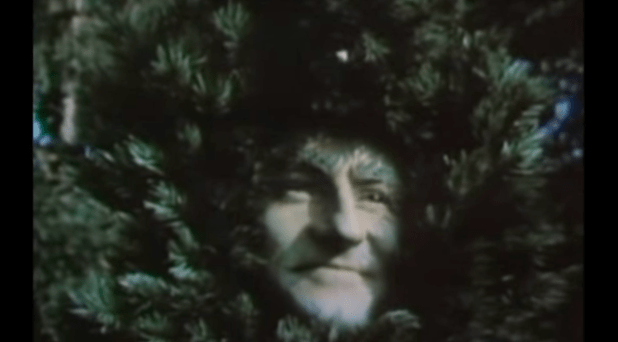
Three trees, Gerald Benson, Jeremy Chagrin and Julian Chagrin, all get sold and put into people’s houses, only to watch children get the most boring toys of all time and then slowly die. It’s Christmas!

Director, writer and star Julian Chagrin was a mime in Blow-Up and shows up in several of the Cannon Movie Tales fairy tale movies, being the magic mirror in Snow White. I’ve watched this tons of times and never realized that Bryan Brown from Cocktail and F/X chops down the trees. I mean, they have the same name. Could it be?

Also: The female tree has oranges on it to appear as if she has breasts. The men have no sexual organs or anything like that, but get very excited by her and when they are watered. One of the trees, the fancy mustache tree, even gets ornaments put on that look like earrings.

At the end, the trees die, in the streets, and fly off to Heaven. What is in Tree Heaven? Do they have souls? What are we to learn from this, other than British dads give their kids bad gifts and that your tree is alive and always watching you?

Sheer terror, that’s what this movie is all about.

You can watch this on YouTube.

VIDEO ARCHIVES SEASON 2: The Human Factor (1975)

VIDEO ARCHIVES NOTES: This movie was discussed on the Patreon for the Video Archives podcast. You can hear a preview here.

Edward Dmytryk may be best known for his film noir efforts like CrossfireCornered and Murder, My Sweet. In 1947, he was named as one of the Hollywood Ten, blacklisted professionals who refused to testify to the House Un-American Activities Committee (HUAC), serving time in prison for contempt of court. However, in 1951, to save his career, he named names to the HUAC, which destroyed several careers. He went on to direct The Caine MutinyBroken LanceThe End of the AffairThe Carpetbaggers and Bluebeard amongst many other movies. The Human Factor is his last theatrically released film; he taught film school, did lectures and wrote books, including Odd Man Out: A Memoir of the Hollywood Ten.

John Kinsdale (George Kennedy) is an American NATO computer specialist with two kids in Naples, Italy. He’s easy going — he likes to play video games at work — and has a good relationship with his wife, who is looking for a new housekeeper. That night, when he gets home from home and expects to go to a birthday party. he finds his entire family killed. He nearly kills himself until he sees a story about his family on TV.

Now he wants revenge.

After the funeral, Kinsdale meets with Inspector Lupo (Raf Vallone), who is investigating the murders. U.S. State Department officers Janice Tilman (Rita Tushingham) and Mike McAllister (John Mills) are also part of the case and they have two suspects: Andrew Taylor (Tim Hunter) and Eddy Fonseca (Mark Lowell). Kinsdale steals U.S. Embassy credentials and tracks down Fonseca, learning that he’s a tourist. He uses those credentials to meet another agent, George Edmonds (Barry Sullivan), who tells him that terrorists have demanded the release of prisoners and $10 million dollars or they’ll kill an American family every three days.

Taylor and Kamal Hamshari (Frank Avianca) are the ones behind it and the government has run a computer simulation that says that Kinsdale has an 8% chance of succeeding in killing him.

Kinsdale does some detective work and discovers that the housekeeper ad in the paper bring Ms. Pidgeon (Haydee Politoff, Queens of Evil) and the killers into the homes of these families. He hides in one family’s house and is there to shoot back when a van filled with murderers arrives. He then follows clues he finds in the fake maid’s purse and tracks down Taylor, shrugging off being stabbed and using a chain to choke the man into oblivion.

Now, clutching his daughter’s doll and driven by rage, he tracks the killers down to a U.S. Embassy grocery store where he engages in a shootout with them, including a moment where an unmasked Ms. Pidgeon spits in his face. He responds by shooting her in the face and continually gunning down people, bleeding all over the place, until he finally kills Kamal and just keeps firing his gun until its empty, filling the dead man with bullets.

Peter Powell and Thomas Hunter only wrote one other movie, The Final Countdown.

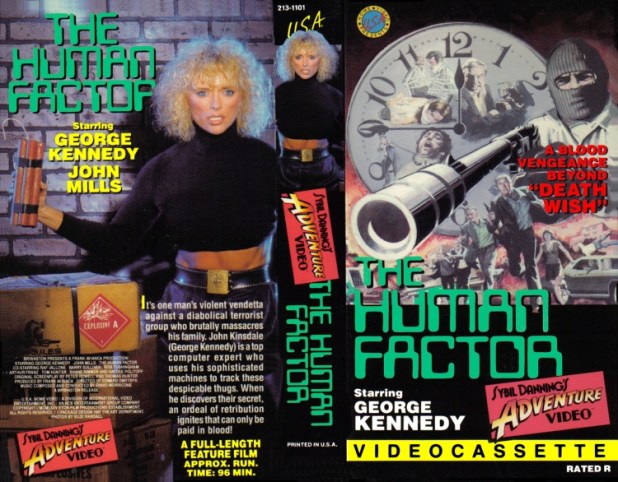
I loved this, because I love George Kennedy. If you only know him as Frank Drebin’s partner Ed Hocken, this is a revelation, as he goes Bronson by the end, killing everyone that has done him wrong. Bonus points for the VHS re-release on the Sybil Danning’s Adventure Video label, as we get a great photo of her holding TNT on the back cover.

You can watch this on Tubi.

SEVERIN BLACK FRIDAY: Night Train Murders (1975)

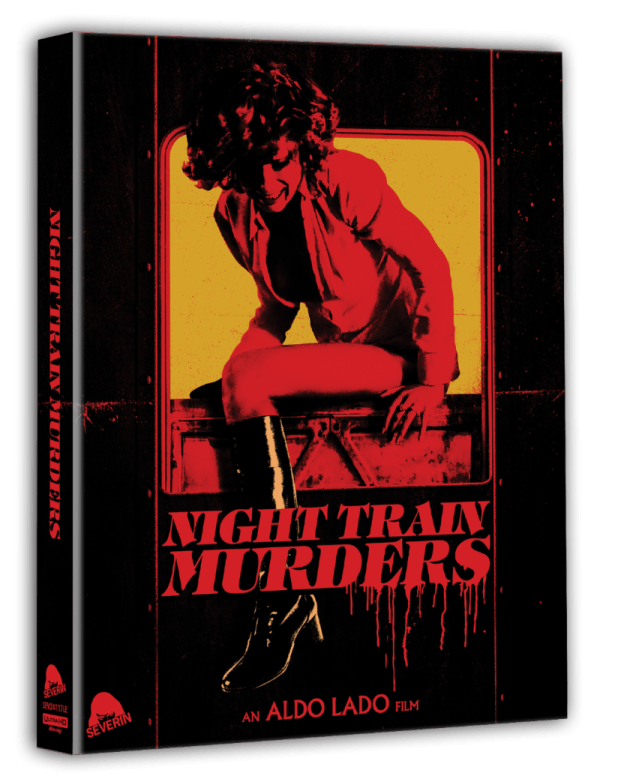
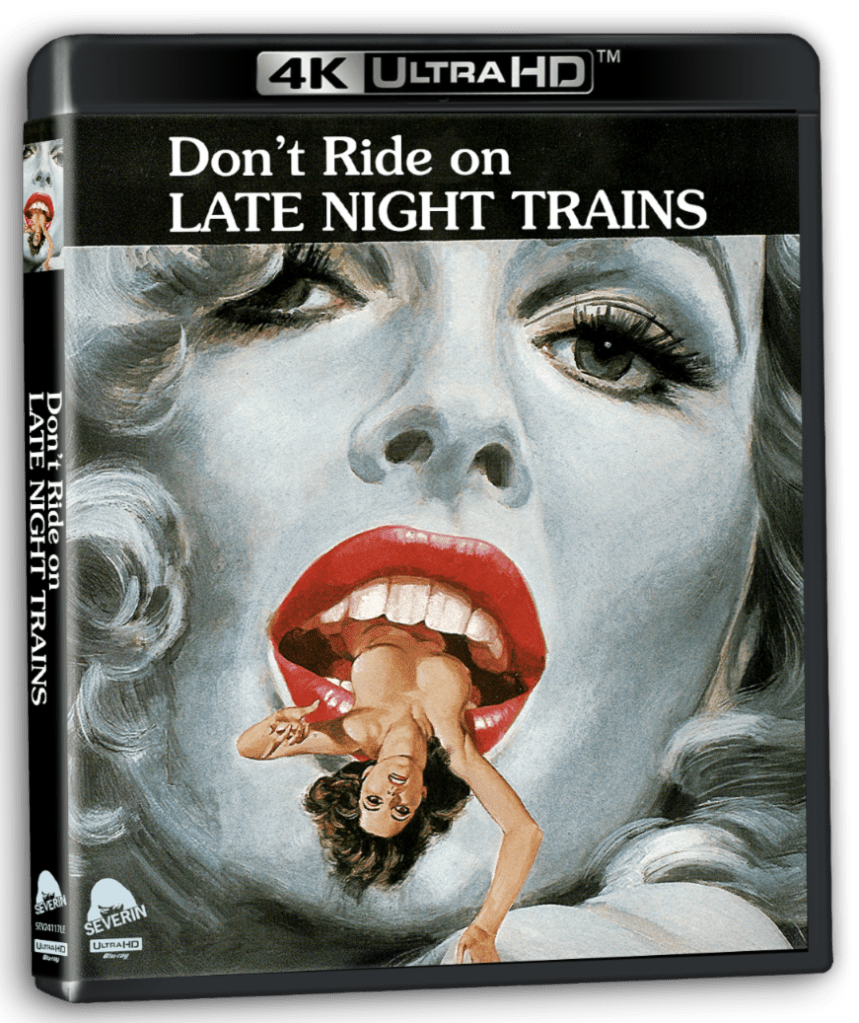
For far too long, this 1974 shocker directed by Aldo Lado has been dismissed as a Last House On the Left knockoff. Now it can be experienced as it should be, on its own merit, in UHD for the first time ever. Scanned in 4K from the original camera negative with over 5 hours of special features — such as commentary by Aldo Lado, moderated by Freak-O-Rama’s Federico Caddeo, and a soundtrack CD — this is why Severin remains one of the best physical media labels.

The sale will take place from 12:01am EST on 11/29 to 11:59pm PST on 12/2 at Severin’s site.


This Aldo Lado-directed piece of Italian grime also went by the names Night Train Murders, The New House on The Left, Second House on The Left, Don’t Ride on Late Night Trains, Late Night Trains, Last House Part II and Xmas Massacre, depending on the whims of fate (and Hallmark Releasing).

Margaret (Irene Miracle, who was also in Midnight ExpressInferno and Puppet Master) and Lisa are set to take the night train from Germany to Italy, but the train is full and they have to sit in a long corridor. They help Blackie (Flavio Bucci, Suspiria) and Curly (Gianfranco De Grassi, The Church) hide from the ticket taker as they board the train and hide from the cops. Of course, instead of saying thanks, they end up decimating the two girls, along with the help of an upper class blonde (Macha Méril, Deep Red) who has already turned the tables on Blackie’s attempts at assaulting her by seducing him. The two thugs really have no idea what they’re in for, because this mysterious blonde is more dangerous than both of them put together.

The whole time the girls are being victimized, murdered and forced into suicide, Lisa’s parents are hosting a Christmas dinner party where her doctor father speaks on the ills of a more violent society.

Later, when they arrive at the station to get the girls, they are worried when they don’t arrive. If you wonder, “Will they end up taking the people that killed them home?” then yes, you have seen your share of revenge movies. The most shocking thing is that the blonde may be the only survivor of the evil trio, as her fate is left open.

This video nasty is the kind of movie that I don’t put on when people come to visit.

While some decry the bumbling cop comedy in Craven’s film, this one jettisons any attempt at levity, adds some 1975 Italian style, gets a soundtrack from Morricone and gets way, way dark.

Lado also made Short Night of Glass Dolls and Who Saw Her Die?, two of the more original and downbeat giallo to follow in the wake of Argento. Even when he’s ripping someone off — not that Craven didn’t also rip off The Virgin Spring, so there are no innocents here — he can’t help outdoing his competition.

How lucky that this comes out on Black Friday from Severin, because despite the fact that it’s so relentlessly immoral, it is, after all, a holiday film.