Johnny Barrett (Peter Breck) wants a Pulitzer so bad that he’s willing to go into a mental hospital to learn who killed someone. He’s talked Dr. Fong (Philip Ahn) into working with him to appear insane and his cover is that he’s incestually obsessed with his sister, who will be played by his exotic dancer girlfriend Cathy (Constance Towers). She doesn’t want to be part of this, realizing how dangerous it is. He doesn’t care — he wants fame.
Once inside, Johnny is overwhelmed by the patients he meets. Literally, as an entire wing of female nymphomaniacs assault him. He gets closer to the truth through three patients: Stuart (James Best!), a man who was taken by the Koreans and indoctrinated into Communism before being reformed, then outed as a traitor by his own government. He now believes that he is Southern General J.E.B. Stewart. The second is Trent (Hari Rhodes), a black man who was so abused in college that he believes that he is a member of the Klu Klux Klan. The last is Boden (Gene Evans), a nuclear scientist who helped invent the atomic bomb who has reverted the mentality of a child so that he no longer has to create weapons.
While Johnny learns who the killer is, it takes his sanity, which is destroyed after shock therapy. He thinks that Cathy is his sister and sure, he writes the story, but he’s now trapped in the same place he worked so hard to get into.
Directed and written by Samuel Fuller, this was shot in ten days with no exteriors. Fuller was upset that the movie was sold as an exploitation movie. It played double features with The Naked Kiss. As I always say, the only difference between the arthouse and the grindhouse is where the movie is playing.
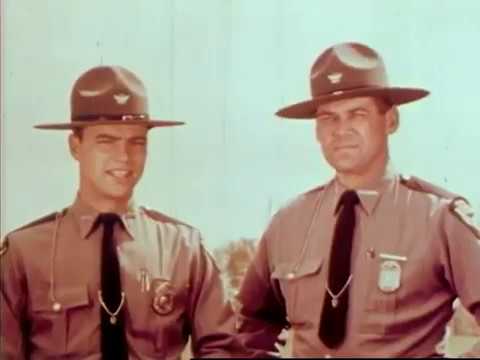
Before reality TV, we watched movies like this in school, in which the officers of The Ohio Highway Patrol prepare for accidents and share the re-enactments of how these ones happened, as well as the gruesome and gory aftermath of the real vehicular mayhem that ensued.
Directed by Richard Wayman, who also made Signal 30 and Mechanized Death, and written by Bill Bradley and Charles C. McCue, who also appear in the film as the highway patrol. That’s not typecasting, as they were actual cops.
If you think this is funny with the badly acted lead-ups, get ready to be shocked into silence. There are accidents with people stuck face first in windshields and no one asked for a release to ask them if they wanted filmed. Neither did the girl who drowned when two boys listened to rock and roll and drove into a ditch and then the water.
They showed these movies to get us to drive better. I never wanted to drive at all after seeing them,
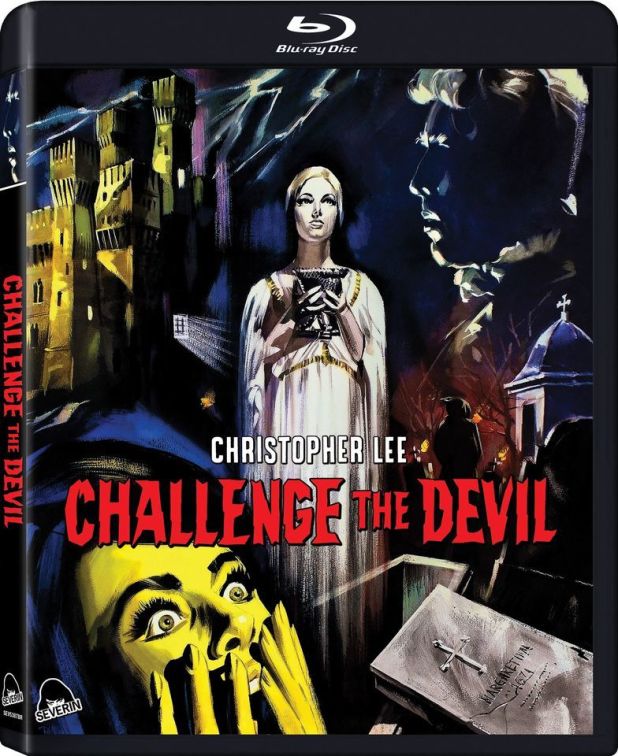
The first twenty minutes of this movie explain how Peo (Piero Vida) became Father Renigio after his younger years of vice. As a criminal who goes by Carlo hides in his church, Peo goes to speak to the man’s exotic dancer girlfriend Alma Del Rio and tell her how he once hid in a castle and met Satan.
An old man (Christopher Lee) had opened his castle for him and several of his friends, asking them to help find the dead body of his wife, but they were so high that they decided to have a bongo dance line instead.
Shot under the name Faust ’63 and originally called Katarsis, this feels like if Jerry Warren and Jess Franco made an Italian Gothic movie together and made a goofy-eyed spider as one of the monsters. Its production company, I Films della Mangusta, went bankrupt shortly after filming. The movie was bought by Eco Film, who added the new footage. Director Giuseppe Vegezzi dropped out of directing movies after this experience and even attempted suicide, which is why the first twenty minutes feel like a totally different movie, as they were added to pad the time.
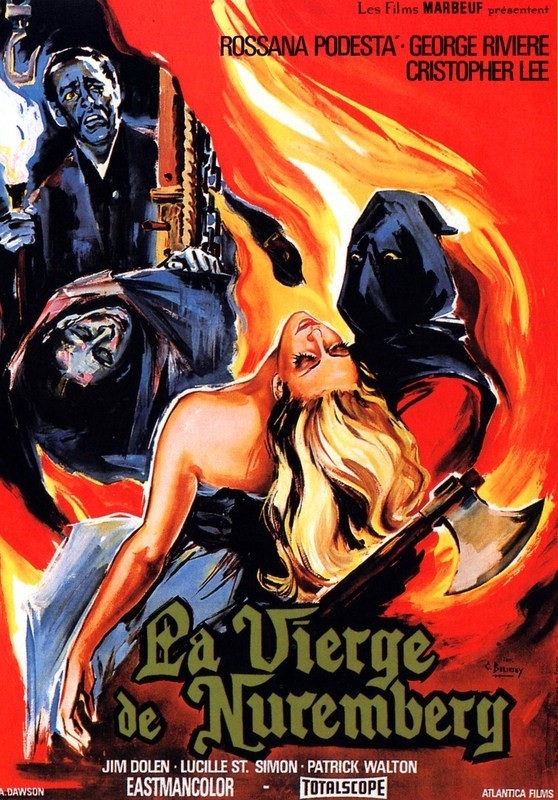
The Virgin of Nuremberg — released in the U.S. as Horror Castle — was based on the Italian paperback La vergine di Normberga by Maddalena Gui. They were published by G.U.I., who sold these Gothic erotic horror slices of sleaze as British books translated into Italian, claiming that their real writers were just the translators. Produced by G.U.I.’s owner Marco Vicario, this was directed by Antonio Margheriti, who wrote the story — well, rewrote it to add the surgical terror and World War II ideas — with Renato Vicario and Edmond T. Gréville, who directed The Hands of Orlac. The other name listed as a writer is Gastad Green, who may either be Vicario’s brother Renato or Ernesto Gastaldi.
Shot on the set of Castle of Bloodin just three weeks, this finds Mary Hunter (Rossana Podestà, Seven Golden Men) newly married to Max (Georges Rivière) and living inside his large castle. One night, she wakes up and finds herself walking down to the dungeons below the ancient structure and finding an eyeless woman inside an iron maiden. Everyone believes that she’s making these things that she’s seen up and that they are just dreams. Cared for by the sinister servants Marta (Laura Nucci) and Erik (Christopher Lee), she soon discovers that the castle once was the home of The Punisher, an evil monster of a human being who loved to torture women.
Well, he’s definitely at it again, engaging in all manner of deranged tortures, including a rat cage face mask — complete with hungry little rats — being placed over a girl’s pretty face in a scene that predates torture porn. Yet this isn’t all shock for the sake of cheap jump scares. This has a dark and twisting story that takes us into how war can destroy people who end up destroying others.
It looks beyond impeccable and over this past year, I’ve become such a fan of Margheriti. Yes, Bava may be the master of Italian horror, but you can make the case for Anthony Dawson to having a space quite near the crown.
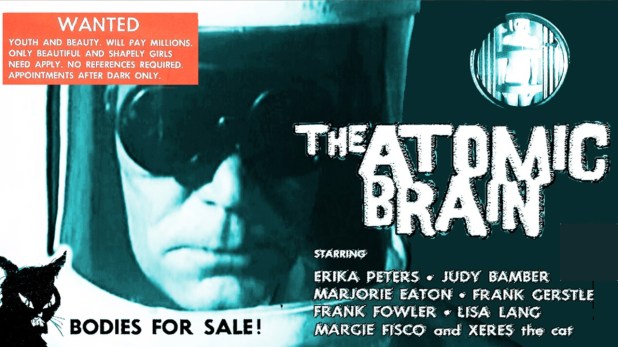
Also known as Monstrosity, this is one of the first movies where decay is given as the reason for the diminished intelligence of zombies. It also features plenty of people better known for other things, like narrator Bradford Dillman, Commerical pitchman Frank Gerstle and Marjorie Eaton, who played the original Emperor in The Empire Strikes Back before the special edition re-imagining.
In just 72 minutes, we learn an old woman who gets her pick of three servants to insert her brain into, thus getting a young body that will extend her lifespan.
This is the last film of Judy Bamber, who is also in A Bucket of Blood and Dragstrip Girl. The budget was so low that she provided Xerxes the cat, who was her housecat.
Don’t have the box set? You can watch it on Tubi or download it from the Internet Archive.
EDITOR’S NOTE: Black Sabbath was on Chiller Theater on Saturday, October 28, 1967 at 11:20 p.m. It was also on the show on June 13, 1970; March 27, 1971 and June 10, 1972.
Known in Italy as I tre volti della paura (The Three Faces of Fear), Mario Bava’s seminal film plays differently in other countries of the world. Here in the United States, American-International Pictures suggested changes to Bava during filming so that the film would play better in America, where it underperformed. Those changes include replacing the original dialogue, changing Roberto Nicolosi’s score to music by Les Baxter and censoring much of the film’s violence. The first story, “The Telephone,” was changed the most, as it was given a supernatural element missing from the Italian version and all references to prostitution and lesbianism were exorcised.
Bava wanted to create a story about how terror can strike in different time periods and looked to books for inspiration. The first tale, “The Telephone,” is based on F.G. Snyder’s story and has Bava trying to match the lurid covers of giallo detective books. The whole name giallo had no been codified yet, so this is a take between The Girl Who Knew Too Muchand Blood and Black Lace.
In that story, a French call girl named Rosy (Michèle Mercier) returns home to receive a series of strange phone calls from her pimp Frank, who has just escaped from prison. A prison that she sent him to, no less.
Rosy calls her ex-girlfriend Mary (Lydia Alfonsi) as she is sure that she is the only person who can help her. She gives her a large knife and while Rosy sleeps, Mary writes to confess that she was the one who made the calls, hoping that she could bring their relationship back. As she finishes, Frank (Milo Quesada)really does break in and kills her. Realizing he murdered the wrong woman, he moves to Rosy’s bed, but the knife does end up saving her.
In “The Wurdulak,” Vladimir Durfe (Mark Damon) is a young nobleman who finds a headless corpse with a knife in its heart. Taking the blade, he leaves for a small cottage where a man tells him that the knife belongs to his missing father Gorca (Boris Karloff, who also hosts the movie), who has gone to fight the wurdulak.
Now, however, the old man has become what he was fighting and even transforms their son into another undead creature that demands to feed on humans, predating Salem’s Lot. One by one, the family becomes these creatures, leaving only Vladimir and his love, Sdenka (Susy Andersen).
That story was loosely based on The Family of the Vourdalak by Aleksey Konstantinovich Tolstoy, along with the story “The Wurdulak” from the anthology I vampiri tra noi, Guy de Maupassant’s “Fear” and Bram Stoker’s Dracula.
Finally, “The Drop of Water” was based on a Chekov story and “Dalle tre alle tre e mezzo” (“Between Three and Three-thirty”) from an anthology book called Storie di fantasmi (Ghost Stories). Nurse Helen Chester (Jacqueline Pierreux) is called by the maid (Milly Monti) of an elderly medium to prepare her body for burial. She can’t help but steal a ring from the dead woman, which leads to bussing flies, drips of water and even the dead woman coming back for her.
Even the color of this film is different between the American and Italian versions. It may seem crazy to us today, but AIP recut, re-edited and recolored a Mario Bava movie. This would be seen as ridiculous today, but in 1963, horror films were hardly seen as art.
There were additional scenes filmed with Boris Karloff introducing the segments, just like he did on the TV sho Thriller, but AIP decided they were unnecessary and cut them. Karloff went on record saying that these introductions were some of the most fun he’d ever had on a film set, which led to him praising Bava to his contemporaries Christopher Lee and Vincent Price. Plans were made to make an adaption of The Dunwich Horror called Scarlet Friday with Karloff and Lee, but after the failure of Dr. Goldfoot and the Girl Bombs, AIP gave up on Bava.
EDITOR’S NOTE: The Blancheville Monsterwas first on Chiller Theater on Saturday, May 1, 1965 at 1:00 a.m. It also aired on September 9, 1967; June 15, 1968 and September 27, 1969.
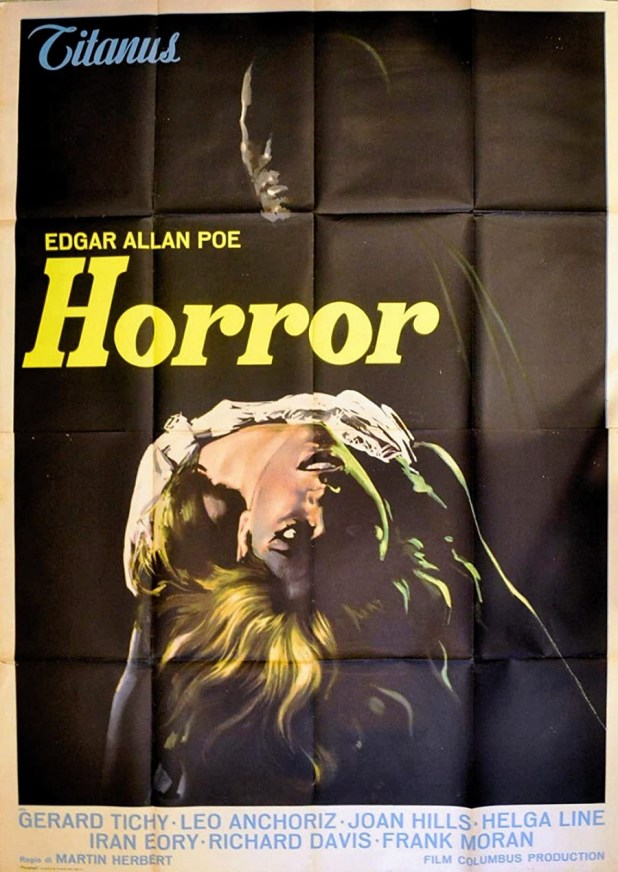
Released in Italy as Horror, this film’s script by Gianni Grimaldi and Bruno Corbucci was said to be based on the works of Edgar Allan Poe. Sure, there are some parts of The Fall of the House of Usher, A Tale of the Ragged Mountains and Some Words with a Mummy, but it’s as much a true Poe as the films of Roger Corman.
It was directed by Alberto De Martino who I celebrate for so many of his remake remix rip-off movies like OK Connery, The Antichrist and Holocaust 2000. Outside of those movies, he also made the wild giallo cop movie hybrid Strange Shadows In an Empty Room. It won’t sell you on this movie if I told you that he said that it was “a little film of no importance.”
Emilie De Blancheville (Ombretta Colli, who would one day become the President of Milan) has returned to her family’s ancestral home only to learn that everything has changed. Her father, Count Blancheville, has become disfigured, gone mad and has locked himself in a tower. Her brother Rodéric (Gérard Tichy) has taken over the home and rules over his servants with an iron fist after, well, all the old help has been killed. And now, the Count is loose and sure that if his daughter is killed before his 21st birthday, the curse on the Blancheville family will end. And oh yes — there’s also a cold and evil housekeeper known as Miss Eleonore played by Helga Liné.
What follows are soap opera romances, thunder and lighting, drama and the kind of murder that goes on in Italian gothic horror movies that are frequently air on my television screen.
AIP sold this to American TV, so if you watched horror shows from the 60s to the 80s, there’s a good chance you’ve seen this. Do you think that Edgar Allen Poe ever was like. “Why are they using my name again?”
EDITOR’S NOTE: The Strangler of Blackmoor Castle was on Chiller Theater on Saturday, July 17, 1971 at 11:30 p.m.
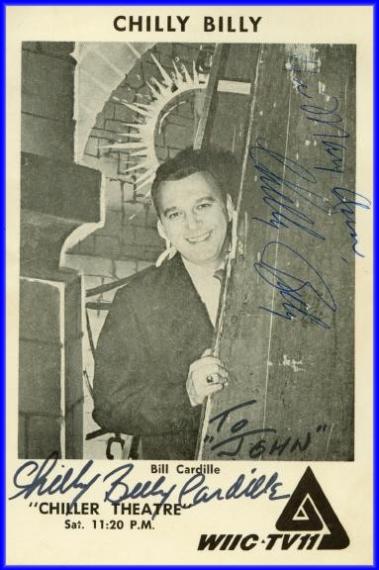
Pittsburgh’s Chiller Theater really gave you something of everything: Universal monsters, science fiction, strange movies from Spain and Italy, kaiju from Japan and even krimi from Germany.
Directed by Harald Reinl, Der Würger von Schloß Blackmoor is a Bryan Edgar Wallace adaptation. Not Edgar Wallace, but his son. He wrote books of his own, adapted his father’s stories for movies and even had some of his stories turned into films like this and The Phantom of Soho and The Dead Are Alive. There’s also a rumor that he was an uncredited contributor to the script of The Cat o’ Nine Tails.
The killer in this is strangling people on a British estate. However, not only does he do that, he then brands an M into the foreheads of those he murders and then decapitates them. Well, maybe he likes to make sure that they’re dead.
The masked killer shows up after a party during which Lucius Clark (Rudolf Fernau) announces that he will be knighted. The hooded strangler accuses him of stealing diamonds and killing Charles Manning, then claims that he will kill until he gets what he wants. He may also only have nine fingers and the police, Lucius and his niece Claridge (Karin Dor, who would play Helga Brandt in You Only Live Twice and is also in The Torture Chamber of Dr. Sadism and Los Monstruos del Terror) must solve the case before more are killed.
EDITOR’S NOTE: Atragon was on Chiller Theater on Saturday, November 4, 1967 at 11:20 p.m. It also aired on August 14, 1971 and July 1, 1972.
In Japan, this movie is known as Kaitei Gunkan and is a combination of two books, The Undersea Warship: A Fantastic Tale of Island Adventure by Shunrō Oshikawa and The Undersea Kingdom by Shigeru Komatsuzaki, who did design work on the film (he also was part of The Mysterians and Battle In Outer Space).
The lost continent of Mu has reappeared — justified, ancient and with its own sun — and threatens the entire world. The only man who can save us all is Captain Hachiro Jinguji (Jun Tazaki), a WW II naval commander who everyone thinks is dead but who has been working on a super submarine he calls Gotengo (Roaring Heavens). He refused to surrender at the end of the war and he certainly won’t to the Mu.
He refuses to help — the ship is only to bring Japan back to power — until the Mu kidnap his daughter Makoto (Yōko Fujiyama). That’s when he goes on the attack with Rear Admiral Kusumi (Ken Uehara) and decimates the empire of the Empress of Mu (Tetsuko Kobayashi), who chooses to swim into an explosion instead of giving up.
Directed by Ishirō Honda, this was Toho’s big movie of 1963. It was so popular that it was re-released five years later as the double feature with Destroy All Monsters. It was released in the U.S. by American-International Pictures as a double feature with The Time Travelers.
The Gotengo shows up in the TV series Godzilla Island, as well as Godzilla Final Wars, Super Fleet Sazer-X the Movie and the web show Godziban. There was also a two-episode OAV anime, SuperAtragon. The monster Manda appears in Destroy All Monsters.
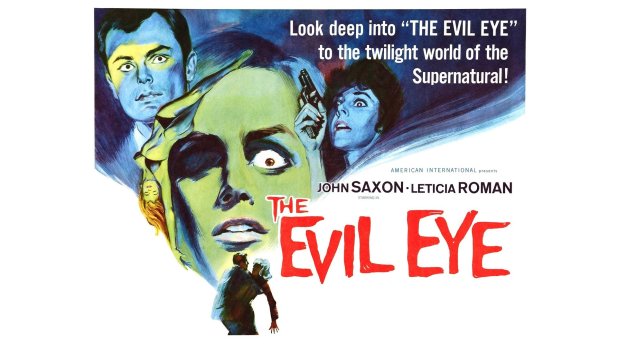
EDITOR’S NOTE: The Evil Eye was first on Chiller Theater on Saturday, August 14, 1971 at 11:30 p.m.
Mario Bava is a genius. This is the root of all giallo before The Bird with the Crystal Plumage and it stars John Saxon as Dr. Marcello Bassi and Leticia Roman as Nora Davis, a young girl who travels to Rome only to witness murder after murder. No one believes her because there’s no corpse. And it only gets worse for her.
Nora was in Rome to help her sickly aunt, who dies the first night that she’s in the city. After walking to a hospital to alert Bazzi, Nora is mugged. When she awakens, she watches a man pull a knife from a woman’s back. The police think she’s an alcoholic and send her to a sanitarium, where she’s rescued by Bazzi.
One of her aunt’s friends, Laura (Valentina Cortese), goes on vacation, allowing Laura to stay in her home. But our detective fiction-obsessed heroine can’t resist snooping, finding a series of articles about a serial killer that the press is calling the Alphabet Killer, as he or she kills in alphabetic order. The last murdered person was Laura’s sister, but that was ten years ago. That’s when the phone rings and a voice tells her that “D is for death” and that she will be the next victim.
Nora begins to fall from the doctor and after they tour the city, she gets a phone call that leads them to an empty room with a recorded message telling her to leave the city if she wants to live.
The giallo conventions that we know and love originate here: a foreigner who can’t remember every detail of a murder, now in danger from the killer and unable to be helped by the police, causing them to turn to their own detective skills. Red herrings abound. And the killer seems to be one person, only for their identity to come out just before the end of the film. What is missing are the more psychosexual and high fashion parts of the genre, but don’t worry. They’ll soon show up in force.
The film was the least commercially successful picture of Bava’s career, as giallo films didn’t find favor until Argento’s 1970s efforts. It was released in the United States by American International Pictures as Evil Eye, part of a double bill with Black Sabbath. This version features a different score and more of an emphasis on comedy.





 B&S About Movies
You must be logged in to post a comment.