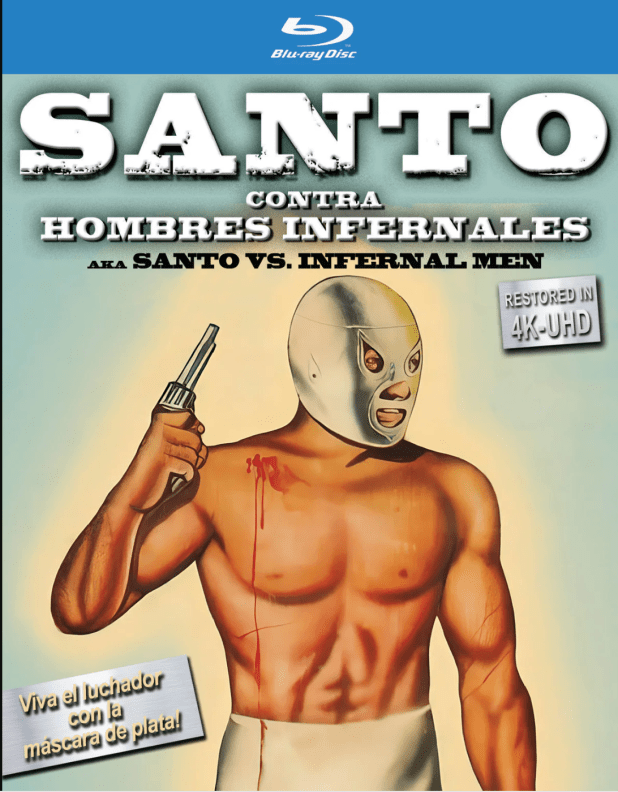
VCI BLU-RAY RELEASE: Santo Vs. Hombres Infernales (1961)

Santo Contra Hombres Infernales and Santo Contra Cerebro Del Mal were the first two movies made with El Santo, filmed in Cuba just as Castro took power, and smuggled out in a coffin. Enrique J. Zambrano realized he didn’t have enough coverage for two films, so he mixed footage between the two movies.

Joaquin (Joaquin Cordero) is the real star of this, a cop whose undercover identity is exposed, leading to his lover Irma (Gina Romand) being kidnapped. Santo just comes in to keep saving him. There’s not even a trip to Arena Mexico to wrestle, as Santo movies would later have. In fact, this has nothing to do with the formula you expect from these films. But you do get to see a lot of Cuba.

Santo had taken years off from wrestling to make movies, and this sat on the shelf for three years. Who knew that, despite the first two movies not being as insane as what was to come, Santo would become such a major cultural hero?

I will say that I love these new 4K Santo transfers. It’s wild to see these films in a whole new light, because they look like brand new films.

You can watch this on Blu-ray.

MILL CREEK LEGENDS OF HORROR: The Sorcerer’s Apprentice (1961)

“The Sorcerer’s Apprentice” is a seventh-season episode of Alfred Hitchcock Presents and was scheduled to be episode 39 of season 7. However, the network was worried about it. Robert Bloch, who wrote the screenplay and the short story that it was based on — it was in the January 1949 issue of Weird Tales — said,  “When the network censors viewed the teleplay, there was thunder from on high. This show was simply too gruesome to be aired. Nobody called me on the carpet because of this capricious decision. As a matter of fact, when the series went into syndication, my show was duly televised without a word from the powers that be.” 

Sadini the Great (David J. Stewart) rescues a young boy, Hugo (Brandon deWilde), sleeping in the cold. The magician’s wife, Irene (Diana Dors), thinks it’s a waste of time; he tells her to get the boy something to eat. The kid goes all over the big top and soon learns that Irene has been sleeping with another performer, George Morris (Larry Kert). In truth, Irene is using Hugo, setting him up to kill her husband by telling him that he can gain magic powers by killing Sadini.

As you can expect, it doesn’t work out well for anyone. This won’t be the first time Diane Dors is sawn in half. Just watch Berserk! 

Director Józef Lejtes started his career in Poland and went on to work on numerous episodic TV shows.

You can watch this on YouTube.

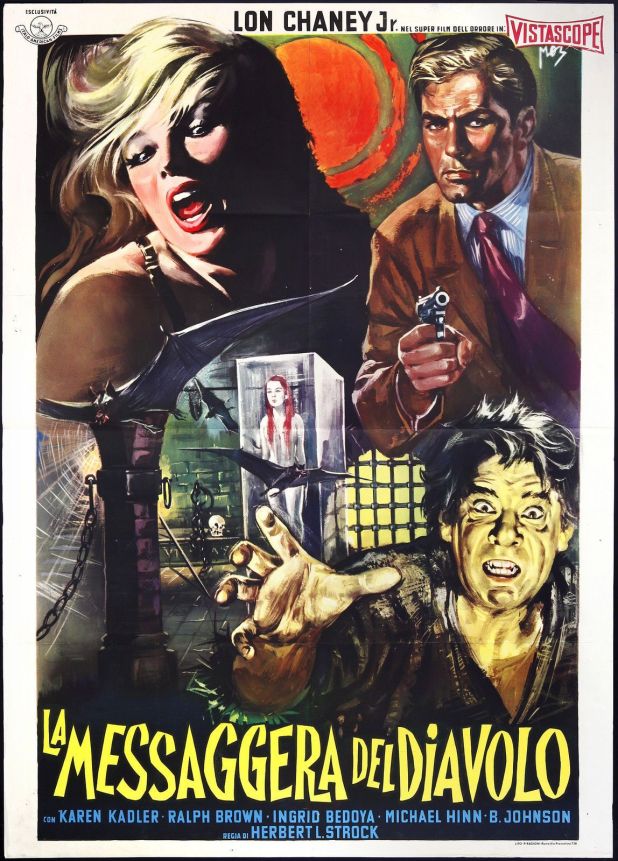
MILL CREEK LEGENDS OF HORROR: The Devil’s Messenger (1961)

I know that Lon Chaney Jr.’s career highlight was being in the Universal monster movies. I realize that the end of his life seems sad — he suffered from throat cancer and heart disease after decades of hard drinking and smoking. In fact, Robert Stack claimed in his autobiography that Chaney and Broderick Crawford were known around the Universal lot as “the monsters” due to how much they drank and raised hell.

Despite living in his father’s shadow, Chaney could be one hell of an actor. After all, he played Lennie Small in the original Of Mice and Men. You get reminded of that when you watch late period Chaney and he has to use his voice and body instead of makeup in films like Spider Baby.

That brings us to The Devil’s Messenger, a 1961 anthology that takes three episodes of the Swedish TV series 13 Demon Street. From the tale of a 50,000-year-old woman trapped in ice bewitching scientists to a man who learns of his death in a dream to a photographer who attacks a woman in teh snow and can’t escape her, these are some pretty decent stories. And oh yeah — there’s a framing device starring Chaney, Karen Kadler and John Crawford that was directed by Herbert L. Strock (I Was a Teenage Frankenstein).

Guess what? Those three Swedish episodes — The Photograph,” “The Girl in the Glacier,” and “Condemned in Crystal” — were directed by Curt Siodmak. Who is that? Oh, only the guy who wrote the original The Wolf ManI Walked with a ZombieSon of Dracula and House of Frankenstein as well as directing Curucu, Beast of the Amazon and The Magnetic Monster.

Look, any movie where Lon Chaney Jr. makes good on Satan’s plot to nuke the world is one I’m going to love.

CHILLER THEATER MONTH: Atlas (1961)

EDITOR’S NOTE: Atlas was on Chiller Theater on Sunday, February 2 at 11:10 p.m. and Saturday, March 14, 1964 at 4:00 p.m.

A movie that caused writer Charles B. Griffith to say, “Atlas was a mess. It was a doomed project.”

Corman was on his way to England to make a film about Gary Powers’ U2 crash called I Flew a Spy Plane Over Russia, based on a script by Robert Towne. Towne got writer’s block after twenty pages. Corman felt like an idiot and left; meanwhile, Griffith was stranded for two years in Israel: “I was involved in an Israeli war picture about helicopters, which never got finished, when Roger decided to make Atlas. This was after Little Shop, and I wanted to make it as Atlas, the Guided Muscle, but Roger wanted to make a Hercules, Italian-type thing. Roger had a deal to shoot it in Puerto Rico, so it was going to be a jungle picture about Atlas and Zeus. Ancient Greece could have jungles, so why not? But I was on my way to Israel because of the helicopter picture that collapsed in the desert. So Roger and I flew to New York together, and we worked on the details of Atlas. Then I boarded a ship going to Israel… I was stranded in Israel for two years, and Roger wouldn’t send me the fare to get out. I wound up doing some pictures in Israel.”

Corman wanted to make this an epic and cash in on the success of Hercules. He did not have the budget to do that.

The shoot was even less fun.

Griffith recalled that the actors “…were very rebellious. Roger was in a towering rage throughout. There was a Greek cameraman and a Greek crew. Nobody knew left from right. The army couldn’t march. They tore the noseguards off their papier-mache helmets so their relatives could recognize them in the picture, with paper hanging down from their helmets. The tips of their spears were hanging down because they were made out of rubber, which I had to have done at a tire shop around the corner of the set. It was a lot of fun…. Roger broke his sunglasses in half and had a temper tantrum. He went a little mad during that picture. We went off afterward and got shipwrecked.”

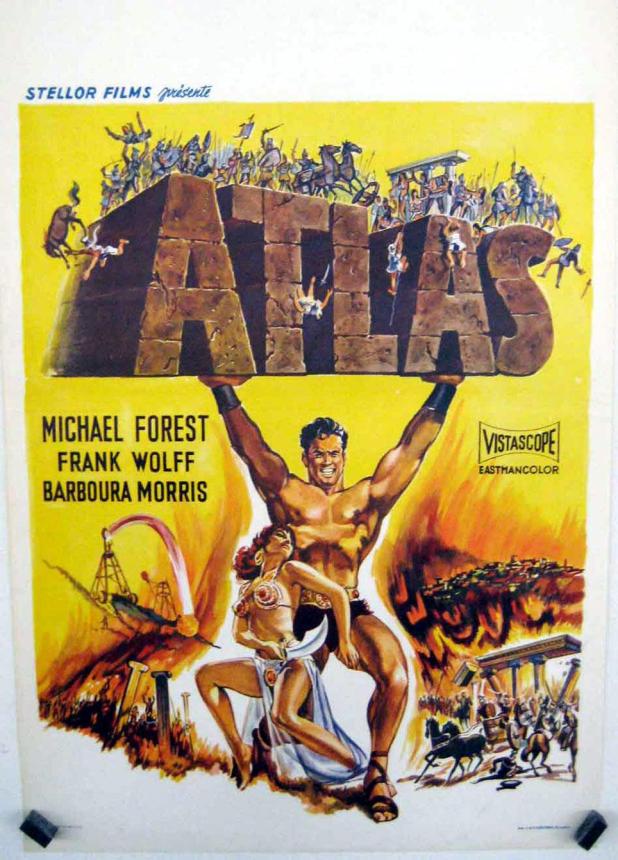
King Proximates (Frank Wolff, who on Corman’s advice remained in Europe as a character actor in over fifty, mostly Italian-made, films; he cut his own throat in his early 40s, depressed over his divorce; his voice in Milan Caliber 9, his last movie, was dubbed by his co-star in this film, Michael Forrest) and King Talektos (Andreas Filippides) have been at war for a long time. Perhaps they could each choose a champion, and that champion could decide the outcome?

He uses his priestess, Candia (Barboura Morris), and philosopher Garnis (Walter Maslow) to recruit Atlas (Forrest) to be his champion. While Atlas easily wins, Proximates sets up Telekthos, who is put to death, and he takes over the city. Atlas quickly battles back and takes Candia with him, leaving all of this behind for Egypt.

The Greeks also didn’t send enough soldiers, so reshoots had Dick Miller and Corman dressed up. As for the modern ruins in the background, they highlight that the country has been at war for a long time.

Proximates is excellent, though, a bitchy ruler who says things like this:

Guard: You wanted to see me?
Proximates:  No!  I wanted to see your great aunt Helen from Lesbos!

You can watch this on Tubi.
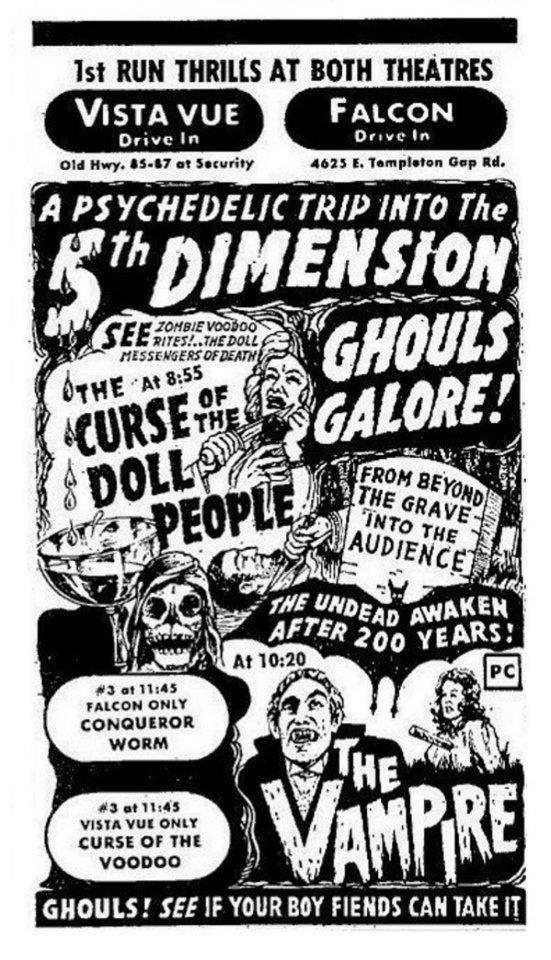
CHILLER THEATER MONTH: Curse of the Doll People (1961)

EDITOR’S NOTE: Curse of the Doll People was on Chiller Theater on Saturday. August 17, 1968 at 1:00 a.m.

Known in Mexico as Munecos Infernales, this movie was directed by Benito Alazraki, who was also behind Santo contra Los Zombies and Espiritismo, both of which were made the same year as this film.

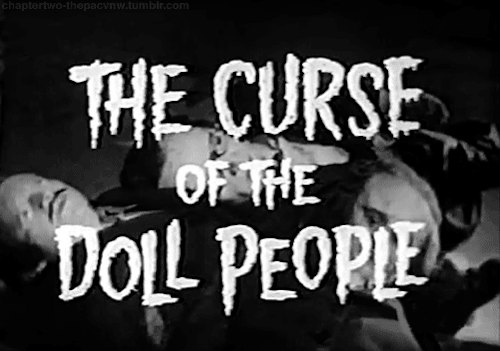
Four men have stolen an idol from a voodoo priest. I don’t have to tell you what a bad idea that is in any country. Soon, evil dolls begin killing their family members years before we even heard of Puppet Master. It’s actually based on the book Burn Witch Burn! by A. Merritt, which has nothing to do with the movie of the same name. That British-American film was initially titled Night of the Eagle and was based on the Fritz Leiber novel “Conjure Wife.”

Speaking of that movie, it had a Paul Frees-narrated prologue in which he read a protective spell for the audience, who were also given further occult defenses via a special pack of salt and the words to an ancient incantation.

This movie has no such assurances.

K. Gordon Murray, who brought The Brainiac and Santa Claus up north, as well as the writer of Shanty Tramp, also brought this movie to America, but not before adding some new scenes.

Ramon Gay, who starred in all of the Aztec Mummy films, is featured. He was one of the brightest lights in Mexican cinema when a dispute over the affections of the actress Evangelina Elizondo ended with her estranged husband shooting Gay dead.

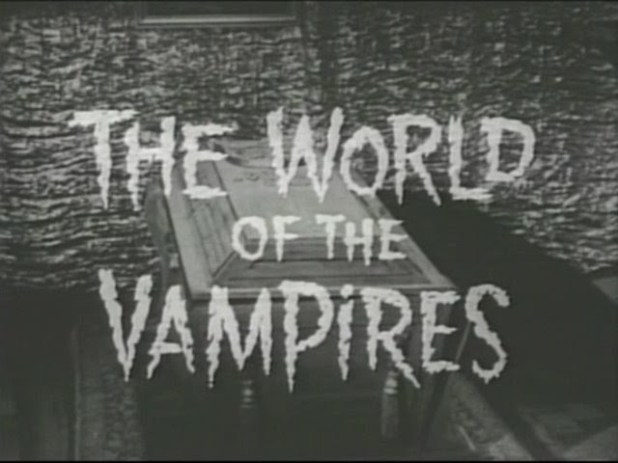
CHILLER THEATER MONTH: The World of the Vampires (1961)

EDITOR’S NOTE: The World of the Vampires was on Chiller Theater on Saturday, September 17, 1966 at 1:00 a.m. and Saturday, March 29, 1969 at 11:30 p.m.

A year after making this movie, which translates as World of the Vampires, Alfonso Corona Blake would direct Santo vs. Las Mujeres Vampiro

Count Sergio Subotai is a vampire who is seeking to wipe out the descendants of his greatest enemy. I’d like to state for the record that he is played by Guillermo Murray. When I was a nino taking el espanol, anyone named Bill was called Guillermo, which means William. So this vampire is really named Mexican Bill Murray.

Another fact that this movie taught me is that instead of a stake through the heart, sunlight, garlic or a cross, music is the best weapon to use against a Mexican vampire. I take that back — stakes are also used.

That said, there are some attractive female vampires and an organ made of human bones and skulls, so this movie isn’t all bad.

You can watch this on YouTube.

CHILLER THEATER MONTH: Konga (1961)

EDITOR’S NOTE: Konga was on Chiller Theater on Saturday, March 20, 1965, at 11:15 p.m., Saturday, May 25, 1968, at 1:00 a.m., Saturday, October 18, 1969, and Saturday, January 30, 1971, at 1:00 a.m.

Dr. Charles Decker (Michael Gough) has been presumed dead, but he’s really been hiding out in Africa, learning how to grow plants and animals to a considerable size. Like the baby chimp Konga, he turns into a monstrous ape and then he goes bonkers. I mean, he was before, too, but even more after. He sends Konga to London to kill all of the scientists who made fun of him, like Professor Tagore (George Pastell) and Dean Foster (Austin Trevor).

No one knows that and he keeps on teaching, getting obsessed with one of his students named Sandra (Claire Gordon), which angers his assistant and lover — and wife? — Margaret (Margo Johns). When she turns him down, Decker assaults her, at which point Margaret injects Konga with so much of the serum that he grows gigantic and kills her before going wild on London, starting with grabbing Decker and tossing him. As for Sandra, she’s attacked by a man-eating plant and the movie never gets back to her!

The cops kill Konga — no comments, I’m trying to be non-political — and he turns back into a chimp.

Directed by John Lemont, this was written and produced by Herman Cohen, who also produced Bela Lugosi Meets a Brooklyn Gorilla. His co-writer was Aben Kandel, who was also Cohen’s co-writer for TrogCraze and I Was a Teenage Werewolf.

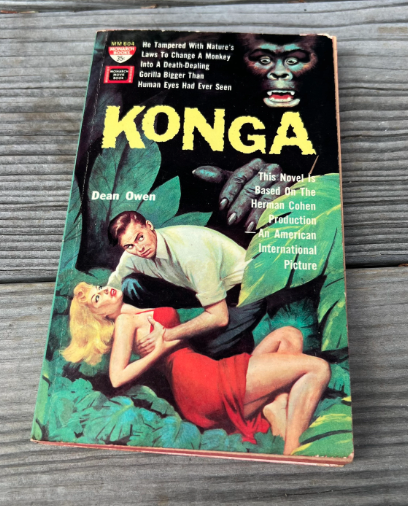
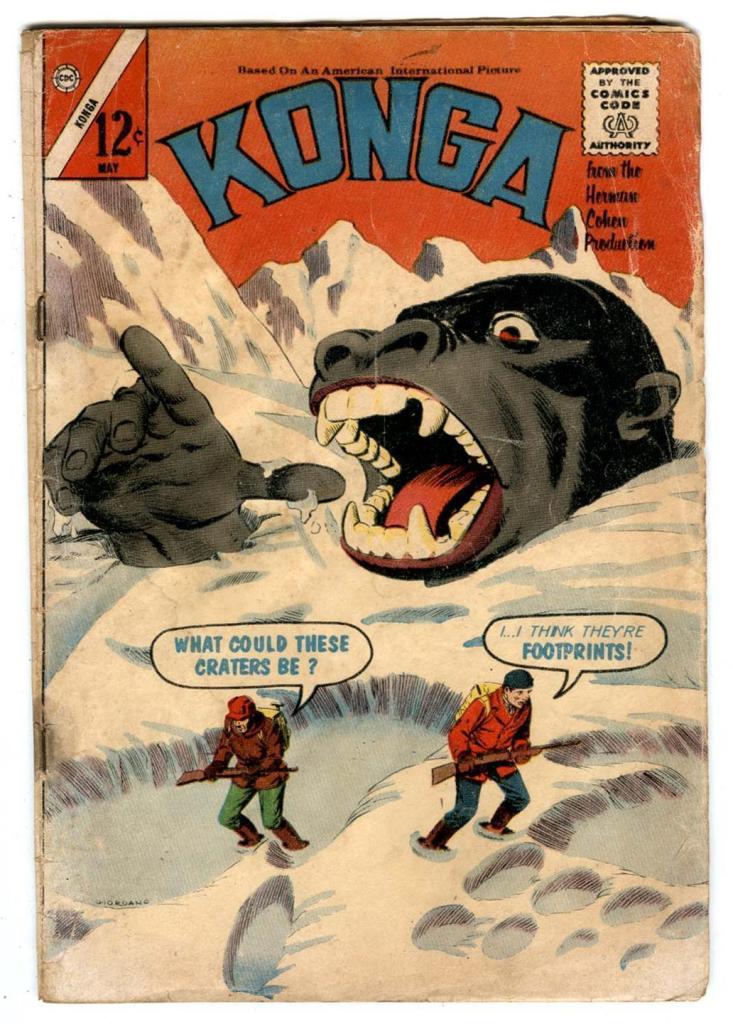
Dudley Dean McGaughy wrote the novelization as Dean Owen. It has a ton more sex — the movie has nothing like it — than the film, as does McGaughy’s Reptilicus paperback. Charlton Comics — who published two issues of a Reptilicus comic book — had also done a Gorgo comic book with Joe Gill and Steve Ditko. Of that work, he said, “I read the screenplay of Gorgo. From the first reading to this day, I marvel at how well Joe adapted the character to comic books.”

Gill and Ditko brought the big ape back from the dead for a few stories in which he fought mole men and undersea monsters. It’s wild that Ditko was drawing this book at about the same time that he was on the Marvel monster books and starting on Spider-Man.

You can watch this on Tubi.
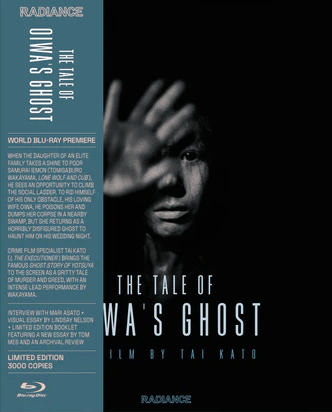
RADIANCE BLU-RAY RELEASE: The Tale Of Oiwa’s Ghost (1961)

When the daughter of an elite family falls in love with a poor samurai named Iemon (Tomisaburo Wakayama), he gets rid of his wife Oiwa by dumping her into a swamp. She comes back on the night of his marriage as a monstrous ghost. Yes, it’s the Ghost Story of Yotsuya remade.

Directed and written by Tai Katô, this adaptation of the kabuki play Tokkaido Yotsuya kaidan isn’t as elegant as others. That’s not a slight by any means; it’s just brutal in how the characters must pay for the horrible things they have done to Oiwa. Those who have done her wrong get the majority of the story, but her deadly intentions weigh heavily on every frame. It’s made with craft and explores every way that film can change the way that we see an expected and known story.

The Radiance Films release of this film has an interview with Mari Asato, a visual essay on tormented female ghosts by Lindsay Nelson, a trailer, a reversible sleeve featuring original and newly commissioned artwork by Time Tomorrow and a limited edition booklet featuring new writing by Tom Mes and an archival review of the film. You can order this from MVD.

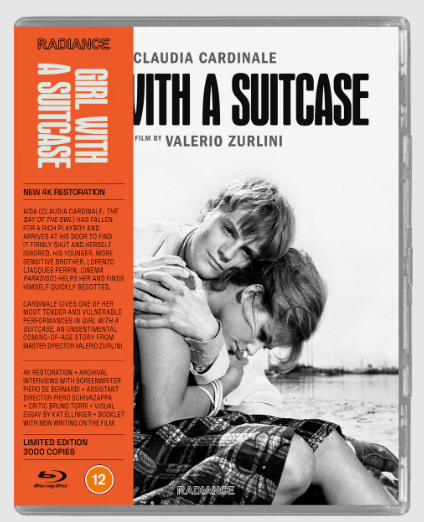
RADIANCE FILMS BLU RAY RELEASE: Girl With a Suitcase (1961)

Aida (Claudia Cardinale) shows up at the door of Marcello, the rich man she’s fallen for, only to have it slammed in her face. Yet the man’s brother, Lorenzo (Jacques Perrin), despite being dispatched to get rid of her, immediately falls for her. However, their worlds are so far apart, and she has already become an adult, a woman with a child, while he’s still a teenager.

Director Valerio Zurlini also made The Camp Followers, Black Jesus and Violent Summer.  In 2008, this film was included in the Italian Ministry of Cultural Heritage’s list of 100 Italian films to be saved, a selection of movies that have “changed the collective memory of the country between 1942 and 1978.”

Cardinale would go on to appear in 8 1/2The Pink PantherOnce Upon a Time in the WestBlonde in Black Leather, The Immortal Bachelor, Goodbye & AmenFitzcarraldo , and so many more wonderful movies.

The Radiance Films Blu-ray release features a 4K restoration of the film from the original camera negative, created by the Cineteca di Bologna in collaboration with Camelia and Titanus. Extras include interviews with assistant director Piero Schivazappa, screenwriter Piero De Bernardi and film critic Bruno Torri; a video essay by Kat Ellinger; a reversible sleeve featuring original and newly commissioned artwork by Filippo Di Battista and a limited edition booklet featuring new writing by Giuliana Minghelli and an overview of the US critical reception by Cullen Callagher. This is a limited edition of 3,000 copies, presented in full-height Scanavo packaging with a removable OBI strip, leaving the packaging free of certificates and markings. You can get it from MVD.

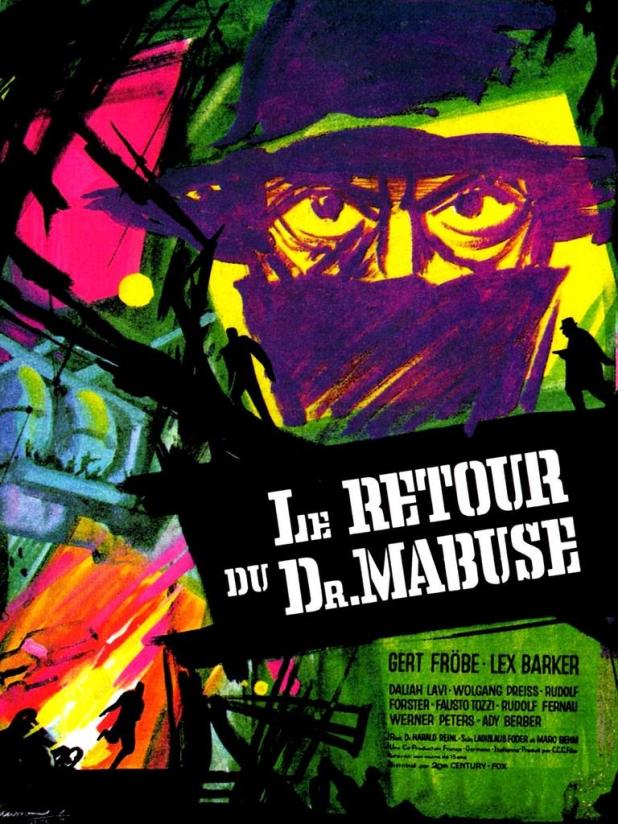
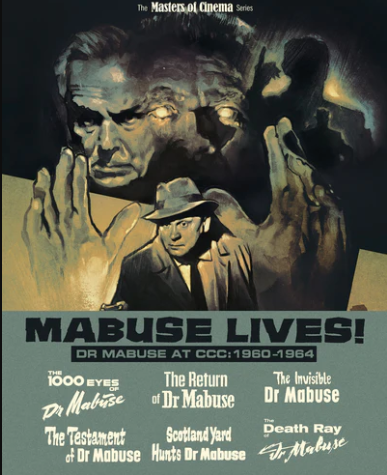
EUREKA BOX SET: Mabuse Lives! Dr. Mabuse At CCC: 1960-1964: The Return of Doctor Mabuse (1961)

The second of the 1960s CCC Films Dr. Mabuse film series, this movie follows up Fritz Lang’s The Thousand Eyes of Dr. Mabuse. Gert Fröbe, who plays Inspector Lohmann, was the selling point in the U.S., as he had become known as Goldfinger.

The lawman is called away from his vacation to investigate a series of murders, including an Interpol agent with proof that American organized crime is working with a European crime syndicate, as well as the wife of one of that group’s members, who is killed by a flamethrower in a scene that’s pretty intense seeing as how this was made in 1961.

That woman was carrying Lohmann’s book, The Devil’s Anatomy, which was written by a Reverend Briefenstein of St. Thomas Church. That book has a theory: Satan is a spirit that can take the form of a werewolf, vampire or Dr. Mabuse. Yet, isn’t Dr. Mabuse dead?  A priest informs Lohmann that even though the body can die, a soul can infest the bodies of other men. At that very point, Dr. Mabuse’s voice crackles from the church’s speaker system, demanding that the investigation stop now.

Mabuse (Wolfgang Preiss) now has an army of zombie criminals that he will use to take anything he wants, including giving these zombies orders to every prisoner in a jail and then sending them to destroy a nuclear power plant.

This movie would be followed by three more: The Testament of Dr. MabuseScotland Yard Hunts Dr. Mabuse and The Secret of Dr. Mabuse. In 1990, Claude Chabrol would bring the character back for his movie Dr. M.

This film’s director, Harald Reinl, also made the krimi The Strangler of Blackmoor Castle.

The Eureka box set Mabuse Lives! has this movie, along with an introduction by genre film expert and Video Watchdog founder Tim Lucas, a new 1080p presentation from a 2K restoration of the original film elements undertaken by CCC and a commentary track by film historian and author David Kalat. You can get it from MVD.