CHILLER THEATER MONTH: Black Sunday (1960)

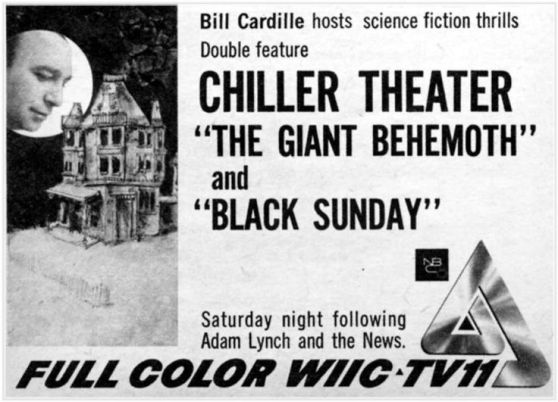
EDITOR’S NOTE: Black Sunday was on Chiller Theater on Saturday, October 16, 1965 at 1:20 p.m. It also was on the show on December 2, 1967; August 30, 1969; June 20, 1970 and July 10, 1971.
This was Bava’s directorial debut — although he had already directed several scenes without credit in other films. By 1960’s standards, this is a pretty gory film, leading to it being banned in the UK and chopped up by its US distributor American International Pictures.

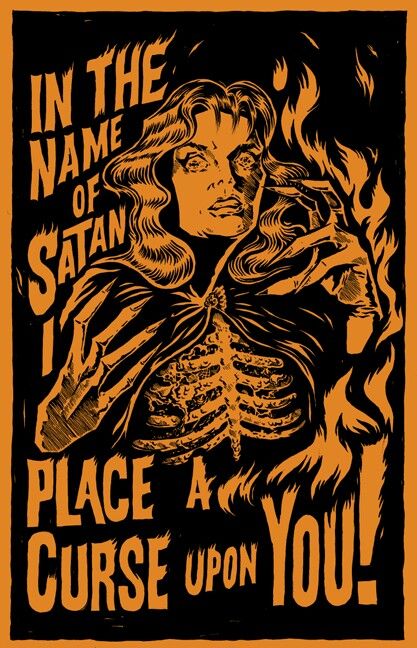
In the 1600’s, the witch Asa Vajda (Barbara Steele, creating her legacy as the horror female supreme) and her lover Javuto are put to death by her brother. Before she is burned at the stake and has a metal mask hammered to her face, she curses their entire family.

Several centuries later, Dr. Thomas Kruvajan and his assistant, Dr. Andre Gorobec (John Richardson, Frankenstein ’80) ae traveling to a medical conference when their carriage breaks down. Of course, they’re in a horror movie, so they wander into an ancient crypt and release Asa from her death mask and getting blood all over her face.

That’s when they meet her descendent Katia (also Steele), whose family lives in the haunted castle that of the Vajdas. Gorobec instantly falls for her and really, can you blame him?

All hell literally breaks loose, with Asa and Javuto coming back from the dead, possessing Dr. Kruvajan and concocting a plan to make Asa immortal by stealing Katia’s youth. Can good triumph against evil? Can you kill a vampire by stabbing wood into its eye socket? Which one is hotter, good or evil Barbara Steele?

A note from reader Edgar Soberon Torchia: “The blood from Dr. Kruvajan’s hand does not get all over Asa’s face. While fighting a bat he breaks the glass covering her face in the tomb. The blood in a piece of glass elegantly falls drop by drop into the empty cavity of Asa’s right eye.”

Thanks for setting us straight!

A lover of Russian fantasy and horror, Bava intended this film to be an adaption of Nikolai Gogol’s 1835 horror story “Viy.” However, the resulting script owes more to Universal Studios-style gothic horror. AIP cut or shortened the branding scene, blood spraying from the mask after it was hammered into Asa’s face, the eyeball impaling and the flesh burning off Vajda’s head in the fireplace. And in the Italian version, Asa and Javutich are brother and sister in an incestuous relationship.

Black Sunday has left quite an impression on fans and filmmakers alike. Francis Ford Coppola’s Bram Stoker’s Dracula contains several shot-for-shot homages, as does Tim Burton’s Sleepy Hollow. And Richard Donner based the cemetery scene in The Omen on the moment when Barbara Steele appears with her hounds.

For a director who is so well known for his work in color, Bava has just as much skill in black and white. The sets were actually created in monochrome, with no color, to add to the dark mood.

My favorite scene in the film is when Bava creates a split screen effect where Steele’s two roles come together, as Asa intones, “You did not know that you were born for this moment. You did not know that your life had been consecrated to me by Satan. But you sensed it, didn’t you? You sensed it… That’s why my portrait was such a temptation to you, while frightened you. You felt like your life and your body were mine. You felt like me because you were destined to become me… a useless body without life.”
UNSUNG HORRORS HORROR GIVES BACK 2023: 13 Ghosts (1960)

Each October, the Unsung Horrors podcast does a month of themed movies. This year they will once again be setting up a fundraiser to benefit Best Friends, which is working to save the lives of cats and dogs all across America, giving pets second chances and happy homes.

Today’s theme: Castle, William or actual

We need more people like William Castle.

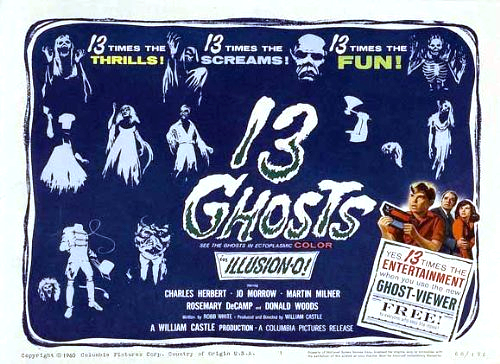
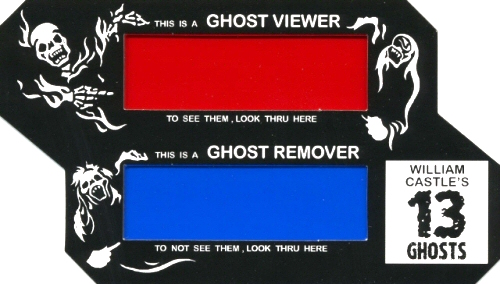
As he starts the movie explaining how the gimmick works — Illusion-O — we learn that we will have the chance to see ghosts. Or not.

Most scenes of the movie is in black and white, but scenes involving ghosts let you watch them with special viewing glasses. If you want to see the ghost, you look through the red filter. If you don’t want to see them, watch through the blue filter.

Occultist Dr. Plato Zorba has given his house to his poor nephew Cyrus (Donald Woods), who moves in his wife Hilda (Rosemary DeCamp) and children Medea (Jo Morrow) and Buck (Charles Herbert). They find out from their lawyer Ben Rush (Martin Milner) that they share the house with 12 ghosts and they must stay there and not sell it or the state gets everything.

There’s also a seance-happy housekeeper called Elaine Zacharides (Margaret Hamilton!) and somewhere, if they can find it, a fortune.

How could you live with twelve ghosts? There’s a floating head, a screaming woman, a set of hands, a skeleton on fire, a chef who keeps killing his wife and her lover, a lynched woman, an executioner with a head that he’s chopped off, a lion (Zamba, who played Kitty Cat on The Addams Family) with a headless lion tamer and Dr. Zorba, who has left behind goggles to help them see the ghosts and an Ouija board that soon warns that death is coming.

Who killed Dr. Zorba? Where is the money? Will the family stay alive living here? Who will become the thirteenth ghost that frees all the other spirits? And how cool is it that the exterior shots are the Winchester House, an actual haunted place?

As much as I dislike remakes, I really dig the newer version of this, Thir13en Ghosts. Dark Castle, who produced that film, has been talking about doing a series about each of the ghosts. I’d love to see that.

You can download this from the Internet Archive.

THE FILMS OF RENATO POLSELLI: The Vampire and the Ballerina (1960)

Hammer’s Dracula was a big deal in Italy and, as you know, my people see imitation as the most sincere way of saying they like something. Except that Renato Polselli was a believer in the magical power of not just violence, but also sex.

1960 was a big year for Eurohorror: Bava’s Black Sunday, Majano’s Atom Age Vampire, Vadim’s Blood and Roses, Franju’s Eyes Without a Face, Böttger’s Horrors of Spider Island, Ferroni’s Mill of the Stone Women and this movie’s spiritual relative, The Playgirls and the Vampire. All of these movies on some level — and some more than others — have the blood on the throat and the hot blood in the heart, so to speak.

As a crew of ballerinas rehearses in a castle, the professor (Pier Ugo Gragnani) explains vampires to them. This goes down as several young girls have already had their blood drained, you know, just like a vampire would.  There’s also romance, as Luisa (Hélène Rémy) and the master of the dance troupe Giorgio (Gino Turini) are getting together while Francesca (Tina Gloriani) is falling for the professor’s son Luca (Isarco Ravaioli).

The four decide to go on a double date into the woods where they find the abandoned castle of Contessa Alda (María Luisa Rolando). Are you the least bit surprised that the Contessa is still there and wearing a dress that looks ancient? Or that Luisa is soon attacked by a monster and becomes the Lucy to Francesca’s Mina? Perhaps the biggest surprise, seeing that this is made all the way back in 1960, is that Luisa and Francesca seem to be closer than any of their relationships with men.

Polselli sets the trend for many Italian exploitation directors that will follow. And by that, I mean, he outright copies not only from Terence Fisher but from nearly every vampire movie that has come before, all the way back to Vampyr.

This was written by Polselli, Giuseppe Pellegrini and Ernesto Gastaldi, who would go on to make so many movies. I love the idea that the Countess uses Herman to drain the women, which makes him young and vital again, then she drains him to do the same for herself, making him ugly again and someone who she rejects. This has been their pattern for what seems like years and he does it all for love. She does it all for herself.

Taken from Groovy Doom.

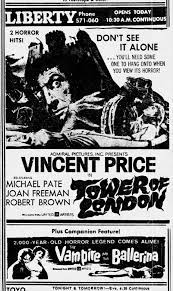
I can’t believe that MGM brought this to America and released it in a double feature with Tower of London. There’s a great new Shout! Factory release that has not only the film, but the Super 8 United Artists home version, which tells the story in so much less time.

CBS LATE MOVIE MONTH: Village of the Damned (1960)

EDITOR’S NOTE: Village of the Damned on the CBS Late Movie on February 25 and August 17, 1972; January 11, 1974 and January 17, 1975.

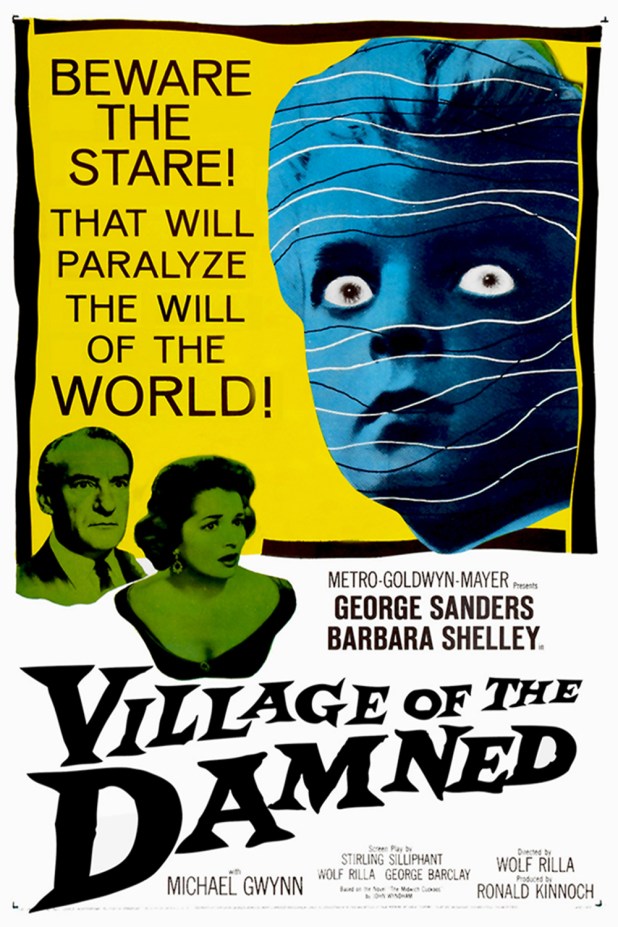
Based on The Midwich Cuckoos by John Wyndham, this movie was delayed by two years when MGM gave in to pressure from the Catholic Legion of Decency, who objected to the depiction of virgin birth and other blasphemous implications of this story. It was sent to MGM-British Studio, where director Wolf Rilla and producer Ronald Kinnoch punched up — and made more English — the script by Stirling Silliphant.

The population of Midwich was asleep for four hours. No one knows why. But two months later, all women of childbearing age are pregnant, giving birth at just seven months old to children who communicate with their minds, have platinum hair and have the brightest eyes.

Professor Gordon Zellaby (George Sanders) and his wife Anthea (Barbara Shelley) are the parents of David, one of these extraordinary children. Midwich is not the only place affected, as similar births have occurred in other parts of the world. The town is gripped by fear of these children, who walk in unison, dress alike, and possess the power to control others.

After attempting to understand the children, he realizes the futility of his efforts. There’s no controlling them. For the survival of humanity, they must be eliminated. He envisions a mental barrier, a distraction, and uses it to plant a bomb in their school. The explosion claims their lives, as well as his own, in a tragic end.

This is a happy ending in 1960.

British censors were worried that the glowing eyes of the children would scar people who saw it—many of whom survived the Blitz, mind you—and demanded another version without the effect.

CBS LATE MOVIE MONTH: House of Usher (1960)

EDITOR’S NOTE: House of Usher was on the CBS Late Movie on September 19, 1972; March 2, 1973 and July 26, 1974.

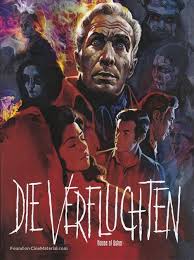
Based on Edgar Allan Poe’s short story “The Fall of the House of Usher,” this was the first of eight Poe adaptions by Roger Corman, often working with writer Richard Matheson. Shot in fifteen days, it was a big gamble for American-International Pictures, who had mostly done black and white double features. This was a color movie with a big budget by AIP’s standards.

The most important thing to know is that the Usher family are all cursed to grow mad and that horrible portent has spread to the very home they live in, which is crumbling around them and even destroying the very ground that it sits upon.

Philip Winthrop (Mark Damon, Black Sabbath) thas traveled to the House of Usher to take his fiancee Madeline, which is opposed by her brother Roderick (Vincent Price), who is determined to see his family’s bloodline end with this generation. This leads to an argument so brutal that Madeline’s catalepsy is triggered, making her appear dead and when she’s buried alive, she fully gives in to the madness within the Usher family, bringing the entire home down in flames all around everyone but our hero, who leaves with nothing.

Although Corman and Lou Rusoff are the people usually given credit for the AIP Poe cycle of films, Damon spoke up on a Black Sabbath commentary track, claiming he gave Corman the idea and was even allowed to direct The Pit and the Pendulum. This story hasn’t been confirmed, as there are several images of Corman directing that movie.

The success of this movie led to not only many more films with Corman and Price working together, but also the same sets and special effects being used over again. You can spot the Usher house set ablaze in more than one movie. It was really a barn scheduled to be demolished.

JESS FRANCO MONTH: La Reina Del Tabarin (1960)

Queen of the Tabarin is the first film that Jess Franco made for producer Marius Lesouer and the first film that Soledad Miranda would appear in for Franco, although her role is so small you may not even see her.

This is the story of Lolita (Mikaela, who was also in Franco’s Vampiresas 1930), a street singer who comes from very modest beginnings, busking with her uncle (Antonio Garisa) and Miguel  (Juan Antonio Riquelme) while her brother collects the donations from people who walk by. She dreams of a better life, so she sneaks into a big costume party and sings for the Countess.

That’s where she meets Fernando (Yves Massard), the Countess’s son who acts as if he were poor. She falls for him but he’s already spoken for. Despite him being shot in a duel defending her honor, she moves on to Paris, where she gets singing and finishing school lessons, becoming the rich star she was always meant to be while the recovering Fernando tries to win her back after renouncing his promiscuous ways.

Franco’s third major film after We Are 18 Years Old and Labios Rojos, this was originally going to be directed by León Klimovsky. This is very much a for hire job, as this was a vehicle for Mikaela, but the cabaret would feature in so many future Franco films.

DISMEMBERCEMBER: The Apartment (1960)

EDITOR’S NOTE: Thanks to Beth Waldron for suggesting this movie. This was originally posted on March 27, 2022. This is also a New Year’s movie!

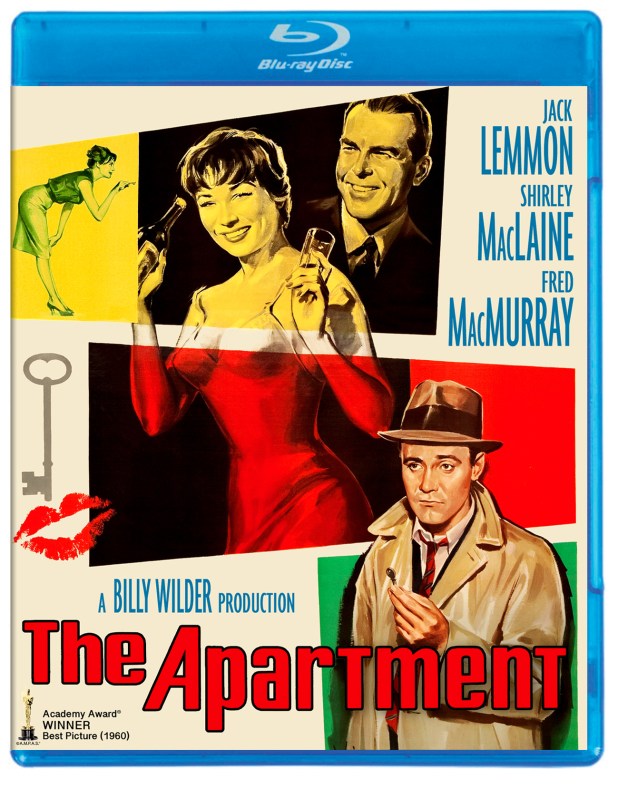
The Apartment is astounding because it makes me consider how we view actors based on where we arrive in reality. For me, Fred McMurray is the kind Steve Douglas from TV’s My Three Sons. For those born before 1960, they probably saw him on that show and wondered how the heel from Double Indemnity and The Caine Mutiny could be trusted around three growing children.

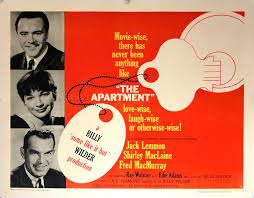
In Billy Wilder’s The Apartment, he’s Jeff Sheldrake, a man who uses everyone he meets, like lonely C.C. “Bud” Baxter (Jack Lemmon) for his apartment and Fran Kubelik (Shirley MacLaine) for her body, uncaring when he pushes both of their to the pit of depression and even a suicide attempt by Fran.

Bud is willing to let the rest of the world see him as the villain, as every executive — Ray Walston is one of them  — uses his home to have dalliances with his secret lovers while he drinks in bars, dreaming of taking home a married woman when all he really wants is the kind of secure love that allows you to sit happily on the couch next to one another and play cards.

There’s also a genuine sadness at the heart of this movie, as Wilder and co-writer I.A.L. Diamond based the film on reality, as high-powered agent Jennings Lang was shot by producer Walter Wanger for having an affair with Wanger’s wife Joan Bennett. Lang had used a low-level employee’s apartment for the affair, just like the film. Diamond also contributed something that had happened to a friend, who returned home after breaking up with his girlfriend to discover that she had committed suicide in his bed.

Back to McMurray. After this was released, women yelled at him in the street, complaining that he had made a filthy movie. One even hit him with her purse. I guess that was the Twitter of 1960.

This may be the best awarded movie we’ve talked about on this site, as it won Best Picture, Best Director, Best Screenplay, Best Art Direction and Best Film Editing at the 1960 Oscars. Jack Lemmon may not have won Best Actor, but when Kevin Spacey won that award in 1999 for American Beauty, he dedicated his Oscar to him, as Sam Mendes had the cast watch this movie for inspiration.

Since then, The Apartment has been remade as a musical (Promises, Promises, which played in 1972 and was revived in 2010) and as two Bollywood movies, Raaste Kaa Patthar and Life in a… Metro.

The amazing thing is that 62 years after this movie was made, it reduced me to tears. It pulled me in and made me care about every single character, even the villain, and the closing scene — and that last line! — absolutely devastated me.

You can get The Apartment from Kino Lorber either on blu ray or 4K UHD. You’ll also get two different audio commentary tracks, one by Joseph McBride, author of Billy Wilder: Dancing on the Edge and the other by film historian Bruce Block. There’s also a documentary about the making of the film and another about the art of Jack Lemmon, plus a trailer.

Eyes Without a Face (1960)

Directed and written by Georges Franju, Eyes Without a Face had such an ignoble introduction to U.S. audiences, playing as a second feature with The Manster when in truth this movie is anything but the kind of junky b-movie that audience had to believe that it was. After all, it was released as The Horror Chamber of Dr. Faustus and that title, while great, doesn’t speak to the art inside this film.

This is the story of Doctor Génessier (Pierre Brasseur) who becomes obsessed with fixing the face of his daughter Christiane (Édith Scob) which has been destroyed in a car crash that was his fault. Sitting in a strange lab surrounded by huge dogs and captured doves, he lures women to their doom, taking their faces and grafting it to Christiane’s but the surgeries never work; her face always falls apart and she must return to wearing the all-white mask that conceals her decimated visage. At one point, she says, “My face frightens me. My mask frightens me even more.” Is it any wonder that John Carpenter has stated the influence that it had on his most famous film?

Obviously, Eyes without a Face became the kind of movie that Jess Franco loved so much that he remade it several times, starting with Gritos en la noche and building through his series of Orloff movies, perhaps best realized in his film Faceless. Other films that have been inspired by this include the Michael Pataki-directed Mansion of the DoomedAtom Age Vampire and Corruption.

I’m so pleased that this movie is now recognized as the classic that it is. When it came out, it was universally reviled by critics. Their error is now writ large for all to see.

THE CHRISTOPHER LEE CENTENARY CELEBRATION PRIMER: Horror Hotel (1960)

EDITOR’S NOTE: You can watch this movie this weekend at the Drive-In Super Monster-Rama! Get more info at the official Drive-In Super Monster-Rama Facebook page and get your tickets at the Riverside Drive-In’s webpage.

Better known as City of the Living Dead, this movie was the first film that John Llewellyn Moxey directed. It was also made in the UK but set in the U.S., so everyone is doing their best American accent.

Back in In 1692 in Whitewood, Massachusetts, Elizabeth Selwyn (Patricia Jessel) and Jethrow Keane (Valentine Dyall) sold their souls to the Devil for eternal life and revenge on everyone if they just sacrifice one virgin during Candlemas Eve and another during the Witches’ Sabbath. That said, Elizabeth is soon tried for being a witch and burned alive.

History professor Alan Driscoll (Christopher Lee) tells Nan Barlow (Venetia Stevenson) that if she wants to learn about Whitewood, she should go there. She visits the town, staying at the Raven’s Inn, which is owned by Mrs. Newless and soon meets the only normal person in town — so she thinks — Patricia Russel (Betta St. John), who gives her a book on witchcraft. She learns that it’s Candlemas Eve just in time to be sacrificed on an altar.

Bill Maitland (Tom Naylor), her fiancee, brings her brother Richard (Dennis Lotis) to town, along with Patricia, who wonders where her friend has gone. You can imagine what happens next, but this is still fun.

This was written by George Baxt as a pilot for a television series that would have starred Boris Karloff. Producer Milton Subotsky rewrote it to be longer, including a romantic subplot about the boyfriend who goes looking for Nan. Produced by Vulcan Productions, it was made by Subotsky and Max Rosenberg, making this the first Amicus movie.

The big difference between City of the Living Dead and the American Horror Hotel cut? Elizabeth Selwyn, before being burned at the stake, says the following before she’s burned alive: “I have made my pact with thee O Lucifer! Hear me, hear me! I will do thy bidding for all eternity. For all eternity shall I practice the ritual of Black Mass. For all eternity shall I sacrifice unto thee. I give thee my soul, take me into thy service.” Jethro Keane adds, “O Lucifer, listen to thy servant, grant her this pact for all eternity and I with her, and if we fail thee but once, you may do with our souls what you will.” Elizabeth Selwyn: “Make this city an example of thy vengeance. Curse it, curse it for all eternity! Let me be the instrument of thy curse. Hear me O Lucifer, hear me!”

In 2011, Evil Calls: The Raven came out with a very similar plot and even lifted footage directly from this movie. But I didn’t complain when Iron Maiden’s “Bring Your Daughter to the Slaughter” and King Diamond’s “Sleepless Nights” videos did. This movie played enough UHF TV that The Misfits even wrote a song about it.

KINO LORBER BLU RAY RELEASE: The Apartment (1960)

The Apartment is astounding because it makes me consider how we view actors based on where we arrive in reality. For me, Fred McMurray is the kind Steve Douglas from TV’s My Three Sons. For those born before 1960, they probably saw him on that show and wondered how the heel from Double Indemnity and The Caine Mutiny could be trusted around three growing children.

In Billy Wilder’s The Apartment, he’s Jeff Sheldrake, a man who uses everyone he meets, like lonely C.C. “Bud” Baxter (Jack Lemmon) for his apartment and Fran Kubelik (Shirley MacLaine) for her body, uncaring when he pushes both of their to the pit of depression and even a suicide attempt by Fran.

Bud is willing to let the rest of the world see him as the villain, as every executive — Ray Walston is one of them  — uses his home to have dalliances with his secret lovers while he drinks in bars, dreaming of taking home a married woman when all he really wants is the kind of secure love that allows you to sit happily on the couch next to one another and play cards.

There’s also a genuine sadness at the heart of this movie, as Wilder and co-writer I.A.L. Diamond based the film on reality, as high-powered agent Jennings Lang was shot by producer Walter Wanger for having an affair with Wanger’s wife Joan Bennett. Lang had used a low-level employee’s apartment for the affair, just like the film. Diamond also contributed something that had happened to a friend, who returned home after breaking up with his girlfriend to discover that she had committed suicide in his bed.

Back to McMurray. After this was released, women yelled at him in the street, complaining that he had made a filthy movie. One even hit him with her purse. I guess that was the Twitter of 1960.

This may be the best awarded movie we’ve talked about on this site, as it won Best Picture, Best Director, Best Screenplay, Best Art Direction and Best Film Editing at the 1960 Oscars. Jack Lemmon may not have won Best Actor, but when Kevin Spacey won that award in 1999 for American Beauty, he dedicated his Oscar to him, as Sam Mendes had the cast watch this movie for inspiration.

Since then, The Apartment has been remade as a musical (Promises, Promises, which played in 1972 and was revived in 2010) and as two Bollywood movies, Raaste Kaa Patthar and Life in a… Metro.

The amazing thing is that 62 years after this movie was made, it reduced me to tears. It pulled me in and made me care about every single character, even the villain, and the closing scene — and that last line! — absolutely devastated me.

You can get The Apartment from Kino Lorber either on blu ray or 4K UHD. You’ll also get two different audio commentary tracks, one by Joseph McBride, author of Billy Wilder: Dancing on the Edge and the other by film historian Bruce Block. There’s also a documentary about the making of the film and another about the art of Jack Lemmon, plus a trailer.