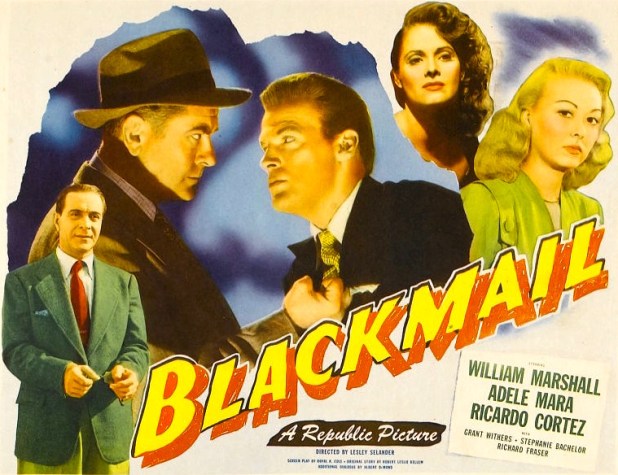
Detective Dan Turner (William Marshall) has been hired by movie exec Ziggy Cranston (Ricardo Cortez) to stop a blackmail plot against him by Carla (Stephanie Bachelor), who has photos of him but is soon murdered. He’s also being set up by some mobsters.
Based on Dan Turner, Hollywood Detective, a pulp story that ran in Spicy Detective and Hollywood Detective. This story came from “Stock Shot” by Robert Leslie Bellem, which was in the June 1944 issue of the latter magazine. The character was also played by Marc Singer in The Raven Red Kiss-Off, which was also released as Dan Turner, Hollywood Detective.
This is just 67 minutes, which is perfect for a quick film noir. This has a lead that says, “Don’t move, sweetheart, this thing doesn’t shoot marshmallows.” It was directed by Lesley Selander, who did more than fifty episodes of Lassie and ended his career working in Westerns. Writers included Royal K. Cole (who did the Captain America, Blackhawk, Superman and Tex Granger movie serials, as well as Valley of the Zombies, The Tiger Woman and The Monster and the Ape) and Albert DeMond (who wrote The Crimson Ghost and D-Day On Mars).
These three short films appear with The White Reindeer on Severin’s All the Haunts Be Ours Vol. 2 set.
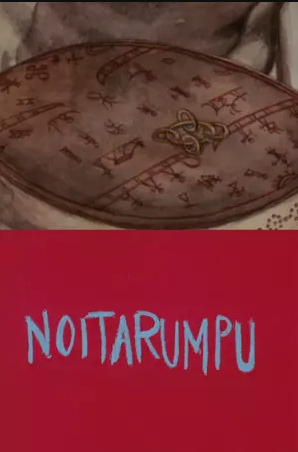
A Witch’s Drum (1982): In this animated film by Kari Kekkonen and writers Outi Nyytäjä and Samuli Paulaharju, a man in a reindeer sled is taking the corpse of a shaman to where it will be barried. This takes him through a barren, snowy world illuminated only by the moon.
Narrated by Matti Ruohola, we soon discover that something has woken the shaman, who is in the same sled as the man, all alone, terrified as he had just watched the man die that evening.
Noitarumpu is a simple yet scary movie, mainly colored pencil art and the steady beat of that drum, ever playing as it takes its listener across that ice adn snow filled tundra to an uncertain fate.
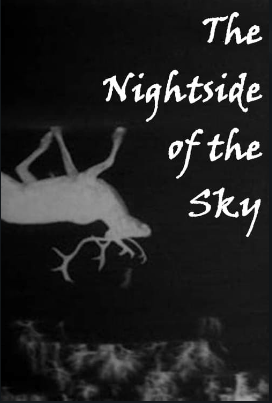
The Nightside of the Sky (2024): This experimental short film reanimates The White Reindeer through contact and optical printing. It was specially commissioned from celebrated Métis filmmaker Rhayne Vernette for Severin. As ominous music plays in the background, these grainy images are recontextualized in the film, creating what seems to be nearly fine art within a set that is meant to show different notions of folk horror.
If you’re creating your own film festival with this set, this would be the perfect movie to put on before it stars, as it will get you in the mood for what you are about to see in Erik Blomberg’s movie. I found it sparse yet dreamingly gorgeous.
With the Reindeer (1947): The first movie by director Erik Blomberg, working with Eino Mäkinen, this shows what reindeer herding was like in the mid 1940s in Lapland. Called Porojen parissa, filming these scenes had to give its creator some context into what the reindeer herders and their families endured before he made his landmark movie.
What a feast to have this as part of the set. I realize that it also appeared on the Eureka release, but it’s still a great part of the overall package. Even in his first work, Blomberg was able to capture some incredible visuals and give you the chill of being in those snowy fields through the lense of his camera.
Our Selves Unknown is part of the new Severin box set, All the Haunts Be Ours Volume 2.
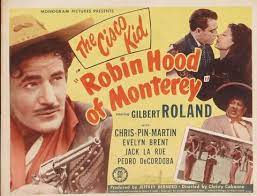
In Arizona, The Cisco Kid (Gilbert Roland) and Pancho (Chris-Pin Martin) learn that someone has been impersonating Cisco and robbing people. I feel like this has happened more than a few times to our hero.
Directed by Christy Cabanne and written by Bennett Cohen, this is yet another adventure just as much about finding the ladies as it is getting to the truth of these crimes. The bad guy — Smoke Kirby — is played by Anthony Warde and the mother and daughter who need saving are Laura Treadwell and Angela Greene.
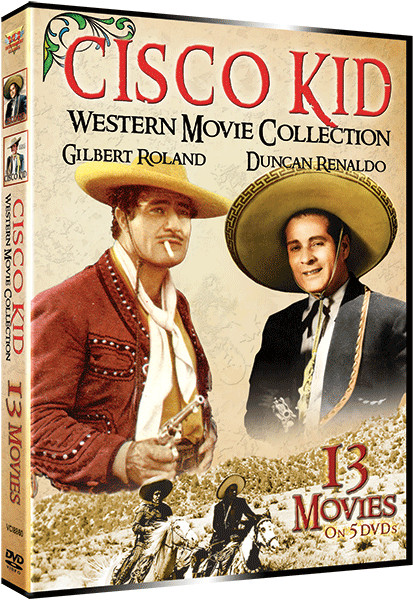
The Cisco Kid Western Movie Collection is available from VCI Entertainment. It has 13 movies and extras like two Cisco Kid TV episodes, interviews with Duncan Renaldo and Colonel Tim McCoy, and photo and poster galleries. You can get it from MVD.
Eduardo Belmonte (Travis Kent) overhears his new stepmother Maria (Evelyn Brent) and her lover Don Ricardo Gonzales (Jack La Rue) planning on getting his father Don Carlos Belmonte (Pedro de Cordoba) off the ranch and in the ground, so to speak. Eduardo offers her money to get out and she accuses him of trying to sleep with her, which leads to his father attacking him. The lights go out, dad is dead and Eduardo is shot.
He’s saved by The Cisco Kid (Gilbert Roland) and Pancho (Chris-Pin Martin) try to solve this, but Cisco is arrested and killed by a firing squad. But you know that this can’t be real and he’s going to show up — he does — and save Eduardo.
This is one of the 167 movies that were directed by Christy Cabanne and 192 movies written by Bennett Coleman.
The Cisco Kid Western Movie Collection is available from VCI Entertainment. It has 13 movies and extras like two Cisco Kid TV episodes, interviews with Duncan Renaldo and Colonel Tim McCoy, and photo and poster galleries. You can get it from MVD.
Rancher Don Jose Ramirez (Martin Garralaga) wants to marry off his niece Delores (Inez Cooper) to Raoul (Ted Hecht), because when she’s wed, he’ll be able to get her inheritance. The problem is that Raoul also is involved with Raquel (Teala Loring).
Where does the Cisco Kid (Gilbert Roland) and Baby (Frank Yaconelli) come in? Well, Cisco is a womanizer, but it’s one lady at a time, like the lovely saloon girl Delorez (Inez Cooper), who is known as The Angel of San Lorenzo for how kind she is.
It’s kind of wild that all Cisco does is smoke, drink and love the ladies, yet he was a matinee hero for kids. It’s a strange comparison to the singing Gene Autry to Tex Ritter and his whip.
This was directed by William Nigh and written by Clarence Upson Young, who also wrote The Strange Case of Dr. Rx.
The Cisco Kid Western Movie Collection is available from VCI Entertainment. It has 13 movies and extras like two Cisco Kid TV episodes, interviews with Duncan Renaldo and Colonel Tim McCoy, and photo and poster galleries. You can get it from MVD.
If you think movies have too much product placement today, well, Jack Armstrong himself was an ad.
Known as the All-American Boy, he was created by the vice president of advertising for General Mills Samuel Chester Gale. The Jack Armstrong character is a fictitious “everyboy” who got into adventures on his radio serial and always ate his Wheaties.
Gale based the character on a member of Sam Gale’s college fraternity, Phi Sigma Kappa at the University of Minnesota. The ad whiz met the real Jack while serving as an advisor to the fraternity and was impressed by both Jack’s name and his”wholesome nature.”
Gale also created another character who a lot of people think is really: Betty Crocker.
The radio serial was on from 1933 to 1951, which is a lifetime in media.
In the Wallace Fox-directed movie serial, Vic Hardy (Hugh Prosser) is a scientist working for an aviation company. When he learns that Jason Grood is using radiation on his secret island headquarters to conquer the world, he’s caught and used to help the madman conquer the world. Only Jack Armstrong (John Hart, who for a time replaced Clayton Moore as the Lone Ranger; he also played Billy Batson in The Adventures of Captain Marvel) can stop him, along with Princess Alura (Clair James) and her island men.
I love that VCI is releasing these serials and keeps on improving how they look. The fact that I can have historical movies like this in my collection makes me overjoyed.
You can get the 4K restoration of Jack Armstrong from MVD.
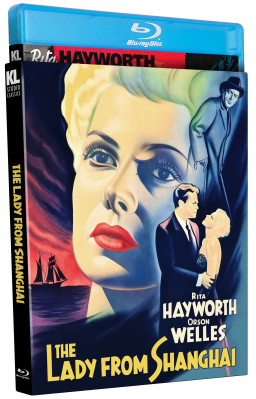
Columbia Pictures president Harry Cohn got this movie from Orson Welles — he promised to write, produce and direct it for just $55,000 — because he helped him pay for Welles’ production of Around the World, a musical stage adaptation of the Jules Verne novel Around the World in Eighty Days.
In Spine Tingler! The William Castle Story, it’s revealed that Castle had purchased the rights to the novel f I Die Before I Wake by Sherwood King. He asked Welles to pitch it to Cohn, with Castle hoping to direct the film, leading to him being disappointed when he was Welles’ assistant director for this film.
When Cohn got the cut from Welles, he was unhappy. Welles wanted the filmto look like a documentary and shot it on location in Acapulco, Pie de la Cuesta, Sausalito and San Francisco. This was an innovation at the time but Cohn liked the look of studio lighting. Cohn ordered extensive editing — which took a year to finish and editor Viola Lawrence cut an hour from Welles’ rough cut — and reshoots. The incredible ending of this movie in the amusement park was twenty minutes long and was cut to just three minutes with all of the footage on the cutting room floor lost forever.
Cohn was also enraged with one major cut: Welles had his estranged wife RIta Hayworth cut her trademark long red hair for short blonde hair. Cohn screamed at her, “He’s ruined you — he cut your hair off!”
Reviews at the time said that this was “wordy and full of holes” and “thoroughly confused and baffling.” Today, we see the film quite differently and the closing hall of mirrors scene is a classic in all of cinema and has been reused several times, most strikingly in Enter the Dragon and The Man With the Golden Gun.
Welles, who directed and wrote this with Castle, Charles Lederer and Fletcher Markle, plays sailor Michael O’Hara, a man trapped in the machinations between disabled criminal defense attorney Arthur Bannister (Everett Sloane) and his alluring wife Elsa (Hayworth). As he works on Bannister’s ship, he’s asked by his boss’ partner George Grisby (Glenn Anders) to help him fake his death. He can use the money to run away with Elsa, but at this point, even through he’s not thinking with the correct brain, he should know that this plot seems too murky to go down.
Sydney Broome (Ted de Corsia), the private investigator who has been following Elsa for her husband, learns that Girsby plans to kill his boss and frame Michael. Grisby shoots Broome and leaves the scene of the crime and heading off to another where he plans on killing Bannister, who is wise to the crime and kills the man, then follows through on blaming Michael.
Bannister acts as Michael’s attorney and soon learns that his suspicions were correct and that he’s in love with Elsa. That said there are so many twists to come, including hiding in a Chinese theater, before the final shots inside the Magic Mirror Maze.
Most of this was shot on Errol Flynn’s ship Zaca, which he was captaining between takes. You can see him show up in some background scenes and when a cameraman literally dropped dead durrng a take, he tried to stuff the body in a bag and bury it at sea. There was also an attack of millions of insects at one point with one stinging Welles directly in the eye and Hayworth collapsed from the heat in Mexico more than once.
What emerges is a movie worth watching and I love that with blu rays, I have this close by and ready to view at any time.
The Kino Lorber blu ray release of The Lady from Shanghai has three different audio commentary tracks, one by film historian Imogen Sara Smith, another by novelist and critic Tim Lucas, and a third by Peter Bogdanovich. There’s also an interview with Bogdanovich, comments by film noir historian Eddie Muller and a trailer. You can get it from Kino Lorber.
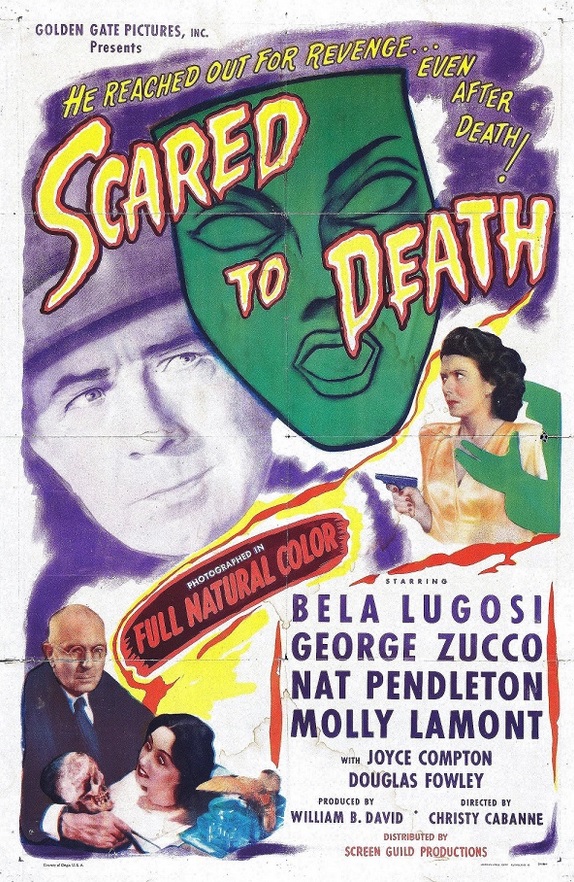
“Roots of horror” fans that enjoy digging beneath the Italian and Spanish Giallo graves of the late ’60s and ‘70s will enjoy seeing Bela Lugosi in Scared to Death (directed by Christy Cabanne of the first Kharis-the-mummy flick, The Mummy’s Hand; he uses that film’s George Zucco, here) as it is the only opportunity to see horror film’s definitive Count Dracula in the “Photographed in Full Natural Color” process—his only color film. However, for everyone else: Bela fluttering around on the cheap, one-set stage play environment with a sad-recycling of his iconic role as a Dracula-like stage magician (complete with an over-the-top hammy-bad accent) in a we’ve-seen-it-before-filmed-much-later-and-done-better, drive-her-mad-for-greed plot—is a pass.
It’s blue. It’s green. It’s in live, living color!
Quicker than Norma Desmond can say, “I’m ready for my close up, Mr. DeMille,” the film goes all “Sunset Boulevard” on us, with William Holden, I mean Molly Lamont (Laura) “solving” her murder via flashbacks from a morgue slab. And like ‘ol Will, she narrates the whole movie. And even with all the morgue-exposition . . . you still don’t know what the hell is going on.
Turns out Laura’s ne’er do well husband and her loaded father-in-law doctor—who runs the sanitarium where her husband committed her—is pulling a Paul Naschy-style Panic Beats on poor Laura: murder-by-fright (without the blood or violence). Then we’re in a Ten Little Indians-rip with an Agatha Christie-menagerie featuring the requisite, weird maid, and Bela (who is really slicing the bacon—even more so than in The Devil Bat) as Professor Leonide, the requisite kook medical professional. Of course, he has a now PC-offensive-par-for-the-course deaf-mute midget sidekick (Angelo Rossitto of Tod Browning’s Freaks (1932) and in the much better Monogram Studios’ Lugosi vehicle, The Corpse Vanishes (1942)), which are always assigned to doctors in the films of yesteryear.
Oh, what’s that? There’s a twist?
Bela’s professor is the cousin of Laura’s father-in-law doctor and Bela’s pre-Professor gig was working as an illusionist in Europe. But wait, Laura has a phobia about foreigners—and magicians—because she’s the widow and former stage partner of a Paris magician who was assassinated by the Nazis.
What’s that? Oh, another twist?
She fled the country because authorities believed she conspired with the Nazi’s to killer her husband. Oh, but wait . . . is Bela a Nazi agent? Does Bela have a personal beef since he was a competitor of Laura’s husband’s stage act? Are daddy-in-law and Bela in cahoots?
Of course, all porcine-slicing antagonists need a hammy protagonist, and all low-budget murder mysteries needs an Inspector Poirot (place this film on a train and you’d have a Murder on the Orient Express; on a paddle steamer, you’d have Death on the Nile), so in steps the bumbling P.I Bill Raymond (Nat Pendleton) who couldn’t cut himself out of a wet paper bag, let alone solve Laura’s murder. Then there’s the equally inept Lucille Ball clone, courtesy of Joyce Compton and that annoying pillbox hat.
Every Gothic-film noir hybrid needs a MacGuffin, so some weirdo keeps popping up in windows so people can scream about the “ghost in the blue mask” (which would have been a more effective title). However, because this an early ‘40s low budget film shot in color, the mask looks green to us—so it’s really a not-so-red, green herring. And the man-in-the-mask-nonsense has something to do with a mystical death mask of a dead Nazi patriot. Who’s behind the mask?
Well, it sure isn’t Alaric de Marnac from Naschy’s Panic Beats, that’s for sure. Laura’s fretting about being “scared to death”? Me, I am fretting that this film bored me to death. But hey, it’s another George Zucco film to check out! Wow. We’ll rattle off a few: Madame X (1937), The Cat and the Canary (1939), The Mummy’s Hand (1940), of course, The Black Raven (1943), and House of Frankenstein (1944) — great, creaky films all. Yep, I’m a fan of big Georgie!
About the Author: You can read the music and film criticisms of R.D Francis on Medium and learn more about his rock ‘n’ roll biographies, along with horror and sci-fi novellas, on Facebook.
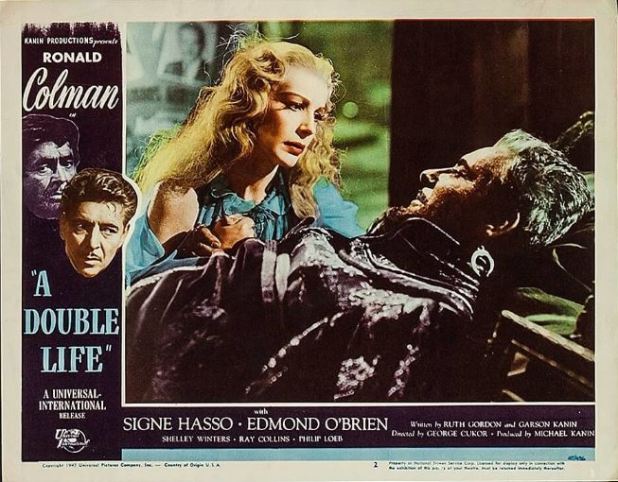
George Cukor may have been replaced as the director of Gone with the Wind, but he went on to direct some of Hollywood’s most famous films: Gaslight, Adam’s Rib, the 1954 version of A Star Is Born and My Fair Lady. Here, he tells the story of Anthony John, a celebrated stage actor who is the ultimate Method actor, fully taking on the role of whomever he plays.
Ronald Coleman, who is the lead in this, is literally the actor’s actor. He won both the Academy Award for Best Actor and the Golden Globe Award for Best Actor for this movie and was the very right people to be awarded a star on the Hollywood Walk of Fame (the others are Olive Borden, Louise Fazenda, Preston Foster, Burt Lancaster, Joanne Woodward, Edward Sedgwick and Ernest Torrence). Interestingly, Ruth Gordon got the first of her three Oscar nominations for writing with this movie. She also won the Oscar for acting with Rosemary’s Baby.
For Tony, the worst possible role would be playing Othello. But that’s exactly what happens and all hell literally breaks loose. This movie portrays the difference between the rich world of the theater and the squalor of the world surrounding it — especially the apartment of Shelley Winters’ Pat Kroll. It also calls out the fact that actors must experience and live all of the emotions that make up their roles and somehow not be damaged by them.
Film noir isn’t always detectives and evil women. Sometimes it can take place inside the mind, where darkness and duplicity may run rampant.





 B&S About Movies
You must be logged in to post a comment.