MILL CREEK LEGENDS OF HORROR: Secret Agent (1936)

Adapted from a play by Campbell Dixon, based on two stories in the 1927 collection Ashenden: Or the British Agent by W. Somerset Maugham, this adaptation introduces Edgar Brodie (John Gielgud) returning from the war, only to discover he’s been reported dead. The story then follows his transformation into Richard Ashenden, with help from characters like ‘the hairless Mexican’ and ‘the general,’ whose identities are misleading. Elsa Carrington (Madeleine Carroll), who took the assignment for excitement, is also introduced as his wife for cover.

While the Mexican has no issues with killing anyone in his way, both Edgar/Richard and Elsa have problems doing so. She’s already fallen in love with our hero as well and soon learns that Robert Marvin (Robert Young), the man who has been hitting on her from the start, is really the enemy agent everyone is after. And the killer in the middle of all of this, the General (Peter Lorre), seems like he could murder anyone at any time. Also, if he feels twitchy, he was kicking drugs at the time that this was made.

Gielgud wasn’t happy that his character was an enigma, and director Alfred Hitchcock later said that, since he didn’t seem heroic, it was hard to be on his side.

You can watch this on Tubi.

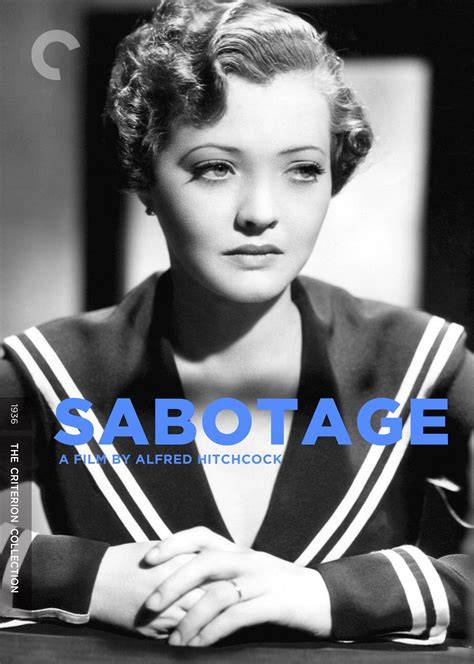
MILL CREEK LEGENDS OF HORROR: Sabotage (1936)

Released in the U.S. as The Woman Alone, this Alfred Hitchcock film starts with movie theater owner Karl Verloc (Oskar Homolka) shutting down the power in London before working with a group of terrorists to leave bombs all over the city. Detective Sergeant Ted Spencer (John Loder) is working undercover to catch him, posing as a grocery store owner while starting to fall for the man’s wife, played by Sylvia Sidney.

The machinations of the terrorists lead to her brother Stevie (Desmond Tester) being killed, and a depressed Verloc literally walks into a knife that his wife is holding, ending his life. Spencer tries to keep her from confessing to the murder, and when the final bomb explodes, destroying Verloc’s body, she is able to get away with it. 

This was loosely based on Joseph Conrad’s The Secret Agent, a story about a woman who learns that her husband is a terrorist. As Hitchcock had already made another movie called Secret Agent. When this was remade in 1959 for the Canadian TV series Startime, Homolka reprised the same role.

When the bus driver remarks in Inglorious Basterds that  “You can’t bring that on here. It’s flammable,” it comes from this.

In one of his interviews with François Truffaut, Hitchcock claimed he was wrong to shoot the scene where Stevie dies, because the character received too much sympathy and “the public was resentful”. Truffaut commented that having a child die in a movie is a “ticklish matter” and an “an abuse of cinematic power.”

You can watch this on YouTube.

MILL CREEK LEGENDS OF HORROR: The Phantom Creeps (1938)

This Universal movie serial — told in twelve parts — shares some similarities with the earlier serial The Vanishing Shadow, including the inventions of an invisibility belt and a remote-control robot.

That makes sense — at the time, Universal was all about recycling. This movie contains stock footage from The Invisible Ray and The Vanishing Shadow, as well as music from the Flash Gordon serials and Frankenstein movies, plus car chase footage that had been used in several other serials and newsreel footage taken from the Hindenburg disaster.

Eight years after his star turn in Dracula, Bela Lugosi’s career was in decline. He had been typecast as a horror star and was not seen as talented as his co-star — and possible rival — Boris Karloff.

This career downturn had many factors behind it. Universal changed management in 1936, and due to a British ban on horror films, they dropped the once-popular films from their production schedule. Lugosi found himself consigned to Universal’s non-horror B-film unit, the same team that made serials like this. And while the actor was busy with stage work, he had to borrow money from the Actors Fund to pay the hospital bills for the birth of his son, Bela George Lugosi, in 1938.

However, that year brought Bela back. California theater owner Emil Umann revived Dracula and Frankenstein as a special double feature, a bill so successful that it played to sellout crowds and Lugosi himself came to host the movies. The actor would say, “I was dead, and he brought me back to life.” Universal took notice of the tremendous business and launched its own national re-release, as well as hiring Lugosi to star in new films.

The Phantom Creeps — yes, we’ll get back to this movie in a minute — was the last of the five serials that the actor would make, shot right after he returned from making Dead Eyes of London. It was released a week before his comeback vehicle, Son of Frankenstein.

Sadly, by 1948, the parts dwindled again and severe sciatica from Lugosi’s military service was treated with opiates, causing a downward spiral that the actor would never really emerge from. He appeared in movies like Bela Lugosi Meets a Brooklyn Gorilla and Ed Wood’s Bride of the Monster. After making that movie, he checked himself into rehab, one of the first celebrities to publicly do so. According to Kitty Kelley’s His Way: The Unauthorized Biography of Frank Sinatra, “Old Blue Eyes” helped with expenses, despite never meeting Lugosi before and visited him at the hospital.

The actor died of a heart attack in 1956, having just married his fifth wife. And yes, he was buried in his Dracula cape.

In this film, he plays Dr. Zorka, a man who loves to make weapons and refuses to sell them to anyone or any country. This upsets all manner of people, like Dr. Fred Mallory, his former partner, and government man Captain Bob West.

Dorothy Arnold, who plays love interest Jean Drew, was the first wife of baseball star Joe DiMaggio. Look for Edward Van Sloan, who always played the doctor battling the supernatural in Universal films. He’s Van Helsing in Dracula, Dr. Muller in The Mummy and Dr. Waldman in Frankenstein. In fact, that movie begins by him warning the audience that they can leave now if they’re too frightened. And Ed Wolff, the seven-foot-four-inch actor who played the robot, was also in Invaders from Mars and The Return of the Fly.

Speaking of the robot, you may have seen him in Rob Zombie’s work. The song “Meet the Creeper” is based on the movie and the robot often appears in the singer’s music videos and stage shows.

You can download this from The Internet Archive.

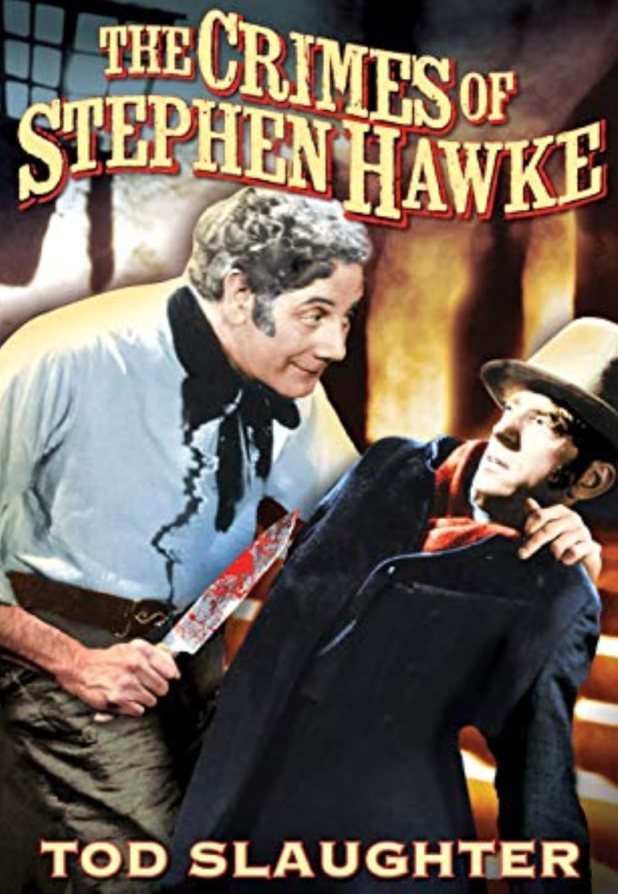
MILL CREEK LEGENDS OF HORROR: The Crimes of Stephen Hawk (1936)

Starting with Todd Slaughter at the BBC, talking about his first two movies (Maria Marten or Murder in the Red Barn and Sweeney Todd: The Demon Barber of Fleet Street), this has him playing Stephen Hawke, a money lender who loves his daughter Julia (Marjorie Taylor). He’s also the Spine-Breaker, a serial killer who is the opposite of his friendly self.

He ends up murdering Joshua Trimble (D J Williams), the father of his daughter’s fiancee Matthew (Eric Portman). Miles Archer (Gerald Barry), another suitor, finds out and tries to blackmail Julia into marrying him instead, so Hawke kills him, but falls off a roof to his death.

It’s a stage play, like Slaughter’s other films, but he’s so strong in this that he can snap a man with his bare hands. Director George King and Slaughter teamed for several of these films, which were encouraged by the British government so that not every movie was made in Hollywood that screened in the UK.

You can watch this on Tubi.

Sizzlin’ Summer of Side-Splitters 2025: Satan Met a Lady (1936)

July 28 – Aug 3 Screwball Comedy: Just imagine, the Great Depression is raging and you’re getting less than a fin a week at the rubber boiling factory, but it only costs two bits to go to the movies all day, so let’s watch some quick-talking dames match wits with some dopey joes!

Private detective Ted Shane (Warren Williams) and his former partner Milton Ames (Porter Hall) start to work together again, which hits a bad patch when he learns that his wife Astrid (Winifred Shaw) and Ted were once an item. When Valerie Purvis (Bette Davis) hires them to find a man named Farrow, it ends with Milton and that man dead, and the police thinking Ted’s the killer.

Ted makes it back to their office, only to find his secretary, Miss Murgatroyd (Marie Wilson), locked in a closet. Anthony Travers (Arthur Treacher) is going through his office, and the henchmen of Madame Barabbas (Alison Shipworth) are coming to bring him to the crime boss. Everyone is looking for a ram’s horn filled with gems, which may or may not be real, and Ted plays everyone for fools until he gets the same treatment from Valerie, the real murderer.

Directed by William Dieterle and written by Brown Holmes, this film was made because Warner Bros. attempted to re-release The Maltese Falcon but was denied approval by the Hays Production Code censors. The 1931 one with Ricardo Cortez and Bebe Daniels. The one that we know and love wasn’t made until 1941 and skips the parts that would keep it from playing.

Bette Davis saw this movie as junk. She claimed in her book The Lonely Life. “I was so distressed by the whole tone of the script and the vapidity of my part that I marched up to Mr. Warner’s office and demanded that I be given work that was commensurate with my proven ability,” she later recalled in her autobiography. “I was promised wonderful things if only I would do this film.” She was suspended but needed to cover living expenses for her mother and medical care for her sister. That’s why she made this.

The Sizzlin’ Something Weird Summer Challenge 2024: The Lash of the Penitentes (1936)

69 EsSINtial SWV Titles (September 15 – 21): Klon, who came up with this list, said “This isn’t the 69 BEST SWV movies, it isn’t my 69 FAVORITE SWV movies, my goal was to highlight 69 of the MOST SWV movies.” You can see the whole list here, including some of the ones I’ve already posted.

Released as Forbidden Fruit: The Golden Age of Exploitation Pictures, Vol. 9 as part of the Something Weird/Kino Classics line, The Lash of the Penitentes is an astounding bit of before your grandparents exploitation sleaze, a report on a murder within the hidden non-English speaking New Mexican cult of Catholic masochists known as Los Hermanos Penitentes.

Hey, happy easter a few days late, because these guys and ladies went absolutely wild during Lent, basically whipping the sin out of themselves before crucifying for real one of the lucky ones of their close-knit group.

Somehow, cinematographer Roland Price (Marihuana: Weed With Roots in Hell as well as early censor-baiting titles like How to Take a Bath and How to Undress in Front of Your Husband) was able to film the rituals and worked with Harry Revier (the maker of Child Bride) to make a murder mystery film that could go all over the country as an exploitation film, whether in a censored 35-minute version of a fully berserk 48-minute epic of Catholicism mixed with ecstatic devotion.

The Sizzlin’ Something Weird Summer Challenge 2024: Ouanga (1936)

Roadshow Rarities (June 30 – July 6) In the old days of theatrical releases some of the more lavish movies would be promoted by holding limited screenings in large cities. These roadshow releases would generate hype before the nationwide release and allow producers to tweak the film to the audience’s reaction. This model also worked for low budget productions that may have had no intention of a wide release. These explo roadshows traveled an informal circuit of theaters, churches, revival tents, high school auditoriums and anywhere else they could run a projector. They frequently promised more than they delivered and left town before the angry audience could catch up to them. Through the restoration efforts of SWV many of these movies have survived to piss audiences off to this very day!

After White Zombie, this would be the second zombie movie ever made. It may also be the first movie to be absolute horror movie BS. That’s because as the story goes, the producers wanted to hire dancers and drummers from Haiti. However, papaloi voodoo priests objecting and the director was threatened with a wanga — a voodoo curse — on his car. To make things even worse, the prop master then stole sacred objects including stuffed snakeskins and skulls. When production moved to Jamaica, a cyclone killed two crew members, then supposedly another was murdered by a barracuda and another passed away from yellow fever.

Klili Gordon (Fredi Washington) is a half-white and half-black plantation owner in love with fellow plantation owner Adam Maynard (Philip Brandon). He likes her, but because of racism, he chooses Eve Langley (Marie Paxton) instead. Klili decides to use voodoo to kill off her rival, raising thirteen black men to do her commands. Adam turns to LeStrange (Sheldon Leonard), his plantation overseer, to stop this. He hangs a dead body dressed as her, but it fails, so he ends up just strangling her.

This movie has so many issues. Leonard was cast as a black man despite being a Jewish white man. And in her last movie, The Emperor Jones, Ferdi Washington kissing a black man looked too close to a white woman kissing a black man, so she had to wear makeup to appear darker. That’s before we even get into the idea that all black people know voodoo.

Director and writer George Terwilliger revised this movie and it was remade as a movie for African-American audiences called The Devil’s Daughter.

You can watch this on Tubi.

CHILLER THEATER MONTH: Dracula’s Daughter (1936)

EDITOR’S NOTE: Dracula’s Daughter was on Chiller Theater on Saturday, February 26, 1966 at 1:00 a.m. It was on a total of nine times: January 21, 1967; July 12, 1969; December 2, 1972; April 6, 1974; May 17, 1975; December 18, 1976; July 8, 1978 and February 8, 1983.

Directed by Lambert Hillyer and written by Garrett Fort, the only cast member to return from the original film was Edward Van Sloan, now playing Von Helsing instead of Van Helsing. Supposedly based on a deleted chapter from the book, which was published as “Dracula’s Guest,” Dracula’s Daughter is much closer to Carmilla. Certainly early ads exploited the sapphic undertones of this movie with the line “Save the women of London from Dracula’s Daughter!”

David O. Selznick and MGM would get the rights to Bram Stoker’s books if Universal didn’t make this by October 1935, which meant. that it was rushed into filming with a script barely complete.

Countess Marya Zaleska (Gloria Holden) is the daughter of Count Dracula and has the same vampiric curse. She believes that if she destroys his body, she will finally be free. That doesn’t work, so she tries psychiatrist Dr. Jeffrey Garth (Kruger). When that also doesn’t take hold, she kidnaps Dr. Garth’s assistant Janet (Marguerite Churchill) and takes her to Transylvania.

How does Van or Von Helsing come in? Well, he’s been arrested for killing Dracula and his defense is that since the man had been dead for half a millennia, it wasn’t murder. Instead of a lawyer, he hires Dr. Garth, one of his former students, to explain his point of view. Obviously, Von Helsing is not dealing with an actual court in our real world.

Doomed love is the theme of this movie, as Zaleska intends to transform Dr. Garth into a vampire to be with him forever. He has had an antagonistic relationship with Janet and now realizes he loves her. As for Sandor (Irving Pichel), the servant of Dracula’s daughter, he is growing angry as she has promised to make him a vampire and now just seems to give it away to the scientist.

There’s also a lot of hypnosis via ring and Lili (Nan Grey), an artist model, being painted by Zaleska before she gives in to her need to kill and drain her.

As for the MGM version that was never made, it was written by the writer of Universal’s Dracula and Frankenstein John L. Balderston. He was trying to wrap up some of the plot of the first movie, as Von Helsing would be looking to destroy Dracula’s brides and learn that there was a fourth grave that his daughter used. She would follow him back to London and pose as a countess. The story also implies that Dracula’s daughter enjoys torturing her male victims and they enjoy it as well. They also would show her dungeon filled with whips. The script couldn’t be made as the contract with Stoker’s estate didn’t allow him to use any characters that didn’t appear in the short story, so Van or Von Helsing was out.

This same script was sent to Universal and wasn’t used. There was another script by R. C. Sherriff that went through so many censors and was finally not filmed.

There’s a theory that so much of Sunset Boulevard was influenced by this movie. According to this article on The Last Drive-In, both Countess Zaleska and Norma Desmond have male servants who are obsessed and utterly devoted to them. Hedda Hopper is also in both movies.

It definitely had an impact on the books of Anne Rice. I kind of like how the Bright Lights Film Journal described the villain of this movie: “Gloria Holden in the title role almost singlehandedly redefined the ’20s movie vamp as an impressive Euro-butch dyke bloodsucker.” Holden hated that she was cast in this and her disdain for the role lends itself a coldness that is actually just right for her character.

Speaking of Sunset Boulevard, its male star, William Holden, was named for Gloria Holden. This article in Billboard explains: “William Holden, the lad just signed for the coveted lead in Golden Boy, used to be Bill Beadle. And here is how he obtained his new movie tag. On the Columbia lot is an assistant director and scout named Harold Winston. Not long ago he was divorced from the actress, Gloria Holden, but carried the torch after the marital rift. Winston was one of those who discovered the Golden Boy newcomer and who renamed him — in honor of his former spouse!”

How strange that the lead in Dracula’s Daughter is Gloria Holden and the leads in Sunset Boulevard and Gloria Swanson and William Holden.

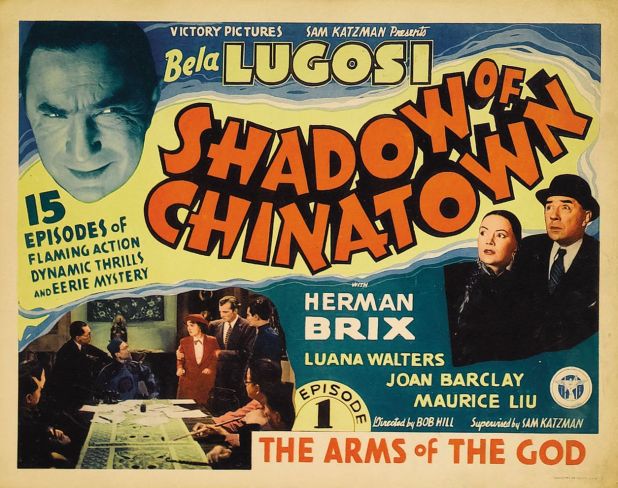
MILL CREEK NIGHTMARE WORLDS: Shadow of Chinatown (1936)

Shadow of Chinatown is a 65-minute version of the 300-minute long serial of the same name. It’s all about San Francisco’s Chinatown is being destroyed by Victor Poten (Bela Lugosi) and The Dragon Lady (Luana Walters), hired by white businesses to decimate the new Chinese businessmen who are taking away their profits. Unlike most serials of the time, it’s intriguing to see a movie in which white people are attacking Asians instead of sinister Fu Manchu being a stereotypical bad guy.

Look, it’s a movie in which Bela Lugosi mesmerizes women into hating the Chinese as much as he does.

This was directed and written by Robert F. Hill, who had 116 directing credits in his career. After World War II, Universal sent him to Japan to open a movie studio where he warned that the locals would try to attack him if he started an American studio in their country. He needed to get a doctor’s permit to prove his wife needed care back home before Universal would let him give up. The next person who tried had that happen as Japanese filmmakers attacked him and used the studio Universal built for themselves.

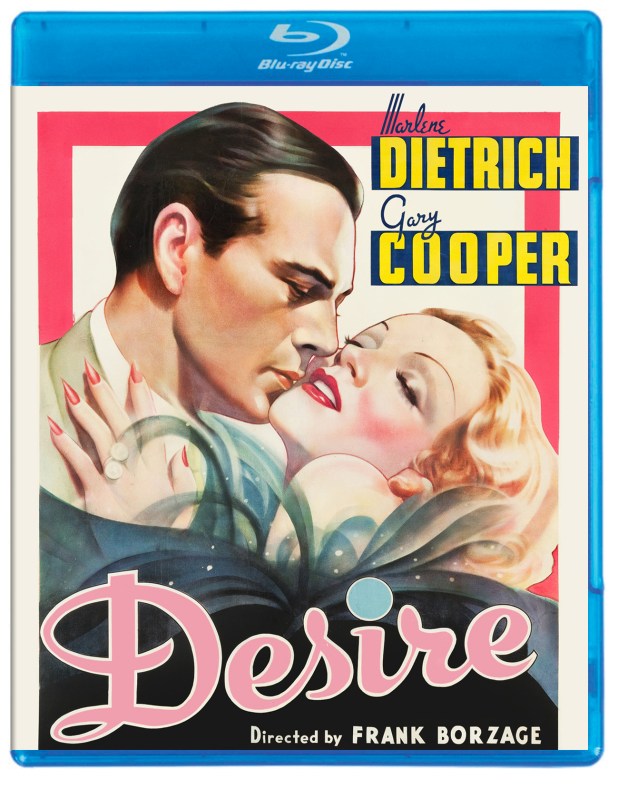
Desire (1936)

After one of the most elaborate jewel heists in European history — in which our female protagonist convinces not just one, but two men that she’s about to marry them — Madeleine de Beaupre (Marlene Dietrich) has escaped with a small fortune of pearls.

On her way to Spain to fence the goods, she runs into car trouble and is helped by Tom Bradley (Gary Cooper), a kindly American who just wants to help. She leaves him behind but he accidentally ends up with the hot pearls. That means that she has to romance him in the hopes of getting them back. But what happens when she falls for someone instead of just trying to work them?

A remake of Happy Days in Aranjuez, which was based on the play Die Schönen Tage von Aranjuez, by Hans Székely and Robert A. Stemmle, this movie was supposed to be the comeback movie for John Gilbert after a series of failures. Only days before shooting started, he had a heart attack and got replaced by John Halliday.

Supposedly, Gilbert and Dietrich were living together when she tried to use her influence to have him cast opposite her. However, she withdrew her support when he started seeing former fiancée Greta Garbo again. Dietrich then got back with Gary Cooper and Gilbert had a fatal heart attack occurred on the same day that Cooper’s casting was officially announced by Paramount.

Dietrich spoke highly of this movie, saying: “The only film I need not be ashamed of is Desire…” and “Desire became a good film and, moreover, also proved to be a box-office success. The script was excellent, the roles superb – one more proof that these elements are more important than actors.” She must have really enjoyed this movie, because she played the role at least two more times in radio adaptions.

The new Kino Lorber blu ray of Desire has two commentary tracks, with one by Samm Deighan and the other featuring David Del Valle and Nathaniel Bell. The 2K remastering of the film looks great and this is just about a perfect release for lovers of Hollywood history.