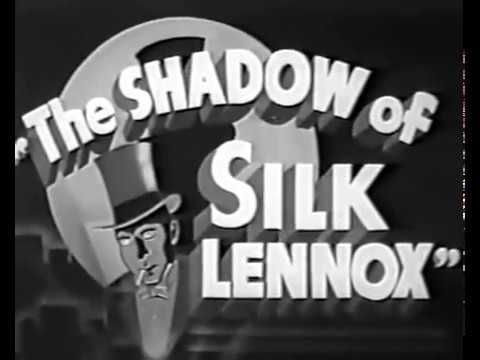
MILL CREEK LEGENDS OF HORROR: The Shadow of Silk Lennox (1935)

Adapted from Norman Springer’s book Riot Squad, this is an early Lon Chaney Jr. role. Directed by Ray Kirkwood and Jack Nelson, this stars Chaney as John Arthur “Silk” Lennox, a nightclub owner who plays both sides as he’s very sure of himself. But he didn’t count on Jimmy Lambert (Dean Benton) and Nola Travers (Marie Burton), who perform at his club, for trying to blackmail him for a heist. 

This is an hour-long, mostly musical, so if you get a Mill Creek set and expected a Legend of Horror or, at the very least, a gangster movie, you don’t really get that. But anyway, a chance to see Lon Jr. without makeup years before he became well-known.

You can watch this on YouTube.
MILL CREEK LEGENDS OF HORROR: The Cheney Vase (1955)

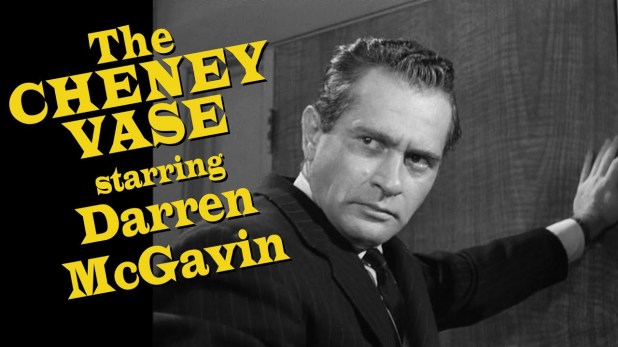
Season 1, Episode 13 of Alfred Hitchcock Presents, “The Cheney Vase,” stars Darren McGavin as Lyle Endicott, who is hired to be the personal assistant of Martha Cheney (Patricia Collinge). What he really wants is the money he’ll get when he takes a family heirloom, the Cheney Vase.

He’s already found a buyer in Herbert Koether (George Macready), but Cheney wants to keep the vase in her family until she dies. This may not be far from happening. And hey — Carolyn Jones is in this!

Directed by Robert Stevens and written by Robert Bless (Frogs), this seems like Endicott has it all figured out. Then again, this is an Alfred Hitchcock show, so it’s one thing to replace the maid and shut an older woman off from everyone else. It’s another thing to get away with it.

You can watch this on YouTube.
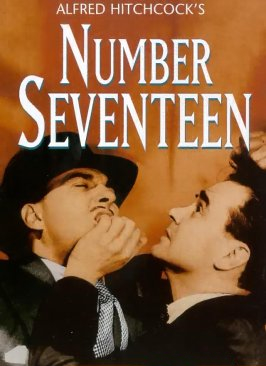
MILL CREEK LEGENDS OF HORROR: Number Seventeen (1932)

Based on the stage play by Joseph Jefferson Farjeon, this begins with Detective Barton (John Stuart) encountering an unhoused man, Ben (Leon M. Lion), as well as a dead body. As people continue to arrive at the house — one falls from the ceiling — the dead body disappears. In fact, it may still be alive. There are also three thieves — Brant (Donald Calthrop), Nora (Anne Grey) and Henry Doyle (Barry Jones) — a man named Sheldrake (Garry Marsh) and a necklace hidden in a bathroom.

There’s also a train chase right onto a ferry, which is some significant action. However, this sadly wasn’t a box-office success. Hitchcock said it was a disaster; he was in a strange phase of his career, remaking stage plays that never seemed to work. Those miniatures of the chase are good, however, and it’s an hour or so long. Not a lot to invest, and you get to see a master early in his career.

You can watch this on Tubi.

MILL CREEK LEGENDS OF HORROR: The Sorcerer’s Apprentice (1961)

“The Sorcerer’s Apprentice” is a seventh-season episode of Alfred Hitchcock Presents and was scheduled to be episode 39 of season 7. However, the network was worried about it. Robert Bloch, who wrote the screenplay and the short story that it was based on — it was in the January 1949 issue of Weird Tales — said,  “When the network censors viewed the teleplay, there was thunder from on high. This show was simply too gruesome to be aired. Nobody called me on the carpet because of this capricious decision. As a matter of fact, when the series went into syndication, my show was duly televised without a word from the powers that be.” 

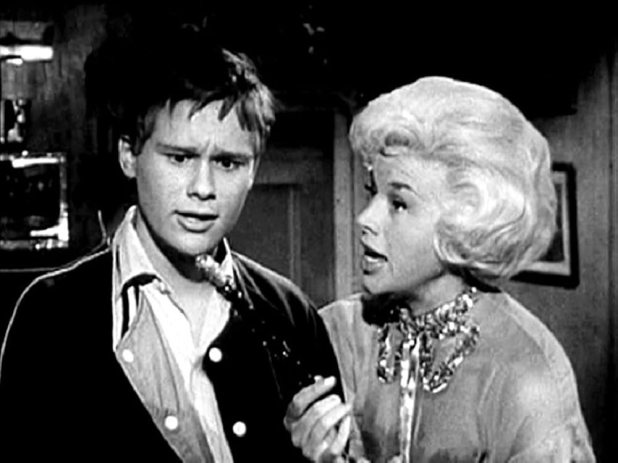
Sadini the Great (David J. Stewart) rescues a young boy, Hugo (Brandon deWilde), sleeping in the cold. The magician’s wife, Irene (Diana Dors), thinks it’s a waste of time; he tells her to get the boy something to eat. The kid goes all over the big top and soon learns that Irene has been sleeping with another performer, George Morris (Larry Kert). In truth, Irene is using Hugo, setting him up to kill her husband by telling him that he can gain magic powers by killing Sadini.

As you can expect, it doesn’t work out well for anyone. This won’t be the first time Diane Dors is sawn in half. Just watch Berserk! 

Director Józef Lejtes started his career in Poland and went on to work on numerous episodic TV shows.

You can watch this on YouTube.
MILL CREEK LEGENDS OF HORROR: East of Shanghai (1931)

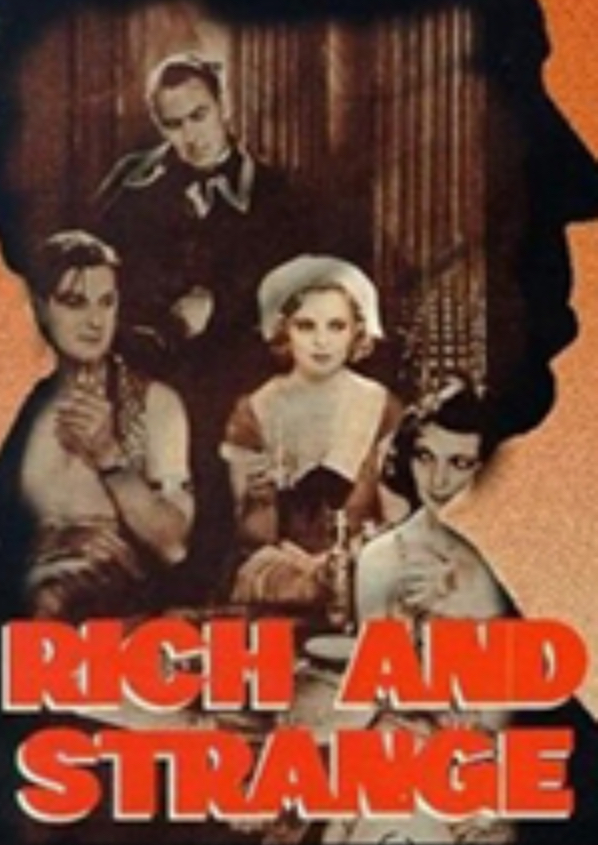
This is what Hitchcock’s Rich and Strange was released as in the U.S. His title is better, because it comes from The Tempest: “Full fathom five thy father lies, / Of his bones are coral made, / Those are pearls that were his eyes: / Nothing of him that doth fade, / But doth suffer a sea-change / Into something rich and strange”

Fred and Emily Hill (Henry Kendall and Joan Barry) are on a cruise but seem to be falling in love with other people. Despite that, Emily still wants to take care of Fred, at least until he gives all their money to his new love, stranding them in Singapore and nearly sinking them until they’re saved by some Chinese folks who eat a cat. Yes, really. A 1931 movie is like that sometimes. Hitchcock even said it was one of his favorite scenes.

You can watch this on Tubi.

MILL CREEK LEGENDS OF HORROR: The Manxman (1929)

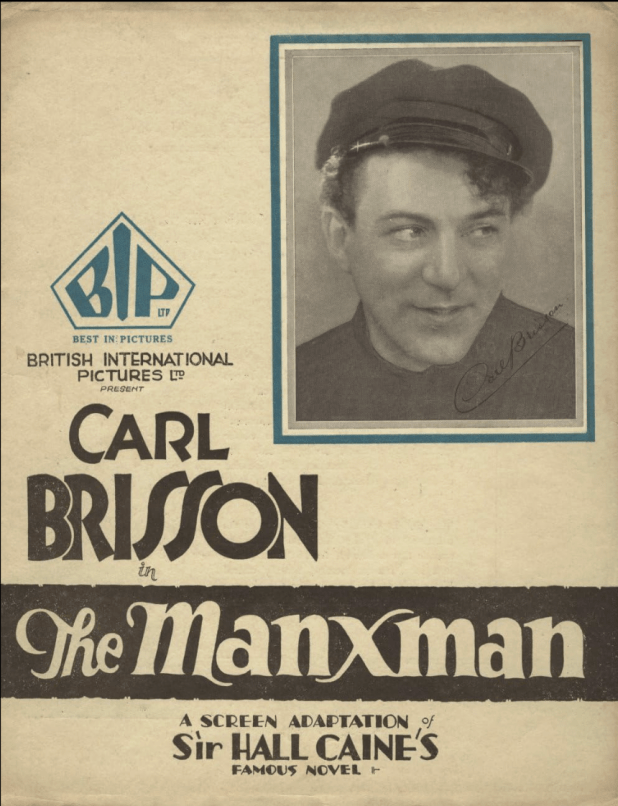
Alfred Hitchcock’s last silent film, The Manxman, is about fisherman Pete Quilliam (Carl Brisson and lawyer Philip Christian (Malcolm Keen), friends from birth, but both after the same woman: Kate (Anny Ondra). Pete asks Phillip to ask her father, Caesar Cregeen (Randle Ayrton), for permission to marry. He says no, as Pete is poor. He goes to Africa to make his fortune, leaving his friend behind to watch over Kate. 

As you can figure out, Phillip and Kate fall in love. Pete is said to have died in Africa, so they plan on being together, just in time for him to come home and marry her. But ah, one day at the Old Mill, they made love, so the baby she gave birth to doesn’t belong to her husband. It’s the child of the top judge in town, Phillip.

This movie was to be filmed on the Isle of Man, but Hitchcock eventually relocated production to Cornwall due to frequent creative interference from author Hall Caine. However, Caine was invited to Elstree Studios to observe. As for Carl Brisson, he got to play two cheated husbands for Hitchcock, in this movie and in The Ring

You can watch this on YouTube.

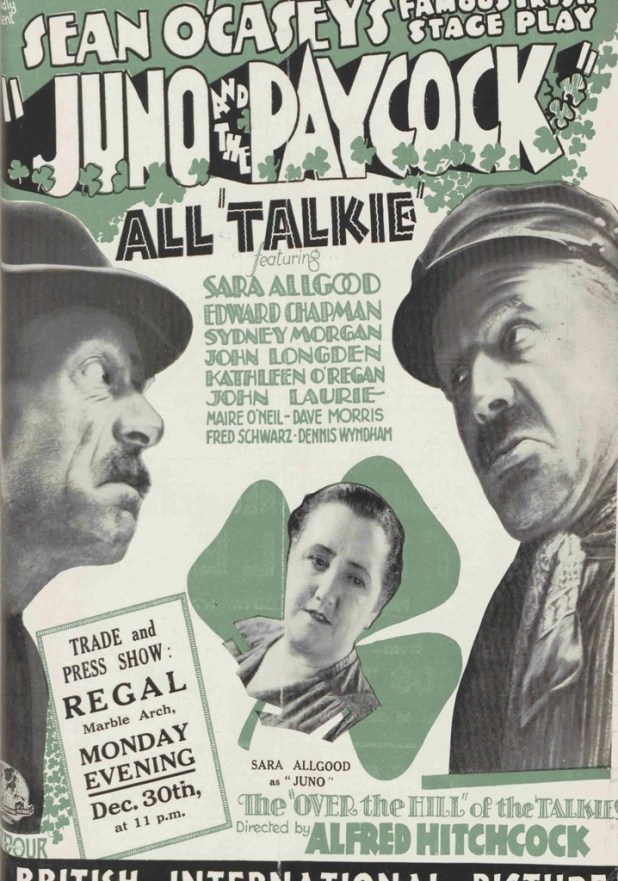
MILL CREEK LEGENDS OF HORROR: Juno and the Paycock (1930)

Based on Juno and the Paycock by Sean O’Casey, this movie follows Captain Boyle (Edward Chapman) living in a two-room tenement flat with his wife, Juno (Sara Allgood), and their children, Mary (Kathleen O’Regan) and Johnny (John Laurie). Juno has dubbed her husband The Paycock because he does nothing but drink. Mary has a job, but she’s on strike; Johnny has lost an arm and broken his hip during a fight, as this takes place during the Irish War of Independence. He’s also turned in a fellow IRA member, a crime that Boyle tells his drinking buddies is a horrible sin.

As for Mary, she leaves Jerry Devine (Dave Morris) for Charlie Bentham (John Longden), who tells Boyle that he’s due for an inheritance. If it ever happens, he’s already spent that. And it doesn’t, because Charles is a bad lawyer and person, as he leaves Mary pregnant before the wedding. Luckily, Jerry is happy to marry her, just in time for them to find out that Johnny has been shot to death.

Mary says, “It‘s true. There is no God.” 

It’s no wonder that Hitchcock used playwright O’Casey as his inspiration for the prophet in the diner in The Birds. This is dark, even when it’s attempting to be a comedy. 

You can download this from the Internet Archive.

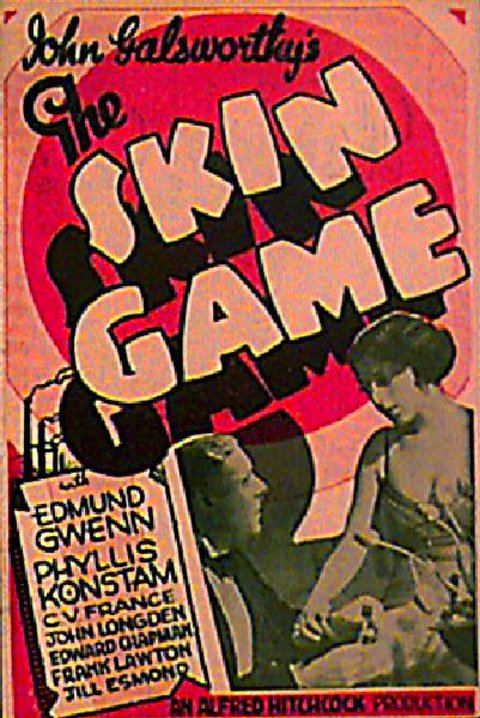
MILL CREEK LEGENDS OF HORROR: The Skin Game (1931)

Based on the play by John Galsworthy, this early Hitchcock film explores themes of social class conflict and industrialization, focusing on the feud between the Hillcrist (C.V. France and Helen Haye play the elder Mr. and Mrs. Hillcrist, and Jill Esmond appears as their daughter, Jill) and the Hornblower (Edmund Gwenn, John Longden, and Frank Lawton) families. Despite being a member of the working class, Mr. Hornblower plays the skin game: buying up land under false pretenses, claiming he’s allowing tenant farmers to remain, then booting them out, and then constructing factories. The Hillcrists learn of this and regret giving him land, as he plans to transform their gorgeous views into smoke and industry.

The Hillcrists respond to this by muckraking up some gossip about the sordid past of Hornblower’s now pregnant daughter-in-law Chloe (Phyllis Konstam), wife of Charles, who learns the secret — she was a sex worker — before Chloe can explain, and she drowns herself, highlighting the tragic consequences of societal judgment and personal secrets.

When Truffaut spoke to him about this movie, Hitchcock said, “I didn’t make it by choice, and there isn’t much to be said about it. We shot with four cameras and a single soundtrack because we couldn’t cut sound in those days.” This reflects the stage play origins and the technical limitations of early filmmaking, which contrast with Hitchcock’s later innovative style.

You can download this from the Internet Archive.

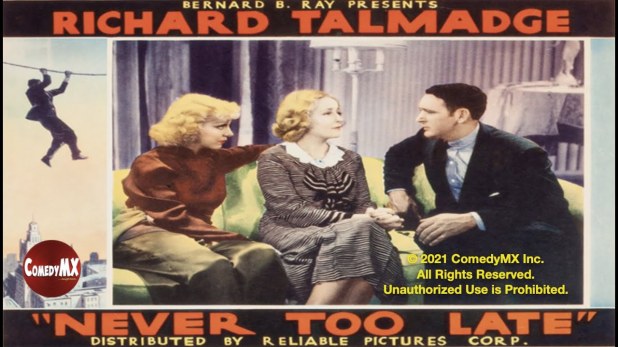
MILL CREEK LEGENDS OF HORROR: It’s Never Too Late to Mend (1937)

Based on the novel It Is Never Too Late to Mend by Charles Reade, this was produced at Shepperton Studios as a “quota quickie” for MGM, but it was popular enough to be rereleased in 1942. Directed by David MacDonald (Devil Girl from Mars) and written by H. F. Maltby, this stars Tod Slaughter as John Meadows, a wealthy man who wants a farmer’s (D.J. Williams) daughter (Marjorie Taylor) and takes out the competition by sending her lover, George Fielding (Ian Colin), to prison.

Luckily, Reverend Eden (Roy Russell) takes a tour of Meadows’ jail and notes how horrible it must be for the prisoners. He takes a special interest in ensuring that Fielding gets out and back to his true love. 

It’s what you expect from a Tod Slaughter movie: He’s a respected society man who is secretly evil and gets found out right at the end. But if it works…it works.

You can watch this on YouTube.

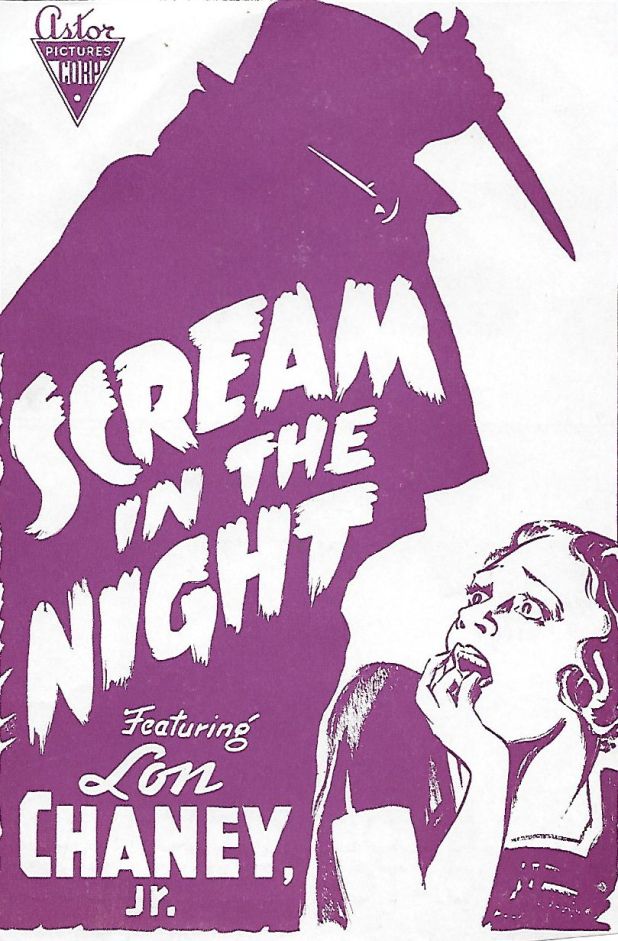
MILL CREEK LEGENDS OF HORROR: A Scream In the Night (1935)

Jack Wilson (Lon Chaney Jr.) is a cop looking for a stolen ruby who decides to go undercover as Butch Curtain, a drunken bar owner. This marks the first time that Lon Chaney Jr. used his new stage name, reflecting a key moment in his career development.

Directed by Fred C. Newmeyer and written by Norman Springer, this movie was completed in August of 1935, but it didn’t reach theaters until 1943, when Astor Pictures acquired the rights and released it to capitalize on Chaney Jr.’s horror-movie popularity.

Why is Chaney in this, playing a romantic leading man? Because he’s dressed as a scarred-up pirate for most of it, which was probably a more comfortable role for him. Philip Ahn also appears; many decades later, he would play David Carradine’s master on Kung Fu. 

It’s fine for the time, but Cganey Jr. was meant for better things.

You can watch this on YouTube.