J-Horror gets its start in the Japanese horror films of the 1980s. There were definitely Japanese horror films before, but the country seemed to find some unique influences from this point on that influenced other nations — particularly America — to be influenced by them instead of the other way around. As J-Horror pushed the horror form away from gore, it created atmospheric films of dread.
These haunted house-style films can be traced to several places. Certainly, Hausu is an early take on the haunted house genre, as is Sweet Home, which went on to form the basis of the Resident Evil video games.
In Colette Balmain’s Introduction to Japanese Horror Film, the idea of the family being destroyed is horrifying. That’s why so many of these films explore the breakup of the family unit and mothers often become monstrous specters of metaphysical death and destruction.
To get the whole story of J-Horror, I turned to someone who knows way more about it than me, Jennifer Upton, the author of Japanese Cult Cinema: Films From the Second Golden Age Selected Essays & Review. You can get it an Amazon.
Here’s what she had to say:
Although the first Japanese horror film is widely acknowledged as Onibaba, the term J-Horror did not become popular until the ‘90s and aughts when films like Ringu and Ju-On The Grudge became international sensations.
Unlike a Universal monster film or an ‘80s slasher, when you watch a J-Horror movie, you are watching Japan’s history going back all the way to the Edo Period unfold before your eyes. The stories are often thematically similar or an outright re-telling of ancient tales featuring ghosts, yokai or oni, originally made popular in the Noh and Kabuki plays of Japan’s past.
Like their theatrical forefathers, these films offer a slower pace than western audiences are accustomed to, relying instead on quietly disturbing sequences dripping with atmosphere achieved through lighting and sound design.
The major difference between western horror and J-Horror is in the films’ sense of sadness, loss and inevitability. In J-Horror, even a happy ending isn’t really all that happy. Although a ghost or vengeful spirit may be temporarily sated, the trauma left behind is almost always intergenerational and self-perpetuating. It’s precisely because the films in this set didn’t enjoy the global success of its contemporaries that we J-horror fans must gorge upon it like fresh sushi. To the rarely seen Noroi in particular, I say, “Get in my belly!”
Thanks Jenn!
Now, Arrow Video has released a box set of seven movies that are example of this the horror films that emerged in Japan at the turn of the millennium.
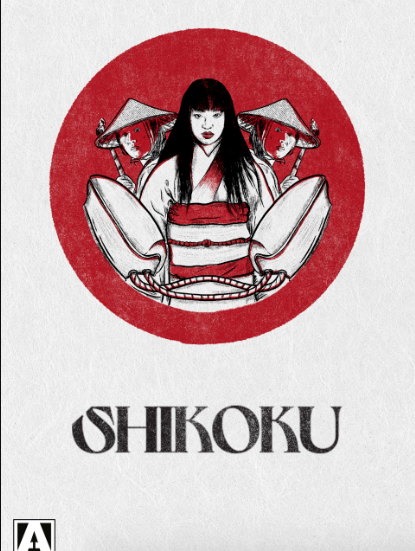
Shikoku: A young woman returns after many years to her rural birthplace, only to find her best friend from childhood has died by drowning when just sixteen. The dead girl’s mother, the local Shintoist priestess, has embarked on the region’s famous pilgrimage – but why is she walking backwards?
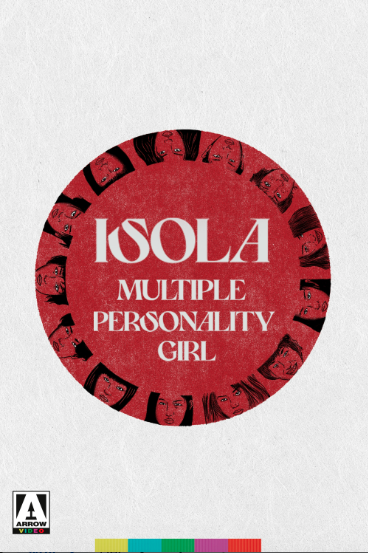
Isola: Multiple Personality Girl: The aftermath of the devastating Kobe Earthquake of 1995 creates fissures in the already fractured mind of a high-school girl, allowing an unwelcome intruder to set up home in her head and leaving a volunteer worker with psychic powers to determine which of her personas is the fake one.
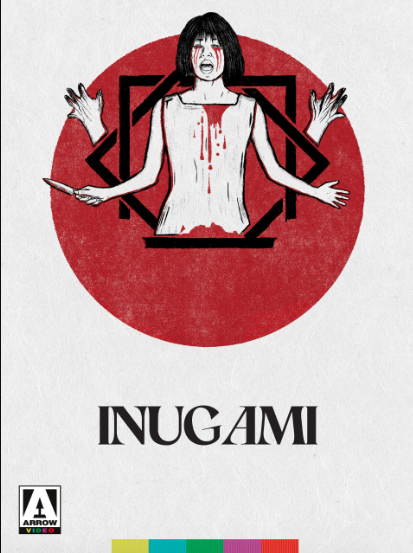
Inugami: A teacher from Tokyo finds himself drawn to a local papermaker, only to find himself the subject of some hostility from her extended family, who have long ties to the region and are rumored to be the descendants of the guardians of ancient evil canine spirits.
St. John’s Wort: The art designer for a horror-themed videogame is forced to confront her childhood traumas when her colleagues ask her to gather visual materials from the creepy gothic mansion she has inherited from her estranged artist father.
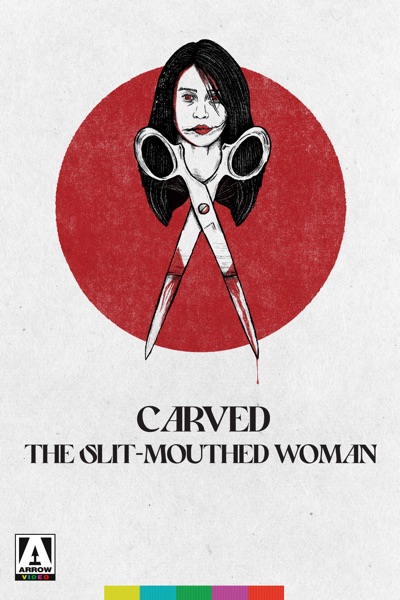
Carved: The Slit-Mouthed Woman: Home isn’t the safest place for the potential child victims of the slit-mouthed mother and killer in this disturbing supernatural horror.

Persona: A new craze for wearing ceramic masks sweeps the students of a high school, unleashing a wave of anonymous juvenile delinquency.
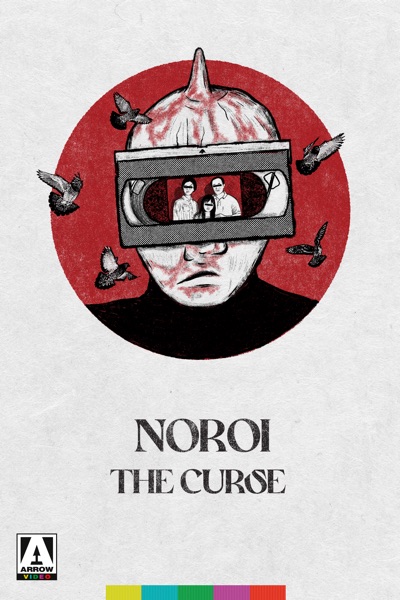
Noroi: The Curse: An investigative reporter into paranormal phenomena is forced to confront horrors beyond his wildest imagination after learning about an ancient folkloric demon.
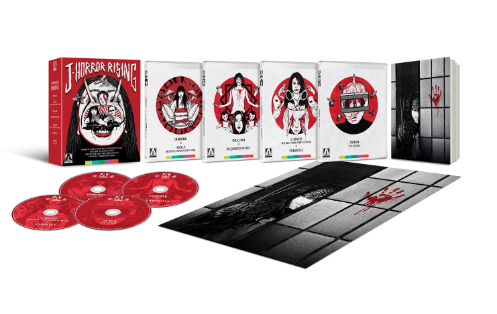
This set includes an illustrated collector’s booklet featuring new writing by Eugene Thacker, Jasper Sharp, Anton Bitel, Amber T., Mark Player, Jim Harper and Sarah Appleton; a double-sided foldout poster featuring newly commissioned artwork by John Conlon and packaging with newly commissioned artwork by John Conlon.
You can get it from MVD.
 B&S About Movies
You must be logged in to post a comment.