ABOUT THE AUTHOR: Jennifer Upton is an American (non-werewolf) writer/editor in London. She currently works as a freelance ghostwriter of personal memoirs and writes for several blogs on topics as diverse as film history, punk rock, women’s issues, and international politics. For links to her work, please visit https://www.jennuptonwriter.com or send her a Tweet @Jennxldn
It’s rare for me to expel an audible groan at the end of a movie.
Especially if it’s a movie starring William Smith released in 1972.
With The Runaway, I did just that. Not because it’s a terrible movie. Far from it.
The film is a mixed bag of loathsome events, and ‘70s anti-gay sentiment portrayed by competent filmmakers and skilled actors.
Ricki (Gilda Texter) is a 17-year-old virgin runaway who leaves her unhappy rural desert home in search of a friend named Roger Jordan in California. A man she barely knows, but whom she trusts because he never tried to hit on her.
During her first 24 hours of hitchhiking, the precarious reality of her new situation is explained via a folksy ballad played over a montage of Ricki fighting back against a string of guys with sexual assault on the brain. Each time, she fights back, proving herself to be a likable, capable protagonist.
Enter Frank (William Smith), a lonely, drunk private eye hired to find the runaway heiress to a wealthy family. Frank and Ricki strike up a friendship forged in the shared experience of life’s miseries and adorned with creepy sexual tension despite their age difference of at least 25 years.
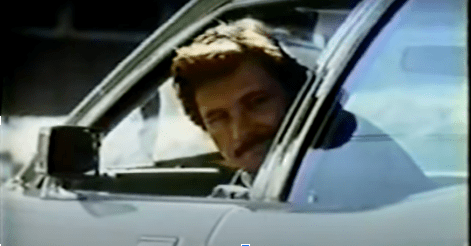
In Venice Beach, California, Ricki meets only one nice person. A traveling musician who helps her score money for phone calls and food. Everyone else wants something from her. After sleeping in an alley, she takes up with up with some hippies who take her to their swinging upstairs pad and dose her with acid, so she moves downstairs into the resident hooker’s pad.
Prostitute Lorri (played wonderfully by Rita Murray) is a lesbian who falls for Ricki hard. She’s supposed to be predatory (as evidenced by the longing stares), but from the vantage point of 2023, she comes off more lonely than anything else. Perhaps it’s Ricki who leads Lorri on and takes advantage of her hospitality.
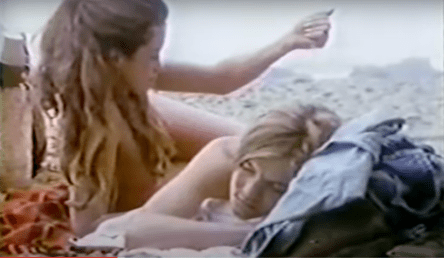
Lorri not only takes Ricki to the beach where the two share a fun day frolicking naked in the seaweed, but she also lets Ricki live with her rent free, buys all the food and cooks all the meals, only to be spurned after they successfully hook up because Ricki is still struggling with the idea that coming out means living a life of always being different. A daunting prospect in 1972. Ricki wants a “nice” life. Whatever the hell that means.
From here, the movie really ramps up the animosity towards its leading lady.
In the worst scene of the whole affair, Ricki attempts to hook up with a random guy recommended by one hippy. Even for 1972 this scene is just wrong. There’s no discussion of whether Ricki even finds the guy attractive. It’s just “Hi, come on in, have some coke,” and the dude hops on like a bunny in spring. Of course, it doesn’t work (because that’s not how female arousal works regardless of sexual orientation) and Ricki flees the scene.
She re-connects with Frank who takes her to the last known address of her friend Roger Jordan. The vaunted man we never get to see but whom Ricki believes will solve all her problems. It turns out Roger never hit on her because he’s gay, too, having stolen the Vicuna sweater of his last lover before peacing out to San Francisco.
Meanwhile, Lorri is revealed to be the missing heiress, cast in the mold of Warhol superstar Edie Sedgwick whose rebellion stems from an abusive upbringing. We’re told that her father has died and left her a great deal of money, but otherwise her story ends there. Did she ever find love? I’d love to see a sequel focused on this character.
The next WTF moment occurs when Ricki asks Frank to deflower her. You know… to see if maybe she’ll like sex with a man she trusts. Again, there’s no discussion of whether she fancies him. It’s just assumed that she’ll like it no matter what man she’s with if she can just get past her personal hang-ups. Because of course, it’s all in her head. Sigh.
Never mind that he’s drunk and old enough to be her father. Frank’s love-making skills are apparently so good that Ricki overcomes her fear of men and is now free to explore a relationship with the nice hippie boy who helped her score food money earlier in the film. Holy shit.
The final song plays over a long shot of the new couple walking along the beach. “Ohhhh, Ricki…Please let me open your eyes to the magic inside you. You don’t need a disguise. For you’re a woman, Ricki! A full out woman, Ricki!” Holy shit. Again.
I’m normally not a journalist who scrutinizes old movies through a lens of modern sensibility. I believe every film is of its time and place. That’s the best way to watch The Runaway. The acting and directing are solid. Texter, Murray, and Smith are all given adequate screen time to portray complex characters trying to navigate their way through a cruel, unforgiving world. But, be warned. The overall message is so incredibly outdated that you too might groan during the end credits.
If you really want to find out, you can watch it in its entirety here: https://youtu.be/yR_D9ss9y5k
 B&S About Movies
You must be logged in to post a comment.