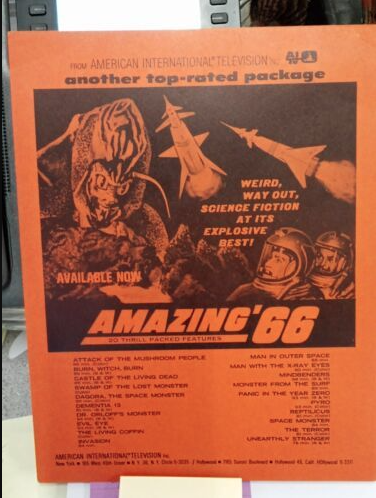
Jack Curtis, who directed this movie, was the voice of Pops Racer and Inspector Detector on the American localization of Mach GoGoGo, which we know as Speed Racer. He also wrote The Deadly Organ, which blows my mind, and did voiceovers for so many Japanese movies and shows. Sadly, he died at 44, as he had pneumonia and was allergic to penicillin. That’s 1970, I guess.
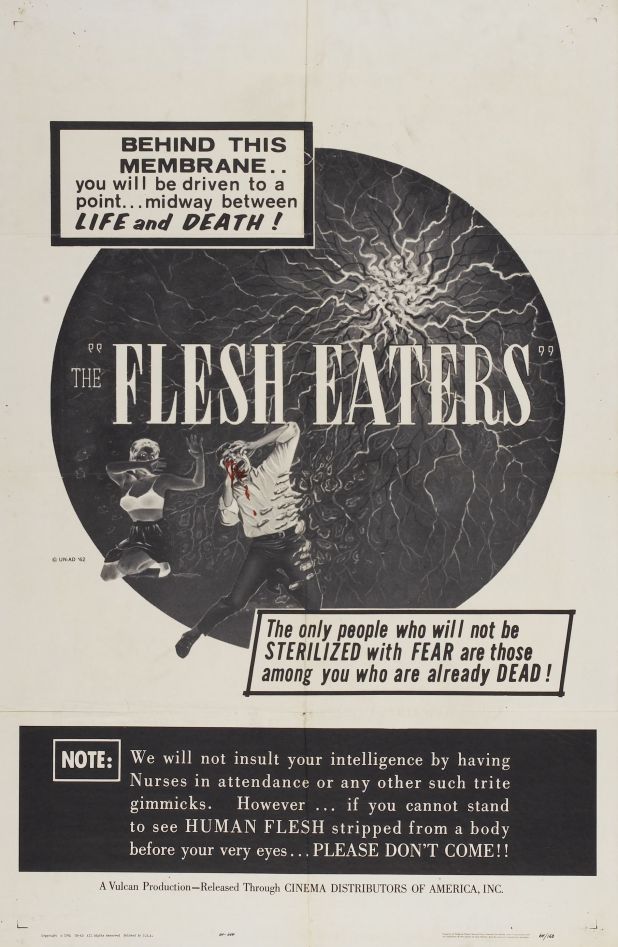
Using the name Carson Davidson, he directed, shot and did pretty much everything there was on this film, aided by a story by Arnold Drake, the creator of the Doom Patrol. How did they pay for it? Game show money. Drake also storyboarded the whole film, creating a comic book of sorts for Curtis to shoot from.
This film is also why Night of the Living Dead is public domain. No, really, go with me for a second. Its distributor, The Walter Reade Organization, was worried that the original title, Night of the Flesh Eaters, would be confused with this movie. When they changed the title, they didn’t properly copyright it.
Jan Letterman (Barbara Wilkin) is the personal assistant to wealthy actress Laura Winters (Rita Morley). Together, they are flying with pilot Grant Murdoch (Byron Sanders) to Massachusetts when their plane has to land after a storm. Ironically, a storm would destroy most of the original equipment needed for this film, doubling the budget.
There, they meet Professor Peter Bartell (Martin Kosleck), a marine biologist and Nazi sympathizer — Kosleck left Germany during the war and hated the Third Reich; his roles playing them in so many movies was him getting revenge — who is experimenting with flesh eating kaiju that live on the island. There’s also a beatnik named Omar (Ray Tudor), who shows up for the kids.
Where this movie gets away from the pack of others is that beyond having a huge flesh eating monster that floats on the beach, it has way more gore than you’d expect. This is a movie unafraid to stab a character, shoot them in the face and then feed them to a monster. And if you hate beatniks, stay tuned. Omar throws his guts up from the inside out.
Yet this is more than just a silly black and white horror movie. All of the characters have motivations and are complicated, not just cardboard cutouts of the same heroes and villains you’ve seen in films like this.
That said, it did have a William Castle gimmick when it played theaters. Only blood can stop the flesh eaters and you were given instant blood capsules in case a flesh eater got loose from the screen and attacked you.
When this was re-released in 1968 as a double feature with Macumba Love, a new sequence of Nazis using the flesh eaters was added. It was added by M.A. Ripps, who also produced Common Law Wife and All the Young Wives.
I nearly forgot! Radley Metzger edited this movie!
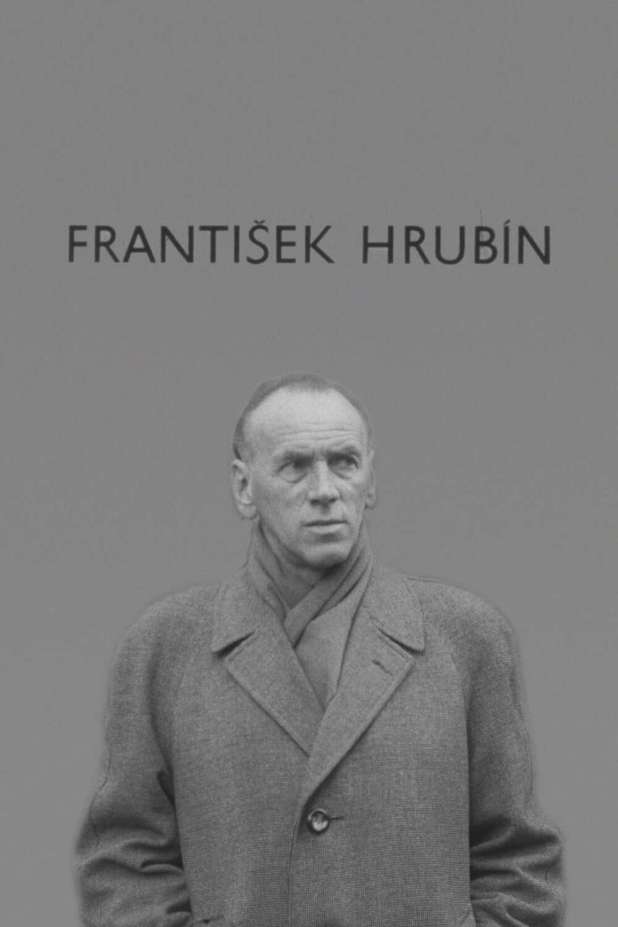
Directed by Tomás Skrdlant and written by its subject, Frantisek Hrubín, this is a remembrance of childhood from Hrubín, who started the Czech children’s magazine, Mateřídouška (The Thyme) and would go on to write 18 movies, including one of the films that this is in the same box set with, the 1978 Juraj Herz directed Beauty and the Beast.
I found it interesting that in the far off away from the world place that the writer grew up, he’d only seen a photo of a poodle in a book and it may as well have been a mythological creature unless he’d seen that evidence. It’s also interesting to watch a man who writes for children look back on the memories of his early years and think through all the places he has come through to end up where he is today.
Frantisek Hrubín is part of the new Severin box set, All the Haunts Be Ours Volume 2.
These two short films appear with Edge of the Knife on Severin’s All the Haunts Be Ours Vol. 2 set.
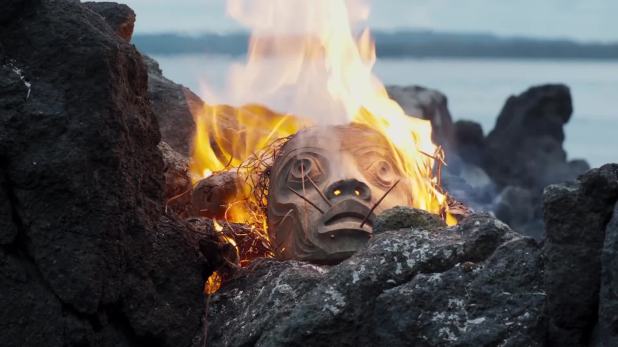
Haida Carver (1964): On Canada’s Pacific coast, director Richard Gilbert shot this short film about young Haida artist, Robert Davidson, and shows how he shapes miniature totems from argillite, a jet-like stone.
While many of the Haida people his age have given up carving for fishing, which isn’t as time consuming and pays better, very few artists were left when this was made. We get to see how Robert finds stones and how he learned from his grandfather how to do this traditional art.
Davidson’s Haida name is G̲uud San Glans, which means “Eagle of the Dawn,” and he remains a leading figure in the renaissance of Haida art and culture. He said, “If we look at the world in the form of a circle, let us look at what is on the inside of the circle as experience, culture and knowledge: Let us look at this as the past. What is outside of the circle is yet to be experienced. But in order to expand the circle we must know what is inside the circle.”
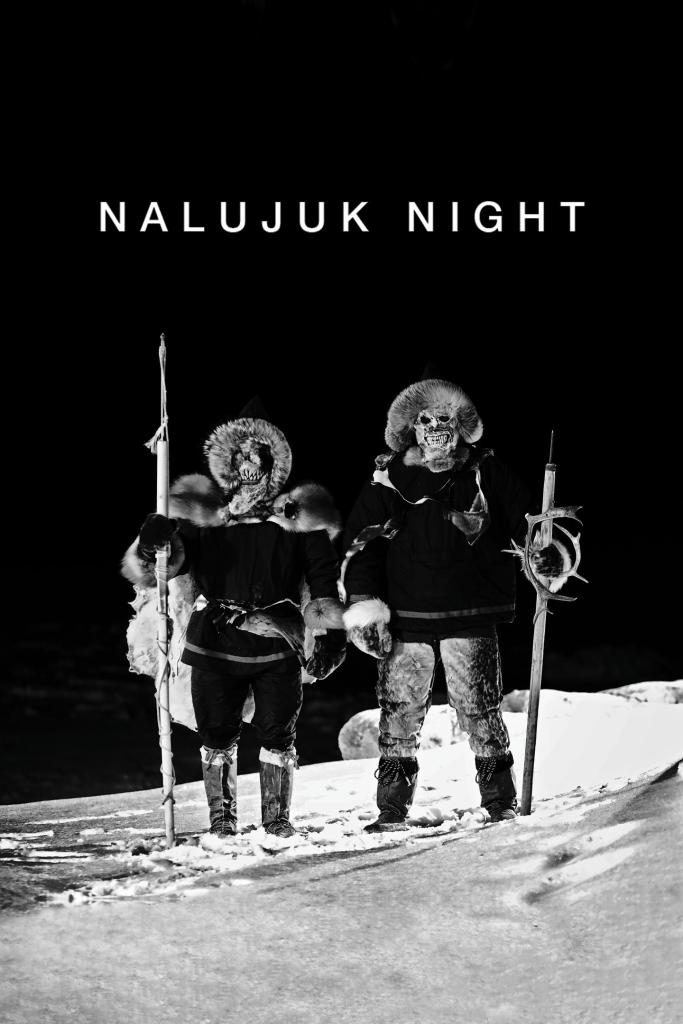
Nalujuk Night (2021): Nalujuk Night is a tradition among the Inuit of Nunatsiavut, an annual event in which “startling figures that come from the Eastern sea ice, dressed in torn and tattered clothing, animal skins and furs” walk through the town, where they reward good children and chase the bad.
Directed by Jennie Williams, this was part of the National Film Board of Canada’s Labrador Documentary Project, which seeks to foster the creation of documentary films about Inuit culture from an Inuit perspective.
Set on January 6, this holiday is celebrated by the young and old alike. In a university paper, Jannelle Barbour wrote: “Nalujuks are not real. They are like the boogey-men of other cultures. But, where this event takes place every year, everyone takes the Nalujuks to be a real thing. Most children and some adults are deathly afraid of them.”
She goes on to say, “Nalujuk’s night is truly a very exciting and scary time for all youth. The night starts off down to the community hall, where there are four or five people dressed as Nalujuks. These Nalujuks aren’t the ones that actually chase the children around town, trying to hit them. These Nalujuks are just there to show the younger children…what a Nalujuk is. After everyone leaves the hall, the real fun and games begin. Usually there are a lot of Nalajuks out running around, and there is always this one big and scary one, this one usually has the biggest weapon. It is really scary to get caught by this one. In Nain, there is always one spot where all the kids gather to stay safe. It’s usually on the steps of a person’s house. No one seems to mind though, seeing that this only happens once a year.”
I would never know of this event without Severin’s box set.
These short films are part of the new Severin box set, All the Haunts Be Ours Volume 2.
EDITOR’S NOTE: Castle of the Living Dead was on Chiller Theater on Saturday, February 5, 1972 at 1:00 a.m.
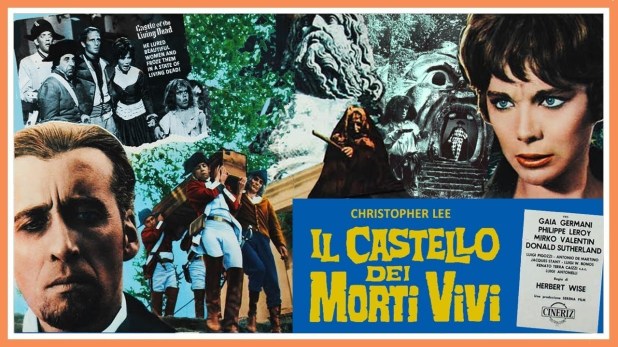
Castle of the Living Dead is a movie of mystery.
Who directed it?
Warren Kiefer, who couldn’t be directly credited for the film as the film required an Italian director?
Herbert Wise — Luciano Ricci, the film’s first assistant director — whose name was used to fulfill that needed native director credit?
Riccardo Freda, who left I Vampiri for Mario Bava to finish and also made Double Face and Tragic Ceremony?
Michael Reeves, the tragically lost too song director who made Witchfinder General? Depending on who is asked, Reeves either did minor second unit work, a polish on the script’s dwarf character, a complete takeover of the movie or nothing at all.
And did Mario Bava do effects?
So many mysteries!
This gothic horror movie stars Christopher Lee as Count Drago, a man who embalms humans and animals, making them part of his eternal theater thanks to a chemical formula that instantly kills and embalms anything that lives, arresting them at the very moment of death.
Beyond Lee, the cast includes Gaia Germani (Hercules In the Haunted World), Philippe Leroy (The Laughing Woman), Luciano Pigozzi (the Italian Peter Lorre), Luigi Bonos (Frankenstein 80) and Donald Sutherland in his first movie playing a witch, an old man and Sergeant Paul.
Co-writer Paul Maslansky would go on to produce tons of movies like Death Line, She Beast, Race with the Devil, Damnation Alley and Ski Patrol amongst so many others, as well as creating the original concept — and producing — all of the Police Academy movies.
BONUS WILDCARD WEEK (September 22 – 28) Go order something from the SWV website and watch it!
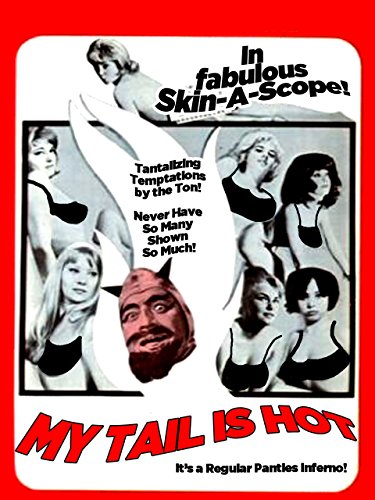
Lucifer U. Devil (Max Gardens, AKA Manny Goodtimes) is mad that Hell hasn’t seen any new arrivals of note since Hitler. He wants the soul of Ben-Hur Ova (Jack Little) and is trying to figure out how to lure him away from his wife Miassis (Bea Reddy). So the first of the fallen bets his wife Saturna (Ima Ghoul) that he can get the man who won the “World’s Most Faithful Husband” by Ladies House Companion to break the Seventh Commandment.
This movie has those really tiny pools that only existed when nudie cuties were being made. These pools are so miniature than only one or two women can fit at the same time. I wonder who made these are what their purpose was other than to show off the breasts of young starlets?
Directed and written by Peter Perry Jr., who uses the name Seymour Tokus, this has a dance by famous burlesque queen Candy barr, as well as appearances by actresses with names like Carry Meoff, Lotta Partz and Evan less. More famous actresses include Carol Baughman, Monica Liljistrand, Gaby Martone, Barbara Nordin, Adele Rein and Karen Wyatt, many of whom turn up in Mondo Keyhole.
The secret of Ben-Hur Ova? He’s a sheik and has a hundred wives, so he’s faithful to all of them. Now I ask, who was Ima Ghoul and what is she up to?
BONUS WILDCARD WEEK (September 22 – 28) Go order something from the SWV website and watch it!
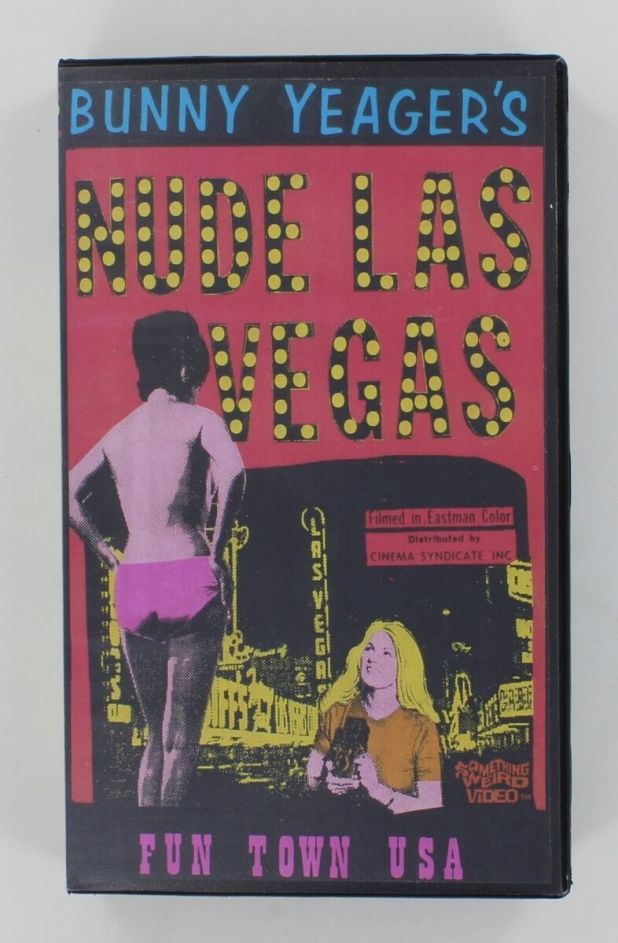
You know, this movie isn’t very good, but I just want to talk about Bunny Yeager, so indulge me.
Linnea Eleanor “Bunny” Yeager was born in Wilkinsburg, one of the suburbs of Pittsburgh, and moved to Florida when she was 17. There, she got the nickname she’d use for the rest of her life. It either came from Lana Turner’s character Bunny Smith in Week-End at the Waldorf or because Yeager played the Easter Bunny in a school play.
Just a few years out of school, Bunny won plenty of beauty pageants, including Miss Army & Air Force, Miss Personality of Miami Beach, Queen of Miami, Florida Orchid Queen, Miss Trailercoach of Dade County, Queen of the Sports Carnival and Cheesecake Queen of 1951.
She never wore the same outfit twice and made plenty of the clothes that other girls wore for their shoots. She’s even been credited with being one of the influencers that made the bikini a hot number in the mid 50’s.
Originally, Bunny went to school to be a photographer so she could save money and make her own prints. However, one of her class projects ended up being the March 1954 cover of Eye magazine and she went pro. Bunny was one of the first photographers to shoot girls in natural light.
She’s probably best known for popularizing Bettie Page (she shot her January 1955 Playboy centerfold) and her work in Playboy, including discovering the very first centerfold, Lisa Winters. She also appeared in the magazine herself five times and was photographed by Hugh Hefner in a pictorial named “Queen of the Playboy Centerfolds.”
Once sexy movies got more gynecological, Yeager moved into mainstream magazines and even took the famous photo of Ursula Andress in her white bikini from the set of Dr. No.
Before the sexual revolution, Bunny Yeager was working within the male gaze to be a trailblazer. She’s one of my heroines and deserves so much more credit and interest than now. Check out her photos today and you’ll see imagery that remains incredibly alive.
As for the movie, there’s no story, it’s just Bunny taking photos of girls and it will make you sad, because it’s shot in the wonderful old Las Vegas, filled with neon and tiki bars and everything magical that the world threw away.
BONUS WILDCARD WEEK (September 22 – 28) Go order something from the SWV website and watch it!
Hakujitsumu is based on a 1926 short story by Junichiro Tanizaki that plays with the nature of reality.
An artist and a young woman are in a dentist’s waiting room and the man is too shy to even connect with her. In the same examining room, they’re both giving anesthetic as he imagines that she is being abused and tortured and even chased by a vampire. The uncut Dutch version even has a sexually explicit scene during which the woman is digitally attacked by the dentist.
A big budget example of a pinky violence movie, this film even dared to show female pubic hair, a major cultural crime in Japan. Most instances — even in the most hardcore of films — are digitally fogged or have a mosaic over them.
Director and writer Tetsuji Takechi was nearly 70 when this was made. He’d already filmed Day Dream once before in 1964, after starting his career in kabuki theater and having his own TV show, The Tetsuji Takechi Hour, during which he reinterpreted Japanese stage classics. His next film, 1965’s Black Snow, saw him arrested on indecency charges and fighting a public battle over censorship between the intellectuals of Japan and the country’s government. Takechi won the lawsuit, which opened the way for the pinky films of the 60s and 70s.
Black Snow may be more controversial for its themes than its sex: its protagonist is a young Japanese man whose mother serves the U.S. military at Yokota Air Base as a prostitute. He’s impotent unless making love with a loaded gun in his hand and before long, he’s killed a black soldier before being cut down by several Americans. The film is also fiercely nationalist with Americans — most pointedly the black man who is killed — shown to be nothing but sex-wild animals.
In the journal Eiga Geinjutsu, Takechi said, “The censors are getting tough about Black Snow. I admit there are many nude scenes in the film, but they are psychological nude scenes symbolizing the defencelessness of the Japanese people in the face of the American invasion. Prompted by the CIA and the U.S. Army they say my film is immoral. This is of course an old story that has been going on for centuries. When they suppressed Kabuki plays during the Edo period, forbidding women to act, because of prostitution, and young actors, because of homosexuality, they said it was to preserve public morals. In fact it was a matter of rank political suppression.”
The remake of Day Dream comes a full decade after newspapers would not advertise his movies and the director was only writing. That film is literally Japan’s first hardcore pornographic movie and it was a big budget movie played on big screens.
Yet while Westerners see his influence, in Japan, Takechi was an outsider in the mainstream and pinky world, so he’s forgotten. His right wing politics clash with the protest ethos within other pinky films, so all in all, he’s lost in many ways.
Female star Kyoko Aizome — who plays Chieko– would gain notoriety from this film and become a star in the worlds of feature dancing (being arrested for indecency for her on-stage behavior) and hard and soft AV (adult video) movies. According to an article on The Bloody Pit of Horror, she had her hymen surgically repaired so she could lose her virginity again on camera and also had her own King Kong vs. Godzillamoment when she starred in Traci Takes Tokyo opposite an underage Traci Lords.
As for the vampires, the dentist’s assistants (Saeda Kawaguchi and Yuri Yaio) have fangs and the dentist himself is Kwaidan actor Kei Sato, a mainstream talent appearing in a movie that is anything but. Even after Chieko runs over the dentist and decapitates him, he comes back as a traditional film vampire.
After the original movie was made, South Korean director Yu Hyun-mok remade it as Chunmong (Empty Dream) and was arrested because there was a rumored nude scene. There were also rumors that actress Park Su-jeong had been humiliated by appearing nude on the set. The truth was that she wore a body stocking. Supposedly, the Korean film, which was kept off screens until 2004, is a superior piece of surrealist art.
BONUS WILDCARD WEEK (September 22 – 28) Go order something from the SWV website and watch it!
Both of the titles of this movie reference others: Kiss Me Quick! is a takeoff of Kiss Me, Stupid and the original title, Dr. Breedlove or How I Learned to Stop Worrying and Love, is obviously taken from Kubrick.
Sterilox is an alien who has come from the Buttless galaxy. He’s played by Frank A. Coe, using the name Fattie Beltbuckle. He ends up in the lab of Dr. Breedlove (Max Gardens), seeking a perfect woman to become the housewife for their planet. Yes, not for breeding. Who are we to not respect the command of the Grand Glom? Yet, one wonders, why is the alien Stan Laurel? And why. is Dr. Breedlover more Bela Lugosi than Peter Sellers?
“Dance! Dance, my little sex bombs!” yells the mad scientist as women gyrate all around the alien and then Frankenstein’s Monster, Dracula and a mummy show up. This is like Famous Monsters if it had a few pages from Leg Show in it, what with all of the stockings being slowly removed.
Director Peter Perry Jr. has the kind of resume that I get obsessed over (and so did Something Weird). Revenge of the Virgins, Honeymoon of Terror, Mr. Peter’s Pets, Knockers Up, My Tale Is Hot, The Wondrful World of Girls, The Notorious Daughter of Fanny Hill, Mondo Mod, The Secret Sex Lives of Romeo and Juliet, The Notorious Cleopatra, The Joys of Jezebel, Cycle Vixens, A Woman’s Dream and many years later, an uncredited job on Taboo VII, long after the fun days of porno chic had become dead and buried.
This was the first movie produced by Harry Novak. He was hands on, as he and Perry did a talent search at strip clubs, looking for women who could act and who would also take their clothes off. This was the start of him getting a roster of actresses looking for work who had been bumping and grinding under wigs and assumed names. Novak’s Boxoffice International Pictures would go on to make more than fifty movies after this.
This is also the first movie in the U.S. for cinematographer László Kovács, who had been in the U.S. for two years and not been hired. He couldn’t speak English and wasn’t in the union. Novak met him and hired him for several of his films — this is the best looking nudie cutie that you will ever see — before he became an in-demand cinematographer in Hollywood.
Coe also played the Frankenstein Monster and did sound, while Max Gardens was the other producer. Also known as Manny Goodtimes, he played Lucifer in My Tale Is Hot and was a men’s club owner.
The ladies in this include Boobra (Natasha, also in The Kill and One Million AC/DC), Kissme (Jackie De Witt, No Tears for the Damned), Barebra (Bibi), Hotty Totty (Claudia Banks), Gertie Tassle (Althea Currier, Sinderella and the Golden Bra), Gigi String (Donna, The Forbidden), Lotta Cash (Lucky) and Gina Cathchafanni (Pat Hall).
69 EsSINtial SWV Titles (September 15 – 21): Klon, who came up with this list, said “This isn’t the 69 BEST SWV movies, it isn’t my 69 FAVORITE SWV movies, my goal was to highlight 69 of the MOST SWV movies.” You can see the whole list here, including some of the ones I’ve already posted.
It takes a certain kind of genius — or maniac — to make a gore drenched version of Brigadoon. I was explaining this movie to someone and said that the main reason why I like it so much is the completely joyful way in which the townsfolk of Pleasant Valley go about their murderous rampage. This is the time of their lives — well, post-death lives — and it’s worth hollering and singing and shouting about.
Shot over two weeks in the small Florida town of St. Cloud — not yet a cog in the omnipotent wheel of the Disney vacation empire yet — and featuring the gleeful participation of nearly every citizen in that sleepy community, this movie established the danger of the South to North audiences, a theme that would reach its creative apex in Tobe Hooper’s The Texas Chainsaw Massacre.
Yankee tourists, made up of the Millers, the Wells and unmarried folks Tom White and Terry Adams (Lewis’ muse, if he ever had one and only because he never sliced off one of her limbs or cut out her tongue, Connie Mason) have followed the detours to Pleasant Valley where they’re the guests of honor for the centennial celebration.
Yes, a hundred years ago, the Union troops marched through the town and killed every man, woman and child. What a thing to celebrate!
The town’s mayor, Joseph Buckman (Taalkeus Blank, who used the name Jeffery Allen, could do such a Southern accent that Lewis would also use him in Moonshine Mountain, This Stuff’ll Kill Ya! and Year of the Yahoo!), and the townspeople show everyone great hospitality at first, but before you can say Mason-Dixon Line they’re slicing off their guests body parts, drawing and quartering them, getting rolled down the hill in a nail-filled barrel, having rocks dropped on them and all other manner of grisly crowd pleasing hijinks.
After kidnapping little Billy, Terry and Tom make it out of town and come back with the police, only to discover that the town never existed. When they leave, the townspeople return and wonder what the world will be like when they come back in 2065 before disappearing into the fog.
This was Lewis’ favorites of his films and he even published a tie-in paperback version of the story.
Yes, that’s Herschell Gordon Lewis singing the theme song, too. You have to admire his dedication to filmmaking. This was produced by David F. Friedman, who met up with Kroger Babb before a career that has everything from nudie cuties and roughies to gore and Naziploitation, which he produced under the name Herman Traeger.
More movies should be like Two Thousand Maniacs!, but so few have the gumption to even try.
Here’s a drink.
Pleasant Valley Dew
4 oz. Mountain Dew
2 oz. moonshine
,5 oz. triple sec
2 oz. pineapple juice
2 oz. orange juice
2 oz. pomegranate juice
Pour it all in a shaker with ice and shake it like it’s a Yankee in a barrel.
Frank Henenlotter’s Sexy Shockers (September 1 – 7) We all know Frank Hennenlotter as the director of the Basket Case films, Bad Biology, Brain Damage, and Frankenhooker, but he’s also a cinematic curator of the crass! An academic of the pathetic! A steward of sleaze! A sexton of the sexual and the Sexy Shocker series is his curio cabinet of crudity. Skin and sin are mixed together in these homegrown oddities, South American rediscoveries, and Eurohorror almost-classics. Your mind may recoil with erotic revulsion at the sights contained within these films, so choose wisely!
Mondo Cane 2 (1963): New Guinea, Germany, Singapore, Portugal, Australia, America and beyond, no country is safe when Gualtiero Jacopetti and Franco Prosperi have their cameras rolling. Paolo Cavara, who helped make Mondo Cane, had moved on to make other films, including Black Belly of the Tarantulaand Plot of Fear.
This time around, their journey takes us through vivisections, lynchings, tranvestitites, sex clubs, alligator hunts and a trip to a mortician’s school. Everything in this consists of cutting room footage of the first film, including a scene where a monk sets himself ablaze that was totally faked with the help of special effects wizard Carlo Rambaldi.
As the mondo had grown beyond their film, this time Jacopetti and Prosperi go abti-establishment, even laughing about how the dog scenes in the original movie kept them off screens in England. They’re incredulous and probably desensitized over all that they have seen.
Mondo Freudo (1966): Mondo Freudo is all about “a world of sex and the strange & unusual laws that govern it,” as told by two absolute maniacs: the producer/director/distributor team of Lee Frost and Bob Cresse, with Cresse himself ranting as we try and make it through another swing through the world of mondo.
Hollywood strippers, Tijuana hookers, London lesbians, Asian sex shows, Times Square Satanists and topless Watusi clubs. Hidden cameras have recorded everything from teenagers making out to a Mexican slave market, a Black Mass near Times Square, while we also see people get painted, beaten and wrestle in mud.
Cresse would go on to make Love Camp 7 and plenty of other upsetting — or awesome — movies before his life fell apart one day while he walked his dog. Coming across two men beating a woman in broad daylight on Hollywood Boulevard, Cresse pulled his gun and ordered the men to stop. Turns out they were cops and shot him in the stomach and then killed his dog. He’d spend seven months in the hospital with no health insurance, losing most of his fortune.
Frost would make The Black Gestapoand put sex inserts into a foreign mondo all about the occult, creating the near-classic Witchcraft ’70. He was smart enough to not fight any police.
Ecco (1963): Offsetting the globetrotting shock of this film — watch a woman bite off a reindeer’s scrotum with her bare teeth! — is the voice of George Sanders, perhaps way too sophisticated a man for such an endeavor. That said, money is money, and it’s time for Gianni Proia to take us all around This Shocking World (the other title for this mondo).
Beyond the expected lesbians and strippers — show me a mondo that doesn’t have those and it’s amazing that I am seeing them as commonplace at this point — you also get a trip to the original Grand Guignol and get to watch a man repeatedly impale himself.
The US version — re-edited with a new commentary by absolute maniac Bob Cresse and with an Italian title that means “look here” — adds scenes from World by Night No. 2, another Proia mondo, with bodybuilding showgirls, Roller Derby and some vacation footage. Consider it like watching snaps from holiday, except the vacation goers have no compunction showing you absolute filth.
Mondo Balordo (1964): Albert T. Viola — yes, the same man who wrote, directed, produced and starred in Preacherman— completed the American version of this film, known as A Fool’s World in Italy. There, it was directed by Roberto Bianchi Montero, who also made the mondos Africa Sexy, Orient By Night, Sexy Nudo, Sexy nel Mondo, Universo Proibito and Superspettacoli nel Mondo. He would go on to make So Sweet, So Dead.
Imagine a world “throbbing and pulsing with love, from the jungle orgies of primitive tribes to sin-filled evenings of the London sophisticate.” Now imagine those very same words coming out of the mouth of Boris Karloff.
Here are just some of the folks you will meet and sights you will see: a dwarf singer, bodybuilders, bedouin pimps, Japanese models for rent, Indian exorcists, people who can’t stop smoking, Jehovah’s Witnesses, lottery players, a clone of Valentino, high end rich dogs, a Borneo version of Romeo and Juliet, cults, nightclubs, Luna Park, London after hours and so much more.
Mondo Bizarro (1966): “To the worm in the cheese, the cheese is the universe. To the maggot in the cadaver, the cadaver is infinity. And to you, what is your world? How do you know what is beyond the Beyond? Most of us don’t even know what is behind the Beyond.”
Mondo Bizarro blew my mind and it hadn’t even started yet.
Much like all of the Lee Frost and Bob Cresse mondos, this is a mix of both documentary and faked footage. Sure, that one way glass in a changing room is fake, but hey, Frederick’s of Hollywood is real, even if it shows up in so many mondo films that I lose track of which one is which.
This one also has a man sticking nails in his skin and eating glass, the hippies of Los Angeles, Germans watching a Nazi play. Cresse must have been, umm, Cresse-ing his jeans, seeing as how he played a German officer in Love Camp 7 with such aufregung.
The duo also used a high-powered lens to capture what they describe as a Lebanese white-slavery auction. Never mind that it’s obviously Bronson Canyon, the setting for everything from Night of the Blood Beast to Equinox, Octaman and, most famously, the entrance to the Batcave in the 1960’s TV show.
Make no bones about it. This is junk. But it’s entertaining junk.
You must be logged in to post a comment.