I’m proud to say that Herschell Gordon Lewis was born in the same town as me, Pittsburgh, PA. He was lured from a career as an educator into being a radio station manager and then, well, advertising got him. I can relate. I’ve spent the better part of 25 years doing the same. But then Lewis got smart. He learned how to make money.
He began making movies with David F. Friedman, starting with Living Venus. Their nudie cuties would be innocent today, but showed way more skin than mainstream films. These weren’t high art. They were made to turn a profit and they sure did, from movies like Boin-n-g! and The Adventures of Lucky Pierre to the world’s first — and probably only — nudist camp musical, Goldilocks and the Three Bares.
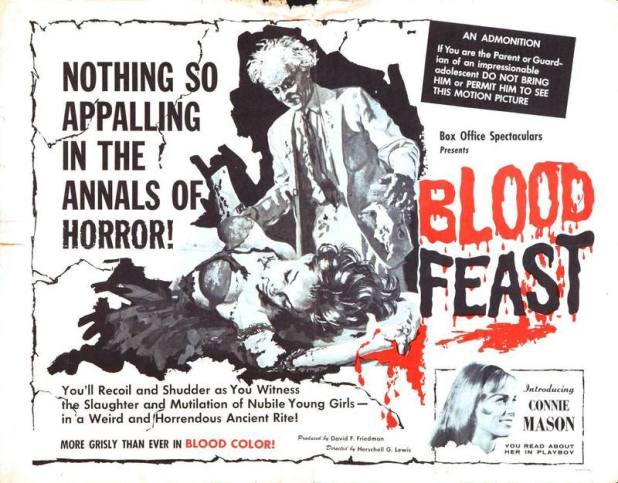
Once nudie movies got boring, Lewis needed another tactic. He found it. Oh wow, did he find it. Gore. Blood everywhere, guts all over the screen and no limits to the depravity that he’d fester on drive-in screens nationwide. It all started with Blood Feast.
This is a pretty simple film: Faud Ramses wants to make sacrifices to the Egyptian goddess Ishtar to resurrect her, so he kills beautiful young socialites when he’s not catering their coming out parties. He’s also wiping out anyone that requests a copy of his book, Ancient Weird Religious Rites.
Shot in Miami, Florida — where life is cheap! — in just four days for just $24,000, Blood Feast used all local ingredients for the gore, except for a sheep’s tongue that came from Tampa Bay. Friedman was a genius at publicity, helping the film succeed, giving out vomit bags at screenings and even applying to get an injunction against his own movie in Sarasota so that it couldn’t be shown.
Lewis and Friedman didn’t stray too far from their sexy roots, bringing in June 1963 Playmate of the Month Connie Mason to star in the film. She would come back for Lewis’ even more astounding Two Thousand Maniacs!
As for Lewis, he left filmmaking in the 1970’s, served some jail time for fraud and then began copywriting his way to even greater success, a second — maybe even third or fourth career — later in life. He wrote and published over twenty books, including The Businessman’s Guide to Advertising and Sales Promotion, Direct Mail Copy That Sells! and The Advertising Age Handbook of Advertising. His books were all over the place at my first agency job and I was shocked to discover that the author of these books — one of the godfathers of direct mail and eblasts — was also the American godfather of gore. Sometimes. life makes sense.
In 2016, Arrow Video released a huge boxset of his films and the man whose work was often in grimy drive-ins and Something Weird video cassettes finally began to be appreciated as an auteur. Funny, as he was the man who said, “I see filmmaking as a business and pity anyone who regards it as an art form.”
You know those movies that they warn you about and tell you that they’ll warp your mind and make you a maniac, how you’ll never be the same again? This is that movie. You should probably watch it right now.
It’s available on Shudder with and without commentary from Joe Bob Briggs.
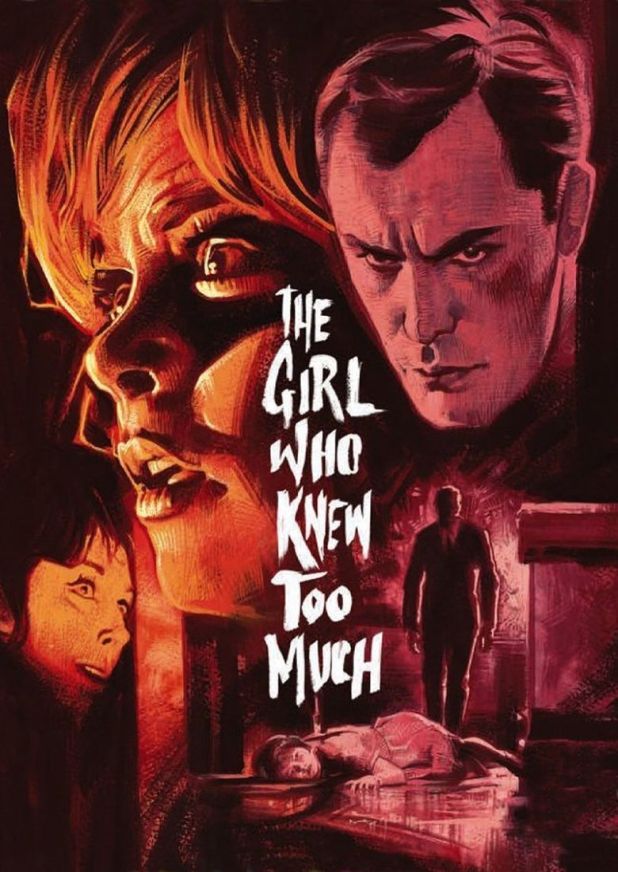
Mario Bava is a genius. This is the root of all giallo before The Bird with the Crystal Plumage and it stars John Saxon as Dr. Marcello Bassi and Leticia Roman as Nora Davis, a young girl who travels to Rome only to witness murder after murder. No one believes her because there’s no corpse. And it only gets worse for her.
Nora was in Rome to help her sickly aunt, who dies the first night that she’s in the city. After walking to a hospital to alert Bazzi, Nora is mugged. When she awakens, she watches a man pull a knife from a woman’s back. The police think she’s an alcoholic and send her to a sanitarium, where she’s rescued by Bazzi.
One of her aunt’s friends, Laura (Valentina Cortese), goes on vacation, allowing Laura to stay in her home. But our detective fiction obsessed heroine can’t resist snooping, finding a series of articles about a serial killer that the press are calling the Alphabet Killer, as he or she kills in alphabetic order. The last murdered person was Laura’s sister, but that was ten years ago. That’s when the phone rings and a voice tells her that “D is for death” and how she will be the next victim.
Nora begins to fall from the doctor and after they tour the city, she gets a phone call that leads them to an empty room with a recorded message telling her to leave the city if she wants to live.
The giallo conventions that we know and love originate here: a foreigner who can’t remember every detail of a murder, now in danger from the killer and unable to be helped by the police, causing them to turn to their own detective skills. Red herrings abound. And the killer seems to be one person, only for their identity to come out just before the end of the film. What is missing are the more psychosexual and high fashion parts of the genre, but don’t worry. They’ll soon show up in force.
The film was the least commercially successful picture of Bava’s career, as giallo films didn’t find favor until Argento’s 1970’s efforts. It was released in the United States by American International Pictures as Evil Eye, part of a double bill with Black Sabbath. This version features a different score and more of an emphasis on comedy.
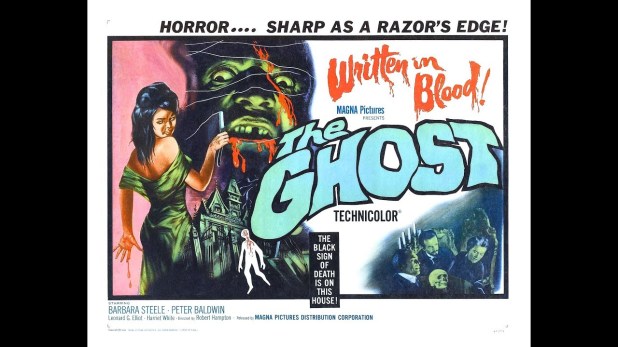
An Italian horror remake of 1955’s Les Diaboliques, I’ll give you one reason to watch this movie: Barbara Steele. Otherwise, it’s a brooding take on murder and gaslighting. And while this is directed by Riccardo Freda, stars Steele and has a character named Dr. Hichcock, it is not the same movie as The Horrible Dr. Hichcock. While this movie was shot right around the same time, it is also not a sequel per se. There are some people who care about these kind of things. Like me.
The ailing Dr. Hichcock and his housekeeper Catherine are engaged in a seance whole his wife Margaret (Steele) is having a love affair with Dr. Livingstone (Peter Baldwin, who in addition to acting in this movie and I Married a Monster from Outer Space, went on to become a director, being behind the camera for TV movies such as the aborted Revenge Against the Nerds TV show pilot, The Harlem Globetrotters on Gilligan’s Island and The Brady Girls Get Married and The Brady Brides series follow-up).
Soon, the doctor is dead and Catherine, Margaret and Livingstone get none of the money. And the key to his safe? Well, he’s literally taken it to the grave. Every time they think they get close or find the money, they’re thwarted. And soon, Catherine the maid is possessed and throws shade on the lovers, convincing Margaret that she should kill the not so good doctor.
The close is where this movie turns the screw. Hichcock has been alive and well the entire time and he murders Catherine, his co-conspirator, and incriminates Margaret. She had been planning suicide and poured a glass of poison, which Hichcock thinks is poison. He begs for the antidote, but she walks away to be arrested for Catherine’s murder. As the movie closes, Hichcock seals himself away inside his castle to die.
Should you watch it? Do you like gothic romantic horror ala Bava but want to see one with none of Bava’s directorial flair? How much do you love Barbara Steele? That should inform your opinion. The good news is that if you have an Amazon Prime membership, you won’t have to pay anything to watch it.
Thanks to Dustin Fallon from Horror and Sons for this entry. Beyond having a great web site, Dustin has really helped us get people to see our site and get writers for this project. It’s really appreciated! Thanks for watching so many movies for this month’s project!
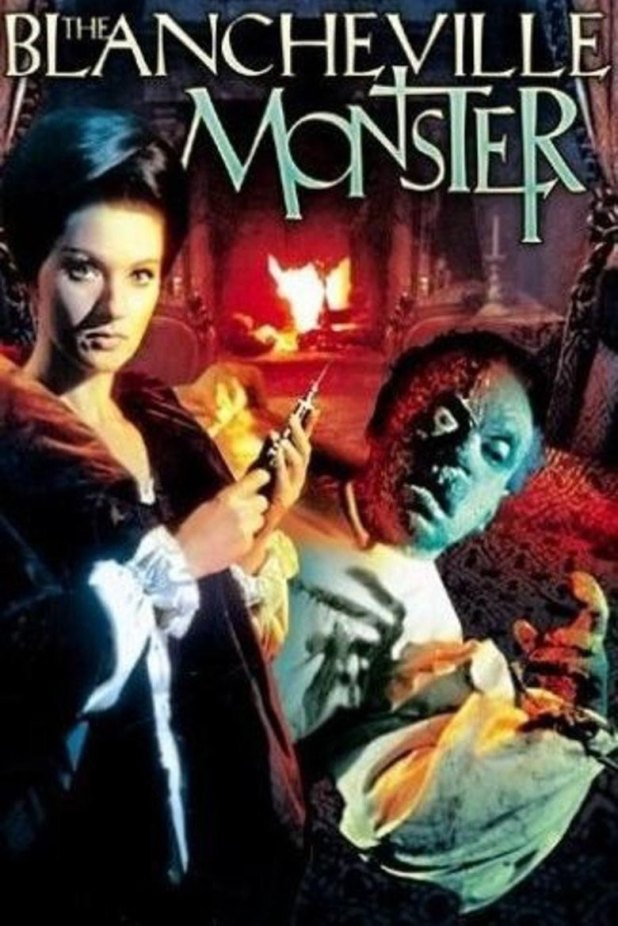
Originally filmed as Terror, the 1963 Spanish/Italian production The Blancheville Monster is a musty, dusty Gothic horror affair that’s just rife with classic horror trappings and features more than just a touch of American soap opera melodrama, although that last part probably wasn’t overly intentional. The film was directed by Italian filmmaker Alberto De Martino, whose later horror credits include 1974’s The Antichrist and 1982’s Blood Link. However, Martino may be best remembered for a film so schlocky that it was featured on an episode of Mystery Science Theater, 1980’s The Pumaman.
Set in Northern France in 1884, the film opens to find young countess Emilie de Blancheville returning home to her family’s ancestral estate after many years away at school. Accompanying her on her trip are her friend, Alice, as well as Alice’s older brother, John. John is secretly in love with Emilie, but it would seem to be a very poorly kept secret. Just as poorly kept of a secret is Alice’s own growing romantic interest in Emilie’s brother, Rodéric, a man that she only knows from hearing Emilie read the letters that he has sent his sister over the years.
Upon arriving at her family’s castle, Emilie is saddened to learn that her father was killed in a fire just a few years prior. Her family’s servants have passed on in her absence as well and have since been replaced. In addition to a new butler, the family has taken on a new housekeeper as well: a much younger, attractive woman named Miss Eleonore. Eleonore is played by one of the better known starlets of 60’s and 70’s (and even later) European cinema, Helga Liné. Liné appeared in numerous horror and genre films, such as Horror Express, Horror Rises From the Tomb, and Nightmare Castle. Liné had a tendency for playing evil or sinister characters, surely due to her ability to be both sensual and emotionless in the same shot.
It doesn’t take long for eerie occurrences to begin around de Blancheville Castle. As they sit for their first meal, a sound much like the howls of an old hound dog or the cries of an injured man can be heard in the distance. Rodéric explains that the sound is indeed just that of an old dog, carried by the wind from one of the surrounding “peasant villages”.
At almost immediately the same time, the new family doctor arrives at the castle. He is introduced by Rodéric as Dr. LaRouche , the tension instantaneous between the two men. Rodéric excuses himself to escort his house guests to their rooms, but essentially warns the doctor that he will return. This leaves LaRouche alone with Eleonore, filling the air with a different sort of tension. There is some vague allusions to double-crosses and other “devious activities” before LaRouche hands Eleonore what appears to be three small vials.
As with any good Gothic horror, a storm rages through the night. Alice is woken by thunder, and begins to wander the darkened halls and corridors of the old stone structure. She hears a gasping sound coming from a stairwell and ascends her way up to a shuttered door. Throwing the door wide, she finds Eleonore standing over the prone body of a severely burned man. A syringe filled with a dark, viscous fluid is clutched in her hand.
Rodéric is forced to reveal that the burned man is in fact he and Emilie’s father, the Count de Blancheville. While the elder de Blancheville had indeed survived his injuries, he had also been driven bat-shit crazy. The syringe that Eleonore had intended to use on him was filled with a sedative intended to help abate the old man’s ravings and rages. Without the injection, the Count has broken free from his chamber and is roaming the castle grounds at large.
Making this family reunion more memorable is the fact that dear ol’ Dad has become obsessed with a curse allegedly placed on his family, one that will befall them should a female descendant reach her 21st birthday. In order to prevent this prophecy from fulfilling, the Count must now murder his own daughter before her next birthday, just mere days away.
The Count de Blancheville appears throughout the castle, usually at his Emilie’s bedside. Almost hypnotically, he frequently makes her rise from her slumber and sleepwalk to the family tomb. There, he systematically attempts to shatter his daughter’s psyche, almost willing her into accepting her impending death. Why he never chooses to actually kill her while he has her in this defenseless state may be the film’s biggest mystery.
The passive-aggressive behavior from our aspiring practitioner of filicide leaves the film free to muddle up the remainder of its runtime with soap opera style love triangles and rampant melodrama, filling the screen with more “red herrings” than a bag of Swedish Fish! Everyone is in love with everyone else, while jilting another all in one breath. You’d be forgiven for expecting Eric Braeden to pop up as “Victor”, but that would be one too many “shady fuckers” for a film to handle.
Buried somewhere in all of this mess is the overlooked fact that the Count de Blancheville is apparently a ninja. Not only can the Count slink from room to room throughout the castle undetected, hiding in the old castle’s multitude of shadowed corners and nooks, but he (or she?) can also launch large blocks at his prey from the castle walls while theoretically still in another room at the time. “Spoiler alert”, or something.
The entire thing culminates in one giant pretzel of double-crosses and fake outs. Characters die only to later return. Ya know, kinda like when “Marlena” supposedly died in that plane crash on Days of Our Lives, only to be “revived” from a coma later on. At least no one in The Blancheville Monster gets possessed by a demon.
Most casual horror fans will probably find The Blancheville Monster to be an insanely boring film… and they’re not entirely wrong. It’s filled with tiresome exposition and moves at a plodding pace. Even ardent Gothic horror fans may be hard-pressed to find much of exception, excluding the beautiful, yet foreboding, architecture of the old castle itself. And despite having Edgar Allan Poe’s name attached to its original title, the film has little to nothing to do with his stories. Skip this one and go watch Barbara Steele in The Ghost, which is conveniently also included in this set.
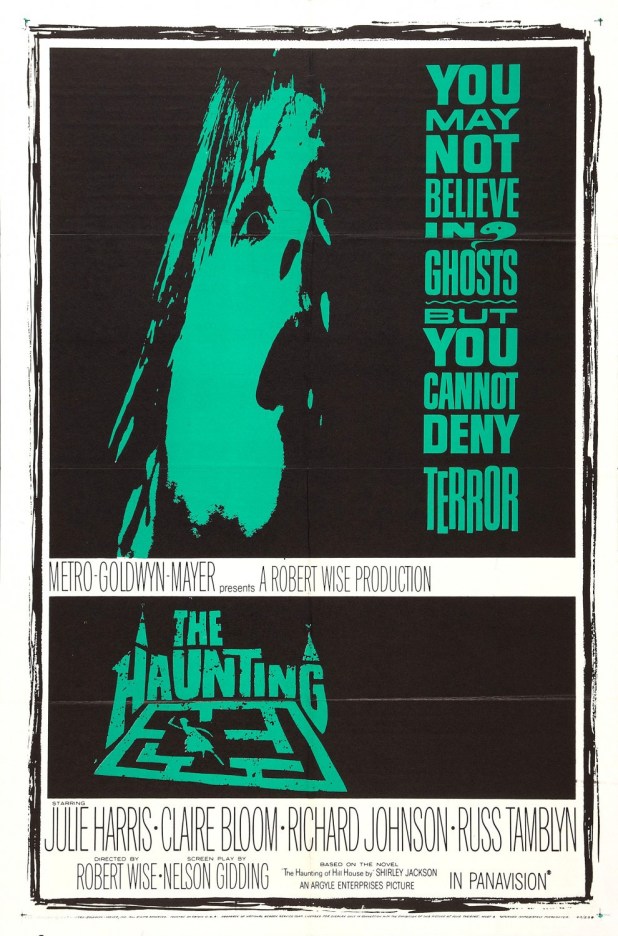
Long before Netflix was even a small stream, Shirley Jackson wrote The Haunting of HillHouse. Jackson decided to write about a haunted house after studying nineteenth-century ghost researchers from the Society for Psychic Research, who she believed had not found a true haunted house, but instead, she said they were “several earnest, I believe misguided, certainly determined people, with their differing motivations and background.”
Directed by Robert Wise (The Sound of Music, West Side Story and the editor of Citizen Kane), the real star of the movie is the house itself. Elliot Scott (who also art directed Who Framed Roger Rabbit, Indiana Jones and the Temple of Doom and Labyrinth) designed the brightly lit set, which had no dark corners or places to hide, yet were made to be claustrophobic with ceilings in each set (traditionally, film sets have no ceilings). Wise further added to the effect by using an untested 30mm anamorphic wide-angle Panavision lens that created distortions that were further pushed with low angle shots and strange tracking shots. Upon release, the film was seen as messy and incoherent, yet in the years that followed, it’s been celebrated as one of cinema’s best horror films.
Hill House’s exteriors are actually Ettington Park, a hotel that was once called “the most important and impressive High Victorian house in the county.” Supposedly, Wise met a society of British haunted house devotees, who pointed him to the house.
Starring five-time Tony winner Julie Harris as Eleanor, Claire Bloom CBE as Theodora, Russ Tamblyn (Twin Peaks and Dr. Montague in the new version of The Haunting of Hill House) as Luke Sanderson and Richard Johnson (Dr. Menard from Zombi 2!) as Doctor Markaway, the film begins with Markaway explaining the history of Hill House. It was made by Hugh Crain for his wife, but she died in a carriage crash as she approached the house for the first time. His second wife died falling down the stairs. And his daughter Abigail lived as a recluse there her entire life, giving it to her nurse upon her death. And that nurse? She hung herself. Now, it belongs to Mrs. Sanderson, who allows Markaway to study the house as long as he takes Luke with him.
Theodora is a psychic (also one of the first expressly lesbian characters in cinema) and Eleanor is continually depressed (as was Harris throughout shooting), who saw ghosts as a child and had to care for her mother until her recent death. Despite everyone else’s terror when the house begins to emit loud noises and knocks, Eleanor begins to fall in love with it.
Soon, Markway’s wife Grace (Lois Maxwell, Moneypenny from the James Bond series of films) arrives, demands a bed at the center of the haunting and begins to bedevil Eleanor, who is losing herself to either insanity, the house or perhaps both.
Here’s a trivia fact that probably no one but me will care about — Mr. Dudley is played by Valentine Dyall, who is the voice of the mummy in the absolutely unhinged classic, Bizarre/Secrets of Sex. Mrs. Dudley is played by Rosalie Crutchley from Whoever Slew Auntie Roo? and Amicus’ And Now the Screaming Starts!
My wife would like everyone to know that Theodora has the best clothes ever, because they were designed by Mary Quant, who claimed to have designed the miniskirt and hotpants.
Dedicated to one of horror cinema’s originators, Val Lewton, cinematic masters such as Steven Spielberg and Martin Scorsese refer to this as their favorite scary movie. It’s a bit talky, but it’s also packed with moments of unsettling eerieness, particularly as Eleanor’s voice narrates the sinister ending.


 B&S About Movies
You must be logged in to post a comment.