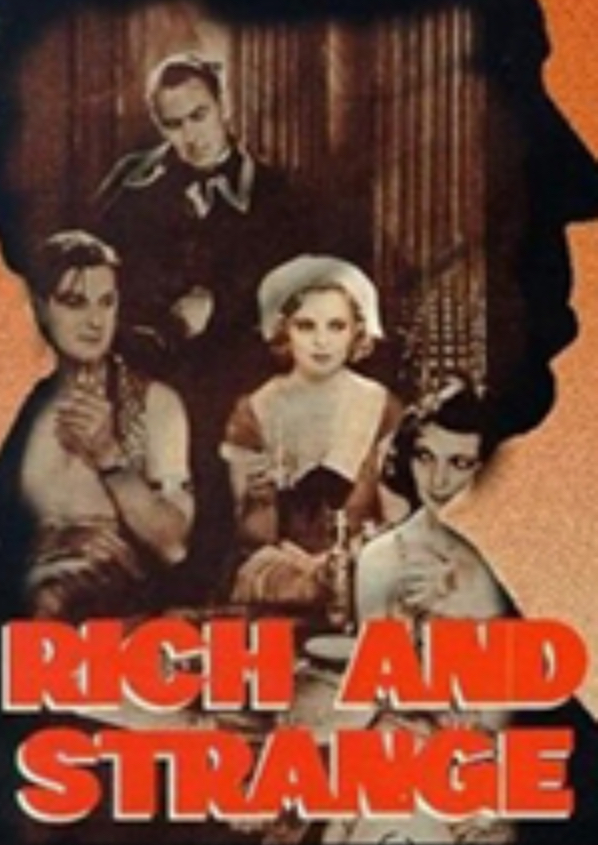
This is what Hitchcock’s Rich and Strange was released as in the U.S. His title is better, because it comes from The Tempest: “Full fathom five thy father lies, / Of his bones are coral made, / Those are pearls that were his eyes: / Nothing of him that doth fade, / But doth suffer a sea-change / Into something rich and strange”
Fred and Emily Hill (Henry Kendall and Joan Barry) are on a cruise but seem to be falling in love with other people. Despite that, Emily still wants to take care of Fred, at least until he gives all their money to his new love, stranding them in Singapore and nearly sinking them until they’re saved by some Chinese folks who eat a cat. Yes, really. A 1931 movie is like that sometimes. Hitchcock even said it was one of his favorite scenes.
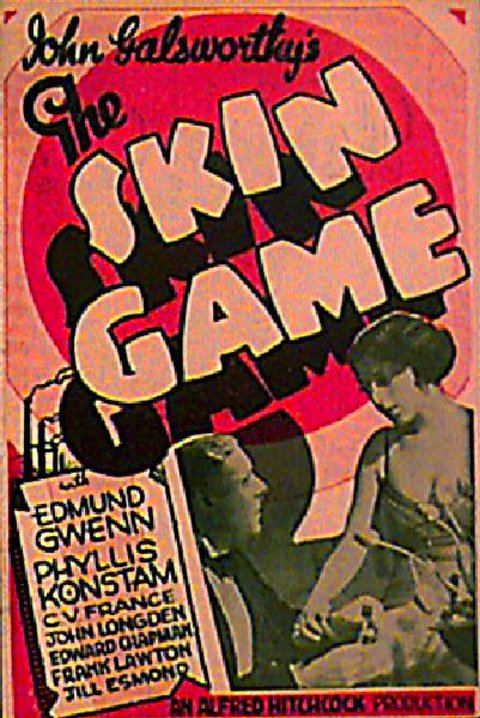
Based on the play by John Galsworthy, this early Hitchcock film explores themes of social class conflict and industrialization, focusing on the feud between the Hillcrist (C.V. France and Helen Haye play the elder Mr. and Mrs. Hillcrist, and Jill Esmond appears as their daughter, Jill) and the Hornblower (Edmund Gwenn, John Longden, and Frank Lawton) families. Despite being a member of the working class, Mr. Hornblower plays the skin game: buying up land under false pretenses, claiming he’s allowing tenant farmers to remain, then booting them out, and then constructing factories. The Hillcrists learn of this and regret giving him land, as he plans to transform their gorgeous views into smoke and industry.
The Hillcrists respond to this by muckraking up some gossip about the sordid past of Hornblower’s now pregnant daughter-in-law Chloe (Phyllis Konstam), wife of Charles, who learns the secret — she was a sex worker — before Chloe can explain, and she drowns herself, highlighting the tragic consequences of societal judgment and personal secrets.
When Truffaut spoke to him about this movie, Hitchcock said, “I didn’t make it by choice, and there isn’t much to be said about it. We shot with four cameras and a single soundtrack because we couldn’t cut sound in those days.” This reflects the stage play origins and the technical limitations of early filmmaking, which contrast with Hitchcock’s later innovative style.
EDITOR’S NOTE: The Spider was on Chiller Theater on Saturday, October 3, 1964 at 1:00 a.m.
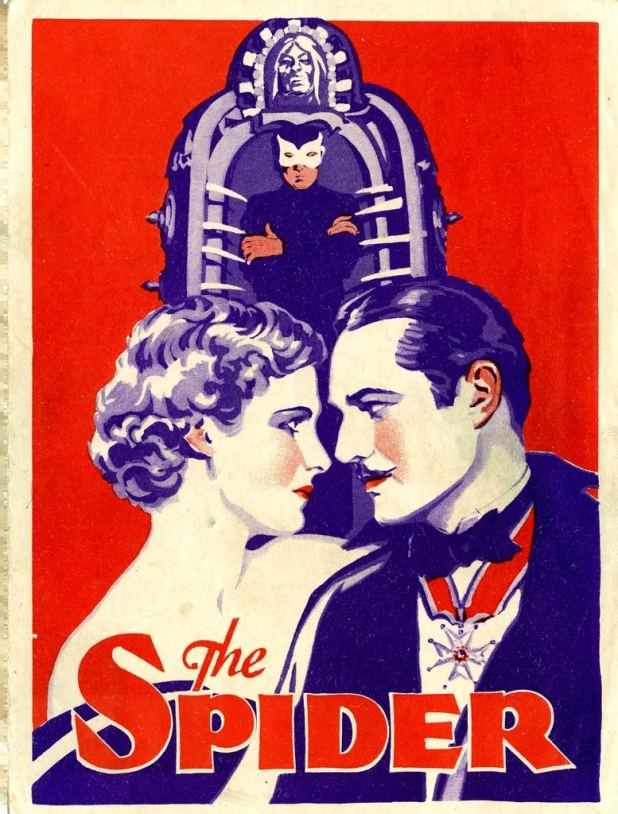
Chatrand the Great (Edmund Loew) asks his fans on a radio show — how do you do magic on a radio show? — that he is looking for the true identity of his assistant Alexander (Howard Phillips), who lost his memory two years ago after an accident. Beverly Lane (Lois Moran) believes that he’s her brother and answers this question. But then there’s a murder — of Alexander’s abusive uncle John Carrington (Earl Foxe) — during their act and Chatrand has to get him out of trouble.
The sets and the magic are pretty great, as they were created by William Cameron Menzies, who co-directed with Kenneth MacKenna. This has mesmerism, mind reading and a seance and hey — it’s only 59 minutes. If it all feels like it’s happening in real time, this was based on a stage play.
It was remade in 1945 as a very different movie yet still based on the same play.
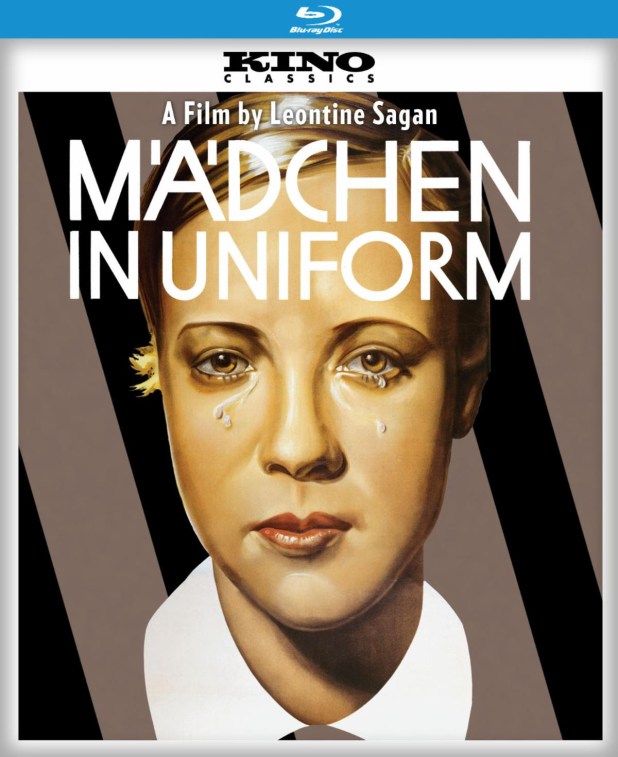
As a new student at an all-girls boarding school, Manuela has started to fall in love with her teacher, Fräulein von Bernburg. Manuela is played by Hertha Thiele, whose career, according to German film historians Heide Schlüpmann and Karola Gramman , was shaped by the fact that “her acting success may well have been based upon her image which met the homoerotic desires of both men and women, though perhaps more those of women.”
What’s even more astounding is that this tale of illicit first lesbian love was made in Germany during the Third Reich. It’s also an incredibly anti-fascist film made right under their noses.
Screenwriter Christa Winsloe based this movie on her life. Directly on her life, that is. Theile shared, “The whole of Mädchen in Uniform was set in the Empress Augusta boarding school, where Winsloe was educated. Actually there really was a Manuela, who remained lame all of her life after she threw herself down the stairs. She came to the premiere of the film. I saw her from a distance, and at the time Winsloe told me “The experience is one which I had to write from my heart.” Winsloe was a lesbian.”
The movie made its way around the world — Japan, the United States (where it was first banned, then released in a censored version after Eleanor Roosevelt championed it), England and France — before it was banned in Germany until a pro-Nazi ending was added. Finally, the film was just as seen as too decadent and banned again.
You can get this new release — as well as Victor, Victoria which we’ll get to tomorrow — from Kino Lorber. The blu ray comes compete with commentary by film historian Jenni Olson.
 B&S About Movies