A CCC Filmkunst (West Germany), C.E.I. Incom (Italy) and Critérion Film (France) co-production — a UN of a movie — this is the last film ever directed by Fritz Lang, bringing back his villain of all villains, Dr. Mabuse. Lang had made the first two movies about this character, Dr. Mabuse the Gambler and The Testament of Dr. Mabuse, in 1922 and 1933.
It’s based on Mr. Tot Buys A Thousand Eyes by Jan Fethke, which was written in Esperanto. I love this Wikipedia description, which said it was a modern take on Dr. Mabuse that combined “German Edgar Wallace film series, spy fiction and Big Brother surveillance with the nihilism of the Mabuse world.”
Dr. Mabuse is dead. But they always say that. And if he is, who kills reporters and anyone who gets close to the truth? Who was in the vision of the murder that blind telepath Peter Cornelius (Wolfgang Preiss) saw? Is the doctor inside the Luxor Hotel, a place wired by the Third Reich to spy on its guests? What’s the deal with clubfoot wifebeater Roberto Menil (Reinhard Kolldehoff), who has abused his wife Marion (Dawn Addams) to a suicide jump and into the arms of American Henry Travers (Peter van Eyck)? What’s the story with Hieronymus B. Mistelzweig (Werner Peters)? Is that Jess Franco’s — Jess would later make The Vengeance of Doctor Mabuse — favorite bad guy, Howard Vernon? How about how in America, the posters claimed that this starred Gert Frobe, Mr. Goldfinger?
Despite Mabuse being surrounded by technology, it’s suggested that his power is near-supernatural. I’m all for that. I also kind of love that Mabuse’s plan is never explained. Why has he brought all of these people together? What’s he trying to do? It doesn’t matter. He’s just evil. Sometimes, that’s all a villain requires.
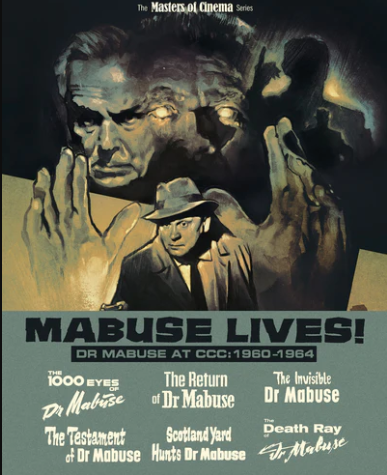
The Eureka box set Mabuse Lives! has this movie, along with an introduction by genre film expert and Video Watchdog founder Tim Lucas, a new 1080p presentation from a 2K restoration of the original film elements undertaken by CCC, a commentary track by film historian and author David Kalat, and an alternate ending. You can get it from MVD.
 B&S About Movies
You must be logged in to post a comment.