EDITOR’S NOTE: This originally appeared in Drive-In Asylum #25. Get it now on Etsy.
Renato Polselli isn’t the kind of director mentioned in the same breath as other famous Italian genre directors like Argento or Fulci. Or Martino, Margheriti or Deodato. Let’s face it. He barely gets mentioned at all.
Yet we live in a golden age of home media, a time when even films that were unavailable during the VHS boom are now available for all to own. Several Polselli films – Delirium (Vinegar Syndrome), Black Magic Rites (Indicator), The Vampire and the Ballerina (Shout! Factory) and The Monster of the Opera (Severin’s Danza Macabra V1: The Italian Gothic Collection) have been released just in the past few months.
While I don’t expect a critical re-evaluation, it’s exciting to watch Polselli’s work because it allows us to crawl down another cobwebbed corner or two of Italian films that otherwise don’t have that many footprints in the dust.
Polselli began directing films in the early 1950s, starting with Delitto al luna park, a romantic movie with some murder in it. But for readers of this tome, where Polselli becomes important is in 1960 with his effort L’amante del vampiro (The Vampire and the Ballerina). That’s because this movie is one of the first times where horror and eroticism worked in concert within an Italian film. That potent blend would be a major part of so many films that would gain audiences worldwide.
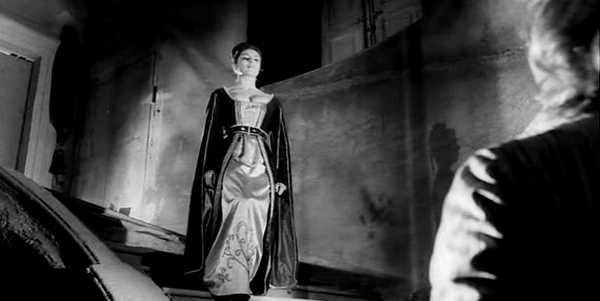
Written by Giuseppe Pellegrini and Ernesto Gastaldi (who admitted that the original script was a bit of a dog), the inspiration for this movie was Hammer’s Dracula, which was a big success in Italian theaters. And again, if you know anything of the Italian film industry, they believe in imitation as the best form of flattery.
Shot in the castle of Artena, a place where Polselli claimed real skeletons were used. It’s ridiculous and I say that in the kindest of ways, as the ballerinas are practicing their new act in a drafty castle when two of them go into the woods with their dates and learn that an undead countess is the next door neighbor.

The suggested eroticism of this film was amped up in Polselli’s quasi-sequel, The Monster of the Opera. A troubled production started in 1961 and was not released until three years later, it was started as Il vampiro dell’opera (The Vampire of the Opera) and once fortunes changed against vampires, the name was slightly altered. Along with Piero Regnoli’s L’ultima preda del vampire (The Playgirls and the Vampire), even more eroticism was added to the bloodsucking. Of course, Gastaldi also wrote that movie and this one too, even if he demurred that they were movies similar to others he wrote, only with vampires.
Yet others ran while Polselli walked, giving Italy a tradition of sexed-up horror. And while the director followed the trends of the 60s – he wrote the giallo Psychout for Murder and the Western Django Kills Softly – his true excesses were to follow.
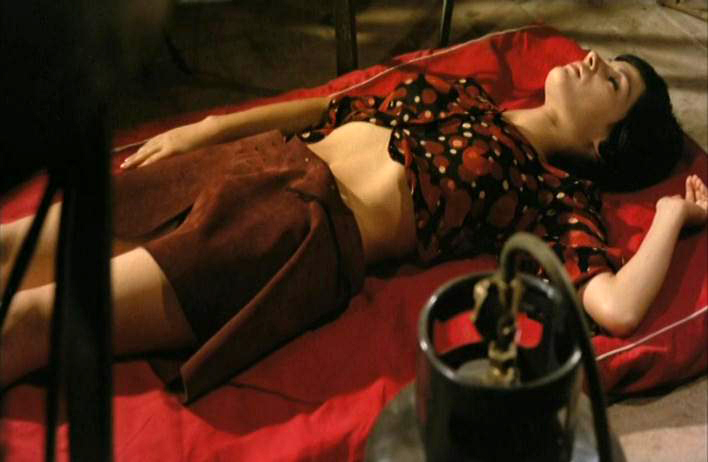
Delirio Caldo – released in America as Delrium and featuring a Vietnam vet plot that was pretty ahead of its time for 1972 – stars one-time Mr. Universe and the former husband of Jayne Mansfield Mickey Hargitay as Dr. Herbert Lyutak, a man who is a psychological consultant to the police and the serial killer they’ve been chasing. Of course, he is that killer, and he’s clued in his wife Marcia in on his secret, as she provides him with alibis and covers up for him. She kind of has to, as Herbert can only perform in the bedroom when he’s beating her senseless or murdering other women.
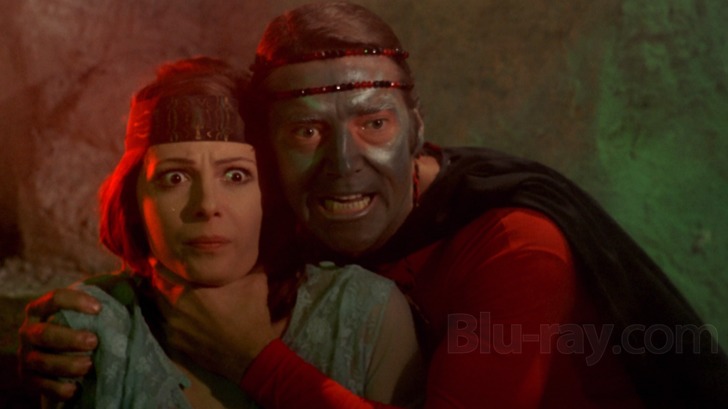
You know when an animal tastes blood and can never be domesticated again? That’s how Polselli feels from here on out, as his follow-ups are even more sexually explicit and filled with the supernatural and the occult. Riti, magie nere e segrete orge nel Trecento… (‘Rites, black magic and secret orgies in the fourteenth century…) was released as Black Magic Rites, The Ghastly Orgies of Count Dracula and The Reincarnation of Isabel in other countries and I can’t even imagine what audiences felt when they saw it.
It was banned by Italian censors – yes, there is such a thing – who said that it “consists of a rambling series of sadistic sequences, meant to urge, through extreme cruelty mixed with degenerate eroticism, the lowest sexual instincts.”
Hundreds of years ago, Isabella (Rita Calderoni) was tortured and burned for being a witch as her lover swore revenge. Today, Jack Nelson (Hargitay) and his stepdaughter Laureen (also Calderoni) are celebrating her engagement in a castle without knowing that the cellar is host to the black magic rites of the title. And if they get seven sets of eyes and the blood of virgins, they can bring back Isabella.
This is the kind of movie that quickly moves to sex scenes or murder or Satanic rituals every time it gets the least bit dull. Polselli would follow it with outright adult fare such as Oscenità and Rivelazioni di uno psichiatra sul mondo perverso del sesso, often using the name Ralph Brown.
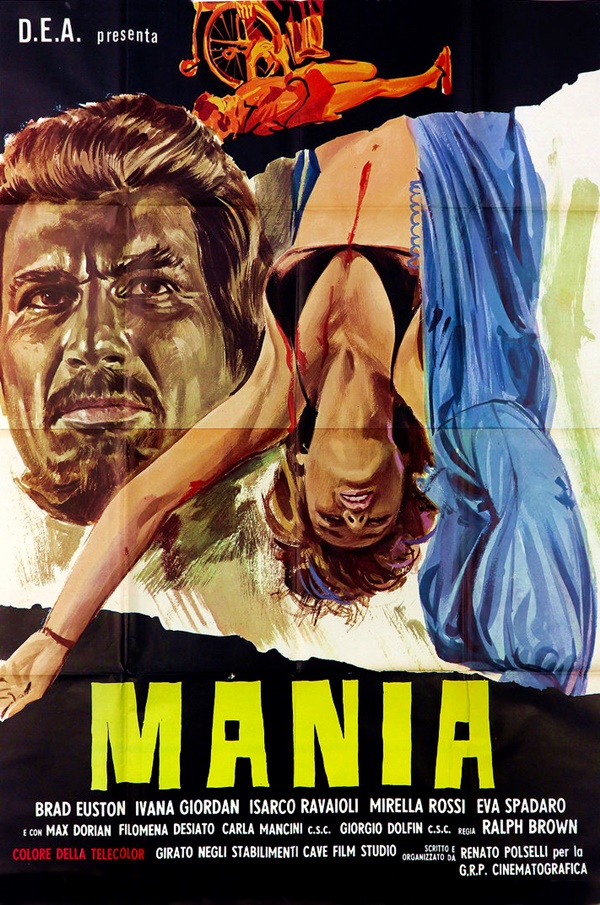
However, it’s Mania that is the strangest of the strange films that this director made. Barely released in 1974, Mania was once a lost giallo until a 35mm print surfaced in 2007 at the Cineteca Nazionale film archive in Rome, which keeps every movie submitted to censors. Some kind soul uploaded it to YouTube and what emerged is pure strange magic.
Beyond playing twin brother mad scientists, Brad Euston paid for the movie to be made with the understanding that he be made the main character. It was also filmed with graphic sex scenes that somehow aren’t in the surviving print but were published when the fumetti – photo comic – of the movie was created in the 70s.
It’s got snake attacks, wheelchair-bound lovemaking, burned-up twin brothers, a lead (Eva Spadaro) who is nearly the villain, multiple maids who yearn to make love to just about everyone and a BDSM machine in the lab. As if that doesn’t whet your Italian low-class appetite, the assistant director was Claudio Fragasso.
Renato Polselli may not be the kind of director who is going to get an extensive box set, but as time goes on, more and more people are finding and appreciating just how strange his films are. They’re also pretty high quality – the initial two vampire movies look great – and if anything, they have so many unexpected moments that you can’t help but be entertained.
 B&S About Movies
Pingback: What’s Up in the Neighborhood, April 13 2024 – Chuck The Writer