Slaughter Day may be thirty years old but it feels fresher and more original than any movie that’s come out in 2022. I had the amazing opportunity to chat with its creators, Brent and Blake Cousins, and discover they put their lives — and the lives of their friends — on the line to create their own blend of zombies, kung fu and great smelling gore, as well as how it rose from the grave to make its way to blu ray from Visual Vengeance.
B&S About Movies: So how did you get started making movies?
Brent Cousins: We had this new technology and we realized that we can actually make something out of a consumer camera and yeah, it shot like a potato but we wondered, “What’s the best thing to start experimenting with?” The horror genre, like all these other big directors started in.
So if we make a horror movie, we need a bad guy. We don’t have really much material in our neck of the woods here in Hawaii and as far as studios are concerned, anybody involved in any kind of moviemaking does not exist on the islands. We had to figure it out ourselves.
The idea was this bad guy was named John Jones and to figure out who he was, we kind of went to our deepest recesses because we were pretty traumatized with movies like Halloween. But we always wondered, “Why don’t they just cut this guy into pieces so he never comes back and be done with it?”
John Jones could still reattach and reanimate and be the ultimate bad guy but in our backyard.
And that’s how we started making our films.

B&S: So when was this?
Brent: I think we started in 1986. We were about 16 years old and started bringing in our classmates or friends. We had a lot of time on our hands and it’s a good way to build friendships by saying, “Hey guys, we’re making this movie. Come down here to the big island and let’s have fun with all these abandoned buildings.”
And when we had the first video done and showed it, that was it. Our friends just couldn’t get enough of it.
B&S: So how did you come up with the effects? Were you reading the Dick Smith and Tom Savini books?
Blake Cousins: We never heard of those books, you know? We just worked with magic when we were kids and performed these magic shows. Parents, friends, whoever would come over for dinner, we’d create these illusions.
We grew up on the beach so we had access to digging holes and figured out how to bury people up to their heads and create this illusion of beheading. We already knew how to do magic tricks, but now we had to figure out how to show the impact, separation and blood splatter all at the same time, and do it all in one camera shot. It was a technical challenge but it just needed a little bit of ingenuity.
We had a lot of gore wrapped around the neck and torso but we’d heard that some movies used real animal guts and we didn’t want to attract flies. It’s going to smell disgusting. So is ketchup. But we had this abandoned house and everything was falling apart and we shredded this couch, shredded the foam and mixed in our concoction of Kool-Aid powder, paint and water. We figured out a non-toxic way of making gory movies.
B&S: That’s way better than how I learned, Karo food syrup, peanut butter and red food coloring.
Brent: When someone gets punched in our movies, we liked to have blood spray out of their mouths. We had enough strawberry Kool-Aid and everyone was looking forward to getting punched in the mouth because it tasted so good.
It was crazy because you look and there’s all this gore but it smells good.
Blake: The gore smells like strawberries.
B&S: You’re ahead of the Texas guys like Tobe Hooper and Bret McCormick who just used guts.
Blake: Strawberry Kool-Aid is the way to go.
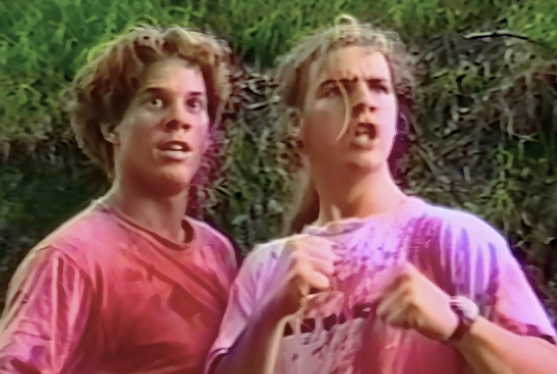
B&S: I got the sense watching Slaughter Day that you got different influences culturally on the islands than we got on the mainland.
Brent: We grew up in a sugar plantation in a community that started in the 1870s. A lot of traditions exist here because a lot of immigrants came to the plantations to work. We grew up around a lot of people from the Philippines, Japan, Portugal and the Hawaiian culture.
Every Friday night there will be this thing called Black Belt Theater, so we’d stay up late at night and look forward to it so much. We’d just stay up and watch these Chinese kung fu movies.
Blake: These Chinese directors always had blood coming out of people’s mouths during the action sequences!
Brent: We were definitely influenced by those films, like Master Killer. That was one of the best kung fu movies out there and it was such a big influence because everyone in it had superpowers, they could fly 12 to 15 feet up trees and do these acrobatics. So we tried to throw that in there.
If you see somebody get hit, they’re getting bounced by this huge industrial inner tube. It’s subtle, but it has some extra effort in that it makes things like when John Jones throws people look so much better because it’s all in camera and it’s real. You’re seeing it in real time in front of the camera with no strings attached — someone is getting thrown five feet into the air or slammed against a wall!
A lot of it comes from Black Belt Theater. And in Hawaii, growing up there we were minorities so we had a lot of fights in public school. We brought that to the table.
B&S: It feels like you had everyone putting their life on the line.
Blake: We just watched it for the first time in probably 20 years the other night. And we were looking at how much we abused ourselves! There are so many times where we’re landing on the ground and not cushions. Throwing ourselves up against walls, falling off things, fighting on a moving flatbed truck!
Brent: And I was hanging off the edge of the truck, getting those shots and that was pretty wild.
Blake: We’re lucky no one got hurt.
B&S: Were your parents upset that you used the family camera?
Brent: Not at all! They bought the camera exclusively for us to start to experiment. Actually, we had to go through a couple! We destroyed one during the first couple of days of shooting! We were really happy that we had this super VHS technology. So we’re going with super VHS and we have this fisheye on it because we wanted to kind of emulate Robert Rodriguez, so we’re using that and following John Jones on this tracking shot and boom, the camera gets destroyed in five minutes. And then on another shot, I wasn’t paying attention and almost dropped off the rocks and that would have been two cameras in one day.
B&S: I was really astounded by the camera placement. It’s well beyond what someone just learning how to make a movie should be able to do. Who were your influences?
Brent: Sam Raimi, Rodriguez, John Carpenter. hat’s what we wanted. We didn’t want to be normal with any of our shots.
Blake: I grew up reading comic books and I’m an artist myself, so I was for our camera to frame things the same way as comic book panels.
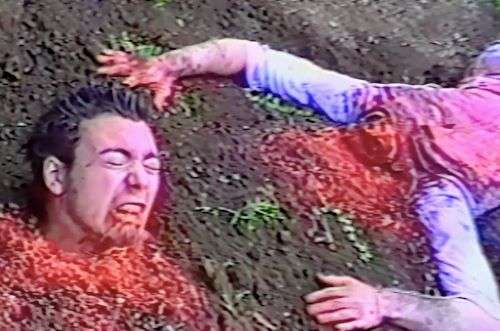
B&S: Like in the truck fighting scene, the camera is all the way to the right and under the truck and it just creates such a dynamic framing.
Brent: I think a thing that is amazing to me today is that we had to make our own camera cranes and Dolly systems because they weren’t really available on the consumer market. The internet didn’t exist. So we had to build a tracking system and dollies, but there was one, in particular, we created for the shot you’re referencing. We had to develop the camera operation where we had Styrofoam sliders on poles and then duct tape the camera to this jury-rigged system.
Blake: We’d each be holding a side of the pole and could move and slide it and get those shots with it.
Brent: We’d talk back and forth as we did it and create this dynamic look, but to get it right it was kind of a little like ballet dancing! Like now, there’s the gimbal stabilizer but everything is preset in cameras. We were doing those things with our own tools and SVHS camera.
B&S: When you watch an older film, you can tell their budget by the aerial shots and today, everyone has one.
Blake: Everyone has a drone shot now so you kind of avoid them!
B&S: What else inspired you?
Brent: Big Trouble In Little China was big.
Blake: We won a John Carpenter award! This magazine called Video Review had a movie contest that we were unaware of and one of teachers sent Slaughter Day. And three months after he sent it, we won this contest. That was also inspiring and gave us more reason to go on, two kids in middle school in Hawaii somehow won a contest in a magazine published in New York.
B&S: You mentioned that this was all pre-internet, too.
Brent: It’s easier to make films today. But with everything being so accessible, people aren’t trying as hard as we did. There might be a missing element of filmmaking today, some lazy filmmaking because we did so much without all this technology thirty years ago. Then again, with the budget, it’s hard to find dedicated actors like we did.
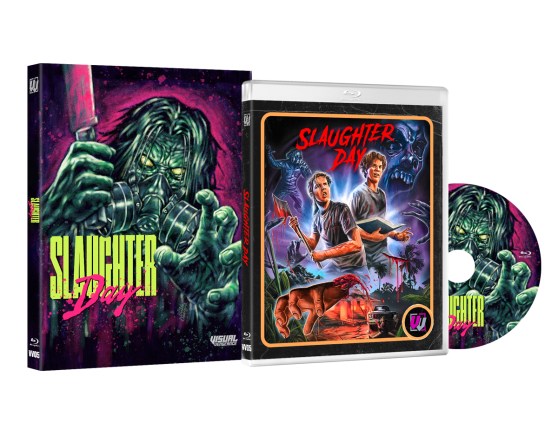
B&S: How did the movie get to Visual Vengeance?
Blake: We considered that it was never going to be seen again. We had it on our master tape and it was collecting mildew for 28 years and then get this call from Rob from Wild Eye. He did his research!
Brent: We had no idea what Visual Vengeance was going to do with the packaging. They said they needed us to maybe do commentary, so we shared some history, but man, they went crazy with the extras. A poster, a sticker, the cover art looks so good…
Blake: It’s even playing at Nitehawk Cinema and we’re going to do a live Zoom to take questions from the audience.
B&S: I love everything Visual Vengeance has released because these movies are like the last of regional cinema. People like you guys, so far away from the mainland and filled with energy and influences unlike anywhere else and you made an artistic vision that is unique.
Brent: Watching it again and yeah, the movie is all action sequences but at the core, I think there’s a story in there. We were impressed looking back and surprised.
Blake: How did 58 minutes of running time somehow add up and we get this whole story? We need to go take notes on the original and have that same energy if we ever do a reboot.
Brent: Let’s not overthink it. Obviously, step it up and even though we’ve come a long way since then, we’ve still never put down the camera and we’re editing over 31 years later. Our techniques now are at another level.
Maybe it’s like how you go from Evil Dead to Evil Dead 2. You repurpose the first act in the first few minutes and then keep it going.
It’s just like man, I felt engaged watching since 20 years ago seen it since the last time I saw it. There is something kind of special to this movie.
Blake: And all the angles and the editing that was involved. And there’s another edit there that was put into this sequence and shoot I don’t even remember!
Also: I’ve already seen some people say that they can hear us talking! (laughs) When we sent the audio, we had a mono track that didn’t have us giving direction, but they went with the mixed one and well, you can hear us! “Go! Go!”
I think it’s kind of interesting because you kind of feel to get into the director’s head and the shot that we’re trying to get.
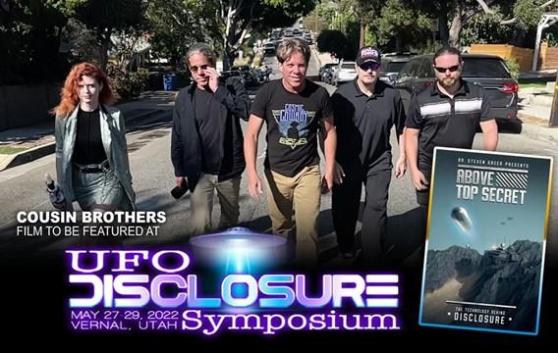
B&S: That’s what I really liked about it. I thought that it was you know, that’s just part of the charm of it.
You guys have made a name for yourself in documentaries as well.
Brent: Over the past 14 years, our YouTube channel Third Phase of the Moon has gotten around 800,000 subscribers and millions of views. And what we do is we speak to actual UFO witnesses and let them share their videos and their stories.
Blake: So like, you’re in Pittsburgh. You film a UFO and say, “Nobody is watching this on my YouTube channel.” We’ll share it, if it’s good, and give you credit. What we do is we get their permissions and we share, discuss, enhance and analyze their UFO videos. We’re pretty much the number one channel and we’ve also done these documentaries and we have access to top UFOlogists, politicians, experts, astronauts, you name it.
We have one video on Amazon Prime, Countdown to Disclosure: The Secret Technology Behind the Space Force and Above Top Secret and these are the biggest documentaries on there and iTunes. Not just in the genre, but on both services.
Brent: It’s pretty amazing that two guys in Hawaii will go shoot a documentary for seven days, edit it for ten days and we’re beating Academy Award-winning documentaries. Our budget is small but the budget is high! We just wrapped up a new one, UFO Endgame Disclosure in Washington, DC a few weeks ago. It’s been a really good ride.
Blake: YouTube is incredible too and given us such an opportunity. We want to go down in history as being the people behind disclosure, whether that’s finding out that there’s nothing or that there is something extraterrestrial in nature. That’s our mission.
We prove disclosure, we got our feet wet with fake Kool-Aid blood and now maybe it’s the time to reboot Slaughter Day.
 B&S About Movies
hi. Trying to reach out to Blake Cusin’s, is he still doing UFO and Alien encounter documentaries
let me know, my email is
LEScontractorss@gmail.com
LikeLike