A dozen years in the making, Before the End’s cryptic tagline sums up the three hours plus docu-mystery film: “One Man. Countless Myths. And in between lies the truth.”
It was created by Jeff Finn, who has been working for decades not just to tell the story that the world knows of Jim Morrison and the Doors but striving to break “the decades-long hermetic seal on the traumatic formative years that forged a brief hellacious life.” Finn labored to explain his theory of “Morrison the nonconformist as neurodivergent” and show the difference between the rock god we put on our walls as the Lizard King and James Douglas Morrison, an introverted outsider.
He’s not in this alone. Finn conducted hundreds of interviews over the decades, including UCLA classmate Philip Oleno and Richard Blackburn, UCLA roommate Ron Cohen, UCLA professor Dick Adams, Florida State University roommates Bryan Gates and John McQueen, FSU professor Ralph Turner, Alameda High School swim coach Ash Jones, childhood friend Jeff Morehouse, Paris-era acquaintances Philippe Dalecky and Gilles Yepremian and Morrison’s cousins, Ellen Edwards and David Backer. He also spoke to past lovers such as Anne Moore, Gayle Enochs, Judy Huddleston and Suzanne Roady-Ross; friends Mirandi Babitz and Salli Stevenson; and industry people like Elektra Records founder Jac Holzman, The Doors booking agent Todd Schiffman, roadie Gareth Blyth, screenwriter Randall Jahnson, rock critics Ellen Sander and Richard Meltzer, as well as conducting exclusive interviews with Jim’s brother Andy Morrison, Morrison’s enigmatic Paris-era assistant Robyn Wurtele and “Mr. X,” a mind-blowing anonymous source.
I had the luck to sit with Finn for nearly an hour and learn what led to this project and why telling Morrison’s authentic story is so important.
B & S About Movies: I’ve just been through this three-and-a-half-hour journey with you as I watched the docs. It’s interesting now to meet you in person. I’ve always been passionate about what Jim Morrison’s life was about.
Jeff Finn: After watching the entire three and a half hours, I’ll gladly pay for any therapy bills you may incur. I should finish my own therapy bills if and when I can afford that, then we’ll move on to yours. (laughs)
B&S: How did you go from loving the music to deciding, “I’m going to make something of this?”
Jeff: How much time do you have? It’s been with me my whole life. It can be argued that whoever your favorite performer is, they’ve probably been with you through the trajectory of both of your lifespans. We pick things up by osmosis.
The Door’s music is some of the earliest I remember hearing. I was in my cousin’s garage, who was much older and had a Mustang — not as awesome as Jim’s Mustang, but, you know, pretty cool, and it was blue for what it’s worth — and I remember he had the transistor radio on the workbench in the garage. At the same time, he’d be working on that Mustang, which was always falling apart. I remember hearing those songs through that tiny transistor radio, and they just haunted me. You fast forward through various progressions, and here we are.

B&S: The Doors are a very obsequious band. Most have heard “Light My Fire” or seen the Oliver Stone movie, but that’s the surface, and there’s so much below the surface for those ready to go there.
Jeff: Those very first nascent songs, I distinctly remember. And I was like, you know, four or five years old in the early 70s. I will be 58 in a couple of weeks in February, but as a little kid hearing “Riders on the Storm” in the dark, I thought of it as a five-year-old kid in my own tiny way. It’s Halloween music. It just had that eerie suspense, that edge, which I loved. I still love it. My favorite Doors albums to this day are the first two and then parts of the third. I like to think of their music as a progenitor to what became goth rock and post-punk, an influence on everyone from Joy Division to The Pixies.
B & S: There have been different versions of Doors fandom over the years after their heyday, from those who got into the Greatest Hits reissue in the 1980s to those who watched the movie. Yet you’ve stayed with it even when it may no longer be in fashion.
Jeff: Yeah, you know, it’s interesting riffing on the music, which is so fun. It’s ironic. As you know, there’s next to no Doors music in Before the End. Because, again, it’s about Jim Morrison. First and foremost, The Doors are a part of that story and a significant part but just a part at the end of the day in my doc, which is about Jim’s span of his life.
I had a band in the 1990s in Chicago; I was the singer and lyricist for that band, Peep, like P-E-E-P. It stood for People Eat Elvis Presley, but…long story somewhat short, I was in that band, and a guy approached me at one point after a show and said, “I need you to be my Morrison. I want you to be my Morrison.”
And I had long hair then, so I don’t know. But I was flattered. He was putting together a Doors tribute band. And, you know, in my early 20s, I was, you know, not cocky, but I was. And I later joked, you know, I probably could have made some damn good money if I’d done that. Yeah. As opposed to my band. (laughs)
There was a silver lining. When we broke up, I was like, what the hell do I do now? That band was a massive part of my life. Nine Inch Nails’ first label nearly signed us. So, it was a big deal at the time. And when it fell apart, I was crushed. And I regrouped and thought, what the hell do I want to do now? I dove headfirst into making the inroads to writing a book about the honest Jim, the human Jim. And this was 1996. I didn’t even have a computer! Now, we’ve come full circle with the doc and the book.
B & S: Interestingly, The Doors have tried to replace him with different singers over the years. But as much as I like Ian Asbury in The Cult, he’s not what I want for The Doors.
Jeff: I’m sure some people love that, just like some people love the two albums — Other Voices and Full Circle — they released after he left the planet. But for me, the mold was broken. You can’t go back and try and repair it.

B&S: What was the reaction of some of the folks you interviewed for the doc when they watched it?
Jeff: It’s great. I’m in touch with several of them; some have even become friends; it’s just an absolute hoot to get their reaction. And it’s fantastic for me, and I’d like to think for them because this doc was a tangible chance for me to give these people a voice. Youse people who knew who loved who knew and person as opposed to the persona. You know, these have only been names in books. These people knew him, Randy Maney and Bill Thomas, who went into high school with Jim in Alexandria, Virginia. They’ve been mentioned in a couple of books here and there, but this is the first time you get to see and hear these people and their side of it. And I think that’s wonderful. I was honored to be a part of that.
B&S: It was nice to hear their perception of what he was like when they knew him. You gave a rich picture of his life that other books and docs haven’t, as they only concentrate on the stage persona.
Jeff: Oh, thank you, man. I appreciate it. You know, I’ve said this a million times. I’ll say it a million more if I’m allowed while the planet is still spinning. With all due respect to the countless biographies, articles, books and what have you, everyone’s just in a rush. Let’s give to the sex, drug and rock ‘n roll. Let’s get to The Doors. His formative years end up being half a footnote.
I don’t want to call it laziness on the part of those biographers, but you know it’s hard to get granular, as I always say, to drill down, way down into who Jim was—going deep into his childhood. And that’s a thorny path, you know? It requires real effort and the turning over of stones, no pun intended. And I did that. And that’s partly why it took so long, you know, that’s not quickly done, at least for me.
I’m a one-man band. I’m a one-man production company. I don’t have a crew. So, you know, the pace was glacial, as I always say.
B&S: I think what’s interesting, too, is that a lot of stories that you would hear about his past vary from interview to interview, where it felt like he was almost playing games within interviews or playing different roles where facts, like his relationship with his father, would change. As a result, we’ve all created our own concept of who Jim Morrison is.
Jeff: I say this in every interview because it’s the truth, you know, I’ve been called a Jim Morrison expert for many years, and I appreciate that, but it’s silly because, you know, it’s just like how Jim said about film: “There really are no experts on film.” It could be argued that there are no experts on any person because I’m always humbled and grateful to learn new facts about Jim, which I do every day. It’s been 39 years, as of October 2024, I’ve been doing this research.
B&S: You’re speaking with people who knew a 3D, real Jim Morrison at one point in time and not the legend we created.
Jeff: I appreciate you watching the whole thing and absorbing it. I connected with over a thousand people who knew Jim in whatever way, from intimate lovers to his cousins, his brother Andy Morrison, his sister Ann, to people who just may have worked on, you know, one album for The Doors in 1970 or whatever. And of those thousand-plus people, everyone had their own Jim.
They’re very proprietary in that regard and fiercely so. Like, I got into almost arguments with people. I don’t want to argue with anybody. Life’s too short. But, like, they’d feel, “It’s not my Jim. You’re not showing my Jim.” I said, “Well, with all due respect, you know, I’m showing everyone’s Jim, at least everyone I connected with.” So, yeah, it’s fascinating, the psychology of it.

B&S: Without giving too much of the movie away, “Mr. X” is fascinating. Who is he? Even if he’s not Jim Morrison, he knows him at a level more than a super fan. Is he playing with you and giving you the answers you expect? For example, when someone is looking for a UFO, is it easier for them to see one? I watch so many documentaries lately, like Exit Through the Gift Shop or F for Fake, where there’s a point where the filmmaker lets you in on the joke that they’ve been manipulating you.
I get the feeling that you’re not doing that. So is “Mr. X” playing a character so that he can be part of a legacy? Yet he feels so unassuming and natural that no one can act that well. It feels like you are trying to lead him into a revelation, and when it does, it’s so close to what Jim would say it blows your mind.
Jeff: The part I found fascinating was that you’re trying to do almost gamesmanship as you interview him. I mean, it was like Alice in Wonderland, going down the rabbit hole. Years before I even met “Mr. X,” I was down the rabbit hole. And as I’ve said countless times, you know, real-life rabbit holes, there’s not just one hole that goes down. It goes down into the warrens. (laughs)
Meeting “Mr. X” was a rabbit hole unto itself. It was an entirely new production of Alice in Wonderland, to the point that, as I say in the document, I literally had to rebuild the entire production from scratch.
That’s how vital his storyline was to me. For all intents and purposes, I was done with the doc and told the fans about it on Facebook. Then I met “Mr. X” and had to hit the brakes. That’s when people started getting really shitty, and the haters and trolls came out, saying that I would never finish. One guy wrote, “I’ll be dead before your movie’s done.”
B&S: Have we reached the end of the cult of personality where we want celebrities to live past their deaths? Elvis, Morrison, Andy Kaufmann and Tupac feel like the last people who live past their end.
Jeff: I have people who say to me, “You’re stupid for even thinking he’s not dead.”
If I’m being honest, I can just come right back and say, “You’re being stupid for taking — at face value — a controlled narrative that’s been out there for 53 years.” Every show, over a thousand nights, Jim would scream, “Wake up!” That’s what I’m trying to do with my doc: get people to — in my own small way — shake themselves out of their complacency or stop taking the information about Jim at face value. Bill Siddons came back from Paris. He said there was a sealed coffin. Jim was dead at the end. And everyone, the mainstream media, the masses, they bought it. By and large, they had the hook in their mouth, and it was like, whoo! Exit, you know, stage right.
Jim was brilliant, and he would look deeper. So, I’m asking everyone else to follow Jim’s lead and dig deeper. Look further, question authority, question your own authority, and question everything until you know the real truth, which, in my view, is different from the truth.
It’s the real truth that I’m after.
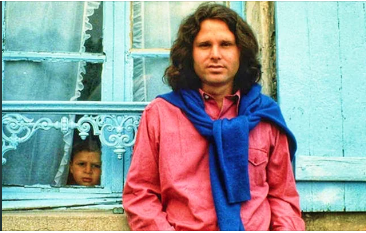
B&S: Just a few years after they argued that Paul was dead, people quickly accepted this truth: They were questioning authority. They quickly accepted what they were told.
It anticipates that the sixties generation will become their parents. We will go from The Beatles being bubblegum to Sgt. Pepper, and then within ten years, the Bee Gees remake Sgt. Pepper and it’s total bubblegum.
Jeff: I think Jim Morrison was anticipating punk. Even John Lydon, Johnny Rotten has said, you know, he respected Morrison, and that’s saying a lot because, in the early days of the Sex Pistols, Lydon was like, fuck everybody. But he didn’t say it about Jim. And that’s a lot. And Jim directly inspired Iggy Pop.
My daughter likes to tease me because I’ll be like, “What’s going on with your generation? Where are The Doors of today? Where are people today? Why aren’t they rising up and forming bands and, you know, the way it was in the late 60s, early 70s and protesting?” And I’m sure they’re out there. I’m probably unaware of them, but I keep my ear to the ground and haven’t seen anything. It could be just as Jim said, an incredible springtime, that moment in the late sixties, it couldn’t be replicated.
There is Pussy Riot; I mean, they’re brilliant, and it could be argued that they’re edgier than Jim and his prime with The Doors. But even Pussy Riot’s been around for over a decade. Kathleen Hanna, she’s amazing. But she’s my age. Where are the 22-year-olds of today rising up against the obligatory powers that be?
I hope that my docu-mystery, as I call it, will inspire Gen Z or the TikTok generation to dive in and discover Jim and form a connection with him via empathy. I’ve been fascinated to find that the TikTok movement has embraced the Menendez brothers of all people. It’s like they are literally drilling stone to go into the sexual abuse that was at the core of that case. And that was totally whitewashed. Who could have ever fathomed that we would reach this point? The youth is doing it in a way, maybe not through rock bands but through social media. I hope they do the same with Jim; take a deep, long, hard look at who he was.
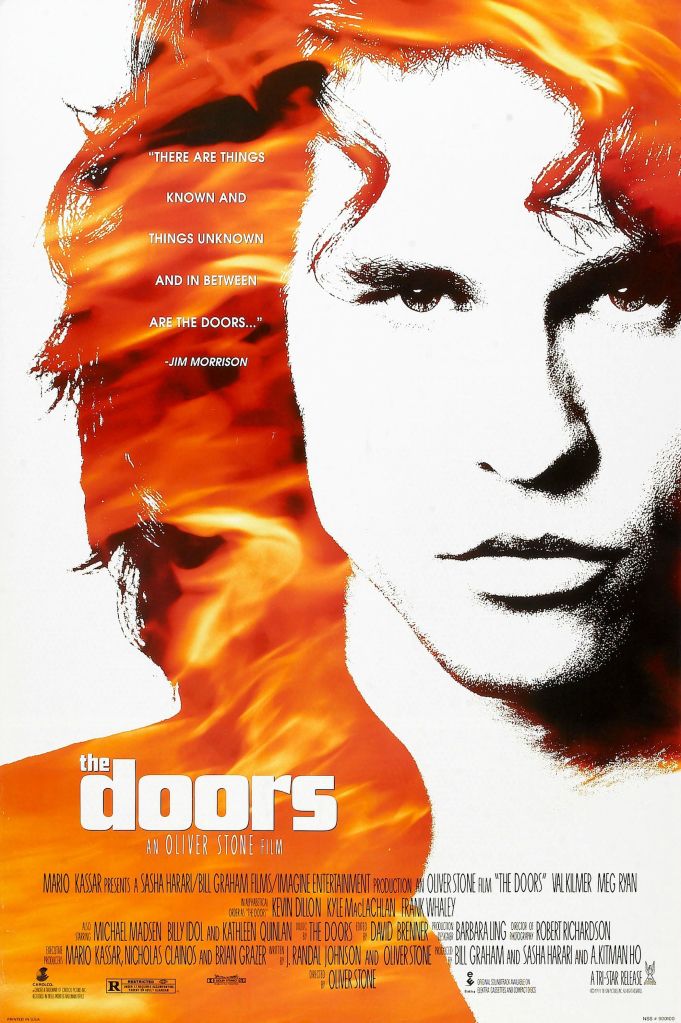
B&S: Better than the fact that the people of my generation only know him through Oliver Stone.
Jeff: I think Oliver Stone’s a brilliant filmmaker. JFK, Natural Born Killers. I think his documentary work on the Kennedys that came out recently is amazing. But that brilliance is not displayed in the movie he made in 1991. And you know what? He made his film, and it was his vision and more power to him. But we don’t have to like it. I certainly don’t.
I was the first one in line for that when it came out. And I was just so disappointed because it just clearly presented a one-dimensional view of Jim as this dark, narcissistic, self-absorbed asshole. And that’s not to say Jim didn’t have his asshole-ish moments. Of course, he did. And many people, we all have a dark side. But they never even showed him with a pen, like holding a pen or pencil and writing a lyric or a poem.
I was doing man-on-the-street interviews in Virginia, outside the library Jim went to as a child, asking people if they knew who he was. One young man replied, “He was an asshole.” And he knew that from the movie.
So, I’ve done a lot of damage control regarding Jim’s legacy from the fallout of that biopic.
It comes back to what we said before. Everybody has their version of him. That’s not the version that I want people to understand. I don’t wish to only the dark side. I don’t want people to like him because he was calm and did drugs. The notion of Jim as an introvert, as being neurodivergent decades before the phrase was even coined, is not what we generally think of when we think of Jim Morrison. They think of the guy in the black leather pants screaming into a mic, the guy who invented stage diving, the guy from the Oliver Stone movie.
I want them to know the Jim that Gayle Enochs, one of his lovers, knew. A man who drank wine and read poetry. A contrast to this rock god.
B & S: Everyone has an outline of Jim Morrison, and your work has filled in some of the colors.
Jeff: I’ve said that a million times. It’s like these black-and-white presentations. Nobody’s black and white. We’re all made up of gray matter, literally. There are nuances to people, and those nuances just get blown out.
In almost everything that’s recorded about Jim, because they’re in a rush to get to the rush, the rush that we get from the, you know, from rock and roll. And again, is that legit? Of course, it is. The music is huge, but there’s so much more to him and everyone than just a black-and-white perception. That’s what I mean when I get granular and go into the gray areas of nuance and what shaped and forged him in his formative years. What brought him to the point of, you know, becoming Jim Morrison of The Doors, you know? , he lived 21 years before The Doors formed. And those 21 years are usually glossed over or just ignored. I went deep into them because they are hugely important to history.

Before the End: Searching for Jim Morrison will make its global TVOD/Digital release on January 13, 2025, following Morrison’s 81st birthday. It will be available on all the major platforms like Amazon Prime Video, AppleTV, Google Play and YouTube TV, with more to follow.
 B&S About Movies
You must be logged in to post a comment.