Thanks to Severin, I had the amazing opportunity to discuss how this set came together with its creator, Kier-La Janisse. You can also listen to this conversation as part of two special episodes of our podcast:
Beyond this set, Ms. Janisse is an author, critic, film programmer, podcaster, publisher and producer with an emphasis on genre cinema. According to Tim Lucas, her book House of Psychotic Women is one of the 10 “most vital” horror film books of all time, and Ian MacAllister-McDonald of the LA Review of Books called it “the next step in genre theory, as well as the most frightening and heart-rending memoir I’ve read in years.”
All the Haunts Be Ours Volume 2 can be ordered now from Severin.
B&S ABOUT MOVIES: Has your definition of folk horror changed from working on these two sets?
KIER-LA JANISSE: Not necessarily compared to when I made my documentary, Woodlands Dark and Days Bewitched. When I first started working on the documentary, my definition of folk horror was very closed and very focused on Anglo-centric folk horror. I have found since making the film and also the subsequent box sets that there is a force of people who really want to keep it Anglo-centric. There’s been kind of backlash, in a certain ways, to the movie, saying that the movie opens it up too much. And that’s never what folk horror was supposed to be. It’s really supposed to be like this type of film in this type of place and that all this other stuff is not folk horror. And so, of course, that is a very Anglo-centric way to look at it. So you have to take that into consideration that most of the people who have that opinion are coming from that culture.
When I started interviewing people for the movie, it became really obvious that the definition I went into it with was not the definition everybody in the world had. I started interviewing people from all these different countries and places and there emerged these kind of two distinct schools of folk horror.
One has much more to do with folklore, like sort of folkloric creatures. The other branch of it tends to be the more Anglo-centric. And by Anglo-centric, I mean British, American, Australian…places that the English went and colonized. Where the people themselves, the folk, the beliefs of the people are the thing that is scary. Because in the other type of folk horror, where it is much more dealing with folklore, usually the beliefs of the people are the things that are actually the powerful and positive things. They are usually the things that vanquish whatever the darkness is or whatever the threat is, whereas those beliefs are the things that are demonized in the more Anglo-centric type of folk horror.
Since making the film, I don’t think my definition of folk horror has changed. I just think that making the film gave me an impetus to really put together these box sets. Ultimately, it’s just up to people themselves, right? I don’t want to prescribe some definition of folk horror and I tried not to do that in my documentary. At no point do I say this is what folk horror is. I just kind of let everybody talk, and then I use editing and illustration to support that. Then it’s up to the audience to determine how they interpret it.
In the newer box, I wanted to go a little bit further afield. Even more than I did with the first box set, focusing a lot more on cultures that were further away from my own.
I kind of love how much people argue over it. They’re so concerned with what’s folk horror and what’s not folk horror. That was never as much of a concern to me, like nailing down a definition for it because it was really, to me, so much more about exploring the things that people think are folk horror.

B&S: Was there a plan in having movies like Bakeneko and Sundelbolong on this set and show how different cultures relate to women’s needs, and how women often have to get their own justice?
Kier-La: Not specifically. I think in horror, in general, women’s issues are dominant. I don’t know if that’s just because I’m a woman. That’s how I look at horror films, but I tend to see women’s issues as dominant in horror compared to other genres.
It’s not surprising to me that those kind of themes come to the forefront in the films that were chosen. But Sundelbolong was definitely picked because we wanted a Suzzanna film. We weren’t sure which one we were going to put in the set and we went with Sundelbolong because I really liked the interview with Katrina Irawati Graham and Dr. Rosalind Galt that I did for the extra in Hantu Retribution — Female Ghosts of the Malay Archipelago.
I was familiar with their work and so I knew that they had some interesting things to say about that film in particular. So I knew that if we got that film, it would be an excuse to kind of have them on board to talk about it. That piece made a really nice compliment, I think, to David Gregory’s documentary Suzzanna: The Queen of Black Magic. It’s very like unifying in its themes, so I was really happy at how that turned out.
Originally, David Gregory’s doc was going to be an extra, but he’s the owner of Severin so he can do anything he wants. But he still pitches me on projects like it’s up to me. He said, “Can I do a feature about Suzzanna?” And in typical Severin fashion, it grew into its own movie.

B&S: I loved the documentary about Suzzanna, because she’s nearly a folk legend all on her own, like how she drank jasmine water and the mystery of her life and death.
Kier-La: I loved that part of the documentary, the fact that it ties in the way people look at her as at the actress is very similar to how they look at her characters.
B&S: She reminds me of Barbara Steele, in that they have a similar look with the long black hair and that stare.
I’ve heard some people ask why Psychomania is on the set, as it feels a bit more known than the other movies.
Kier-La: We’re huge fans of Psychomania. City of the Dead is another movie that’s been released a lot on other labels. People were like, “Why bother to release that?” It’s because we’re mega fans of and those movies became available. It was as simple as that.
We wouldn’t have necessarily gone after it first, because we were looking for rarities. But when the opportunity presents itself to release one of your favorite movies, why not do it?
B&S: Speaking of rarities, Born of Fire is so amazing. Then I read reviews online and people said, “It’s boring.” What movie are they watching?
Kier-La: It’s interesting. Because Andrew, who is our post-production supervisor at Severin…we have a Severin podcast and he’s always on the podcast. He was saying, of all the movies on the set, this was the one he did not get. He did not understand why we chose this movie. And I was like, really? Because I don’t know anybody that doesn’t love that movie. I mean, I’m sure there are lots of people who think it’s boring and don’t like it, but anybody I know that I would hang out with usually is like, mesmerized by that film.

B&S: There are movies in this set that I’ve wanted to see forever, like Who Fears the Devil (AKA The Legend of Hillbilly John).
Kier-La: I love The Legend of Hillbilly John, but it’s funny. That was a film that grew on me. When I first saw the film, which was a couple of decades ago, I thought it was a terrible film. I had the same opinion about it that, like many people did at the time — and many Manly Wade Wellman fans who would just think the movie is a joke — so when I first saw it, I kind of saw it as this really dumb movie with bad effects.
Then over time, I just completely fell in love with everything about the movie, including the cheap effects, the folk music. I actually think Hedges Capers as John is a perfect John. I’ve read many of the Silver John stories. I haven’t read the ones where Manly Wade Wellman revisited the character, like in the early 80s, and gave him this whole kind of Green Beret background. And so I have not read those novels, the later ones, but based on the earlier stories, the ones that would have been licensed to make that film, I think that Hedges Capers is the perfect actor. He has the perfect sense of innocence and curiosity and defiance and just everything all mixed in. And I love the music in it, too.
B&S: The theme song is amazing.
Kier-La: That’s Hoyt Axton, the dad from Gremlins.
B&S: I always think of his voice as being this warm, gentle thing. And in that song…
Kier-La: He has a really strong voice when he wants to. I’ve heard a lot of his music where he’s almost whispering and then other music where he has a thunderous voice.
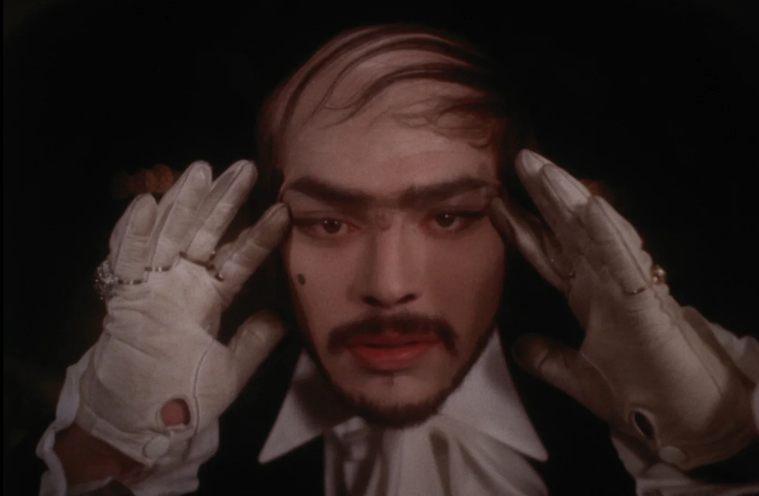
B&S: I’m overjoyed that Litan is also on this set. To find so many of these movies, you had to be an archaeologist to hunt them down. And now here these movies are, all in one place, looking better than they ever have.
Kier-La: It is bizarre if you’re used to watching old VHS tapes. Nang Nak, the Thai film in the set, someone posted a frame grab from an old DVD they had and commented that they were positive that we must have changed the color grade so much that we deliberately changed a night scene into a day scene. No, that scene takes place in the day, like, that’s how bad the previous version was that it looks like it’s set at night. It’s not how the director intended it. The director oversaw the transfer that we have and that scene takes place during the day. It’s supposed to look like daytime, but it’s a drastic difference from the previous releases of the film.
I think there’s a real nostalgia for when films looked like shit. (laughs)
Yes, this is how I saw most of those movies. To be able to see a 4k of a movie…I remember the first time I saw The Texas Chainsaw Massacre properly remastered. I was like, holy shit this is a different movie. Before it was just muddy. The night scenes were so muddy, you would occasionally see a flash of a character. Then, when it was all cleaned up, I remember even then, people were complaining. “It ruins it that you can see everything.” You know, you’re never going to please anyone.
But it’s also good, because we have so many blu ray labels and they’re constantly upgrading. Everybody’s doing a better job and a better job and a better job. It’s part of the story of that movie, all the different releases that it’s had, and the way that people have chosen to restore each version. That’s part of that film’s story now. Whichever version you want to watch the movie in, that’s what it should really be about.
It should be about your enjoyment of the film, not about arguing over it. That’s what you should focus on.

B&S: Was putting this together like making a mix tape? Was there a flow that you had in mind?
Kier-La: To a certain extent. I definitely chose Sean’s movie, To Fire, You Come At Last to be first because that was an original production that we had made for the box. If we had known that David’s Suzanna: The Queen of Black Magic was going to be a full feature, we would have put that probably first.
I really wanted the indigenous disc to be second. Because to me, Edge of the Knife is such an important film. I know a lot of people are probably going to argue it’s not horror enough or whatever, but the way that people in different cultures tell stories — tell horror stories — is different, the way that they deal with horror themes. They don’t all tell films in the same way that a North American Hollywood film would tell their stories, you know? And so the pacing is different and the types of things they focus on is different, but it’s such a unique film.
It’s got this great like, 25-minute documentary about the making of the film and how making the film itself revitalized an endangered language. I really wanted to showcase that as much as I could. So I knew I always kind of wanted that disc to be the second one in the set along with The White Reindeer.
We have regions in the discs and so I feel like it moves a little bit. It’s like things are kind of clumped together a bit geographically, until you get to the last disc, which the two movies are completely mismatched. That was because they were the last movies to come in, so they ended up going on a disc together, even though The Rites of May and City of the Living Dead don’t really go together. It’s hard!
B&S: Is there anything in these movies that shocked you?
Kier-La: The ending of Io Island, for instance, was not something I was expecting at all. A movie made in Korea in the 70s, during a time when they had a lot of censorship on films. I just didn’t see that ending coming from that film.
Some of the imagery in Born of Fire. The director, apparently, had to sneak that into the film. They had to shoot all the nudity secretly.
There is shocking and challenging imagery all through these films. And I would say, even films I have seen a million times, they sometimes still have that effect on me. Once you watch a film, you have a certain impression of it. But the next time you see it, depending on where your head’s at, or what kind of day you’re having or whatever — the movie could be totally different to you, you know?
That’s one of the good things about physical media. You can just keep revisiting things and you could potentially have a unique and different experience with the same film.
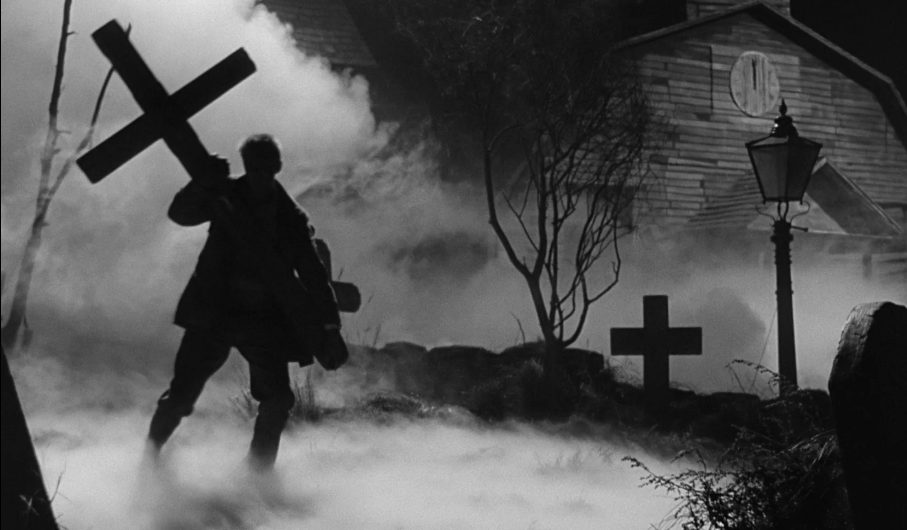
B&S: Was there a dream movie that didn’t make it into the set?
Kier-La: The Rites of May was a film that we were trying to get on the last box set. It took us so long and the director kept changing his mind. He would say, “Yes, I agree.” Then, “No, I’ve decided I’m not going to release any of my films ever again.” And then, six months later, “Okay, I think I want to do it.” And then he’d be like, “No, I don’t want to do it. I think Criterion might do it be better for a box set.”
Eventually, Carlotta Films in France, who had done a Mike De Leon box set, they really spoke up. They vouched for us because he liked them. He was very happy with their box that they did. And so the guy from Carlotta Films said to him, “It’s a good company. They’re going to do a nice job on your film.” And so it was really thanks to them that he came through.
There was another film that we got. I can’t say what it is, but another company ended up getting it. That’s all that I’m going to say. We actually had the film, we had done all the extras,and then we ended up having to give them over to another label.
It happens all the time. There’s so much competition.
The biggest thing when you want a film is being able to find elements for the film. Sometimes you can find the rights holder and they want to work with you, but they don’t have access. They don’t know where the negatives are. All the existing film prints are crap. Trying to find usable film elements is usually the biggest problem and then only secondly to that is the fact that it’s a very competitive market. There are so many blu ray labels out there now that a lot of them are going after the same films. And so when you’re doing a really ambitious project where you’re trying to get a bunch of things that are thematically connected and you lose one of the films, it can kind of throw off your curating because you’re like, “No, this other film doesn’t make sense because it was supposed to go with that film.”
That kind of stuff happens, but there’s always so much more stuff out there. You know, there are so, so so many movies that have never been on blu ray so even when you lose one, it’s kind of like you can’t cry about it for too long because there are a million other movies that you could be giving all that energy to. I think that’s the beauty of it.
David Gregory is like — I don’t even know how to describe it — he’s like the filmmaker whisperer. A lot of the filmmakers who just don’t even answer emails from anyone you know, like people trying to get a film, like Eyes of Fire, for instance. Every label had been trying to get that movie. All kinds of people had been trying to find the director and trying to pitch him on releasing. For whatever reason, he was unresponsive to so many other people before David Gregory.
David Gregory contacted him. He said yes instantly.
I was like, “How the hell did you get that to happen?”
David Gregory is like that with all kinds of people. Severin just announced some Russ Meyer films, so that, I mean, that’s David Gregory, right? He is a very charming and very sincere person, like, he’s a very honest person and a very straight-shooting person. I’ve worked for him now for like, seven years or something. And I’ve never worked for a better boss than David. He has an enthusiasm and a sincerity and all these qualities that I think just come across instantly to whoever he’s trying to get a movie from. I face a lot more when I’m trying to get a movie. I face a lot more challenges than he does.
B&S: Since your documentary came out, Hollywood has seemingly embraced the term folk horror. Are they making any quality films?
Kier-La: I don’t know. Which movies are you talking about?
B&S: It just seems like they’re using a phrase they never used before.
Kier-La: Sure. It’s a label. These labels are just things that you know, you just can’t get to attach to them. They’re made by sales agents most of the time, you know.
I remember everybody getting upset about elevated horror, you know. And it was like, who cares? I was literally in the room when that move word was used for the first time. It was at a pitch at the Cannes Film Festival. And I remember everyone in this audience groaned, because somebody said, “My movie is more like elevated horror.” And everybody in the room were genre film fans and genre press, and they were all just like, “Ugh…”
These are just words people use to try to sell things. When you look at genre in general, all these categorizations are used because somebody needs to convince somebody else of something. And it’s like shorthand that they use, you are trying to tell somebody that they’re going to like this movie, because it’s this category. And then they can connect it to other things they like. So it can be useful that it gets somebody to go like, “Oh, okay, I get it. I like those kind of movies.”
That’s a good thing. You know, so it’s like, who cares? It doesn’t matter. It’s not bad. It’s never bothered me, whatever stupid terms people come up with. But with folk horror, it’s like, yes, there’s all kinds of people who are going to be like, “My movie could count as a folk horror. I’ll start selling it as a folk horror, because folk horror is hot right now.”
If anything, the people interviewed in my movie showed how broadly that term can be used. Sure you can market your movie as a folk horror. It can be a folk horror as well as being five other things. It’s not inaccurate, you know, like it can be a drama or a comedy or a romance and also be a folk horror.
That’s one of the great things about horror. People who don’t like horror, they always think horror is stupid or it’s superficial or it’s one-dimensional. No, because horror films, ultimately, are some other genre of film with horror in it. It’s a drama with horror or a comedy with horror or a Western with horror. It’s never just horror, there’s always a human dram usually at the center of it.
There’s more violence or threat or dread, or, you know, darkness or something like that in it that exaggerates whatever the stressors are that people are dealing with in normal movies. But those stressors are actually the same, whether it’s like, you know your daughter died your husband died or you don’t have money to pay the rent, or whatever, you know, whatever the problems are in like a Ken Loach movie, the same problems are in a horror movie. (laughs)
B&S: As a kid, the ghosts in The Amityville Horror were frightening to me. As an adult, what’s scary is how are they going to pay for their next house and deal with the insurance for this home? Because they’re all in on this one.
Kier-La: As a kid, I was obsessed with the drawings in the book. There were drawings of Jody the pig and all these maps of the property. I would just look at those images over and over and over and over again. I was, like, obsessed with, like, just the floor plan of the house. As an adult, I love maps. I love floor plans, like, I love the aesthetic of a floor plan, and it probably comes from that from the Amityville book.
What’s scary is the sense of space that gets changed. In House of Leaves, when they call the police because there’s an extra door and the police are like, “What are you calling us for?” It’s like, this door was not here. Are you saying somebody broke into your house and built a door? What are we supposed to do here?
B&S: I’m still working my way through the box set. The extras are next.
Kier-La: All the bonus features on this disc, I think, overall, are like, even stronger than the last disc. So, yeah, I remember when. Alison’s Birthday came out on blu ray and bluray.com somehow ended up reviewing the discs individually, as though they were, like, standalone releases. They said it really didn’t have that many extras or whatever. And it was like, well, it didn’t have many extras because it was on a disc with another movie and that film also had two extras.
We packed out the disc as much as we could, but they reviewed it as though it was like a standalone movie that we only put a couple of extras on. And I think that actually made me try even harder this time to make the extras even stronger for each movie.

Thanks again to Kier-La for her time and answering all of these questions. Remember — All the Haunts Be Ours Volume 2 can be ordered now from Severin.
 B&S About Movies
Exceptional box set, exceptional interview, Sam. The term “folk horror” is now officially part of the English language with its recent inclusion in the Oxford English Dictionary.
LikeLike